Tag Archives: travel

Living “Rustically”

Spring on Hanson Island is bittersweet for us. As we celebrate the sun crawling higher and higher above the mountains of Vancouver Island, we trot outside, palms and heads held skyward. We lay out on the south facing deck all afternoon, soaking up the sun and getting the greatest outdoor bathtub in the world up and running. After a long, windy winter that was defined by the height of the waves and the thunder of the wind, these sunlit days are nothing short of Nirvana.

But in the back of our minds, we know the countdown has begun. That these days are fleeting, and the days of cleaning, organizing, and packing are fast approaching. We have less than a week remaining before, like the geese flying above, we flock north.

Didn’t we just get here? Weren’t we just winging our way south, watching the the islands and inlets crawl by? Winter always seems to slip through our fingers like sand. Blink and its April. This is our life. Every six months we pack everything and shove a resigned kitty and rabbit in the car, our penance for loving two places that are far from easy to reach.

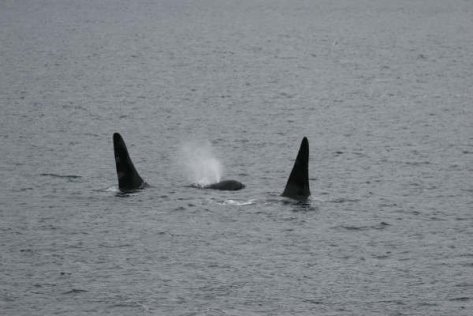
But before we return to a land with bigger glaciers and smaller trees, we reflect on another winter that has taught us much. It’s hard to think of Hanson Island as rustic. Sure, there’s no warm running water or indoor plumbing. But we have a full size fridge, wireless internet, and the ocean at arms reach. In many ways, living in a New York apartment would feel more oppressive, more difficult. The constant artificial lights, the blaring car horns, the masses of humanity. More restraining than the borders of this little island. Where I walk into the forest and hear a Thrush and Woodpecker, or sit on the deck and hear the breath of an Orca a mile away. Things like warm water and flush toilets feel unnecessary. Give me creatures over convenience, stars over street lamps.

Which is all well and good, until the generator won’t turn over on a cloudy morning, the lab batteries failing and the lights flickering. Or the boat engine suddenly refuses to start as the water’s churn in Blackney Pass. Or you wake up in a cold sweat in the middle of the night, the window panes rattling the waves pounding, and your fear of the boat getting swept away in full swing. Than an apartment with running water, reliable lights, and a corner store sound pretty good.

So I remind myself of what these inconveniences do. They pull me back to my roots. Remind me that the things we take for granted we shouldn’t. That it’s important to know where our electricity, our fuel, our freshwater come from. And even more, it gives you a personal stake when the only one that can fix it, is you.

A month ago, the generator, died. Not an old generator mind you, but a brand new one. My generator knowledge began and ended with: “turn the key, push the choke in, go back inside.” I went inside, found the dusty owners manual, and marched back to the generator shed without the faintest idea of what I was doing. I opened the maintenance door and stared at its innards. I traced the fuel line, opened the spark plug compartment, and shook my head. If I lived in a city, I’d call the power company and wait impatiently for someone to fix the problem. I had no one to complain to, no one to lean on but me.

Thirty minutes later, my fingers coated with fuel, oil, and grime, I slammed the maintenance door shut. With a knot of apprehension, I filled the generator with gas, pulled the choke, and turned the key. Fifteen seconds later, the blasted thing came to life. I walked back to the cabin with a sense of accomplishment. I love having our source of fresh water, our power, our food squarely in my control. As hard as it can be, it gives me an emotional investment in their sources. Inconvenient or not, I’m grateful.

I want that sort of control, that responsibility when I have my own place. I want solar panels, ground water, a garden, and a wood stove. I have Hanson Island to thank for that. For giving me an intimate connection to the services that it’s so easy to take for granted. After 27-years of turning taps and opening the fridge with little knowledge of where their sources originated, I don’t think I can ever live that way again. Maybe I’ll just have to be rustic forever.

For His Old Branches II

The rain falls as a fine drizzle, turning the surface of each rock and log smooth and slick. My body feels unbalanced, the chainsaw in one hand, oil and two stroke fuel in the other. Beyond the crunch of my boots against the loose rock the world is silent. Blackney Pass stands calm and tranquil. The vista slows my heart and mind. This view. How easy to glance past it after all these months. The islands and channels are worn into my mind like the creases and callouses on my hands. Swanson, Harbledown, Baronet, Cracroft, Blackfish. What names. They stir the imagination, fall smoothly from lips and tongue like water over stones. For years I stared at maps, brushing my fingers over their namesakes, their crude imitations of green and blue put to paper. Now? I see them every day. May the novelty never fade.

I bend over the chainsaw and pull the cord. Through my ear muffs I can hear and feel the vibrating base of the saw as it comes to life. Oil, fuel, and metal. In my hands, with the simple pull of a trigger, I become master of the woods. Capable of felling trees that have patiently grown for a millennia, evicting squirrel, thrush, and deer as the roar of progress and the thunder of manifest destiny march through the woods. But for this I have no desire. I could no sooner fell a growing Cedar than take a man’s life.

I head down the beach. I’m searching for a sacrifice. For a gift willing to disappear from the physical world through the chimney of our cabin leaving only a small pile of ash as a talisman. The log is weathered and worn, maybe a little water logged. But its location is good, and cutting this one opens up space to negotiate the nicer, friendlier logs behind it. I pull the safety, click the button, and the war cry of humanity echoes off the standing trees. I cut with my head down, the trigger pressed halfway. The sharpened chain cuts clean and smooth. No knots. No warping. What a tree it must have been. Before it was reduced to this. Reduced to laying naked on the rocks, it’s branches stripped, its roots severed. I love reading the stories of the old hand loggers. The one’s that went up Tribune channel just north of here. Each tree was selected with care. It had to be. For each one had to be felled just right and rolled into the ocean. Clearcutting wasn’t just unnatural, it was impossible. Hard work. Anything but glamorous. That I could do. No one hand logs anymore. Carve a road into the hills and forests. Strip the forest. Every. Last. Tree. This log I’m cutting is nothing more than a refugee.

Brittney joins the ritual. She wraps her arms around the rounds as they roll free and patiently walks them up the beach, dropping them with a thud that shakes the forest floor. The rain continues to fall, mixing with the sweat on my brow and back. Cutting wood always makes me perspire. I have no idea why. I’m just standing here after all.

I work with my back to the water, the incline slightly uphill. After a time I stop and rise, stretch my back, and turn. A tug and its massive tow fills the strait. It chugs south with diligence. The rumble of the massive diesel engines echo in my chest. My eyes fall on the tow and a snarl spreads across my face. A log tow. Hundreds, maybe thousands of logs lay piled a hundred feet high. A hundred logs high and a hundred wide. Plucked from the raincoast, heading south to await their fate. As what? I’d be lying if I said I knew. Homes? Mulch? Toilet paper? It makes little difference in the moment as a wave of disgust washes over me.

The chainsaw vibrates and slides over the rocks, bumping against my foot, reminding me of my hypocrisy, that I’m standing in three inches of sawdust. That I live in a wooden cabin. That the kayak my father is lovingly crafting for me is made of it. What if the wood for my kayak was once on a barge like this? What if it had been pulled south, past this lab. So that I could one day paddle the inlets it had once looked over.

What’s enough? What is ethical? What is right? The oil companies had a field day a few years back when Shell’s big oil platform pulled into Seattle. Hundreds of big hearted, environmentally conscious people took to the water in kayaks, many of them plastic. Floating thanks to an industry that allowed them to be there. Does that make them hypocrites? Does it muffle or mute the cause they stand for? Do I have a right to feel angry when a log tow goes by? Is it enough to say that I’m doing what I can and accept that it’s impossible to not impact the environment negatively in some way?

There’s no answer from the ocean. Hard to hear with these ear muffs on and the saw rumbling. Avocados from Mexico, bananas from California. Oil, carbon, trees, methane, melting ice caps, Republicans. Dear God. And I’m worried about a couple of trees?

“Do what you can with what you have.”

Who said that? Roosevelt I think. Teddy or Franklin? I can’t remember.

A pillar of Christianity is that we are imperfect and that Jesus does not require us to be. We need forgiveness because we’ll keep screwing up. I look down at the log and feel a shiver run down my neck as the sweat and raindrops cool on my shirt. I think about the book I’m writing, that I want to see published. More than one if I can pull the wool over the eyes of an editor. Books that will be published… on paper since stone tablets went out of style years ago.

Just because I’m an imperfect environmentalist doesn’t mean I shouldn’t, or can’t talk about it. For if we wait until we’re not harming it at all, we’ll be delivering the message on horseback in between long treks through the forest, hunting with sharpened sticks and rocks. Next summer I’ll sit in my wooden kayak, and I’ll do so without guilt. From its seat I can be an agent of change. I can touch the lives of thousands of people as I lead them into the wonder of Glacier Bay. Reminding them gently, patiently, that if we lose this we lose ourselves.

I pick up the chainsaw. I’d be lying if I said I felt good about it as the sawdust started to fly again. One by one we carry the rounds up the hill and to the chopping block to where our woodshed (made of wood) stands. Beyond it is the forest. A forest rebounding from logging. At its heart stands Grandma Cedar, the ancient tree that has survived so much, has seen it all. A forest that, if we keep talking about it, will never hear the sound of a chainsaw in its depths again.

The Garden: A Plea for our Parks, Monuments, and Refuges

I wonder if Abbey ever felt this way, or Muir, or Roosevelt. A sort of melancholy joy that all of this is fleeting. Perhaps I worry too much. It’s hard not to. In a time when we need wildness more than ever, it’s never been more threatened. One need look no further than the skulking figures of the right, elbowing and jostling each other for the opportunity to be commander and chief. Debates have become nothing more than four amateur comedians, dropping punchlines and waiting for the laughs that aren’t coming. But between the childish jokes of genitalia and chest thumping, they have declared war. Not on ISIS, hispanics, the middle class, or China. But on us. On the final fragments of American history.

The Party or Lincoln has become the Party of More. Blame it on Reagonomics, the Koch brothers, Ted Cruz’s jowls, it doesn’t really matter. Regulate a women’s body, regulate marriage, but God forbid that the steam rollers of industry should be slowed. Away with the EPA, usher in the era of fracking. What goes into the bank account matters more than what goes into our bodies. Away with the public lands, those worthless wastes of space, those dollar bills hanging from the branches, just waiting to be plucked.

“If you’ve seen one redwood, you’ve seen them.” Ronald Reagan said.

“If you’ve seen one hundred dollar bill, you’ve seen them all.” I say. “The only thing more foolish than trying to drink your money is trying to breath it.”
10329274_10152863254909852_4693130274254238988_n
Herein lies the danger. Herein lies the tragedy. Ted Cruz has already tried to put an end to the miracle that is public lands—our national parks, our monuments, and wildlife preserves. America’s greatest gift to itself. It twists my stomach into knots. Take my healthcare but not the bay, not Denali, not the Arctic Refuge, these shrines to the world that made us. I’ve met several people who, on their deathbed, ran north. To Alaska. To see the land wild and free. Not to see oil wells or mining sites. But that seems to mean little. Give him a big enough eraser and he’ll wipe them all out. Those wastes of space. All those trees and bays and wolves and bears. Refuges and refugees, two concepts that fall on deaf ears. Give me your poor, your tired, your weak… nevermind, some oil subsides will do fine. Conservative and conservation, similar in spelling alone.

This is our own fault. Nature, wilderness, is mythic to some, a fairy tale to many. Something that may or may not exist somewhere beyond the city limits where the concrete may or may not end. An ideological Bigfoot. It’s somewhere our phone’s don’t work and wi-fi fades away. Many never see them. And we’ve lost all connection to how bad we need them.

Air? It comes from the air of course. Food? From the grocery store. Water? It comes from the tap. Trace the journey of these substances and you arrive at the same place. Soil growing food, trees producing the air and filtering our water. Forgetting that relationship is toxic. Ask the children of Flint, Michigan. Ask the families of Butte, Montana about the “pennies from hell.”

“Growth for the sake of growth is a cancerous madness,” wrote Edward Abbey.

Let us define mankind not by what we can extract and obtain, but by what we can leave alone. Let us not define ourselves by our consumption, but by our self control. Do we have the courage, the willpower to push ourselves away from the petroleum feast, to announce that we’re full? There are bigger things, more worldly things, and yes, more Godly things than maximizing profit on every square foot of land.
10151271_10152867795959852_442814964723618859_n
What if we stopped looking at the world like a factory and instead like a garden? A plot that must be nurtured, cared for, fed, and watered. Treated with the understanding that what we take out must be replaced. Minerals and matter must be returned to ensure that the carrots, potatoes, and lettuce of life return bigger, fresher, and tastier next year. Foolish is the farmer who doesn’t renew his soil with fertilizer, who stuffs his rows of lettuce tightly together, believing that the highest quantity planted will equal the maximum yield. Shame to the farmer who doesn’t let a field go fallow. Let the land rest, let it breath, let it be land for a year. And like us after a deep breath, it will work harder, the benefits in a year outweighing the one that was lost.

But the world doesn’t work like this. We can’t stand the thought of letting a portion go fallow. Of not maximizing our yield right now. Forget the future. The future is now isn’t it? The TV told me so. Those that see the world as a garden are shouted down. We’re labeled as extremists, alarmist, other harmful -ists, standing in the way of progress. Good old progress the shield of the conservative politician. But you’ll never hear a politician, pounding the lectern, demanding that he be allowed to frack the tar sands of Utah labeled extremist. He’s just living in the real world. A world where the economy can grow forever. Infinite growth, finite world. His birthright. If we’re not moving forward we must be going backward.
10312681_10152863254884852_4060311875310743348_n.jpg
Will our offspring a century from now look back on us with admiration or disgust? Will we be revered like the minuteman or demonized like the slaveholder? The one’s that took a renewable world and saw it only for what it could do in that very moment. At least we made some money. But is that how we want to be remembered, is that what we want inscribed upon our gravestone?

 Here lies the modern world. The bottom line looked good.

Surely even the most selfish cannot desire to be remembered like this. Let’s be remembered for our love, for our sacrifice, for our restraint. Let a tree be a tree. A refuge a refuge. A fishery a fishery.

“Any fool can destroy trees,” wrote John Muir. “For they cannot run away.”

To which I add, any fool can do something for profit. It takes a man of true character, true conviction, to see a resource, to see personal wealth, and leave it where it is, acknowledging that there are some fields that should always be fallow. We’ll survive without it. The farmers to follow will thank us.

45543_488769164851_2875335_n

A Love Note for the Raincoast

Everyone has a natural habitat. A place that fuses perfectly with their soul, their love, their passions. Some may spend their entire life looking for it, opening and closing doors, rambling from place to place, searching for the location that moves in rhythm to their beating heart. I grew up in Eagle River, Alaska. A town that sits at the mouth of a valley, carved out by glaciers millennia ago. I loved watching the mountains turn the color of flames every fall as the birch trees downed their autumn best. Loved the female moose that would come down from those wise old mountains every spring to give birth in the safety of our neighbors yard. I loved my family, loved my friends, loved my school.

I had to get out.

Everyone needs to get out of their hometown, at least for a little while. If for nothing else than to look at some different mountains or buildings or street signs. I went north. To Fairbanks. 50 below and blowing snow.

“Not even close,” I thought.

I have since found a land where I fit snugly in its hand. In some ways, it’s not that much different from where I grew up. Glacier’s are the architect, but the valleys are filled with water, and rain falls more than snow. For years I hung a map of my natural habitat in my dorm room. Greens and blues dominated the map, towns and settlements little more than punctuation in the epic tale that requires nothing but imagination.
The raincoast, how I love it. From Vancouver Island up her spine of islands and into the shining face of the Alexander Archipelago, through southeast Alaska, following the march of the glaciers. And it is here that I pinball back and forth. From Hanson Island to southeast Alaska. Fjording fjords. Cruising past canals. Passing through passes. I could live a thousand years and never tire of exploring the silent coves and hidden secrets of this land, never camping in the same place twice, no two sunrises the same, each Orca encounter more enthralling and exhilarating than the last.

I love Alaska, I love British Columbia. For how can I refuse the chance to sit inches above the water and stare at the glacier’s that still stand guard at the headwaters of many an Alaskan fjord? And how can I ever turn away from the rich smell of cedar infused forest in the early morning light, the fog burning off of Blackfish Sound? The world becoming whole, feeling both old and new with each passing day.
8086_10151351163234852_1520975010_n
Early on in the winter we knew that six more months wouldn’t be enough. The glacier’s of our summer home beckon, our jobs as kayak guides await. But… what can I say? Hanson Island gets into your blood, syncs with your heart and spirit the way few places can. Can you love two places so fiercely you can’t live without either?

Early December, a rare calm day along the B.C coast. Brittney and I sit in the cabin, watching the sun struggle above the mountains of Vancouver Island. Before either of us open our mouths we know what the other will say. That two winters is not enough. That we need another winter with ears cocked to the speakers, waiting for the first whisper of an Orca’s voice. Another winter watching the deer trace the shoreline, sucking up every strand of kelp that washes ashore.
11008650_10155365472945858_1720255889708099310_o
“We’re so blessed,” Brittney says. “Our biggest problem is we can’t chose between the two places that we love.”

It’s true. For all our talk of buying property, settling down, being “normal,” Hanson Island doesn’t encourage normalcy. How can it? It’s founded on the tenants of faith in yourself, conviction, and passion. Pillars that don’t lead to nine to five jobs and mortgages in the suburbs. Every day I look out the window to where the lab stands on the rocks. I think of the time, the effort, the sacrifice, and risk that Paul, Helena, and countless others poured into this place. Out of a love for whales, for quiet places and open spaces, from a belief that man still can coexist with the world we seem determined to exterminate. To be a small piece in that, what a tremendous honor, to know these people not just as passing acquaintances, but as friends and mentors. It is this above all that pulls me back.

“I came for the place, I stayed for the people,” wrote Kim Heacox in The Only Kayak.

Ironically he was writing about Glacier Bay, the other place that pulls at our heartstrings. A place filled with beautiful people. A community defined by the bay, the Beatles, and bluegrass.
37367_467283714851_8103409_n
But we’re not ready to chose, not ready to force it. I want to drag myself out of bed at three in the morning because there’s Transients in Robson Bight. I want the tide and weather to determine when I go grocery shopping. I want to hear Paul’s smiling voice on the other end of the phone. When we walk away, we’ll never live like this again. Never have sea lions as neighbors, or have Harlequins knock on our front door. We are unique, we are blessed, we are insanely lucky.

Every day in the summer we’re asked the same question, “what do you do in the winter?”

And when we answer the follow up question is always the same, “what do you do there?”
292906_10151433415214852_720328661_n
How to explain that it is not what we do but why and for who we do it  that makes it so special. I watch the sun rise, listen to the ocean, talk to the trees, bond with the mink, and glorify the Orca. And above all, give thanks that I can have both places for another year.

The Wolf

I am not a brave person. At least, I don’t consider myself one. I rarely feel bold, or filled with valor, or the innate desire to take risks, and stick my neck out. I get nervous walking through the woods in the dark, even here, where there’s been exactly one bear sighting in decades. My imagination, which is often my ally betrays me in these moments. I feel the hair rise on my neck, the goosebumps spread across my body, a spasm of fear running down my legs.

I don’t believe in spirits floating among the living. At least, I think I don’t. But the lab is built on the same ground that was once a Namgis summer camp. A small grave was found in the rocks, somewhere near here, the body of a young girl entombed within. That’s what Walrus says. I never asked him where the grave was. I don’t want to know. But it’s much easier to believe in restless spirits, the thrill of the supernatural, the magnification of fear when the dark surrounds you with creaking and swaying trees. Glowing eyes in the dark. Deer, they have to be deer. But what if they aren’t?

The water’s rough. The waves roll up on themselves, ringed with foam and frothy white caps like pearls on a necklace. Rain falls as a fine mist. In our tiny boat, the waves roll by at eye level, the boat pitching over the crest and through the trough of each swell. Up and down the hills, again and again. Why does it seem like we’re always going into the wind? The water is deep, churning, cold, dark. This seems like a lot of work to go through to run a generator. But such is our assignment today. To cross Blackney Pass for Cracroft Island. To add the magic of unleaded gasoline to help us maintain power at the lab.

It’s the same body of water we were crossing when the boat engine died a few weeks ago. And for an hour we were at her mercy. Enough to make you think twice when the land fades away off the starboard side and you begin the mile wide crossing. I’d be lying if I said it wasn’t in the back of my mind, with the waves growing and the ocean soaking our windshield. No boldness or valor or bravery here. Loyalty and dedication maybe. I’m more Hufflepuff than Gryffindor.

What would it be like if we lost the engine here? If the boat filled with water? If we had to jump clear, life jackets clinging grimly to our necks? To come face to face with our greatest fear? I’ve never had a near death experience. At least not that I remember, and I’d like to think I would. How terrible and thrilling, to come face to face with my own mortality. Would I be cognizant of my final breath? Aware that it was the last one this body would ever draw for me? Would I watch this grim physical home for my soul drift into the depths as I floated above, great wings growing out my shoulders? Or does everything just go blank? A reel of film that’s reached its end, spinning pointlessly on its spools.

But today is not that day. Across Blackney Pass. In the shadow of Cracroft Island, the water is calm, a soothing emerald color. It’s far too rough to land on the rocks by the shelter. So we motor into a quiet cove on the opposite side, out of the wind. Was it really just a year ago that we blazed this trail? Just me, Paul, a couple of hacksaws, and a general idea of what direction to bushwack. By some miracle our zigs and zags led us straight to the CP shelter. We climb onto the bow and tie the boat to a massive log draped across the rocks.

I step into the woods and stop. I’m not alone. Something lays on the ground at my feet. A jigsaw of vertebrae and ribs and fur. It’s been dead awhile, the body barely recognizable. The skull lays just off to the side, neatly picked clean as if it were a name tag, identifying the creature to which it had belonged.

“There’s a carcass in here!” I shout.

Brittney shoves the ferns aside and stops next to me, mouth agape. The smell wrinkles our noses, but neither of us step back. For a long while we simply stare, a silent vigil, disturbers of the animal’s peaceful sleep.

“What is it?” Brittney asks. She’s kneeling near the clump of fur and vertebrae, awestruck. She’s neither squeamish nor disgusted but fascinated. Even in death, her compassion for things furry continues.

I break off a stick and flip the skull over to reveal the jaw. The mandibles and lower jaw bones are gone, but the unmistakable canines of a predator remain. We let out silent gasps.

The wind rattles the tree tops. It’s going to get worse out here before it gets better. I leave Brittney with the departed, and vanish into the woods. The whole way to and from the shelter, I think of nothing but the creature. I’d never seen anything like it, on the day that I’m contemplating my own mortality. It can’t be a coincidence.

I return to find that Brittney hasn’t moved. It was a wolf pup she announces with conviction. I agree. What else has teeth and claws like this? We sit in silence, my mind trying to put the wolf back together.

“How do you think it died?” Brittney asks.

Like the girl’s tomb, I don’t want to know. The ocean is not twenty-feet away. Is it possible that one of my own species is responsible for this? Was this cub the victim of some human’s potshot with a rifle? A vigilante dedicated to predator control? Maybe that’s unfair, but I can’t think of any explanation for how he chose right here to lay down and die. We leave him where he lays, to continue his noble work of returning to the soil, feeding the web of life around him. A sacrifice that won’t go unnoticed.

One more stop. Parson Island. The water has settled a bit while we were in the woods. And the journey across Baronet Passage is a calm one. I disappear into the woods and up the hill, one more generator to go. My mind returns to the wolf cub and I feel pity for the little creature, that his life was taken so early. I pray he died right, with honor, dignity. Perhaps he just didn’t want to be a wolf anymore. Was ready to be something bigger than himself. Isn’t that what I want? What we all want? For what is more fulfilling than giving of ourselves to something bigger. To make the world a better place.

The land where the wolf lays resting was clearcut some thirty years ago. The land stripped. Every. Single. Tree. No more squirrels, no more birds. No wolves. No cougars. No life. No character. But the land is recovering, like it always does. And will flourish with magnificent old Cedar trees again, if we allow it. Maybe all he wanted was to speed up the process. Infuse the earth with his carbon and nitrogen, accelerate the growth of those great trees so that the generations to come can run and hunt and howl beneath their great branches.

I reach the cliff. From here I can see past Cracroft Island and into Johnstone Strait, up into Baronet Passage, out into Blackfish Sound and Queen Charlotte Strait. Pristine silence. Quiet places. Open spaces. The little cove on Cracroft is indistinguishable. The wolf’s resting place invisible, his sacrifice anonymous from here. But I know. Brittney knows. The tree’s know. Sometimes the greatest sacrifice is the one not recognized.

I say a little prayer before I pour gasoline into the generator. Before the war cry of my species infects the land.

“Thank you,” I say, my voice drifting across the water. “For making this world a better place, for reminding me of what is good and pure and wild. For infusing the earth with your spirit. I hope to leave this place better than I found it too.”

I bend over and pull the cord. The generator roars to life. Without a backwards glance I turn and vanish into the woods. The Cedar and Salal covers my tracks. The growl of the generator echoes in my ears.

The Luxuries of Wilderness

The boat grazes the rocks and rocks and Brittney steps onto the bow. The gentle landing is short lived as a three foot wave picks us up and throws with a dull thud against the shore. Line in hand Brittney leaps clear of the bucking boat and lands nimbly on the jagged rocks of Cracroft Point. The engine pulled up and the line unsecured, the boat is at the mercy of Johnstone Strait, a strait that seems apathetic towards the BC weather’s promise of a calm afternoon. White caps dot the surface and their thunderous crashes against the point’s steep shore is intimidating. I grab the bag and leap for the shore as another wave lifts the boat and sets it down, landing just clear of the water as the wave swirls around my boots.

Brittney handles the line like a cowboy handling a mustang, goading the boat into a small crevice in the rocks and out of the path of the largest breakers. She’s got this. Without a backwards glance I scurry into the woods, wielding a bottle of oil in one hand and a flathead screw driver in the other. The generator demands an oil change. A few feet inside the treeline the sound of the wind and waves is muffled, as if I’m listening to it with a pillowcase pulled over my head. Trying not to rush, I flip the generator on its side and unscrew the covering.

It’s incredible how much goes into keeping this place running. And even more amazing how inept it can make you feel. Between the electronics, the power sources, and internet connections, not to mention the mechanical nuances of boat repair, tree climbing, diving, and deciphering whatever voodoo it is that allows us to stream the hydrophones 24/7. Paul and Helena are probably the only two people on earth that know how it all works. It’s staggering to imagine anyone else with the combination of skills they’ve acquired in thirty some years. In the last two winters I’ve learned how to set up inverters, decipher internet connections, and giving myself more than a couple of nice shocks as I learned the difference between AC and DC. I’ve nicked the tip of the iceberg.

The oil comes out as black as night and as thick as molasses. Better late than never I suppose. I funnel the remaining oil into an old bottle and refill the generator with clear, syrupy  10W-30. Brittney appears at my side, the boat nestled in its crib.

We glorify wilderness. We consider ourselves disciples from the school of John Muir and Edward Abbey. And yet… look at what goes into surviving out here. Granted, I wouldn’t be crouched over the generator if there wasn’t an internet connection to maintain. But I can’t imagine the time and effort that it would require without 50 horsepower strapped to the boat, or a grocery store 45-minutes away. Even the men that sparked my love of wilderness had some indulgences. Abbey spent a lot of time living in a trailer, a propane stove and cot at his disposal. Heck, even John Muir had a rotating cast of savvy and tree smart Tlingit’s escorting him on his paddle trips through the Alaskan archipelago. Is the glorification of wilderness a luxury? Would Travels in Alaska and Desert Solitaire been written without them?

The oil in the funnel burps and I sit the generator upright, dipping the dipstick into the oil reservoir, the pale gray plastic coming back with a clear, reassuring shine. Would I deify the forest and ocean if my days were dedicated to ensuring my survival? I don’t know. Muir was mortified at the audacity of his Tlingit guides to shoot at deer on the beach as they paddled past. He would rock the boat so that there shot would go wide. A respect and love of nature to be sure. But for his Tlingit guides, it had to be analogous to going to the fridge only to have someone slam it shut. Not everyone has the luxury of hardtack and tea.

I screw the covering back on the generator and pull the start cord. It roars to life on the second try, spitting blue/white exhaust into the air, the southeast breeze sending it into the forest. Is my love of nature threatened by the very things that help me adore it? The avocados from Mexico and bananas from Belize that spare me the cumbersome task of crawling through the woods in search for all that is edible. Would I miss the forest for the trees and the tasty mushrooms that grow on their trunks?

This isn’t meant to belittle Muir or Abbey, two men I admire as both writers and preservationists. But would such men have been the same if they’d stalked across the western frontier a century earlier? Would that convenience have existed if Muir had been born a seal hunter? The glaciers not a monument to be marveled but a threat to his existence? Perhaps it’s as simple as saying that they were the right people, at the right time, writing the words that needed to be written to stave off humanity’s insatiable consumption of the very thing that makes us whole.

I pull the boat out of its protective crevice and the ocean roars up around it. I hold her as steady as I can until Brittney leaps aboard. With a heave I push the boat clear of the rocks and slide across the ocean soaked bow, clamoring over the top and into the relative protection of the cabin. The engine roars to life. A marvel of human engineering and brilliance. But without the miracle of organic compounds slowly compressed over millions of years it would be nothing more than a five hundred pound paperweight.

Maybe the Tlingit and Kwakiutl Indians loved wilderness the same way the European nature writers did, simply in a different way. Perhaps their love had  matured after centuries of marriage to the natural world. Their love expressed in the familiar and comfortable way a couple does after being married for thirty years, while Muir, Abbey, Brittney and I are in the honeymoon stage, breaking free of the society and concrete that compresses our chests and sends us running for the woods.

Water rolls over the top of the boat as the nose dips into the trough of a wave. Blackney Pass is sheet of white caps. I steer for Parson Island, we’ll take the longer, more comfortable way home.


My Life as an Orca DJ

It starts with dolphins. They giggle like jackals, punctuated by the dull thuds of their echolocation. I shut my eyes and let the sounds of dolphins, crashing waves, and 30 knot winds rock me back to sleep. Moments later my eyes open. I sit up, Brittney’s feet swing out of the bed. The dolphins aren’t alone. The hee-haw of a donkey floats through the speaker that sits on the shelf just above our bed. G clan’s back.

1917778_229391884851_28180_n
“My turn,” Brittney mutters like the mother of a new born and staggers down the stairs, out the door, and to the lab. Moments later her voice comes out of the speaker as she begins the recording, mixing with the sounds of swirling water and cackling dolphins.

“This is Brittney, this is Hanson Island 2015, digital recording number…” my head hits the pillow and I drift away.

For the next few hours I fade in and out, coming to just long enough to see Brittney isn’t back and that the whales are still calling. They’re faint, maddeningly faint, but there. Three hours after they first pulled Brittney from the bed I rise. It’s a moonless December night with the clouds building for another low front, 7 am and still pitch black.

Brittney takes little convincing to go back to bed. She’s been at it since four and the whales seem to have barely moved. Their voices still distant in Johnstone Strait, at the limits of the Critical Point hydrophone. What compelled them to sit in one place and talk about it for so long? I wrap my sweater around me and feel the lab vibrate as another gust hits the south facing windows. I wipe the sleep from my eyes and brace myself as another tug rolls into range. The sound grows to a deafening roar, the orca’s voices extinguished. Feeling guilty I pull the headphones off and rub the headache emerging from my temple. If only they had such luxury.

The tug moves on and they’re still there. G clan somebody. I31s perhaps? Even Paul and Helena can’t say for sure. These late nights remind me of summer. When late night recording sessions were the norm rather than the exception. It’s warmer in July though. And the sun’s there to keep you company starting at about four in the morning. I am the night shift orca DJ, playing the hits of the A, G, and R clan on 92.1 the WHALE.

At long last the darkness lightens a shade, the whales almost inaudible, Vancouver Island distinguishable as a darker shade of black against a slowly lightening sky. The sun finds a gap and a splash of color transforms the world from black and grey. It’s all worth it. The water and mountains light up like ta water color and the orca’s go quiet. Maybe they too are watching the sun rise.

The sunrise doesn’t last long, extinguished by another fog bank rolling in. Waves topped with whitecaps intensify, the rain strikes like pebbles. Twenty minutes with no calls, than twenty-five, thirty, are they gone? A couple summers ago the A36s played a horrible trick on me, sitting silent in Robson Bight until I would end the recording before letting out a whispered giggle, letting me know that they were still awake and I should be too.
The I31s don’t have their sense of humor though. I end the recording and walk back to the cabin. The tree tops swirl and the waves thunder into the rocks twenty feet away on the high tide. My job, my office, my life. And to think a few years ago I was ready to work in a lab, studying herring bioenergetics. Let someone else wear the labcoat. I’ll go to the office in slippers and flannel.

Silent Nights in Robson Bight

IMG_5288It starts with the flutter of a Hemlock bough, almost imperceptible. It registers for the briefest moment and falls into some unlabeled file in the back of the mind. It’s subtle, quiet, it’s how every storm begins. Now two hours later the waters of Blackney are streaked with white caps and the young hemlock bends at the waist. Harlequin ducks make a desperate gambit from one cove to the other, riding breakers two to three times bigger than they are. They’re tough little things, impervious to the weather. Whatever is in the next cove over, I hope it’s worth it for them.
After a week and a half of sun, the clouds feel intrusive, cutting into our precious allotment of daylight.

The roar of the ocean feels deafening after a week of calm seas. A week that gave us the chance to return to the orca’s holy land, Robson Bight. On the map, Robson Bight appears as just a little divot in the Vancouver Island shoreline, unassuming and natural. But it’s here, in the back of the bight, where Erich Hoyt camped in the 70s. Fearless and casual, he’d sit in his row boat in the dead of night, floating on the tide, waiting for the orcas to swim by. As we cruise across the mouth of the bight for the site of the hydrophone on the east side, I try to imagine how I’d feel. What would it be like, to float on blackness, thin paneled wood between me, the ocean, and 15 behemoths? After hours with whales, many of them with nothing but fiberglass separating us, I’m not sure I’m ready to surrender my primary sense when we meet.

The site of the hydrophone in Robson Bight is on a steep cliff that drops straight into the ocean. It doesn’t descriminate, picking up the sound of tugs as soon as they clear Weynton Passage some five miles to the west. At Orca Lab we call it the Critical Point hydrophone. After the whales enter through Queen Charlotte Strait, it is on this end of the bight that they choose to either continue east into the strait, or turn back to the west toward the lab and open ocean.

But now, in the quiet stillness, nothing seems critical or pressing. Brittney and I relay the car batteries up the cliffside. Critical Point is the most vital but also the most susceptible hydrophone in the array. It has the widest range, but its solar panels are draped in shadow for most of the winter by the massive mountains at the back of the bight. For five nights we’ve been nudged awake by the unmistakable chirps of a hydrophone about to run out of power. Invariably it’s Critical Point that needs to be extinguished, leaving us sonically blind in most of the strait.

It’s easy enough to swap the batteries and install the new ones, all one needs is a wrench and an understanding that touching positive and negative terminals will lead to the shock of your life and possibly frayed eyebrows. Batteries firmly in place, I call Paul.

“Where are you now?” He asks, you can always hear a smile in his voice.

I grin back and fall into the moss putting my feet up on the rocks, drinking in Robson Bight, the rays of sun cutting through the mountains, anointing them with breathtaking halos.

“Just on the Critical Point cliff, soaking in the sun.” The honor and novelty of being here, of working for the guy that wrote the book on Orca behavior is never lost on me. This is so cool.

An hour later we’re riding the ebbing tide to the west, I’ve memorized the strait like some learn city blocks. There’s the cliff, always dead heads on the ebb coming around the corner. The Sophia’s, reef off the west end. Nice deep water off Cracroft Point.

We round the corner into Blackney Pass, the water churning as it rushes for the open maws of Blackfish Sound and Queen Charlotte Strait. Miniature whirlpools splatter the entrance, a heavy tide rip in the middle. I can count on one hand the number of times I’ve seen Blackney in a state that I’d be willing to kayak. The water never rests.

Gulls, murres, guillemots, and murrelets manipulate Blackney’s upwelling, dive bombing for forage fish pulled to the surface. Off to the right is Barontet Passage, a long slender channel that runs east on the northern end of Cracroft. The resident orcas never go that way, but occasionally the transients – what was that?

Without bothering to slow down I yank the wheel to the right, turning ninety degrees, the bow pointing toward the opening of Baronet. A hundred yards later I slow down. Something caught my eye. Something bigger than a sea lion. I think it was just a humpback, there’s been a couple hanging out between Parson and Cracroft.

There’s a dorsal fin.

“It’s an orca.” My heart stops, resets, and accelerates. Brittney’s already digging for the 400mm lens. I don’t mean to say it with such intensity, but I can’t help it. Eight years later, orcas still do this to me. May they always.

I turn the boat so they’re on our port side. The boat we’re in is only about ten feet long and when you sit, you’re barely four feet above the surface. You may as well be in Erich Hoyt’s row boat. And on the rambunctious currents of Blackney, you couldn’t ask for a worse platform to photograph.

“Can’t you keep it level?” Brittney asks as the orcas-four in all-break the surface.

The group heads the same direction we’ve just come from. I know we’re a land based research facility, but screw it. When is this going to happen again? We follow respectfully, years on the whale watch boats paying off, the camera whirs to life with every surfacing. I dig in my pocket, and one hand on the wheel, both eyes looking out the window, call Paul again.

“Hey Paul, guess what we found.”

I hear the smile in his voice as we round Cracroft Point and once again, travel east into the strait.

A Movie Script Ending

An odd curse seems to precede my arrival to Hanson Island. Some dark foul spirit that blazes the trail and harbors ill will to Paul’s boat. In ’08, ’14, and now ’15 the June Cove has been struck with engine trouble just days before the ferry spits me out in Alert Bay. Thanks to this demon, I’ve still never arrived at OrcaLab on the day I intend to. Which is why the four of us  (Brittney, me, Porter, and Penny) found ourselves curled up in Paul and Helena’s Alert Bay home for Halloween watching the curves of Hanson Island fade into the darkness through the bay windows. So tantalizingly close.
It wasn’t all bad. We watched baseball, took one more hot bath, and handed out candy to the handful of trick or treaters that came knocking on the door. Still to be determined was when we’d cover the last few miles. Dave Towers (Yes Jared Towers Dad) was to be our taxi driver. But the southeast gusts for the following morning did no breed optimism. So we settled down for another day in the bay. We slept in. I found the Vikings game on TV. And was just getting comfortable when the phone rings.

“Hey Dave, it’s Dave. How’s the weather looking out your way?”
I walk to the window and stare out at the strait. There’s still whitecaps, the trees in the yard dance. Maybe not as bad as an hour ago? “I think it’s dying down, it’s supposed to be a little better this afternoon.”
“Great! Can you leave in an hour?”
My eggs are just starting to bubble in the frying pan, I’m wearing pajamas, all we have for food is a bag of oranges. “Can you make it two?”
“No problem… oh and it’s an open skiff. Be sure to dress warm.”
David hangs up and I stare at the phone. A rabbit and a cat in an open air skiff? I think back to last fall when we tried to put Porter in Penny’s cage. The mess, the horror, the terror, I’m still getting over it.
90 minutes later our bags are piled in the boat. Penny’s cage is between my legs, a towel draped over the corner that’s facing the bow as a windbreaker. Porter sits on Brittney’s lap, wrapped in a jacket, a look of incredulity on his face. David looks over our little menagerie with a mix of amusement and confusion.
I shrug, “we couldn’t just get a dog like everyone else.”

We cruise out of the harbor and round the corner, heading east into Johnstone Strait. The wind has vanished, the sky is dry, I breath a sigh of relief. Porter buries his face in Brittney’s jacket, but Penny stands on her hind legs, trying to see around the towel. She’d drive the boat if we let her, fearless.
We weave through the islands and passes, their names echoing in my head like old friends. Pearce Passage, Plumper Islands, Blackfish Sound. I can trace the route on the palm of my hand. It’s been a week and a half with three ferries, one border crossing, and too many trips through the backpack digging for clean socks, but as we round the final point and the wooden buildings come into view, every second is worth it. My chest feels light, my fingers tingle. Was it joy? Relief? Excitement? As if every positive emotion is swirling inside simultaneously.
“Dr. Spong,” I’m beaming as we embrace and I look over his shoulder at our cabin. Smoke billows from the chimney, Helena leans nonchalantly against the railing. Brittney and I try not to get too close to her. Not out of animosity, but because of her vicious pet dander allergy that makes my sweater a chemical weapon.
In a matter of minutes our bags our piled in the living room near the wood stove. Every smell, every memory coming back tack sharp. The speaker connected to the hydrophones pumps in the sounds of swirling water and a distant tug. Sonic comfort food. Macaroni and Cheese for the ears. Within the hour we’re splitting wood, scanning for humpbacks, falling back into the beautiful rhythm of the island. I walk past Brittney bent over the chopping block, Porter sprinting up in down the hill, his euphoria matches ours.
“Do you feel like you’re floating three inches above the ground?”
The shadows grow long, the sun dipping behind the island painting the mountains in a soft glow. I step out onto our porch, drinking in the view. A mile down the sea lions roar and bark, the noise rising to a crescendo. With no warning dozens of them launch themselves into the water. I furrow my brow, what on earth is making them all – and I see them.
Dorsal fins. Five of them. Just off the rocks, smooth curved dorsals with knife sharp points. Biggs. Transients. Oh my God. For a heartbeat I’m rooted to the spot, too stunned to move. On our first night? Muscle memory takes over. I skid across the deck, throwing open the door to our cabin and scream, “Biggs at the sea lion haul out!” I’m gone before Brittney can respond, tearing over to Paul and Helena’s, heart pounding, I haven’t seen orcas in months. I repeat the message and head for the observation deck, camera in hand.
The light is so dim every photo is like a blurred and pixelated photo of Sasquatch. There a mile away. It doesn’t matter. As the last of the daylight fades we strain our eyes to follow the group as they go around the corner, leaving the sea lions in a frenzy. The movie script ends, the whales vanish, and we stand in near darkness. No roads, no cars, no stores. Just us, the trees, the ocean, each other. Back where we belong.

Same Destination, Different Path

The sun breaks through, faces turning upward, mouths open, drinking in the sunshine.  A respite, finally. No better way to leave. We’re on the Alaska Ferry’s equivalent of the milk run. The grand tour of southeast Alaska with little concern for time of day. Juneau at 4 am, Hoonah at 9, Sitka in the evening, in and out of Kake under the cover of night. Weaving through the mouse maze. West, east, and slowly, tantalizingly south.
We’re not alone. High school volleyball and wrestling teams are bedded down in every lounge when we stagger aboard in the early morning twilight. It had been my idea to stay up until our 4 am departure from Juneau, a decision I’ve been regretting since midnight. Through bleary eyes, sleep clinging to our eyelids we maneuver the minefield of snoozing adolescents, looking for any gap on the floor for a pair of sleeping pads.
Mercifully teenagers aren’t early risers, and most of us are still asleep when the purser’s desk begins to scold us over the intercom in a voice reminiscent of Mr. Feeny. “It’s time to turn these lounges back into lounges! Chaperones, get those lounges cleaned up!”
He must get a kick back every time he says lounge. But as I look around the room at the draped arms and legs protruding out of the corners and between seats, I’d say the room is living up to its name the way it is.
By the time we’re squeezing through the minuscule pass between Baranof and Chichagof Islands, the sun is burning through the fog, the day turning from Late October to June in minutes. With the shore just yards away from both sides of the boat we curl up on the solarium and let Alaska dazzle us for the countless time. Ravens chatter in the woods like invisible sentinels. A pair of Kingfisher’s chase each other above the treetops, their punk rock haircuts matching the throaty screeches perfectly. A humpback surfaces. The hemlocks grow tightly together. Every now and than a flash of red among the green, a Cedar. An outlier, we’ll be surrounded by them soon. As if magnetically drawn by the sun’s cameo, the high schoolers filter to the open deck.
Electronics are sparse among them. In the cafeteria playing cards appear, they talk, joke, laugh, are kids. Not drones with their head’s pulled down to an HD screen with the world around them invisible. It makes me smile. No cell service, unplugged from the world but not each other. When phones do appear it’s to take pictures of the scenery, often with them and their friends in the foreground.
Selfies are the new currency of flirting. All a boy must do to receive the attention of his chosen girl pack is leap into the photo, eager to participate in the immortalization of the moment through the magic of sim cards and 10 GB hard drives. Can’t say I’d so anything different if I was them.
The water stays calm as we leave Ketchikan in the evening and push into Canadian waters. Once again, we leave under the cover of night as the ferry pulls into Prince Rupert at 4 in the morning. This means crossing the border and explaining what the hell we’re doing in this country will be done through two sleep deprived and bloodshot eyes. We’re fourth in line getting off the ferry and I scarf down our remaining two apples for breakfast in lieu of turning them over.     We reach the customs lady and I roll down the window. Usually Porter sees any open window as a gateway to his god given freedom. And after two days confined to the car I expected Brittney to have to pin him down to keep him from crawling up the lady’s uniform. But he sits politely on Brittney’s lap, the perfect gentleman, as if understanding the gravity of the situation and our history with cranky and stoic border guards.
But they seem as groggy as us. The only loss is the little pink can of mace Brittney has had on her key chain since she worked mornings at a coffee shop. Bear spray, we’re told, would’ve been permissible, but since her mace was designed to use on humans, we were a threat to the unsuspecting Canadian citizens.
The inhabitants of Prince Rupert spared a terrible mace induced terrorist attack, we drive into the sleeping town. It’s too much to hope that our pet friendly hotel would leave their door unlocked at 5 am. So we grab coffee and hole up in the parking lot, waiting for the sun to rise and the lights to come on.
It feels good to be transient again. With our bags piled up behind Penny’s house in the back of the Pathfinder, the cat on our lap. Home is the four of us together. Two hours later the door unlocks and we record history’s earliest hotel check in, dropping our bags on the floor and collapsing onto the beds. Penny leaps euphorically as she hops into every corner, free of her house for the first time in 48 hours. Everything must be smelled, tasted… and chewed. With a $200 pet deposit we watch her like a hawk.
Brittney retreats to the shower, our hot water days numbered, and I watch Porter try to keep his eyes open as he curls up on the bed. The simplicity of my joy, my contentedness, brings peace. We search for happiness everywhere, sometimes demanding much, sometimes little. Sometimes, it’s as simple as an early check in, a sleeping cat, and the knowledge that no matter where I go with these three, I’m already home.