Tag Archives: life

A Love Note for the Raincoast

Everyone has a natural habitat. A place that fuses perfectly with their soul, their love, their passions. Some may spend their entire life looking for it, opening and closing doors, rambling from place to place, searching for the location that moves in rhythm to their beating heart. I grew up in Eagle River, Alaska. A town that sits at the mouth of a valley, carved out by glaciers millennia ago. I loved watching the mountains turn the color of flames every fall as the birch trees downed their autumn best. Loved the female moose that would come down from those wise old mountains every spring to give birth in the safety of our neighbors yard. I loved my family, loved my friends, loved my school.

I had to get out.

Everyone needs to get out of their hometown, at least for a little while. If for nothing else than to look at some different mountains or buildings or street signs. I went north. To Fairbanks. 50 below and blowing snow.

“Not even close,” I thought.

I have since found a land where I fit snugly in its hand. In some ways, it’s not that much different from where I grew up. Glacier’s are the architect, but the valleys are filled with water, and rain falls more than snow. For years I hung a map of my natural habitat in my dorm room. Greens and blues dominated the map, towns and settlements little more than punctuation in the epic tale that requires nothing but imagination.
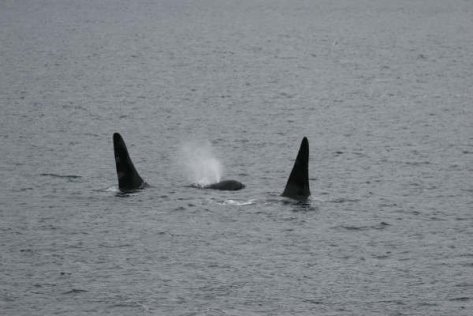
The raincoast, how I love it. From Vancouver Island up her spine of islands and into the shining face of the Alexander Archipelago, through southeast Alaska, following the march of the glaciers. And it is here that I pinball back and forth. From Hanson Island to southeast Alaska. Fjording fjords. Cruising past canals. Passing through passes. I could live a thousand years and never tire of exploring the silent coves and hidden secrets of this land, never camping in the same place twice, no two sunrises the same, each Orca encounter more enthralling and exhilarating than the last.

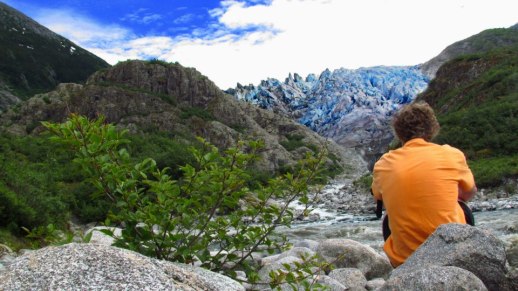
I love Alaska, I love British Columbia. For how can I refuse the chance to sit inches above the water and stare at the glacier’s that still stand guard at the headwaters of many an Alaskan fjord? And how can I ever turn away from the rich smell of cedar infused forest in the early morning light, the fog burning off of Blackfish Sound? The world becoming whole, feeling both old and new with each passing day.
8086_10151351163234852_1520975010_n
Early on in the winter we knew that six more months wouldn’t be enough. The glacier’s of our summer home beckon, our jobs as kayak guides await. But… what can I say? Hanson Island gets into your blood, syncs with your heart and spirit the way few places can. Can you love two places so fiercely you can’t live without either?

Early December, a rare calm day along the B.C coast. Brittney and I sit in the cabin, watching the sun struggle above the mountains of Vancouver Island. Before either of us open our mouths we know what the other will say. That two winters is not enough. That we need another winter with ears cocked to the speakers, waiting for the first whisper of an Orca’s voice. Another winter watching the deer trace the shoreline, sucking up every strand of kelp that washes ashore.
11008650_10155365472945858_1720255889708099310_o
“We’re so blessed,” Brittney says. “Our biggest problem is we can’t chose between the two places that we love.”

It’s true. For all our talk of buying property, settling down, being “normal,” Hanson Island doesn’t encourage normalcy. How can it? It’s founded on the tenants of faith in yourself, conviction, and passion. Pillars that don’t lead to nine to five jobs and mortgages in the suburbs. Every day I look out the window to where the lab stands on the rocks. I think of the time, the effort, the sacrifice, and risk that Paul, Helena, and countless others poured into this place. Out of a love for whales, for quiet places and open spaces, from a belief that man still can coexist with the world we seem determined to exterminate. To be a small piece in that, what a tremendous honor, to know these people not just as passing acquaintances, but as friends and mentors. It is this above all that pulls me back.

“I came for the place, I stayed for the people,” wrote Kim Heacox in The Only Kayak.

Ironically he was writing about Glacier Bay, the other place that pulls at our heartstrings. A place filled with beautiful people. A community defined by the bay, the Beatles, and bluegrass.
37367_467283714851_8103409_n
But we’re not ready to chose, not ready to force it. I want to drag myself out of bed at three in the morning because there’s Transients in Robson Bight. I want the tide and weather to determine when I go grocery shopping. I want to hear Paul’s smiling voice on the other end of the phone. When we walk away, we’ll never live like this again. Never have sea lions as neighbors, or have Harlequins knock on our front door. We are unique, we are blessed, we are insanely lucky.

Every day in the summer we’re asked the same question, “what do you do in the winter?”

And when we answer the follow up question is always the same, “what do you do there?”
292906_10151433415214852_720328661_n
How to explain that it is not what we do but why and for who we do it  that makes it so special. I watch the sun rise, listen to the ocean, talk to the trees, bond with the mink, and glorify the Orca. And above all, give thanks that I can have both places for another year.

Overcoming Doubt and Listening to Abbey (Not the Road)

It’s hard to imagine having a mid/early/late life crisis here. In a place where on any given morning the ocean turns sapphire, the forest yields every shade of green imaginable, and Orca’s call in the dead of night. But it happens. We’re reminded that our unconventional life is a societal outlier. 27-year old’s are supposed to have reliable mailing addresses. Maybe a mortgage and a baby room. Quaint, bustling, hard working, picturesque. It’s the American dream, the American way. At least it was until it wasn’t.

But this doesn’t stop us from considering that maybe we are doing this all wrong.  Seeds of doubt can germinate and grow quickly if we allow them to. Swimming upstream can be tiring. A writer? Who reads anymore? What makes you think that what flows from your mind and through your fingers will capture a world that would rather scroll Facebook than turn pages? This is all well and good, but shouldn’t you shelve the dream, move on, get a real job.

As an uninspiring “mentor” from my church going high school days told me, “you can’t ride the skateboard forever.” He admonished when I told him what I was doing with my life. “Have you ever seen a 60-year old on a skateboard? You’d think something was wrong with him.” Every now and than his voice gets in my head. My fingers tremble, my words seem trite, uninspiring. I pour another cup of coffee, sit with the Harlequins in the cove, take a deep breath, refocus.

Our fear and self doubt manifests itself in different ways. I bang my head against the writer’s block, Brittney scrolls through house plans. She looks at property, checks the bank account, shakes her head, and refreshes the Real Estate page. We have a target now, a landing strip. Gustavus, Alaska. 400 people, 400 moose, one life changing national park. Now if we could stop flying long enough to land. A body in motion stays in motion, one at rest stays at rest. After five years together, we’re still in motion. New Zealand, Juneau, Gustavus, Seattle, British Columbia. I love it. I’ve pushed past my fear, my self doubt, at least for now. Be a writer or starve to death trying. Brittney says she’s ready for the house. My little tumbleweed wants roots. I can’t blame her. Gustavus fits us as good as we do each other. A warm sweater on a crisp fall day.  I love sweaters, I’m wearing one right now. But at some point in the next hour I’ll want to take it off. I’m not ready to wear it forever.

I could have it all right now. The house, the mortgage, the lawn in need of trimming. But I wandered off that road a long time ago.

“Petroleum is Alaska’s present and future.” I was reminded throughout high school. The gateway to, if not fame, certainly fortune. On the backs of industrial giants, we will ride Alaska into an age of wealth and opportunity that we can only imagine. We’ll dig the spurs in deep, push her into a gallop. For nothing should stand in the way of growth, monetary opportunity. All this, I was told, could be mine.

“If you want to make money, live a comfortable existence, petroleum engineering is your best choice.” Grab a straw, stick it in the ground, suck that sweet nectar until it’s empty. Life, liberty, oil subsidies, and the pursuit of happiness.

 What if I don’t want a comfortable existence?

No one talked about what those that wanted to sit on the rocks and count Orca’s should do. Or if you loved the philosophy of fitting everything into one rusting Pathfinder that you prayed would start.  If it doesn’t fit? Give it away. You don’t need it. There was one definition of success, and it could be found in your bank statement.

Now? Oil is going for under $2 a gallon. The state is bankrupt, people panicking. The kids that grabbed their straws are realizing the glass is emptying fast. If the money disappears will they still enjoy what they do? I sincerely hope so. Will the industry rebound? Maybe, probably, I don’t know. Ask British Petroleum, Shell, or a state senator and they’ll say it has to. Alaska needs it, can’t live without it. The voice of the addict. Without oil, Alaska will be like Maine. A nice place to live but not a great place to make money.

As my friend (and writer) Kim Heacox says, “what’s wrong with that?”

I hold Brittney’s hand, squeeze it softly, pull the computer away from her. I know that look, know that fear, understand that desire to have a place to call home. She wants to build an apothecary, bring natural healing to Gustavus. She wants open mic nights, a vegetable garden, the slow bike race on the fourth of July. But she also wants Hanson Island, the open road, the freedom that we enjoy that we’re debt free. She admits she’s not ready to give that up yet. Maybe in a year or two, or three, or thirty. I want all those things too. But we can’t have both. Maybe if we invest those Permanent Fund checks our bankrupted state keeps giving us we can…

Not everyone is meant to live like this. That’s fine. That’s a relief. There aren’t enough Hanson Islands  or Gustavuses to go around. I ferried and drove to Orca Lab on the miracle of petroleum pulled from the ground and refined in a factory that pushes more carbon into the air than the globe has seen in millennia. Does that make me a hypocrite? Maybe, probably, I don’t know. Edward Abbey said the job of the freelance writer was to criticize and inspect the country in which he lived. Consider me his disciple, just trying to do what he expected. Good old Abbey. Doing what he loved until the very end. His buddies snuck him out of his death bed in the hospital he hated more than roads through national parks and let him say goodbye in the desert.

They inscribed on his tombstone: Edward Abbey. No comment. I like that.

Where do I want to say goodbye? Gustavus or Hanson Island? I can’t decide. Mercifully I don’t have to, and God willing, I won’t have to for a long time. We’ll see how far our skateboard carries us.

The Wolf

I am not a brave person. At least, I don’t consider myself one. I rarely feel bold, or filled with valor, or the innate desire to take risks, and stick my neck out. I get nervous walking through the woods in the dark, even here, where there’s been exactly one bear sighting in decades. My imagination, which is often my ally betrays me in these moments. I feel the hair rise on my neck, the goosebumps spread across my body, a spasm of fear running down my legs.

I don’t believe in spirits floating among the living. At least, I think I don’t. But the lab is built on the same ground that was once a Namgis summer camp. A small grave was found in the rocks, somewhere near here, the body of a young girl entombed within. That’s what Walrus says. I never asked him where the grave was. I don’t want to know. But it’s much easier to believe in restless spirits, the thrill of the supernatural, the magnification of fear when the dark surrounds you with creaking and swaying trees. Glowing eyes in the dark. Deer, they have to be deer. But what if they aren’t?

The water’s rough. The waves roll up on themselves, ringed with foam and frothy white caps like pearls on a necklace. Rain falls as a fine mist. In our tiny boat, the waves roll by at eye level, the boat pitching over the crest and through the trough of each swell. Up and down the hills, again and again. Why does it seem like we’re always going into the wind? The water is deep, churning, cold, dark. This seems like a lot of work to go through to run a generator. But such is our assignment today. To cross Blackney Pass for Cracroft Island. To add the magic of unleaded gasoline to help us maintain power at the lab.

It’s the same body of water we were crossing when the boat engine died a few weeks ago. And for an hour we were at her mercy. Enough to make you think twice when the land fades away off the starboard side and you begin the mile wide crossing. I’d be lying if I said it wasn’t in the back of my mind, with the waves growing and the ocean soaking our windshield. No boldness or valor or bravery here. Loyalty and dedication maybe. I’m more Hufflepuff than Gryffindor.

What would it be like if we lost the engine here? If the boat filled with water? If we had to jump clear, life jackets clinging grimly to our necks? To come face to face with our greatest fear? I’ve never had a near death experience. At least not that I remember, and I’d like to think I would. How terrible and thrilling, to come face to face with my own mortality. Would I be cognizant of my final breath? Aware that it was the last one this body would ever draw for me? Would I watch this grim physical home for my soul drift into the depths as I floated above, great wings growing out my shoulders? Or does everything just go blank? A reel of film that’s reached its end, spinning pointlessly on its spools.

But today is not that day. Across Blackney Pass. In the shadow of Cracroft Island, the water is calm, a soothing emerald color. It’s far too rough to land on the rocks by the shelter. So we motor into a quiet cove on the opposite side, out of the wind. Was it really just a year ago that we blazed this trail? Just me, Paul, a couple of hacksaws, and a general idea of what direction to bushwack. By some miracle our zigs and zags led us straight to the CP shelter. We climb onto the bow and tie the boat to a massive log draped across the rocks.

I step into the woods and stop. I’m not alone. Something lays on the ground at my feet. A jigsaw of vertebrae and ribs and fur. It’s been dead awhile, the body barely recognizable. The skull lays just off to the side, neatly picked clean as if it were a name tag, identifying the creature to which it had belonged.

“There’s a carcass in here!” I shout.

Brittney shoves the ferns aside and stops next to me, mouth agape. The smell wrinkles our noses, but neither of us step back. For a long while we simply stare, a silent vigil, disturbers of the animal’s peaceful sleep.

“What is it?” Brittney asks. She’s kneeling near the clump of fur and vertebrae, awestruck. She’s neither squeamish nor disgusted but fascinated. Even in death, her compassion for things furry continues.

I break off a stick and flip the skull over to reveal the jaw. The mandibles and lower jaw bones are gone, but the unmistakable canines of a predator remain. We let out silent gasps.

The wind rattles the tree tops. It’s going to get worse out here before it gets better. I leave Brittney with the departed, and vanish into the woods. The whole way to and from the shelter, I think of nothing but the creature. I’d never seen anything like it, on the day that I’m contemplating my own mortality. It can’t be a coincidence.

I return to find that Brittney hasn’t moved. It was a wolf pup she announces with conviction. I agree. What else has teeth and claws like this? We sit in silence, my mind trying to put the wolf back together.

“How do you think it died?” Brittney asks.

Like the girl’s tomb, I don’t want to know. The ocean is not twenty-feet away. Is it possible that one of my own species is responsible for this? Was this cub the victim of some human’s potshot with a rifle? A vigilante dedicated to predator control? Maybe that’s unfair, but I can’t think of any explanation for how he chose right here to lay down and die. We leave him where he lays, to continue his noble work of returning to the soil, feeding the web of life around him. A sacrifice that won’t go unnoticed.

One more stop. Parson Island. The water has settled a bit while we were in the woods. And the journey across Baronet Passage is a calm one. I disappear into the woods and up the hill, one more generator to go. My mind returns to the wolf cub and I feel pity for the little creature, that his life was taken so early. I pray he died right, with honor, dignity. Perhaps he just didn’t want to be a wolf anymore. Was ready to be something bigger than himself. Isn’t that what I want? What we all want? For what is more fulfilling than giving of ourselves to something bigger. To make the world a better place.

The land where the wolf lays resting was clearcut some thirty years ago. The land stripped. Every. Single. Tree. No more squirrels, no more birds. No wolves. No cougars. No life. No character. But the land is recovering, like it always does. And will flourish with magnificent old Cedar trees again, if we allow it. Maybe all he wanted was to speed up the process. Infuse the earth with his carbon and nitrogen, accelerate the growth of those great trees so that the generations to come can run and hunt and howl beneath their great branches.

I reach the cliff. From here I can see past Cracroft Island and into Johnstone Strait, up into Baronet Passage, out into Blackfish Sound and Queen Charlotte Strait. Pristine silence. Quiet places. Open spaces. The little cove on Cracroft is indistinguishable. The wolf’s resting place invisible, his sacrifice anonymous from here. But I know. Brittney knows. The tree’s know. Sometimes the greatest sacrifice is the one not recognized.

I say a little prayer before I pour gasoline into the generator. Before the war cry of my species infects the land.

“Thank you,” I say, my voice drifting across the water. “For making this world a better place, for reminding me of what is good and pure and wild. For infusing the earth with your spirit. I hope to leave this place better than I found it too.”

I bend over and pull the cord. The generator roars to life. Without a backwards glance I turn and vanish into the woods. The Cedar and Salal covers my tracks. The growl of the generator echoes in my ears.

A Summer Sampling

The wind roars so hard the windows creak and strain against their frames. Rain pelts the walls so hard it sounds like someone is hurling handfuls of pebbles at them. Every few minutes we can hear a dull thud, first on one side of the cabin, than the other. I’ve never heard anything like it before, and I’m not feeling brave enough to go out and investigate. I’ll chalk it up to an ornery log refusing to settle on the rocks. By the time we crawl beneath the blankets—the cat nestled as he always is on Brittney’s pillow—the storm has reached a crescendo.
Periodically throughout the night we rise and feel our way down the dark stairs to the living room. Penny’s house is nestled in a corner, a blanket thrown over the top to insulate her. We’re not sure how cold is too cold for a rabbit, so we throw wood on the fire periodically throughout the night to keep it comfortable. She barely moves as I poke my fingers through the bars and rub the soft spot between her ears. She opens one eye indignantly, her pupil reflecting the dancing flames behind us.
“Sorry,” I whisper, and creep back up the stairs, under the blankets, and into the warmth.
By the time the first tendrils of dawn are creeping above the mountain’s of Vancouver Island, the storm has exhausted itself. The tree branches tremble in a weary sort of way, the ocean placid and innocent. All it takes is a few hours to go from 45 knots to five, the low pressure system skidding to a halt.
I open the front door. The air feels surprisingly warm on my face. The life of the island looks out cautiously. A cluster of Harlequin ducks emerge around the point, bobbing on the tiny ocean ripples. They’re spunky little things, but where they go when the ocean roars like a lion is beyond me. But every morning, here they are, wholly unimpressed with the storm.
Out of the woods steps a deer. It’s not just any deer. This is Frodo, and he’s the most social of his kind I’ve ever met. Our porch overlooks a little cove, and Frodo has taken to trolling back and forth along it on every low tide. He’s scavenging for kelp fronds, and as he hears the boards creek he looks up. His expression is benign, a piece of kelp hanging ridiculously out the side of his mouth, looking at me. Every other deer I’ve encountered would turn and run at my approach. But Frodo moves casually toward the porch, nose glued to the rocks, sniffing for breakfast.
We have our morning routine down to a science. Feed the pets, brew coffee, drink coffee/ Brew more coffee. But this morning as we pull open the curtains and look over Blackney Pass, something feels different. The sun burns off a thin layer of clouds, and light floods the living room. And for the first time in months, the fingers of sun feel warm. This is not the biting cold of an easterly outflow that clears the skies and buries the mercury. This feels good. And we walk out onto the deck near the lab where the late morning sun heats the porch and turns the cove emerald.
It’s the first sign of Spring, and we stand dumbly for a few moments, soaking up the warmth. Even the building afternoon breeze feels welcoming, and we exercise outside for the first time since last summer. Porter watches with a concerned look on his face. What could possess them to behave in such ridiculous fashion?
We move about in shorts for the afternoon, the sun beating down on the solar panels, the generator quiet for the first time in days. It’s days like this where nothing beats Hanson Island. The cove swollen with Harlequins, deer, and harbor seals. The salt air filled with the arguments of sea lions, the debates of eagles, the giggles of gulls.
But it’s still January, and as the sun disappears in the late afternoon the wind intensifies. The temperature drops, and we cut up another round of cedar, because the temperature in the cabin has dropped several degrees in just an hour. Soon the wind is shaking the windows again, the night air cold and biting. Regularly scheduled programming. We load the wood stove and Brittney gets the tea kettle whistling. Summer may be getting closer, but winter’s not done with us yet.

Here We Go Again

A couple of summer’s ago Brittney was in Seattle when she and a couple of friends stopped in a sushi restaurant for lunch. One of her friend’s asked the waitress before ordering if the salmon roll was made from farmed or wild salmon.

“Oh it’s farmed,” said the waitress without a sliver of embarrassment, “but that’s good because it doesn’t have any of the toxins or parasites of wild fish.”

You can’t make this stuff up. Nobody ordered the salmon.

It’s incredible that in an age where virtually every question can be answered by a piece of metal that fits in our pocket, we remain so uninformed, so ignorant, using the power of wi-fi for cat videos and time lapsed food recipes.

And while I’m sure the server was just trying to say what she thought Brittney and her friends wanted to hear. The farmed fish propaganda was far from true. Quite the opposite actually.

Since their arrival in the water’s off Vancouver Island in the early 80s, the salmon farm industry has been cloaked in a web of controversy, cover ups, and deceit. Fish farmers swore that with their technology, that the farmed Atlantic salmon could not escape.

They did.

When fisherman began to find Atlantic salmon in their nets, the industry promised that they could not procreate in the wild.

They did. The more aggressive Atlantic salmon rooting out their native Pacific brethren from their already threatened streams.

The location of the pens near estuaries has led to a decades long fight to bring attention to sea lice. These sea lice, while relatively benign to fully grown fish, latch on to young, defenseless salmon fry and have threatened the livelihood of several Pink salmon stocks.

The latest news from those on the front line is perhaps the most disturbing of all. A virus that decimated the farmed salmon industry in Chile back in 2007 has been found in both farmed and wild salmon along the B.C coast.

The good news is the whistle blower, biologist Alexandra Morton uncovered the virus early. “We never found the whole virus, just pieces of it,” she reported to the CBC. One reason for this though is the closed door policy of the farmed fish industry. A closed door and hush hush policy is never an indicator of respectable or ethical practices. There’s a reason slaughter houses run off anyone with a camera. Morton and her team were able to take samples from “healthy” farmed salmon, usually ones that were already on the market. Potentially sick or diseased salmon that could be in the pens as we speak are hidden from sight.

The fish farm industry’s silence in damning enough evidence and the latest in a line of embarrassing failures in which the Canadian government has looked the other way. No criminal charges were filed against Imperial Metal’s, the company responsible for the burst Mount Polley dam in August of 2014 https://raincoastwanderings.com/2015/03/07/worth-so-much-more/.

In fact, Imperial Metal’s is now refilling the site of the burst dam. That’s what happens when you “donate” $234,000 to B.C Liberals. Remind me of this the next time I complain about America’s corrupt political system.

“What evil, thieving people,” we say. We shake our fist and…. what? We go back to our cat videos, we look out the window and the world looks the same. A storm rages right now in Blackney Pass and shakes the window. If there is a deadly salmon virus rolling along the flooding tide right now, it’s not giving itself away. What will it take for change? Will we wait until it’s too late? Until wild salmon are nothing but a myth? Our grandchildren wondering if they ever really existed?

Let’s not let that happen. Boycott farmed salmon, hell, boycott the stores that sell farmed salmon. Take away the demand, destroy the supply. And speak up. Let Justin Trudeau and the Liberal Party know that what is happening in the water’s off B.C is bullshit. That no profit is worth the potential death of an entire ecosystem. Do it now, before you leave your computer, before your busy day continues and it slips from your mind. Let’s stand with Alex Morton and the tireless watch dogs that have been battling this for years. Write to the Liberal Party here: https://www.liberal.ca/contact/

To my American and global readers remember, the ocean is not a closed system. A pandemic doesn’t care about international boundaries, the distance from B.C to the southeast panhandle is not  great. If it breaks out here, there’s no reason that it can’t travel north, south, east, west. We must stop caring about just ourselves and what is happening just in our backyard. The natural resources of this planet belong to all of us. And when one stock is threatened, we are all threatened.

We are a race that has cut ourselves off from the natural world. But we are not above it. We are, in the end, at its mercy. We cannot survive without it.

Photo from: http://alexandramorton.typepad.com/.a/6a0120a56ab882970c01a73d74643c970d-pi6a0120a56ab882970c01a73d74643c970d

Born too Late

One of my favorite TV shows is Futurama. It’s a weird,  stupid cartoon in which a slacker named Fry is cryogenically frozen in the year 2000 only to be unfrozen a thousand years later. He awakes to find that one eyed (and curvy)  female aliens and beer drinking robots are part of normal every day life.

In one episode Fry, his distant relative, a mad scientist named Professor Farnsworth (just go with it) and the beer drinking, fire belching robot go back in time. Like all TV shows, the plot and setting  completely reset by the end of the half hour run time with the exception that the professor stopped briefly in the year 1939 so that he can assassinate Hitler with a massive ray gun.

Isolated and surrounded by a forest hundreds and in some cases thousands of years old, the land here can feel as if it’s been frozen like Fry and we’re able to glance back in time by simply walking through the forest and counting the rings on fallen trees.

But it’s not static. Nothing is. There is no climax community where, if left undisturbed it will stand immaculate forever.

I often find myself obsessed with how the land and wildlife looked thirty years ago, a hundred years ago, a millennium, an epoch ago. So I scour the books and testimonies of those that have come before me. Offhand comments like one by Paul a couple months ago send my imagination into overdrive.

“There used to be a hotel on Parson Island,” he says offhandedly. “This place used to have a much denser population.”

No way. I stare up at the cliffs that form the southern border of Parson Island and try to imagine it dotted with buildings. The absurd image of a 30 story Hilton plays before my mind. Communities in Freshwater Bay, fish buying companies in every cove, hand loggers determinedly probing through the inlets looking for something bigger.

One of these men was Billy Procter. He’s something of a legend. Our Gandolf or Obi-Wan Kenobi if you’d prefer. He grew up in Freshwater Bay, a little indention in Swanson Island a five minute boat ride from where Orca Lab now sits. Of course in the 1920s there was no Orca Lab. No whale watching industry, Orca’s nothing more than competition for fish. For it was fish that pumped the blood of the north island and Billy talks endlessly of massive runs of salmon. So thick on the flooding tide that the air was inundated with their odor.

“The Blackfish used to follow them through Blackfish Sound in numbers so thick you could walk across there backs,” he relayed to Alexandra Morton.

It’s these phrases that make me yearn for a different time. “The good old days” as it were. When a 2 HP engine was nothing short of a miracle, and fishing was as easy as dropping a line in the water and jigging for a few minutes. Before clear cuts and climate change, before fishing stocks plummeted or tugs chugged in an endless relay up and down the strait.

“I was born too late,” I think, setting down Billy and Alex’s book, Heart of the Raincoast.

I want to see that sort of abundance. I want to fish, can, and gather my way to an existence. I want to live in a float house and tow it up and down Knight Inlet.

In the 70’s Erich Hoyt and two other filmmakers sailed up Johnstone Strait and settled in Robson Bight, spending the summer tracing the loving shorelines of Cracroft, Vancouver, and Hanson, following the whales. No rules, no regulations, no cares. I was born too late. They were camping in the bight, documenting the rubbing beaches for the first time. Rubbing shoulders with the parade of scientists who rewrote the book on the “savage killer whale” and helped us see them the way we do.

I want to dive off the rubbing beaches, follow an orca pod in my kayak with no boats blitzing past me at 30 knots. I want to ride the ebb out Blackfish and the flood through Weynton. I want the good old days. I want to steal Futurama’s time machine and sit on the rocks at the feet of an old growth forest that has never been cut. I’ll even agree to take out Hitler on my way.

No I don’t.

Because no one talks about the “bad old days.” No one dwells on the fact that everything that ate fish had a bounty on it sixty years ago. 2 bucks for a seal’s flippers, a dollar for a Raven’s beak or an eagle’s talons. That there’s a reason that the salmon don’t run so thick you can smell them followed by Blackfish that form a bridge across the sound. That the slow curve downward began somewhere.

Or that the 70’s were filled with the live capture trade for Orca’s and the cold blooded murder of several others. That there’s a reason that the beaches and bight are closed, that the minimum distance is 100 meters. That today we live with the decisions made during those days that were neither good nor old.

So I go to ask the one soul on this island that’s lived in it for a millennium. I walk to Grandma Cedar whose cedar boughs have seen it all. Has watched the salmon come and go, the glacier’s charge and retreat, and a lab be built at her feet.

Does she miss the good old days? The bad old days?

I stare up at her, my neck craning, trying to make out the branches that originate a hundred feet above me. But she is centered in the here and now. Focused on the simple task of taking the miracle of sunlight and carbon dioxide and turning it into oxygen. Perhaps if all she’s thinking about is today I should be too.

Maybe it’s one thing to read and admire history and another to yearn for a world I know virtually nothing about. One thing to devour old black and white photos and dig for artifacts on the shoreline and another to feel as if it will never be that good again. To let go of a history I can’t even begin to understand or control, and look to a future I can. You can keep your time machine Professor.

Cover photo credit: BC Archives. Freshwater Bay C.A 1916.


Finding Light

Brittney has a great capacity for love. This compassion stretches deep through the animal kingdom. Every feather, every ball of fluff. Whether they have no legs, four legs, or eight legs, she cares for them all. A couple years ago she stopped killing spiders (or more accurately having me kill spiders) and insisted that they be relocated outside. Her fear of our wall climbing, web spinning roommates was no justification for murder. She still scrolls through the Juneau Humane Society website, cooing over ever whiskered face while our cat Porter looks at her with a betrayed look on his face.

Factory farming, greyhound racing, the egg industry, and of course, captivity all have room for remorse in her heart. And while many would turn their head, or acknowledge their plight and move on, Brittney doesn’t seem capable of that. She won’t rest until every “fur baby” is safe, happy, healthy.
10329311_10152867795949852_7120445375934915455_n
“Do you think they know that there’s people in the world that care? She asks as she fills out another petition to abolish greyhound racing. That there are people trying to help them?”

“I hope they do,” I say. Though I don’t know how they can.
I look at the picture on the screen, a greyhound with dark empty eyes alone in a crate, it’s head resting on a beam. It looks defeated. I feel sadness when I see this, but anger is my primary emotion. Anger and disgust. At the greed of man. Our selfishness. At the lengths we will go for profit. Our obsession and worship for the man made ideal, money. Somehow it’s become the measuring stick for our species. We’ll obliterate whatever is in our way to obtain it. Greyhounds, orcas, the very world we live in. How is it that we’ve forgotten that we cannot live without the natural world we insist on pillaging? Infinite growth in a finite world. Not the American dream, but the global fantasy.

I look back down at the picture, my mind returning to the present. The knot in my chest tightens, my heart rate increases. How could man look at this and not be enraged? Yet here is the proof that ambivalence lives.

It’s another storm ridden night at the lab. Similar Paul points out, to the night Corky was captured. It was a wave capped, howling winter gale when her family innocently swam into Pender Harbour and had their life change forever. In the name of corporate gain and human entertainment. How can we look at ourselves in the mirror?

Do you think they know that there’s people in the world that care?

Corky seems to. Why else would she withstand this torture, humiliation, and pain for so long? Does she believe there are others beside the ignorant masses that stand on the other side of the glass and snap photos with their camera phones?

“Corky’s plight makes me sad,” says Brittney, “but I feel more impassioned by factory farming, by animal testing. There’s millions of animals that die inhumanely, that live terrible lives. It’s 2015, but we’re more barbaric than ever.”

“Look what we do to our own species.” I answer, “we can’t stop murdering each other and we’re asking that same species to have compassion for other animals?”

Yet this is where we are. I pour whiskey over ice and settle on the couch. Here I am, in the middle of the natural world, and I can’t escape. ISIS, immigration, Donald Trump, SeaWorld, climate change. Running to the woods won’t make them go away.

“It’s important,” I remind Brittney, “not to get bogged down in the negative.” I’m reminding her as much as myself. “Our media, our world feeds off of negativity. It gets clicks, draws traffic in a way that heart warming, positive stories don’t. Seek these out, hang on to them. Celebrate the victories, the joy, the beauty. Because it is there. Even in darkness there is always some light.”
537318_10152372664114852_545974904_n
The chainsaw roars. I follow the ebbing tide down the beach, accepting the sacrifice of a massive Fir tree. It’s a beautiful piece of wood, undoubtedly an escapee from a passing barge. It didn’t deserve to be cut, but at least its death won’t be in vain. The sharpened teeth on the saw litters the rocks with wood shavings as I cut into the sweet smelling wood.

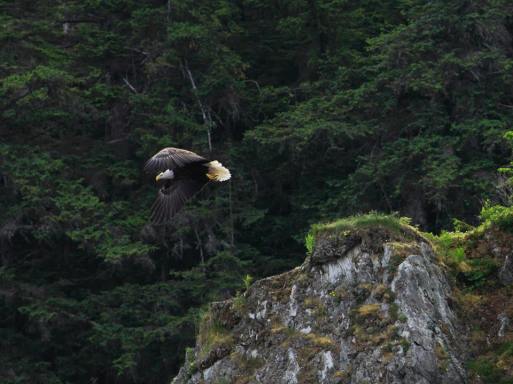
At the end of the log I stand and stretch the ache in my back, looking over Blackney Pass, over paradise. I drop the chainsaw and feel my heart lift. Blackney teems with life. Hundreds of gulls swarm a fifty yard patch of ocean in numbers so thick they look like a great feathered cloud. The bait ball has not gone unnoticed. An armada of eagles roar in from the trees, great black wings punctuating the ball of white. I count at least thirty eagles, shuttling back and forth between the trees near the cabin and the ocean. Again and again they swarm overhead, the silvery flashes of sand lance clasped tightly in their talons. Life, sustenance.
10540_10152009960619852_192033272_n
Brittney and I fall under their trance, the log lays forgotten at my feet. A lump rises in my throat. Why does this feeding frenzy have tears coming to my eyes? Because after everything the land has endured. Clear cutting, fish farms, live captures, predator control. They’re still here. The orca’s are still here. Is the world perfect? No. But here is a victory, here is joy. Here is a chance to celebrate.

“Do you know what I see?” I ask pointing out at the surging biomass before us.

Brittney looks at me, her eyes softened, the light glowing in her pupils.

“Hope.”


My Life as an Orca DJ

It starts with dolphins. They giggle like jackals, punctuated by the dull thuds of their echolocation. I shut my eyes and let the sounds of dolphins, crashing waves, and 30 knot winds rock me back to sleep. Moments later my eyes open. I sit up, Brittney’s feet swing out of the bed. The dolphins aren’t alone. The hee-haw of a donkey floats through the speaker that sits on the shelf just above our bed. G clan’s back.

1917778_229391884851_28180_n
“My turn,” Brittney mutters like the mother of a new born and staggers down the stairs, out the door, and to the lab. Moments later her voice comes out of the speaker as she begins the recording, mixing with the sounds of swirling water and cackling dolphins.

“This is Brittney, this is Hanson Island 2015, digital recording number…” my head hits the pillow and I drift away.

For the next few hours I fade in and out, coming to just long enough to see Brittney isn’t back and that the whales are still calling. They’re faint, maddeningly faint, but there. Three hours after they first pulled Brittney from the bed I rise. It’s a moonless December night with the clouds building for another low front, 7 am and still pitch black.

Brittney takes little convincing to go back to bed. She’s been at it since four and the whales seem to have barely moved. Their voices still distant in Johnstone Strait, at the limits of the Critical Point hydrophone. What compelled them to sit in one place and talk about it for so long? I wrap my sweater around me and feel the lab vibrate as another gust hits the south facing windows. I wipe the sleep from my eyes and brace myself as another tug rolls into range. The sound grows to a deafening roar, the orca’s voices extinguished. Feeling guilty I pull the headphones off and rub the headache emerging from my temple. If only they had such luxury.

The tug moves on and they’re still there. G clan somebody. I31s perhaps? Even Paul and Helena can’t say for sure. These late nights remind me of summer. When late night recording sessions were the norm rather than the exception. It’s warmer in July though. And the sun’s there to keep you company starting at about four in the morning. I am the night shift orca DJ, playing the hits of the A, G, and R clan on 92.1 the WHALE.

At long last the darkness lightens a shade, the whales almost inaudible, Vancouver Island distinguishable as a darker shade of black against a slowly lightening sky. The sun finds a gap and a splash of color transforms the world from black and grey. It’s all worth it. The water and mountains light up like ta water color and the orca’s go quiet. Maybe they too are watching the sun rise.

The sunrise doesn’t last long, extinguished by another fog bank rolling in. Waves topped with whitecaps intensify, the rain strikes like pebbles. Twenty minutes with no calls, than twenty-five, thirty, are they gone? A couple summers ago the A36s played a horrible trick on me, sitting silent in Robson Bight until I would end the recording before letting out a whispered giggle, letting me know that they were still awake and I should be too.
The I31s don’t have their sense of humor though. I end the recording and walk back to the cabin. The tree tops swirl and the waves thunder into the rocks twenty feet away on the high tide. My job, my office, my life. And to think a few years ago I was ready to work in a lab, studying herring bioenergetics. Let someone else wear the labcoat. I’ll go to the office in slippers and flannel.

When The Storm Breaks

The weather breaks. The sun tears through the cloud curtain. First a lone ray of light strikes Parson Island, than another, and another as like fingers thousands of miles long, they creep across Blackney Pass until they fall on our windows. The aftermath of a 50 knot storm. Porter sticks his whiskered nose out the door. He’s suspicious and disgruntled after being confined to the cabin for two days as rain pelted the windows and the walls rattled.
We step onto a beach littered with logs washed ashore in the night. Fir bark, affectionately known as “fishermen’s coal” punctuates severed trunks of cedar and spruce. We pile the bark greedily in our arms. In a few days they would dry and capable of supercharging the fire at night when temperatures are dropping below freezing.
The bark drying on the sheltered picnic table near the cabin, I grab an ax and send splinters of wood flying. Heating by wood stove offers the luxury of warming you up twice. Once when you cut it, and again when you burn it.
I used to take heat for granted. Why wouldn’t you when for 25-years all you had to do was turn a knob, flip a switch and be rewarded with steamy warm air emitting from the magical grate in the floor? That heat, that energy had to come from somewhere. Coal? Hydropower? A wizard in the wall? I couldn’t tell you. But here I’m intimately connected to where my heat comes from, my electricity. Sunshine means the computers charge, the hydrophones switch on, Netflix is operational.
Too many cloudy days and we pay the price. Hydrophones flicker, cycle, and scream in their static voices until we turn them down. To keep the lights glowing and Orca Live streaming we turn to the massive red monstrosity in the shed. The generator, good old unleaded gasoline and 10W30 motor oil. As the unprecedented climate change intensifies, there’s a sensation of guilt each time I pull the choke, turn the key, and see pale white exhaust shoot into the atmosphere. At least I know where it’s coming from I guess. Thankfully, on sunny days, the generator sits unused, ignored. For what can be more renewable and reliable than those rays of sun beating down from above?
“When we know where our food, our energy comes from,” says Zachary Brown, founder of the Inian Island Institute in Alaska, “we no longer take them for granted. When we have an intimate connection to these commodities, we pay attention.”
Food for us is a different story. Banana’s from Belize, avocado’s from Mexico. At least the Kokanee and apple’s are Canadian. We do what we can. We grow kale, collard greens, and potatoes that are waiting patiently for Thanksgiving. It’s no different in the summer when we live in a town of 400 in southeast Alaska. A town with an award winning recycling program, where people have gardens instead of lawns, and avocado’s cost 5 bucks apiece. Avocados that arrive on the same barges that I shake my fist at in the winter time as the plod past the lab, filling the hydrophones with their roar, the air with their exhaust.
What’s the answer? What’s enough? Are my bananas and avocados ethically harvested? I’m vegetarian but should I be vegan? Maybe I should just eat the salal that grows between the cabin and the ocean.
Brittney used to agonize like this when she was in school. She’d come home from another humanities class: People and Plastics and Animal Rights courses. Nestle stealing groundwater, animals testing on rabbits, a fresh water crisis, orcas in captivity, taps running dry, corn fed factory farms. What to do, how to promote change, progress.
We aren’t superman. We can’t fight all of this. Instead we must select those injustices, those policies and acts that raise the hair on our neck. That quicken our pulse, that pull at our conscience. Whether it’s animal rights, oil pipelines, alternative energy, letting Corky come home, Syrian refugees. We must pick our battles, our medium for fighting them, and go to work.
Deep in the woods of Hanson Island lives a man. An anthropologist, a writer, an activist, a hero. He calls himself Walrus. As the forests of north Vancouver Island were leveled by the chainsaw, he took a stand by sitting down. He seated himself on a logging road that wound into the heart of Hanson Island, of Yukusam, and could not be moved. This was his fight, his passion. He won. He lives in a cabin now at the site of his barricade. “The longest active logging blockade in British Columbia,” he says.
This is the life of the activist. It’s Rachel Carson typing out Silent Spring as cancer ate at her because someone had to write it, Paul Spong camping in front of the Vancouver Aquarium, insisting that Skana go home, Michale Pollen and Food Inc, Marches for Lolita, Will Allen perfecting urban farming. Different people, different passions, huge change. May we someday be counted among them.

The Parson Island Relay

The breath catches in my chest, my legs wobble, and my arms shake. I try to take another step forward and feel the ground slide beneath me. Mud and its ally gravity pull me to the ground. My elbows bounce off the cedar boughs and spruce branches that carpet the hillside, my head bangs against the cardboard box in my arms. I groan and lay motionless for a moment, grateful that no one but the trees and squirrels were present to see my fall. The sound of a humpback surfacing floats through the trees from Blackney Pass 100 feet away. I roll over and look up at the tops of the trees, massaging my chin and wiping sweat from forehead.

For the last twenty minutes I’ve been participating in a maniacal relay. In the six cardboard boxes are batteries. Batteries that are getting heavier every time I pick them up. Between the soothing breaths of the humpback and my more labored ones, I’ve developed a rhythm. Fifty steps. Drop. Return. Grab the next. Fifty steps. Drop. Return.

Paul and I had unloaded the batteries on Parson Island, the island across Blackney Pass from Hanson Island and OrcaLab. Now he’s scurrying back to the lab to grab Brittney to monitor the boat as the tide falls. Free us to  move the tedious batteries up to the Parson Island camera site. As we move the batteries into the woods we’re already panting, sweating, and shedding our wool sweaters. It’s a quarter mile to the camera site, most of it uphill.

“They say,” Paul gasps, “that battery technology has really improved the last few years…” he weighs the battery in his hands, “I don’t feel a difference.”

I have to agree. I could wait for Paul to get back so we can carry the batteries up the hillside together. But I’ve never been patient.

Which is why I’m laying on my back, staring up at the treetops, letting the remnants of last nights rain fall from the needles and onto my face. Despite the burning in my legs and the distance still to go, it’s impossible to not be moved by the sublimity of the scene. An eagle chitters and the humpback explodes to the surface again, its breath sounding like a trumpet, the echoes bouncing off the rock cliffs. I smile and permit my eyes to close for just a moment, feel my spirit sink into the forest floor. I could lay here forever.

“Everyone deserves to see this.”

Which is coincidentally, why I’m here in the first place. The new camera atop the Parson Island cliff demands more power than the eight Kirkland brand car batteries can provide in the winter when the sun disappears for days on end. The batteries in my arms should help the camera stream throughout the winter with minimal help from the balky generator stashed under tarps and rocks.

Fifteen minutes later, the batteries are at the top of the hill. The sound of an engine floats across the water, Paul’s back. We relay the batteries together. Past a thicket of Salal and around Cedar trees. The sunlight moves through the forest, the only marker of time as the afternoon wears on.

“After scurrying over rocks, hauling batteries up hills, and everything else you make me do,” I say, “I’ll never be able to have a real, respectable job… thank you”

He laughs and claps me on the shoulder, “come on boy, no rest for the wicked. And apparently,” he lifts another battery into the rubbermaid tub we’re using as a sling, “we are really wicked people.”

As we work the humpback continues to trace the Parson shore line. It’s surfacings the perfect background music. Soothing and relaxing to counteract our labored breathing as the relay continues. Finally we break through the salal bushes and onto the cliff overlooking Blackney Pass. The water has become a mirror. I don’t think I’ve ever seen it so calm, like liquid glass gently vibrating. I can hear the mutterings of murre’s. Random rays of sun stab through the clouds like knives and illuminate the gentle rain that has begun to fall. I’m struck dumb by the beauty. How can this not change people? We unpack the batteries and begin to hook them up. Maybe this camera will.

Thirty minutes later the job is done. With our arms full of soggy and decomposing cardboard we move back down the hill. I know this trail far too well now. Walking it twelve times will do that. We board the boat and disturb that perfect stretch of water. The humpbacks have moved away from Parson Island toward Johnstone Strait. Any day now they’ll swim east down the strait and set course for Hawaii. Leaving us with the sea lions and harbor seals for company.

We leap neatly from the boat and onto the rocks and look out over the water. Brittney gasps. An incredible rainbow has sprung into being. As Paul motors away back toward Alert Bay he slow the boat, his phone extended through the window, photographing the picturesque scene. Even after forty some years it’s still not old to him.

I sit down on the rocks and drink it in. This. This is what makes me happy, fulfilled. Hauling batteries through the woods, humpbacks in my office. Porter gives a soft meow and jogs up beside me, rubbing his face against my arm. My hand goes to my forehead and I feel the dried sweat glued to my skin. Now if only I could find some hot running water around here for a quick shower.