Tag Archives: Vancouver Island

Sights and Smells

I wonder what’s different.

The transportation for one. Greyhound no longer brings their gargantuan buses this far up Vancouver Island, and as we careen down the narrow two-lane road with six inches of shoulder, I can see why. The playlist blasting in my ears has changed, though I brought back some classics like Death Cab for Cuties’ Bixby Canyon Bridge and Snow Patrol’s Make This Go on Forever.

A myriad of greenery blurs outside the window. I watch these forests differently, too. Oh, my heart still flutters at the boughs of red cedar hiding secret pathways to 6,000-foot peaks. But I also see acres of young hemlocks scrunched together like matchsticks in neat little packages. Phrases like “stem exclusion” and “30-year harvest cycles” whisper with sullen voices. Countless watersheds line the east side of Vancouver, but the Tsitika River I just rumbled past is the only one that hasn’t been logged. Tsitiaka winds through the tallest mountains on the Island and reaches saltwater at a little place called Robson Bight.

Orcas. It always comes back to orcas.

For two days, I have ferried, flown, and ridden from Gustavus to Juneau to Seattle to Victoria and am now just an hour from Port McNeil. Despite my evolving playlist and old-growth forest opinions, it still feels impossible that my first trip to Port McNeil was 17 years ago. Surely it was just a couple of weeks ago that I hopped off the Greyhound. Wasn’t it last weekend that I drove a Nissan Pathfinder up this road with a cat and rabbit in the back seat?

These roads, islands, and waterways hold a lot of the stories and experiences that explain the evolution from basketball boy to kayaker, guide, naturalist, bum, redneck-hippy, writer, conservationist, and whale aficionado. I’m counting on it providing a few more.  

Ferried. Flown. Ridden.

I count the number of petroleum-driven vehicles that propelled me from Gustavus to the footsteps of Port McNeil, Johnstone Strait, and my precious Hanson Island. All to go on one more monkish retreat in the woods and waters of my youth. All to catch one more ride on a boat powered by an outboard motor or go paddling in a kayak made of, you guessed it, fossil fuels.

Too small to tip elections in favor of Mother Earth, I run to my favorite hiding place, sheltered by, you guessed it, Mother Earth.

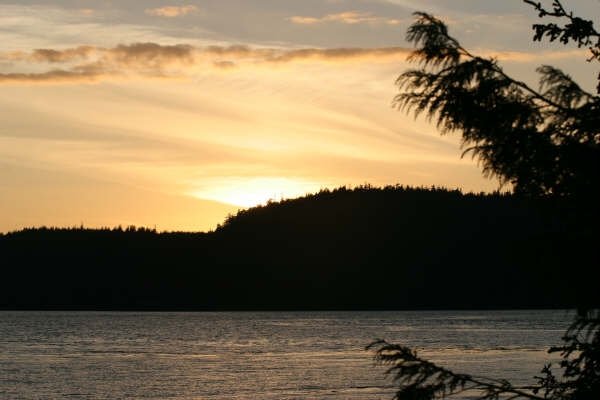
Blackfish Sound

If the trees are passing judgment on my life choices, they keep it to themselves. If those replanted hemlocks are packed like matchsticks, what happens if one of them lights? I woke to the news that California was burning during the wet season.  A world getting drier, warmer, crazier, more unpredictable. Surely, it would be the earthquakes that doomed southern California. We beat San Andreas Fault to the punch.

***

Don’t cry. Whatever you do, don’t cry.

All those old names:

Blackfish Sound, Pearce Passage, Weyton Pass, Blackney Pass, Queen Charlotte Entrance.

Bold Head and Cracroft Point. Blinkhorn Peninsula and Kaikash Creek.

I know them all, have stared covetously at their little faces for eight years, promising I’d see them again. I’m sure they’ve been getting on just fine without me.

I confess I left my guilt on the Port McNeil dock, catching one more 45-minute ferry ride to Cormorant Island and the town of Alert Bay—the end of public transportation. I wait two days for a weather window that finally comes as low pressure turns to high and the wind pivots from southeast to northwest.

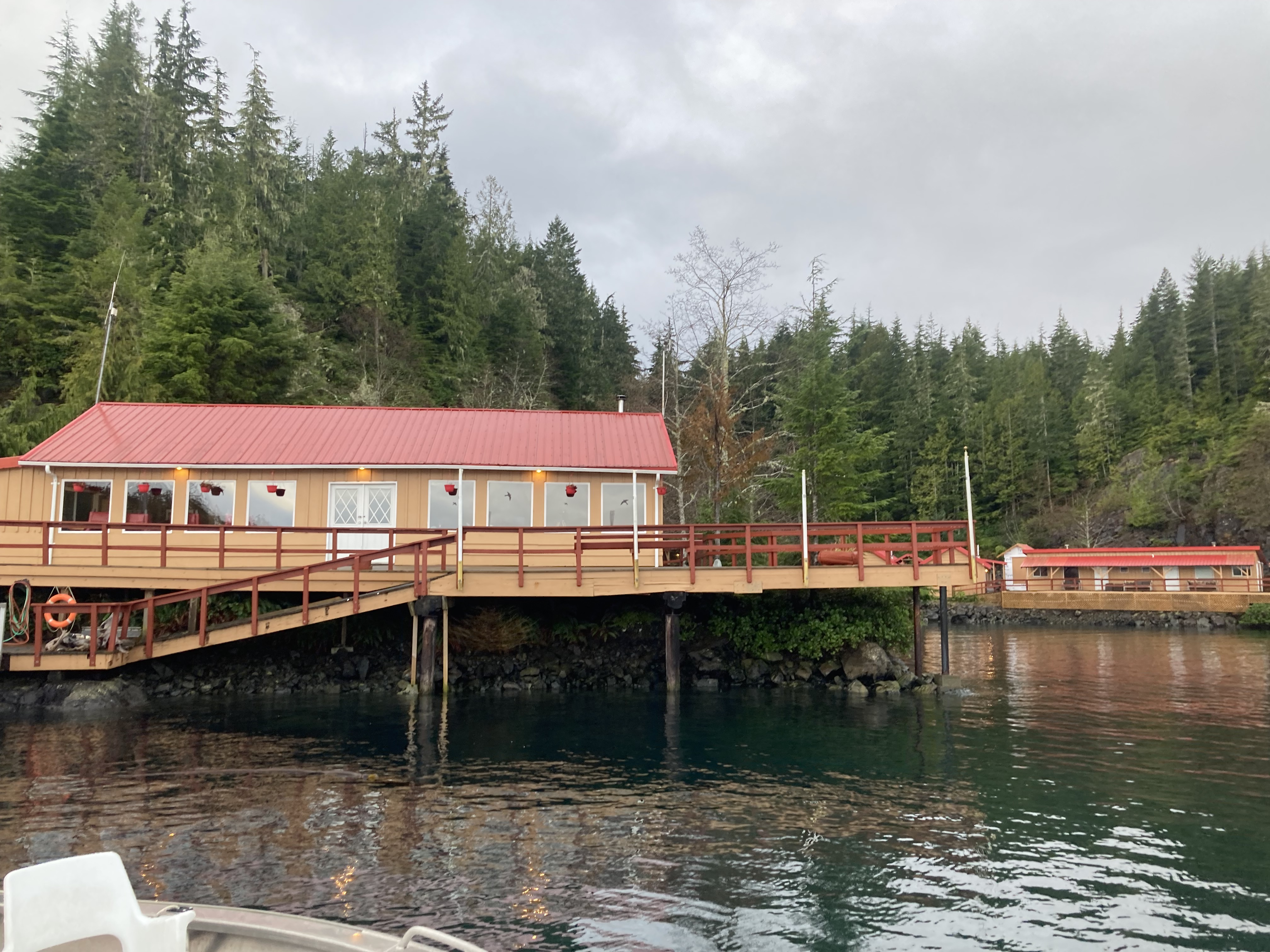
Every town run from Orca Lab to Alert Bay took me past Double Bay, its long boardwalk, floating dock, and cherry red rooftops. I shoulder my pack and follow the other caretaker, Laurene, up the dock. She directs me to a cabin on the right side of the horseshoe-shaped boardwalk, perched on the rocks with a view of Blackfish Sound and the first layer of the Broughton Archipelago’s islands.

The door opens, and the pack thumps from my shoulders. The cabin is bigger than my Gustavus design, with a half-loft upstairs, a functional shower, even a flush toilet. I would have settled for half-a-shabin and a cot. It’s not the high-end amenities that made the pack fall.

Don’t cry. Whatever you do, don’t cry.

Next to the kitchen table is a shelf. On it rests a radio receiver that looks all too familiar. Whether donated or purchased from Orca Lab, the ocean blares from the speakers—water gurgling, a distant boat engine, crackling shrimp. I swear I hear A pod.

“We have a hydrophone at the mouth of the cove,” Laurene explains, unaware I have been transported back in time. “There’s a volume knob on the right—”

“I know,” I interrupt. Not the best first impression.

I cross the room and crank the volume. How many nights did I fall asleep to this? She leaves me to unpack. I move quietly across the floor as if I’m in church. Clothes upstairs, tortillas and cheese in the fridge. Curry paste in the cabinet. I open the wood stove and smile. A pile of ash has calcified on the bottom and shrunk the stove’s space in half—a chronic problem with burning wood soaked in saltwater.

I pry the ash free and grab a handful of piled kindling. With eyes closed, I bring a stick of red cedar to my nose and inhale like an addict, listening to the hydrophone as my head spins and heart palpates. Our sense of smell pales in comparison to most mammals. Yet its ability to conjure memories is undisputed.

There is a smell to Hanson Island I have found nowhere else. Something in the ground, the water, the trees. Perhaps it’s as simple as it remains one of the few islands in the region that has not been clear-cut. Old-growth smells for a land that measures lifespans in centuries and seasons in seconds.

***

I weave between cedar and fir, balance on fallen skyscraper hemlocks, and plunge through salal undergrowth. I squish deer scat between fingers and spy on harlequin ducks perched on rocky beaches. Rumor has it a wolf has taken up residence on Hanson Island. I scan the hills with blind optimism for hazel eyes, ears cocked for the howl that proclaims that there are still things green and wild and true on this burning planet.

The rising northwesterly brings the forest to life with creaks and cracks. I settle against the hollowed-out trunk of a cedar, its innards charred from a long-ago lightning strike. Yes, even here, there can be fire from time to time. The stubborn cedars simply refuse to rot and fall, standing even in death in defiance of the decay and rebirth that comes for all.  

I scratch at the charred bark and sniff. Any smell of fire is gone. The forest around me vibrant and healing. I watch the treetops, content to let the afternoon crawl away. There will be time tomorrow to check in and learn what is expected of me here, how I can give back to this place that dreams of becoming a sanctuary and educational retreat. It took enough petroleum to get me here. I will live, write, and eat in a shelter made of wood. I’ll try to leave this place better than I found it.
Wet earth soaks into wool pants, a pleasant shiver travels up my spine. Ravens cackle, eagles retort. Somewhere, an orca explodes to the surface. I feared two months wouldn’t be enough time to find what I was looking for. But as eyes close and my soul rises to the island’s tallest canopy, I know it’s already been found.

Risk and Living

The tender splashes over the side, and the southeast breeze tugs at the bowline. I tie it to a cleat and give the anchor a firm pull. Find me a boat owner who’s more paranoid about their anchor than me.

Boat anchorages for this forecast don’t get much better than Lemesurier Island’s Hooter Cove. Tucked on the island’s west side beneath a steep hillside, it’s insulated from all but the worst southeasterlies.

Lemesurier Island on a nicer day

I wiggle into the little inflatable and paddle awkwardly for shore. I can’t imagine the designers of the Seahawk 2 had this in mind when they marketed her. Judging by the photo on the box, their grand plans included two full-grown men squeezing into this glorified raft for a magical day fishing on their favorite lake.

The raft zigzags at a glacial pace, and I keep glancing at the trees to confirm that I am indeed making progress. Even if I didn’t have my pack, rifle, and long legs, there doesn’t seem to be room for another dude in this thing, and I have no clue where you’d stash a fish bigger than a goldfish.

I nudge into the barnacle-coated rocks. Seahawk’s already sprung a pair of leaks, and we’ve agreed it’s a good idea to always take the hand pump. Despite the comical marketing and questionable durability, Zach and I have become strangely attached to the goofy inflatable that fits neatly in the back of our 20-foot skiff. I stash Seahawk above the tideline and, for the countless time this fall, pull my rifle from its drybag.

It’d be nice to have one more deer. The weather and daylight window for the day are tight, made worse by me forgetting my deer call on the bedside table and delaying our departure another 15 minutes. The ride to Lemesurier is just bumpy enough to remind me that the evening forecast calls for 20 knots and growing to 25 by Thanksgiving morning.

It’s mid-morning by the time I drop Tanner and Zach at their hunting spots and anchor. Four hours in the woods can vanish with astonishing speed. Depending on where you find deer and the difficulty of the drag, sometimes the day is done just as fast as it began.

I pause in spite of the tight schedule and look skeptically back at the skiff.

“It’s not drifting, is it?”

“No, it can’t be.”

“In your head. It’s all in your head.”

Some grow bolder the longer they tramp the woods, climb the mountains, and cross the straits, but I am not one of them. The more time out here, the more whitecaps and steep scrambles I traverse, the more cautious I’ve become. Too many close calls. Too many stories about boats with capable captains caught off guard by a rogue wave or experienced hikers disappearing on trails they’ve hiked dozens of times. I think about some of the stuff I got away with in my 20s and wonder how many of my nine lives remain.

Yet, here I am, boating across aptly named Icy Strait in weather that could best be described as “iffy,” and tramping down the beach after buck tracks in freshly fallen snow.

“Well,” I reason as I brush aside foliage and step into the forest. “There’s a balance between risk and living. Why live here if you’re going to be inside all day?”

I blink in the dim light and look around dumbfounded. I’ve never walked these woods despite passing this island dozens of times. This is Hank’s refuge, his go-to spot to hunt and shelter in a small, off-grid cabin. I’d heard him talk plenty of times about how much bigger and open the Lemesurier forest is compared to the Inian Islands, but I had to see it to believe it.  

Stately hemlocks with just a smattering of spruces tower high above an open floor devoid of menziesia, huckleberry, and devil’s club. The trees are spread wide, a myriad of deer trails weave hither and thither.

I look up the hill. I can see forever. So many great perches. I gain some elevation and settle on the soft moss, the rifle propped on a rotting deadfall.

I scan the full 360-degree view. This may not be as advantageous as I want. I can see forever, but so can the deer, and they’re a whole lot harder to see at 200 yards than me.

The big old trees give the impression of being watched. This place feels familiar, comfortable, like I’ve been here before. Not here exactly, but on an island pinned between the British Columbian mainland and Vancouver Island. A place I’ve thought about – for better or worse – every day for more than a decade.

It is no slight to Juneau, Gustavus, or southeast Alaska to say that the sweetest moments of my life came on Hanson Island, British Columbia, where I sat up nights starring over inky Blackfish Sound while orcas called from Robson Bight.

These Lemesurier trees echo Hanson Island’s mega old growth, where wizened red cedar and chunky fir trees persevere. Instead of looking for antlers, I daydream about magical harbor seal encounters and lugging batteries.

I can’t quit this place, and when I vowed to return, I had no idea it might happen so fast.

***

I had every intention of going somewhere warm for the winter. Hawaii sounded good, and I trolled the usual “workshare” websites and pestered my Hawaii friends for job opportunities. Something kept getting in the way. Schedules didn’t line up, the timeline either too long or too short (or too expensive).

Eventually, I did what usually happens when I have a new search engine open. I typed in “orca.” I scrolled through the workshare, and my heart skipped several beats when I saw Orca Lab’s profile staring back at me. After several minutes fantasizing about going full hobo and returning for the summer, I kept moving, scrolling past several opportunities along the B.C. coast that toted the chance of seeing “wild orcas.”

I stop at an overhead drone shot of red-roofed buildings and a floating dock. Orca Lab isn’t the only site of human habitation on Hanson Island. Double Bay is on the opposite side of the island in an appropriately named bay that cuts deep into the shore. It had been an inactive fishing lodge during my Orca Lab days and snapped up by a philanthropist some years ago with the ambitious idea of bringing Corky home. While far too old to ever go full ‘Free Willy’ and return to her pod, living out her final days in a large net pen adjacent to her native habitat seemed the least humanity and SeaWorld could offer after decades of imprisonment.

Help us Create an orca sanctuary. Caretakers needed for January and February.

***

Deer-less and cold, I hustle back to Hooter Bay, hoping Zach and Tanner saw more than my single doe/fawn pair. Knots of anxiety bend my stomach as the water comes into view. Terrible scenarios fill my head, including a broken anchor chain, a punctured Seahawk, a shifting low front, a chilly night, and a long walk to cell phone service.

But the skiff is there, and Seahawk is reasonably inflated. I paddle out and have to admit that the wind is picking up.

“There’s a balance between risk and living. Why live here if you’re going to be inside all day?”

The anchor pops off the bottom—big pull. Reset my grip—big pull. Reset. I pause, catch my breath, and look back at Lemesurier. It’s been several weeks since I reached out to Double Bay Sanctuary, and I’m dragging my feet on my final answer. Two months isn’t a big commitment, and it’s not like sitting in the middle of nowhere is some monumental life change. There’d even be two other people there. I wouldn’t have to go full hermit this time around.

Snow swirls around my head, and my fingers go numb. The anchor comes into view, and the skiff sways in the growing chop. I stare at the anchor, considering the balance between risk and living.

“Why do this?” I ask the cove.

“Why not do this?” the forest answers.

“Because… I don’t want to chase ghosts. I don’t want to be Uncle Rico.”

There’s no question who my celebrity lookalike is. While there are times I’d prefer to be comped to Damon or Pitt, at least Napolean Dynamite got to eat tater tots and dance. But it’s Napolean’s antagonizing Uncle Rico I’m scared of becoming.

Yes, I’d dreamed of going back, of cruising up Highway 19 in time to catch the evening ferry from Port McNeil to Alert Bay. Yet, if I was going to do this, it won’t be to relive some glory day or a feeble attempt to recapture my Orca Lab magic – the rambling equivalent of throwing a football over mountains or wondering what would have happened if coach put me in during the fourth quarter. After 18 months trying to look forward instead of backward, the last thing I needed was an excuse to relapse.

***

The anchor clangs, the boat drifts free, engine in gear. Choppy waves meet me at Lemesurier’s northwest corner. Low gray light and fog hide the setting sun. Tanner is right where he’s supposed to be, a marvelous 3×3 buck resting on the boulder-strewn beach. I abandon the helm and help lug his prize over the hull, trying to keep covetous envy out of my voice.

A deer of comparable (but still smaller) dimensions.

“Where’s Zach?”

Tanner drops his pack and checks the stern for rocks before we pull away.

“Just heard him on the radio, says he’s on a beach east of here.”

I shake my head: fading light, growing waves, temperature below freezing. We may find what our skiff can do on this 15-mile run home.  

I wouldn’t have given the crossing a second thought ten years ago. Invincible and drunk on life, I took Orca Lab’s teeny boat into all sorts of weather, tying it to the rocks off Cracroft Point and hustling to replace a battery or restart a generator while the tide fell and waves pounded. I took green water over the window and felt the hull wobble under an overloaded cargo of groceries, laundry, water, fuel, and batteries.

We cruise just offshore. Water sprays the windshield, and I taste salt.

“Where’d you find’em?” I ask, trying to take my mind off the weather.

“In a muskeg just a few hundred feet above the beach,” answers Tanner, not taking his eyes off the shore. He points towards a pebbly beach below a cliff. “There he is.”

Zach leaps aboard the lurching skiff with the ocean roaring in our ears. Spinning towards home, the bow dips unnervingly in the stacking four-footers. Tanner’s buck receives a dose of salt brine.

“We could use a little more weight in the stern,” I say grimly.

We shelter behind the little windshield and bounce like pool toys. I glance west into fading light. It’s gonna be close.

The boat goes quiet as we stare over sooty seas. My fingers go numb on the wheel, and we crawl forward. Home looks far away.

“There’s balance between risk and living. Why live here if you’re going to be inside all day?”

Lemesurier disappears in fog. Glacier Bay comes into view. I replay the route again and again. Lemesurier to Point Carolus. Across Sitakaday Narrows to Lester Point. Lester to Halibut Point. Halibut to the Bartlett Cove dock. The chop subsides near Carolus. Push the throttle down. 10 knots. 15 knots. 20 knots. The outboard purrs. We’re gonna make it.

I forget the weather and cold as my mind retraces another marine route that’s burned into my memory. A path that scoots across Cormorant Channel and through the Pearce Islands before hitting Weyton Pass at the slack. It meanders through the Plumper Islands and past a sea lion haul-out before navigating the tidal islets off Hanson Island. But instead of continuing down Blackfish Sound for Licka Point, I turn into a bay with two heads cutting deep into the island that will never let me go.

Hanson Island

***

Carolus’ rocky reef goes whizzing by. Sleet pelts our faces, but it seems that the worst is behind us. We breathe a little easier, our nervous jokes a little funnier. It’s impossible to always know where the line is between risk and living. The line moves without warning. A sunny day can be overrun with fog or variable seas replaced with small craft advisories.

We sprint across Sitakaday, and comprehension hits harder than the iciest salt spray. I cannot let fear stop me from loving the places that resonate. There are challenges around returning to Hanson Island. Memories and nostalgia would wiggle into my heart and try to drag me down—that oscillating line between risk and joy.

Bartlett Cove dock pokes out of the fog. Did I let the fear of a snapping anchor line or bouncing waves stop me? No, I tied the line tight, double-checked the weather, and trusted my skiff and friends. We cannot sit at home in fear of what may happen.

I am an unreliable narrator still learning the quirks and priorities of a reborn 36-year-old who stresses about his boat and runs after every report of orcas. Some things just won’t change. For 18 months, I looked forward, reclaimed home, and fell deeper in love with Icy Strait. I want the same for Hanson Island, for it to be part of past, present… perhaps future.

The skiff slides into the dock. The motor goes silent, and I flex my throbbing fingers as the blood returns and numbness fades. Did it—a bit of risk for another day in the woods. The sensation and payoff are inescapable, makes me thirsty for more. We walk up the ramp, keenly aware that we forgot to call for a ride home.

I pause against the railing and look across the water. Lemesurier and its big old trees peak out of the fog, and I give them a solemn nod, thankful not just for home but the opportunity to live a life that permits me to fiercely love two places. There is room for Hanson Island in this new life. Room to write a new chapter and make it part of home. I clap my stinging hands, heart filling with cautious excitement.

A great blue heron lands on the railing and stares with prehistoric eyes. The same bird that flew over the Shabin on my first visit and whose vestige now adorns the kitchen. I am not one for signs and imagery, but I take his presence as positive affirmation.

“Thanks,” I whisper. “It’s good to be going home.”

Hanson Island

Why Would I Watch

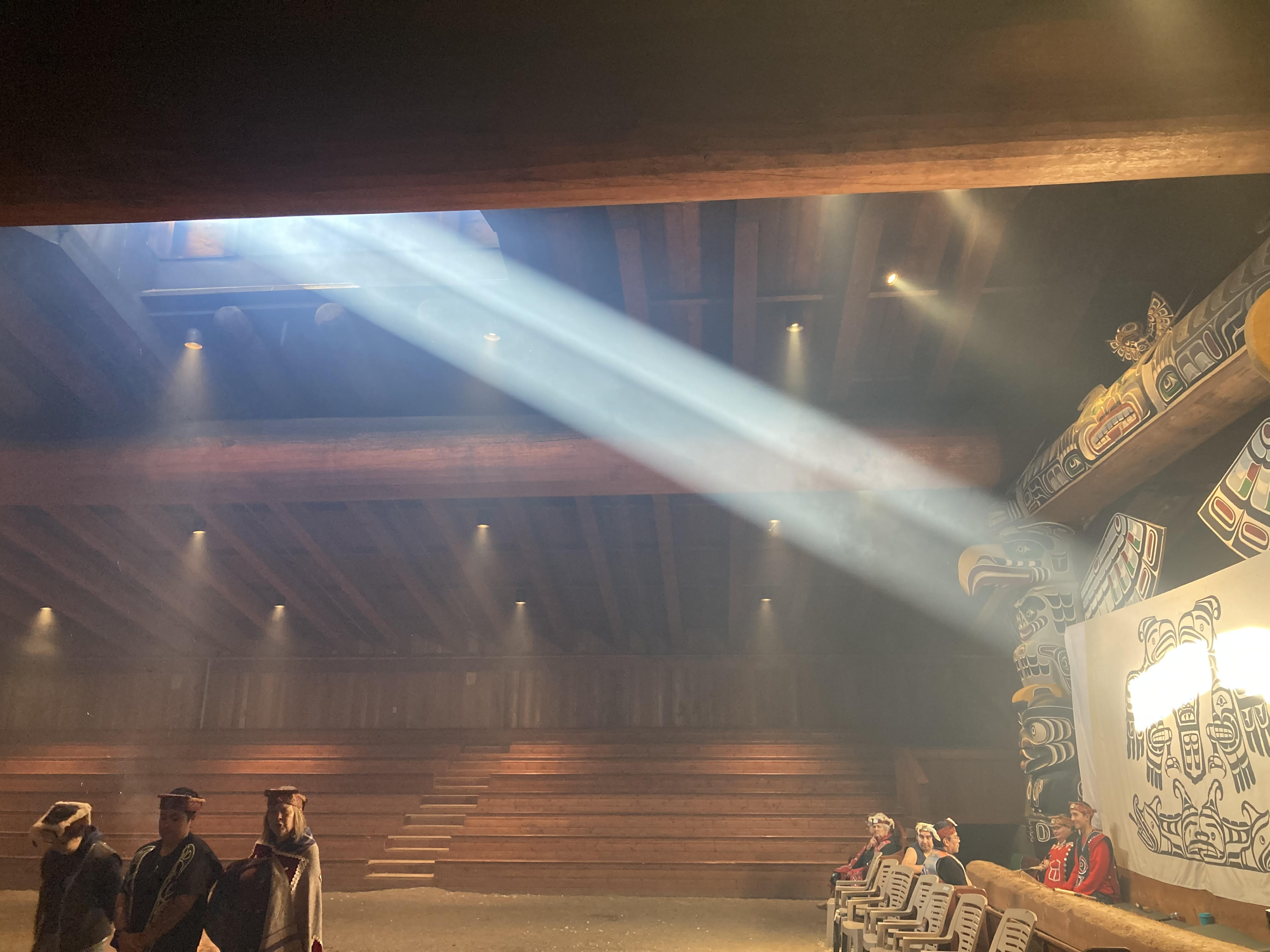
Smoke pours from the double doors. A fire lights up the dim interior of the Alert Bay Big House. A pair of totems adorned with thunderbirds glare from the far wall. Cedar logs crack and sparks lift skyward toward the hole in the roof.

I step away as the doors close and the thunderbirds disappear. I know what I’m missing: 60 minutes of the Northwest Coast brought to life through the songs, dances, and regalia of the Namgis First Nations. To the shock of no one, my favorite is the “Salmon Dance,” complete with a carved wooden orca that chases sockeye across the dirt floor with remarkable authenticity while nine community elders pound in unison on a booming drum.

 A steady mist falls. The muffled voices inside the walls go quiet. I turn and walk across a vacant soccer field and down a dirt road. I can see the islands beyond Cormorant Pass. All those names that make my heart pound and ache.

Plumper Islands. Weyton Pass. Robson Bight. Blackfish Sound. Hanson Island. Johnstone Straight. I am back where it all began.

I was born on the northeast coast of Vancouver Island, where the tides bottleneck through archipelagos and ancient fjords. Alaska may be home, but my dalliances with this place will never end.

Blackberry bushes infest the roadside ditches and stretch to the beach. Stacks of cedar and fir abandoned on the full moon tide guard a pebbled shore. I navigate the logs and turn left. I doubt what I’m looking for will still be there. I can’t decide if I want it to be. I glance at the note on my phone dated two years previous. Something kept me from exterminating this little artifact.

End of the road. Turn left. Approximately 100 paces. Look for a cedar tree with a split top. It’s a large piece of fir bark resting on the trunk.

“98… 99…100…”

There it is. The tree must be half a century old. The most precious commodity on the coast was and is an old-growth cedar. House posts, canoes, hats, clothing, baskets. It can be lived beneath, paddled, worn, and carried. No wonder Indigenous cultures revere it. I try to imagine a world older than this cedar. When the banks of the nearby Nimpkish River swelled with sockeye and the Namgis butterflied their fillets before cooking them over open fires. It must’ve felt like a miracle: food arriving at the front door every summer as the Tree of Life grew abundantly. The resources seemed limitless until we tried to feed and house the world instead of a community.

I put a hand on the cedar and stroke the sinewy outer bark. There aren’t many 500-year-old cedars left. This tree was a sapling when Columbus sailed the ocean blue. The forked trunk split as Washington crossed the Delaware. It listened to the chainsaw’s ceaseless roar as the forests of Cormorant Island fell in the name of siding and firewood.

I peer around the trunk and feel the familiar tugs of anxiety and longing. My teeth dig into my lips until I taste iron.

Pick it up. You’ve come this far.

I bend over and grab the slab of fir bark I placed here two years ago. It holds memories, just like everything on this coast. I can’t look at a fir tree and not remember combing Hanson Island’s shorelines for this bark known as “fisherman’s coal.” Stacked on top of a woodstove’s roaring flames, a couple of large pieces kept our cabin at Orca Lab toasty at night.

Memories domino: padding down the dark, narrow stairs to check the fire. The rabbit cage in the corner tucked beneath the windows. Penny nestled in her litter box, soft brown ears twitching. The hydrophone speaker above the bed and the ocean sounds bubbling through the cabin. Wind and rain on the roof. Deer on the beach. Harlequin ducks in the cove. The boat runs to Alert Bay to resupply. A hot bath. A sandwich and beer with my hero Paul Spong.

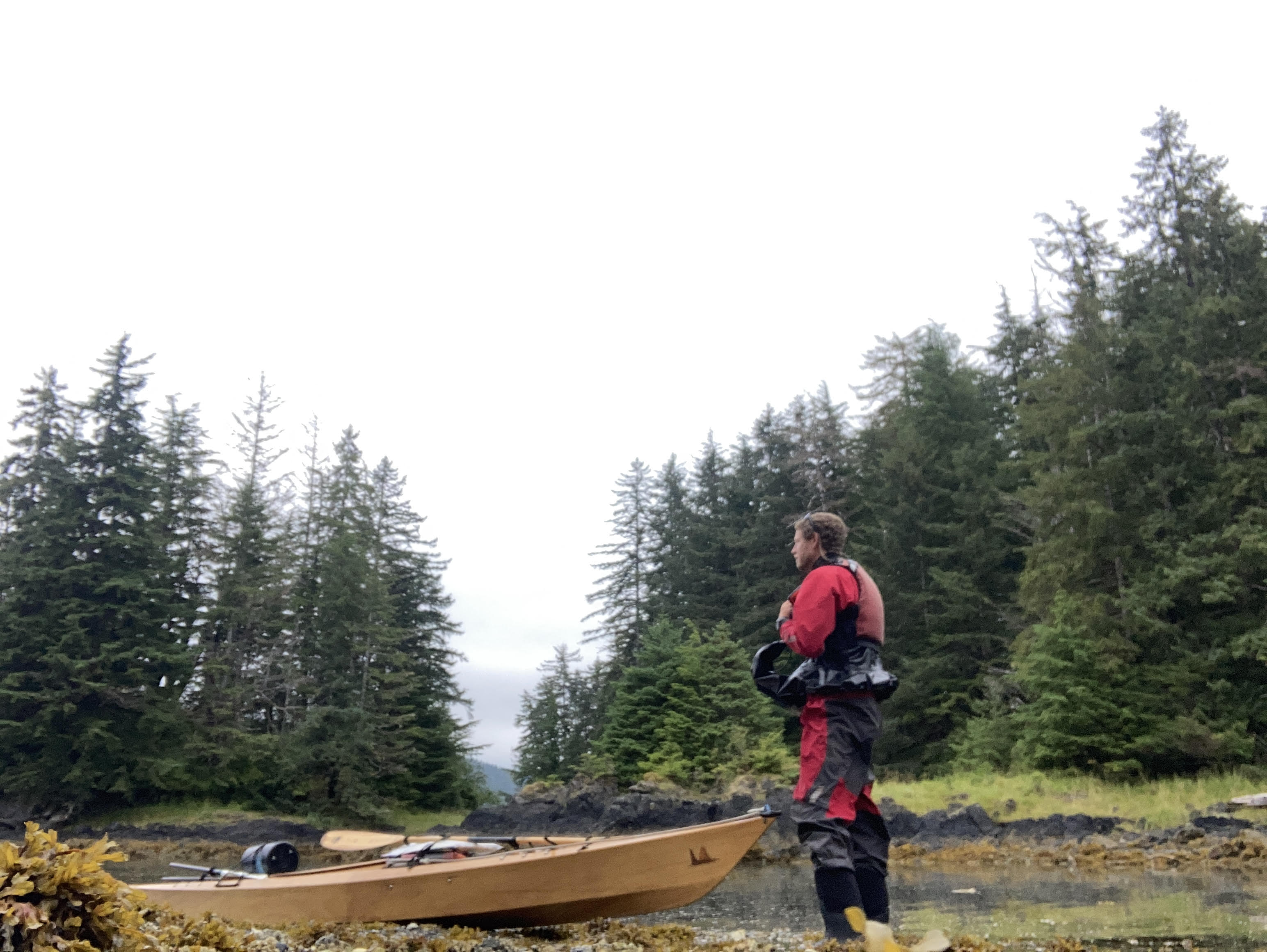
I pull myself from the past like a diver breaking the surface. Stalling, I look across the water at the islands I hold dearly. Hanson Island hovers on the horizon. Orca Lab, that cabin, is just a few miles away. I could be there in a few hours if I stole (excuse me, “borrowed”) a kayak.

The hypothetical brings me back to the slab of fir bark. I flip it over and run my fingers across the smooth brown surface. Someone has scrawled an untidy message into it. The penmanship is mine, but that’s where the similarities end.

I had vowed we’d return here and finish what we’d started. The Orca Lab caretaking era was supposed to be nothing more than a kayaking trip until it grew into so much more. But we never did get that paddle trip. Two years ago, when I returned to Alert Bay for the first time in five years, I scribbled this vow that we’d paddle here. I’d imagined finding this piece of bark and celebrating before we walked the familiar road to Paul and Helena’s house to laugh and reminisce.

The unfulfilled message has stuck in my mind like a sliver. Something insisted on finding it, making peace, and sending it on its way.

“Now what?” I ask the falling tide.

There’s no answer. No divine sign, magic rainbow, or miracle dorsal fin. I don’t expect one. I don’t need one. I flip the wood into the water and walk down the beach without a second glance. Not everything needs a proper burial.

***

Three hours later, the National Geographic Venture cruises east in Johnstone Strait, Hanson Island’s shoreline gliding past. I am giddy. My eyes ping pong between the spotting scope and my phone. I’m cheating. Thanks to Orca Lab’s streaming camera, I know orcas are swimming south towards Blackney Pass from Blackfish Sound. I watch them on my phone’s tiny screen before pushing my eyes to the scope. I find them at the east end of Hanson Island. Dorsal fins. Right where they’re supposed to be. One, two, three, four, five. I reflexively catalog them. Three females, one juvenile, and one adult male.

I should say something. It’s the only reason I’m on this boat. But I savor it a beat longer than I should. For 60 seconds, it’s just me and these five whales. They split the surface, the male raising his tail and slapping the surface. I permit a moment of anthropomorphism and tell myself he’s waving at me. Perhaps I am looking for that divine sign.

“Hey guys…” I radio to the bridge team. “We found them.”

A flurry of activity. An excited announcement rings through the boat. An orderly rush of binoculars and baseball bat-sized lenses arrive on the bow. But as the Venture turns into Blackney Pass, the orcas turn toward the Hanson Island shore.

I gaze across the pass toward Cracroft Point, remembering the dead wolf pup we found there. Off the bow is Parson Island, solar panels and remote camera visible on the cliff where I lugged eight backbreaking batteries, savoring every step and stumble.

We round the point… and there it is. From here, Orca Lab looks just as it did when I pulled away in April 2017. I think of that piece of fir bark floating in the current, reconciling memories, joy, and grief. How does one savor memories without drowning in them? And if those memories lead to stark regret, why would I watch?

The clicking of cameras fades into the ether. It’s still just me and those orcas. The Lab in the background with its observation deck and recording studio where I spent sleepless nights staring across a black ocean with chattering whales in my ears.

I step away from the scope, and my spot is immediately filled. The soothing bass of breathing orcas pirouettes across calm water and floats over the bow.

“If we’re quiet… we can hear them,” I say to no one in particular.

Why would I watch? Why do I watch? How long will I continue to watch?

The calf rockets from the water and hovers briefly before sending white water geysers high. I couldn’t stop watching, even if I wanted to. Couldn’t look away if my life depended on it. And if these animals, these places, these memories… if they bring a twinge of heartbreak syndrome from time to time… then that’s the bargain I’ll strike.

My fingers twitch, grasping at an invisible kayak paddle. The fir bark promise doesn’t need to go unfulfilled. The only thing keeping me from retracing these shorelines is the person rooted to the deck.

Waders are for Wimps

Even off the grid, where hot running water is nothing more than a mystical fantasy, there is luxury. And like everything else around here, it is earned. Balancing precariously on the rocks on the inside of the cove sits an old bathtub. Small towers of rocks on all four corners keep it level, just try not to notice the rusting bottom and slowly chipping paint. But fill her to the brim with seawater and meticulously feed a fire beneath the rusting base for a few hours and viola! Your very own saltwater hot tub.

The orcas vanished on September 17th and we’ve heard nothing from them since. We haven’t been without entertainment though. Just a mile down the beach, on a series of flat white rocks lives our new neighbors. They are loud, kind of smelly, and supposedly, will call the Hanson Island shoreline home for the better part of the winter. The Stellar Sea Lions have been patrolling the shore, sometimes just feet from us for almost a month now, their growls and barks becoming a consistent white noise that we’ve all had to learn to block out. But a strong fall run of salmon have led to several spectacular chases and catches from the neighboring sea lions and harbor seals. The sea lions especially love to attack from below, rocketing out of the water, a salmon clamped tightly in their jaws. Bouncing vertically in the water column they seem to bob like corks as they try to orient their catch so it slides down the gullet headfirst, all in one nauseating gulp.

The salmon scatter any direction they can, seeking shelter in the kelp bed or running into the shallows where the sea lions are hesitant to go. Two days ago we watched a fish, trapped against the shoreline in just a foot of water, while a sea lion circled just off the shallows. Seeing dinner floating meekly in the water I ran off the deck and over the rocks and hovered above the 18 inch salmon. In one move I lunged for it and felt my right hand grasp the base of his tail. With a single flick and a torrent of water, the salmon broke free of my grip and rushed into the kelp bed, willing to take its chances with the pinnipeds. Crestfallen, my pride in pieces I found two more salmon that day, and both times, spectacularly failed to corral them. Frustrated but determined, I found an old blue net in the shed and strategically placed it near the lab. Next time I wouldn’t go unarmed.

Which is how I came to be yesterday, watching the tide slowly fill the cove lounging in the saltwater bath. A sea lion with a large gash on his right flank routinely enters the bay, sometimes surfacing just twenty feet from my tub, eying me with perhaps just a bit of jealousy. A harbor seal, dwarfed by the sea lion we’d named “Patches” follows in his wake like a dog after its owner. I lean back and close my eyes, and hear a splash from the other side of the rocks. Glancing over the small mound I see a sea lion, pacing back and forth his attention directed at the shoreline. Praying for a shot at redemption, I climb gingerly and bare ass naked out of the tub. Paul and Helena were gone, it was just Brittney and I on the island, but nevertheless, my social conscious kicks in and I reach for the only thing I have to cover myself with, a bright pink towel.

Cinching it around my waist I move gingerly down the rocks, feeling their points and spikes stab into my feet. I try and fail to avoid slipping and breaking every bone in my body while still looking for the shadow of the salmon. I reach the water and see it, swimming slowly back and forth, fixed firmly in three feet of water. My heart races, all pain forgotten I run back up the rocks and grab the net and make my way back to the water, pink towel still firmly attached. My return startles the wayward fish and with a flick of its tail, disappears into deeper water. My heart plummets, a fall breeze washes over me and I shiver. Had I gotten out of my warm tub to fail again?

The water laps at my ankles, the net held limply in my hand. I’m about to turn back when the fish returns, moving into the same shallow pool that he just abandoned. Three rocks stand clear of the water on one side and I move as quickly and quietly as I can onto the furthest one, eyes locked on my prey. I reach the third rock and stumble, catching my balance before I fall, but my bumbling, and maybe a flash of pink startles the fish and he again flicks out of the pool. Patiently I wait, wishing I had stopped to put on some actual clothes, goose bumps erupting all over my body. For the second time the fish comes back and begins once again his slow circle around the pool. As slowly as the adrenaline in my body will let me, I dip the net into the pool and wait. The fish circles again, passes the net, and turns his tail to it.

This is it. I drop the net to the ocean floor and watch the salmon turn into the blue netting. I pull the net from the pool and in my rushed movements, the towel falls. For a moment I stand naked and frozen, the fish thrashing in the net now high above the water. How I wish there was a picture. Grabbing and refastening my pink garment I pick my way back up the rocks and reach for the walkie talkie, “honey, I know what we’re having for dinner tonight.”

Wanderlust Knows No Age

Cindy moves slowly along the rocks, one hand on her cane the other in mine as we move slowly step by step up the tideline. The steps to the guest house are just feet away when we stop for a breather. There is no fear or discomfort on her face, no sound of frustration in her voice. She had come all the way from Houston, Texas, she knew what she was getting herself into. With a determined look, her jaw set, we begin again, down the jagged rock, feet probing for a flat spot laid smooth long ago, past the loose pebbles and with two quick steps, onto the deck. Her face relaxes immediately, a smile spreads across her features. The same look we all must have had when we finally realized we had made it. Her husband Gene follows and together we all climb the stairs into the guest house.

I’ll admit I was nervous. Not just because we were representing Paul and Helena’s life work, though that was reason enough to panic. But because I was still living in the dark and terrible corner of the stereotype. I had met countless couples from Texas, some with huge belt buckles and ten gallon hats as they ambled down the cruise ships gangway. Nearly all were courteous and friendly, that wasn’t my worry. Too many though, wanted to know how much it cost to kill a brown bear. Had I? Why not? Any of these mountains being mined? Tell me about this oil money you guys get every year. I’d find myself morphing into part car salesmen, part street corner evangelist. Trying to explain the non gun toting, non developing appeal of the Alaskan wilderness. That the world would not collapse if the Arctic Refuge remained what it was, a refuge. That shooting bears with a camera was a much more rewarding and intimate experience. And no, I don’t want to discuss any of Alaska’s governors, former or current. The worst was the climate change question. It was phrased the same nearly every time, “do you believe in global warming?” As if it was a religious cult akin to voodoo.

I’d explain that yes, the world is in a natural warming phase but that man kind was helping it along. “It’s like steroids in baseball,” I’d say (it always does come back to baseball). “Barry Bonds didn’t need to take them to hit homers, but it sure helped him.” I’d stare into their faces, as if hoping to see a flashing light bulb appear over their heads. More times than not though, it was a smirk, they’d heard “natural warming phase,” that’s all they needed to hear.

Cindy looks out the window, drinking in Blackney Pass, a humpback surfaces, a sea lion splashes, she looks born again. “I’ve waited 13 years to see this place!”

They had won the two night stay on Hanson Island for their contribution to the June Cove boat fund. And two bad knees and Gene’s replaced hip wasn’t going to stop them. I smile, instantly relaxing, I should have known I suppose. Anyone willing to work this hard to reach this place didn’t deserve to be lumped in with their geographic region. I remember travelling to New Zealand, how I would tell people in the hostels I was American and the reception I received. So I just started saying Alaska, half the people seemed to think that it was part of Canada anyway. I didn’t bother correcting them. Poor Tomoko and Momoko, our fellow volunteers had to have the same nightmare. They were from Japan and any mention of Japan and whales had to instantly lead to an avalanche of embarrassing issues. The Cove, Whale Wars, and the IWC, just to name a few. We were all victims of the stereotypes our homeland depicted. And all guilty of the same assumptions.

We walk into the lab after dinner, the place from which everything they had seen, heard, and read about Hanson Island originated. They move as if they’ve just entered a church, quietly, respectfully. Cindy looks down at the sheet of paper that diagrams the six hydrophones and our location, her fingers tracing the outline of the shore line. I show them where they saw the orcas earlier that day on their way to the lab and all three of us jump as a sea lion throws its whole body out of the kelp just feet from the shore again and again.

Quietly they began to share the stories of their lives. Not about home in Houston, but there travels north. “We just keep winding up going north for some reason.” Cindy says as she admits with a small smile that she picked a programming company not for its competence but because they were based in Vancouver. They were drawn to the same world as us. A world of water too cold to swim in but too beautiful to stay away from. Of islands, strung together like diamonds on a necklace, each hidden cove and bay full of mystery. And of course the whales. They’d seen more of southeast Alaska than I had it turned out and it was my turn to listen greedily of stories from Tenakee and remote lodges on the island of Admiralty.

“We got to Seattle and decided we weren’t ready to go home once,” Cindy recalled, “so I went to the ticket counter and asked for the next flight back to southeast. He wanted to know where I wanted to go, I told him I didn’t care. We’ve been all over, but always independent, we’ve never taken a cruise ship up there,” she proclaims proudly.

“Bless you.” I answer with a smile.

Here were people that found joy and beauty in the same way we did. There bodies may no longer allow them to sleep under the stars on the rocks or among the trees, but they weren’t about to let that stop them from exploring. To stop marvelling at the breath of a humpback, the wing span of an eagle, or the simple and perfect beauty of a sunrise over the water. “I wish we would have started doing stuff like this sooner,” she says, “you two keep exploring, do it while you’re young, there’ll be plenty of time to worry about life later.”

After two short nights here they were gone. Leaving the same way they’d come, determinedly and carefully moving down the rocks and onto the boat. Looking back I wish I would have thanked them for the impact they’d made. The barriers they’d torn down, that it was because of people like them that I loved guiding so much and find myself missing it since they’ve left. I want to share peoples discoveries again. To lead them carefully to the salmon stream with a bear poised on the beach. Around Point Retreat where I know orcas are waiting and turn with a big smile and ask, “you heard of Sea World? Do you want to see how it’s supposed to be.”

And than humbly step aside, my work completed. Allowing the animals, the smells, the sounds, the view to do the rest of the talking for me. Speaking more eloquently, beautifully or convincingly than I could ever dream.

But most importantly they left me with this. The next time I’m working a trip and the couple announces they’re from Texas, I won’t fear their questions on oil, brown bears, or the refuge. Instead I’ll think of Cindy, with tears in her eyes as she talks about watching A37 swim past the lab on what may have been his last night on earth. Of Gene’s insistence that, “we’re just going to stay here forever.” And of the two of them, refusing to let age stand in the way of their adventures, making their way up and down those rocks never wavering, knowing exactly where they want to be.

Why Do They Only Breach Close at Night?

We may have to change the name of the blog. It hasn’t rained since we got here. After driving off the ferry in Nanaimo in a torrential downpour, it has been sun and blue sky ever since. It’s wonderful to sit on the deck in just a t-shirt as mid September approaches, though I’m already bracing myself for the inevitable monsoon  that I’m sure is coming. The raincoast has brainwashed me. Even when the sun shines, I’m sure mama nature is just piling up additional rain to make up for it. See what you’ve done to me Juneau!

There is the small problem as well as the water pressure in the sink has noticeably gotten weaker and weaker in the past few days. All our fresh water is gravity fed from a spring, connected by a never ending tube of garden hoses that wind their way up a hill and through the spruce and cedar trees. There’s just five of us here and any bathing is done via the salt water tub, so fortunately we’re not using much right now. Nevertheless, a nice steady day of rain would help me breathe a little easier.

All has descended into relative quiet though. It has been nearly 24 hours since the orcas called, they’re somewhere to the north, suddenly reclusive and introverted after two weeks of tracing the shorelines of Johnstone and Blackfish. The water feels empty without them. Chelsea and I did seem them yesterday on the way into Alert Bay on the weekly pilgrimage to civilization for food and beer. Relaxed and at peace with the world, the A30s and A42s traced back in forth off the north end of Swanson Island near a place called Bold Head. We couldn’t resist stopping to watch. The contrast was shocking. Counting us three boats floated off the island, watching the two pods. I thought back to what whale watching was like in Juneau when someone saw a six foot dorsal fin. The never ending parade of boats, in a mob like blood thirsty consumers on black Friday. For a moment I felt guilty as I watched A38 rise to the surface off our bow, even from 100 yards he looked massive.  After all, I’d been part of it, had taken every opportunity to see the orcas when I could, because, try as I might, I just couldn’t look away. But here there was no ethical battle being waged inside. We were just one of three instead of thirty. We watched the families rise and fall for a few minutes and continued on our way.

Even the humpbacks have slowed down, after a week that saw double breaches and a even one surfacing in the cove just feet from shore, their prey must have shifted. But last night, as the tide ebbed and Brittney and I sat in the cabin, a sound like thunder roared from the ocean fifty feet away. There was only one thing that could make water sound like that. We stood on the deck as the moon broke the clouds, illuminating a single strip of the black water below, and a shadow, darker even than the ocean rose. The humpback’s blow echoed off the islands and we could just make out the back as it arched and pulled the flukes into the air. A minute passed before as silent as the night itself, there came a great rush, a blow, and the humpback flew out of the water, its silhouette framed by Parson Island across the pass, the frothy white splash illuminated beautifully in the dark leaped twenty feet in the air as gravity pulled the whale back to the surface. Just another small moment of joy in the world of Hanson Island.

There’s little planned between now and the 16th of September when we go from care takers and volunteers, to hosts. Throughout the year, Paul and Helena have been fund raising by offering what they call, “perks.” Donate X dollars, get a CD of orca calls. Donate 5X (see, algebra!) and get a trip to Orca Lab. Cindy and Gene put up 5X, and decided September 16th-18th would be the best time to visit. Paul and Helena politely explained that they’d be out of the country still at the IWC. “That’s ok,” they said.

Well than. Hopefully the whales come back and make an appearance for a few days, because theres only so many times we can show them the cedar trees and rubbing beach videos. Of course, if you’re willing to travel all this way, I’m willing to bet you’re perfectly happy to sit in what will still hopefully be sunny weather and watch the humpbacks, sea lions, and harbour seals cruise slowly back and forth in front of you. The night before they left, Paul  and Helena gave us a list of tasks and chores to keep the lab running in their absence as well as food and dinner ideas for when our guests arrived.

As the sun set and darkness claimed the living room and everyone began to clear the table, I asked the question I’d been meaning to for days. “These people that are coming,” I ask, “where are they from.”

Helena pauses for a moment, “the U.S,” she answers.

Something in her answer makes press further. “What state?”

A wry smile crosses her lips, Paul lets out a little chuckle. “Texas,” she answers.


God’s Cathedral

There is a place on the island where you can see history. Feel it travel through your feet, up your spine, sending tingles down your arms. You travel back a thousand years in the blink of an eye and remained rooted hundreds of years before Columbus even considered leaving. And yet all is quiet and still, the words whispered. The story and message imagined and interpreted within. The walk to the time machine is a short one. Winding through stands of rebellious young Hemlocks, shrouded in the shade of their brothers above, crawling year by year upward. I’ll be long gone by the time they see the sun. Here and there a strand of blue is wrapped around a tree, the words, “culturally modified” scrawled across it. They are not the largest, but they are the most important. The historical importance of these trees to the Namgis first nations people has saved the island from logging, a tiny shrine to the old growth stripped by the mountainside on Vancouver Island just a few miles away.

For all her size you don’t see her until you hop the stream, round the final corner, and the shadow towers above you. 12 feet in diameter, hundreds of feet high, she is more impressive than any building any architect could create. The land around her base is bare, her children, teenage trees, shurbs, and huckleberry rise up nearby in the protective shadow of her arms. All is still, the silence so complete you can hear mosquitoes on the other side of the clearing. It’s like walking into a church, you speak in whispers, move quietly, sit down silently. Holier than any church man could conceive. Gods first and true temple, standing, waiting to be worshiped in for a mellinium. Grandma cedar is the pulpit the trees her congregation, it would be arrogant to call us angels.

Everyone I take to see her has the same reaction. Visitors, cameraman, authors, journalists, stare upwards, mouth open, their necks craning farther and farther back, searching for the peak of her branches. Again and again the photographer falls to the floor turning his camera this way and that, trying every conceivable angle in a vain attempt to capture the beauty and tranquility of the scene. Every glance at the LCD screen leaves him shaking his head, hands running through his hair, than back to the forest floor for another attempt.

While the light reflects bright and harsh off the water a quarter mile away, here it is soft and green, the eyes and mind relax, and you drift to a time before anyone knew this existed. The clearing transforms and a sheet of ice replaces the trees. Creaking and groaning it moves, imperceptibly, year after year, resignedly giving way to bedrock, slate, and erratics. It drops a massive rock near the cove, an erratic that will someday be the wall of my home. Water fills the passes and straits that will become the homes of salmon and seal, humpback and herring. Grandma cedar begins to grow. When exactly is not important, what’s 100 years when we’re speaking of thousands? As she rises she sees and hears all. She sees the Namgis settle and camp. Catching salmon and seals, revering the orca and raven. There songs and fires echo and reflect off her face, the jumping light and songs drifting across what would someday be Blackney Pass. They may war with each other but they are at peace with nature. She sees the otter, the humpback, the people, obliterated, her landscape changed forever. Her kinfolk felled to make wooden tables like the one I write on now. The hypocrisy burns as I sit in a house made entirely of wood.

She sees a man in a kayak, a flute at his side, paddle into the cove at her feet. He walks to the erratic on the beach, running his hands down the cool stone, an image born in his head. A house appears, than another, yet the structures seem to melt into the forest. Wrapped in the cloak of grandma’s congregation. People come and go in the following years, nothing more than a fleeting second in her eyes. But whoever touches the shore is brought before her, to pay their respects, honor the matriarch of the forest and remember where we have come from. She changes lives without an audible word. She speaks in riddles, symbolism, and nothing more. The message you take away is the one you are looking for.

And now I stand before her, staring up at the tips of her branches that seem to reach to the heavens. Touch her trunk, feel her age, her power, a talisman of the past. Of how things were, how things can be if we allow them to. I fall to my knees, in silent worship and thanks for this place. For Muir had his glacier, Heacox has his kayak, and I have this island.

Moonlit Orcas: My First Trip to Hanson Island. Part: 4

ImageThe pub was empty in the early afternoon, a fine misting rain fell outside fogging the windows. It was early August, my first beer in a bar sat in front of me (God bless Canada’s drinking age) and it was quiet save for the low hum of a the muted baseball game, Blue Jays/Mariners in the background. For once in my life I wasn’t watching baseball, I hadn’t checked a Twins score in a week, granted this was partly due to the internet being down at the lab. Paul had dropped me off in Alert Bay an hour ago, leaving me with a handshake and the assurance that I was welcome back any time.

And now, after all the build up, all the preparation and all the work to get there, my time on Hanson Island was done. Five weeks that felt like a blur and still do. I really should have kept a journal. But two moments still stand out, burned into my memory. Most notably and embarrassingly was the first time I was dispatched to collect firewood:

A good bit of our time was spent collecting wood. Salvaging it, chopping it, and stacking it. Cedar was the prized cut. Burning hot, it was reserved for the wood stove, the catalyst in Helena’s phenomenal bread. Logging had been one of the biggest economic powers for decades and drifting trees came up and down the channel with the tide, like pleasure cruisers out for the day. They were terrifying to maneuver a boat around. As the logs floated they absorbed more and more water, causing them to slowly sink below the surface until they sat almost completely submerged, out of sight but not out of reach of a boat’s unsuspecting propellers. Should one of these logs happen to drift close to the lab though, someone had to be dispatched to retrieve it. It wasn’t just about getting enough wood for the day, or the week, but for the winter when you could go through a whole tree in a day trying to keep the biting winter wind out of the house.

The second evening on the island, one of these drifting logs floated down Blackney Pass on the ebbing tide sitting high in the water, still reasonably dry. Anxious to prove that I wasn’t just a brilliant research assistant but one of those rugged Alaskans everyone had heard so much about I leaped into a kayak and paddled out toward my quarry.

It had a deceptively larger diameter than I had anticipated though with the bottom of the log a good foot below the surface. Holding the coil of rope in my hands I very carefully leaned over to loop the rope around it and nearly fell straight into the water, soaking my entire left side. Here I was, in the fading light, in a leaky kayak with no life jacket, completely ill prepared for the task at hand. Slowly working my way down the log I reached the nub of a branch that had been sawed off. A good half foot remained though and I tied the rope around it. I’m not sure what knot I was tying but all my loops and knots and bows were sure to stay. Very slowly I paddled back toward the lab, It was amazing how far the current had taken me from the cove in just a few minutes.

Adrenaline now beginning to kick in I tried to paddle back upstream, my paddle on the right side interrupted by the log on every stroke. For a moment panic surged through my body and I imagined the log and I floating helplessly into the wide expanses of Johnstone Strait. Keeping the paddle on my left side though I paddled as hard as I could like it was a canoe. The kayak bumped into the log on every stroke, keeping me straight but slowing my progress. After about five minutes I was back at the mouth of the cove when an explosion from behind almost sent me back into the drink. I tried to turn around to see what on earth was behind me but the kayak rocked yet again and I gripped the log for dear life, my knees knocking together. What on earth was I doing out here? Was this my life now? Risking life and limb for some firewood? The humpback, that’s all it could have been behind me, never surfaced again and I very shakily paddled the rest of the way into the shadows. Only to stand up and fall into the water, my head banging on a barnacle encrusted rock. In the adrenaline I hadn’t realized my feet had fallen asleep. I dragged the log above the tide line, giving it a swift kick I regretted immediately. From the windows I could see Paul and Evan doing their best not to laugh when I looked their way. Welcome to the island rookie.

More beautiful and romantic were when the orcas came into range at night. Paul’s hyrdophones heard every noise in the ocean for miles around and didn’t discriminate. Boats, dolphins, tugs, waves crashing into the shore, and of course the orcas. Any time they made a peep it was up to someone to go to the lab, hit record, slap on the headphones, and listen. I learned to love the sleepless nights, watching the moon slowly move across the sky, reflecting off Blackfish sound as the early morning summer light slowly reappeared. Stay up long enough and just maybe Helena would surprise you with cinnamon rolls, steam still streaming out of them, icing oozing over the sides.

Those nights by yourself gave you plenty of time to think. I was due to return to Fairbanks in the fall, a place that could not be more different from the water drenched rain coast of British Columbia. I loved the climate, how the forest turned green with just a few hours of rain, every square inch filled with life, the greenery stretching all the way to the ocean before finally conceding to the power of salt water and tides. I needed to come back, not necessarily to this place, but to this climate. It was in the lab one night that Juneau first crept into my conscious. I had taken a chance, running off to a place I’d never seen, to live with people I didn’t know, and encounter things I hadn’t prepared for. Like rampaging humpbacks, invisible cougars, and those goofy boat engines and I was anxious to do it again.

One of my final night shifts saw the orcas take an unexpected turn into Blackney Pass and continue north into Blackfish sound, moving right past the lab. Helena and I were both up, and we put the headphones down for a moment and stepped onto the porch. The ocean was flat calm, there were no boats or waves, no light save for the half moon above us. From miles away we could hear them in the perfect silence. Their blows gliding across the ocean, echoing off the rocks.

We said nothing, words would have ruined it as we listened to them come closer and closer, Helena taps my arm, and in the moonlight I could see her pointing to a spot on the water, right where the moonlight was widest. A shadow moved across the beam of light, than another, and than three more as the pod all surfaced, their silhouettes illuminated for the briefest moment. And than the phantoms were gone, slipping back into the inky ocean. There’s the rustle of water as the waves close over the whales’ backs, and all is silent again. As if they were never there. I turn to Helena, a pair of tears running down my cheeks, my heart in my throat. I wanted to thank her and Paul for opening up their home, for letting me taste this life, for letting me be a part of something so much bigger than me but all I could do was smile.

I rub the fog off the inside of the window and make out the outline of the ferry pulling into the Alert Bay dock, the first step on my way back to the real world. I set the empty beer mug on the table, grabbed my duffel back, crusted with mud and dirt now, and trudge into the rain. On the ferry I snap a picture of the Alert Bay sign through rain streaked windows, and feel the boat slowly, painfully pull away. I slip on my headphones and settle back for the 45-minute ride, silently vowing to myself that this wouldn’t be the last time I’d be here.

Crawling the Last Few Miles: My First Trip to Hanson Island. Part: 3

24383_376048174851_4648308_n

The engine sputtered, coughed, and died as the June Cove glided slowly to a stop on the calm water, bobbing in the channel between Alert Bay and Hanson Island. From my seat atop the cabin I spun around and peered down at the stern deck. There was no smoke or flame, nothing that would indicate we would need to start practicing a frantic dog paddle. The door to the helm slid open and Paul opened the engine hood, looking down into a maze of wires and metallic mystery. He pulled his wool hat off, running his hands through his thinning, long dark hair. Years later Paul would describe the Mercury engine as a, “big bloody monstrous thing.”

But right now the monster was pissed, we were almost exactly halfway between the lab and the Alert Bay boat harbor, and the sun was setting. After performing what he hoped would be an accurate amount of mechanical wizardry Paul moved back to the helm and the engine coughed and sprang back to life. The four other volunteers and I smiled as the June Cove slowly picked up speed. Less than a minute later though the engine quit again.

Again Paul marched onto the deck, this time glancing up at me and the kiwi, Shane who was perched on the roof of the cabin with me, “how well can you boys paddle?” he asked, a little laugh in his eye. Shane and I exchanged uneasy grins and I smiled back nervously, imagining how my mother would feel if I was lost at sea my fourth night in Canada.

Three more times the June Cove roared to life and died. A pod of Pacific white sided dolphins had begun following the wounded vessel, giggling no doubt at mans’ vain attempt to conquer this aquatic medium. Finally Paul threw up his hands and told us to get comfortable, the engine would run as long as the RPM’s were kept painfully low, and we slowly puttered to the lab, I swear a kayak passed us along the way.

An hour later we rounded the final point, and there, perched heavenly on the rocks just above the cove was the lab. Tucked back and nearly invisible among the fir and cedar trees was the house. Big bay windows overlooked the cove and Blackney pass, a tiny chimney sat on top, silt gray smoke pouring out, it was the picturesque homesteaders cabin. A board walk ran just above the jagged rocks of the intertidal to the “lab.” Much smaller, the lab had a wraparound porch that overlooked the pass giving a 180 degree view of the water and anything that moved up or down it. On the board walk was Paul’s wife Helena, her slender frame and flyaway white hair visible even from the water, a large husky at her side sent booming bark after bark flying across the cove, a marvelous welcoming committee.

Six years later there is still so much that vividly stands out from that first night. The mac and cheese and garden salad we had for dinner. Watching the sun set through those big beautiful bay windows, and just how easy the conversation was.

There were seven of us around the table that night representing five countries and different walks of life. Shane the New Zealander, slowly traveling around the world. Tomoko and Momoko, two girls from Japan where Paul was revered by many for his anti-whaling stance (and obviously hated by some). And Evan Landy, who, like me, was a biology major with an orca fascination that, like me, boarded on obsession. Helena was, interestingly enough, the only Canadian born citizen among us, who had been a school teacher in Alert Bay before meeting Paul.

I fell asleep that night not in the tent I had lugged all those miles, but on the wraparound porch overlooking the ocean, the occasional waves lapping at the rocks and the soft underwater noises emitting from the speakers connected to the six hydrophones strategically placed around the lab. Passively listening for the orcas to come into range.
I dozed off almost instantly, reveling in the smell of salt on the air, the intimate sounds of the ocean, both above and below, and the magnificent realization that I was finally, actually, here.

Orcas’ Love the Beatles Too: My First Trip to Hanson Island. Part: 2

Car after car drove slowly by, rolling to a stop at the ticket window, the line slowly growing until at least ten cars were waiting to catch the evening ferry from Port McNeil to Alert Bay. I was consciously aware that any car could have Paul Spong behind the wheel, and my lack of preparation was embarrassing. Briefly I considered just walking up to the counter and asking if they knew the good doctor. But some piece of pride, the same piece that insisted on camping on the ground with hungry cougars prowling about kept my butt firmly on my bag.

I stared into each car, in what I’m sure was a very creepy manner, trying to make out a silhouette, as if he’d be holding a sign to the window announcing: “Dr. Paul Spong! Orca Guy! All lost kids from Alaska please follow me!” I gave up trying to see inside the cars and instead started to wonder, “what sort of car would Paul Spong drive?”

Born in New Zealand, he’d earned a P.H.D in the neurological field at UCLA, and moved to Canada in the 70’s to take a position at the University of British Columbia. Part of the contract involved doing work with Skana, one of the first orcas to be successfully captured and was being kept at the Vancouver Aquarium. Paul devised a simple experiment intended to measure the visual acuity of the giant mammal. But his life changed forever when, after thousands of trials, Skana began to give the wrong answers. Not randomly, but one hundred percent incorrect.

For the first time, Paul found himself the subject or the experiment and he was enthralled. His workload piling up at the lab, he couldn’t pull himself away from the whale. He quickly learned that auditory stimulation was a much greater reward for Skana than food. What came in the following months was a melody of tunes as Paul played everything from the Beatles and Rolling Stones to Bach. Skana loved them all. Paul was forced to accept that Skana was much more intelligent than any other terrestrial mammal he’d come in contact with. She was almost certainly, going crazy in her little pool, her calls reverberating and echoing off the concrete walls, with just a few humans for company. Capable of speeds up to 30 knots, Skana was resigned to swimming in slow circles day after day. It was apparent to Paul what needed to be done: Skana needed to go home.

But when he did present his findings, a storm of controversy followed at the aquarium. They didn’t want Skana to be a sentient intelligent being. They wanted the equivalent of an aquatic dog that would do tricks and keep people coming through the turnstiles. Paul was quickly becoming public enemy number one and was finally given an ultimatum: “you can check into a psychiatric ward willingly or not.”Undaunted by his controversial findings (orcas were at the time considered little more than mindless killing machines), Paul walked out the door. Within months, he found what he was looking for. Wild and free orcas to follow and study, in their natural habitat.

Now, 30 years later, he was driving onto the Port McNeil ferry for what to be the thousandth time while I was desperately trying to decipher, what kind of car a pioneer in the world of orca research would drive. Finally an old slightly rusted Subaru looking car pulled onto the pier, every seat save the drivers’ was stuffed with boxes so high, I couldn’t see inside at all. There was something about it though, the character, the age, or just the fact that I couldn’t imagine Paul driving a huge lifted pickup with a bunch of logs in the back that convinced me.

The car stopped thirty feet in front of me. I walked over just as Paul got out to hand his ticket to the teller, “You’re Paul Spong aren’t you?” I asked. He turned and looked up at me.

“He’s shorter than I thought.” Was the first thought that crossed my mind.

“I’m sorry, do I know you,” he asked. For the briefest moment my stomach fell. There’d been a miscommunication, I wasn’t supposed to come, I had the wrong guy, I’d braved Cinnabon, the bus station, and cougars for nothing. But a look of recognition crossed his face, “Oh that’s right, you’re David, yes?” I smiled, and felt the jittery weak kneed feeling you get when you shake the hand of your hero.

“Yea Paul, I’m David, it’s great to meet you. I can’t believe I’m here.”