Tag Archives: nature

Chop Wood and Haul Water

You don’t hike through salal; you swim through it. Buried in an acre-sized grove, I stand on tiptoe, gazing at the island of hemlock ahead. In my mind, salal was just a hybridized version of discount alder. A nitrogen fixer thriving wherever sunlight poked through the clouds.

I breaststroke another few feet, struggling against the plant’s willowy but strong branches. The individual plants weave together like plywood, forming dense barriers that feel like drowning. I try a few more desperate strokes, pause, and look around. There’s supposed to be a trail somewhere.

I plunge beneath the surface, crawling under branches instead of through. Things look clearer down here. Something resembling a deer trail cuts through the maze. More tunnel than path, it’ll have to do. I reach for my phone and stare at the little orange triangle. GPS tells me the Hanson Island summit is just a few hundred feet ahead. I wiggle a few more feet, wondering why I didn’t do this long ago.

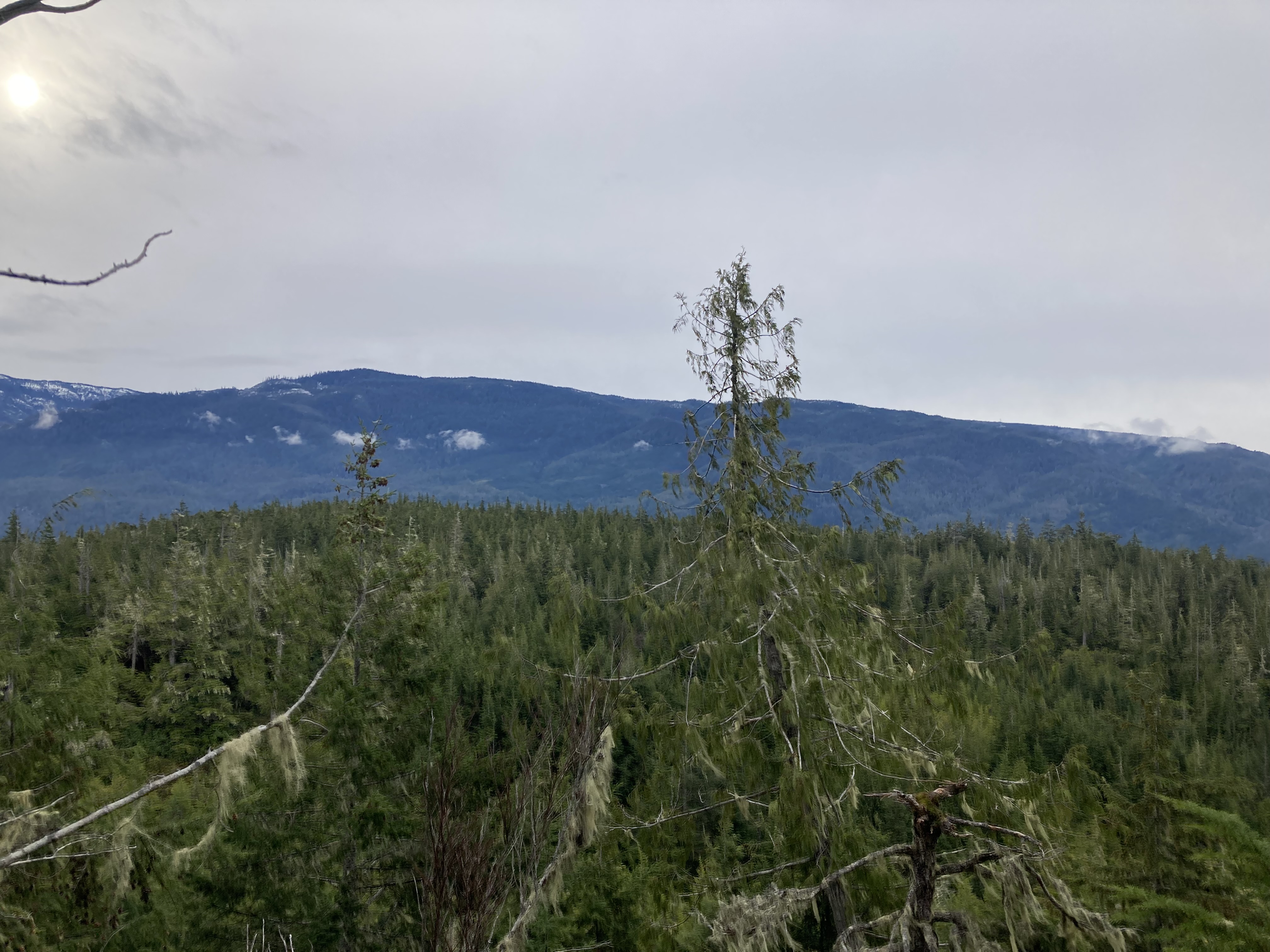
I’d be lost without my phone. It’s hard to admit, even by myself, without so much as a raven to judge me. The salal thicket blindfolded me, the small drainage spun me, and the few windows of sky reveal nothing. I follow the crutch in my hand, allowing it to guide me up one more embankment. A trio of big cedars with intertwined limbs shade a clearing festooned with deer beds. I push through one more wall of salal and gaze from the summit at Vancouver Island’s distant ridges. The hillside steepens, leaving just enough room for a viewshed and a clearing of rocks and lichen. I squeeze fatigued legs to my chest and stare at undulating greens and blues.
***

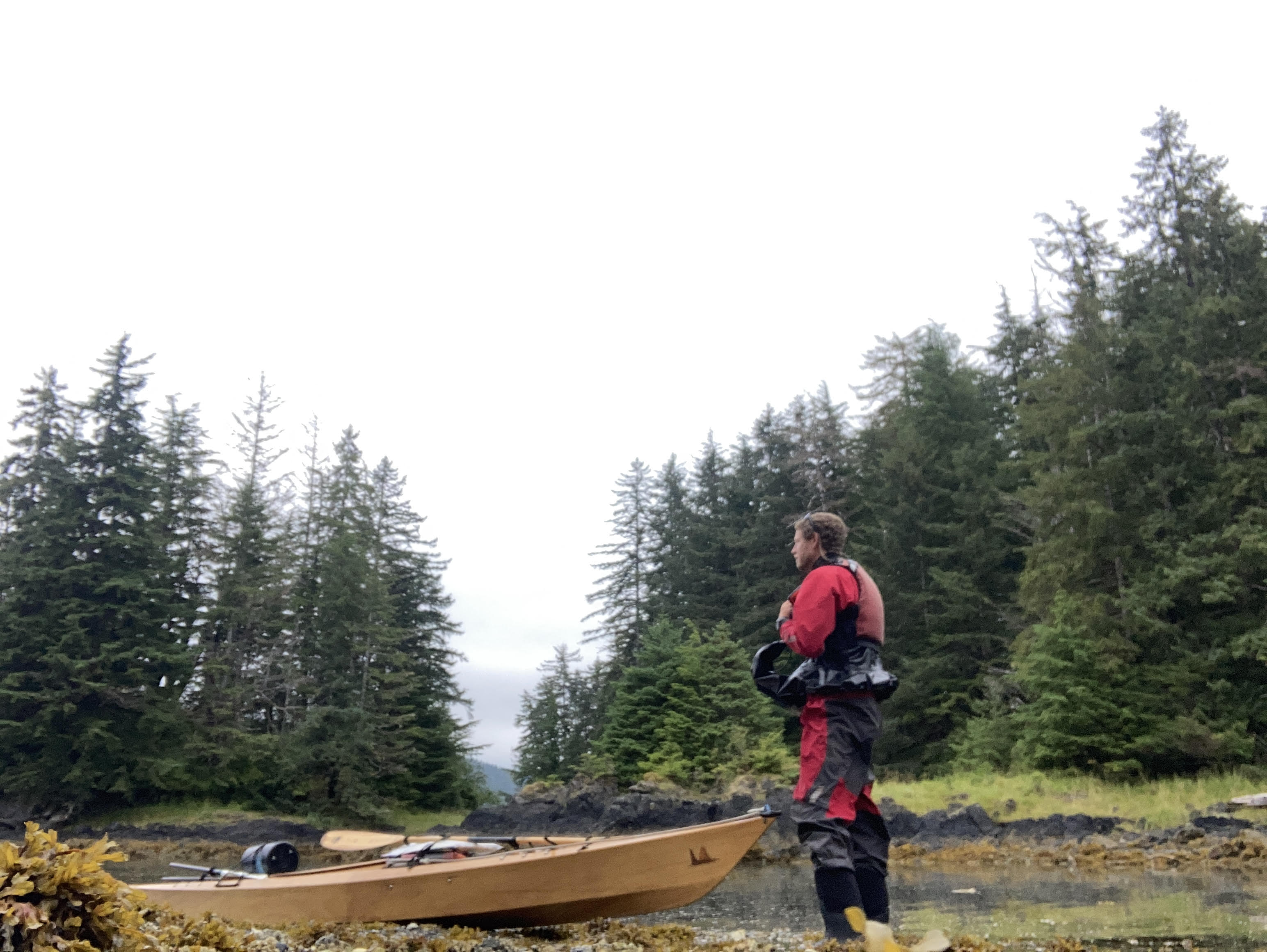
Harlequin ducks squeak in protest as I paddle by. They take to the water, necks bobbing forward and back as if to give themselves the illusion of more speed. Their rubber ducky chatter conceals their daredevil hobby of surfing southeasterly waves seconds before they break on the rocks. They dive like seals and fly like puffins, frantically beating their wings centimeters above the water. Every tidal rock holds another cluster of them, chattering away and admonishing the yellow kayak gliding past.

(C) Oregon Department of Fish & Game

Hanson Island crawls by. Every beach beckons to be explored, and twice, I slide into cobbled shores and poke into the woods. I’ve boated these waters dozens of times, always in too much of a hurry to pause. Always hustling either to Alert Bay or back to Orca Lab, usually in fading light or racing the next low-pressure system barreling up Johnstone Strait.

I’m hell-bent on savoring; I linger in non-descript woods for no reason other than they exist. At last, I swing into a narrow bay with steep shores plastered with ochre stars. A lone white buoy bobs at the head, and I pull into a small beach pockmarked with softball-sized rocks.

There’s the trail, just as I’d left it, through stands of alder and up a single-lane logging road recolonized by hip-tall hemlocks. I follow the steady incline under fallen trees and around puddles. A smattering of fish cut from plywood marks the trail with engraved names like “Bobby ‘Sparkplug’ Joseph” that demand exposition.

Past a slippery “bridge.” Clear-cuts glare at me—old ghosts rotting in choking shadow from dozens of same-aged hemlocks racing for sunlight. I stop at one such graveyard and try to remember. Had I noticed these old fallen trees in 2015? ‘16? ‘17? Had I been too naïve and unencumbered? Did the umbrella of protection now stretching across the beloved island somehow nullify the millions of board feet already removed?

I continue past spindly young cedars and gurgling streams, stopping at a fence woven with alder and salal. The gate swings open at a touch and the rusty old bell rings. A cedar shingle sign with weathered words welcomes me to “Earth Embassy.”

Trees sway in the wind, but it’s peaceful in the small courtyard between the old ramshackle buildings. Amongst the weathered old shingled walls, fraying tarps, and a bulletin board tacked with water-stained pages stand two new metal signs.  

“Respect this property,” the first sign commands, going on to recognize the site as the home and resting sight of one, David “Walrus” Garrick.

I wait for the creak of a wooden door and Walrus’s long gray beard and mischievous eyes. I listen for the echo of his dog Kessler’s booming bark or the rattle of the steller Jay fed peanuts every morning. But it’s just me in this quiet shrine with the work of one man’s lifetime.

The closest thing we had to a neighbor, I frequently made the hour-long hike from Orca Lab to Walrus’s. Equal parts Gandalf and Dumbledore with a liberal sprinkling of Original Trilogy Obi-Wan, Walrus would crack beers and tell stories he’d undoubtedly told a million times.

Wide-eyed, I’d listen to this living oracle talk about the founding of Greenpeace, protesting seal hunting in the Arctic and working as a cook on the first anti-whaling vessel before the Discovery Channel and Sea Shepard mainstreamed it.

The stories culminated in this place. His final act. The one he’ll be remembered for.

“The longest active roadblock in Canadian history,” he boasted, gesturing at his uninsulated cabin with a leaky vapor barrier, no insulation, and a smoky woodstove.

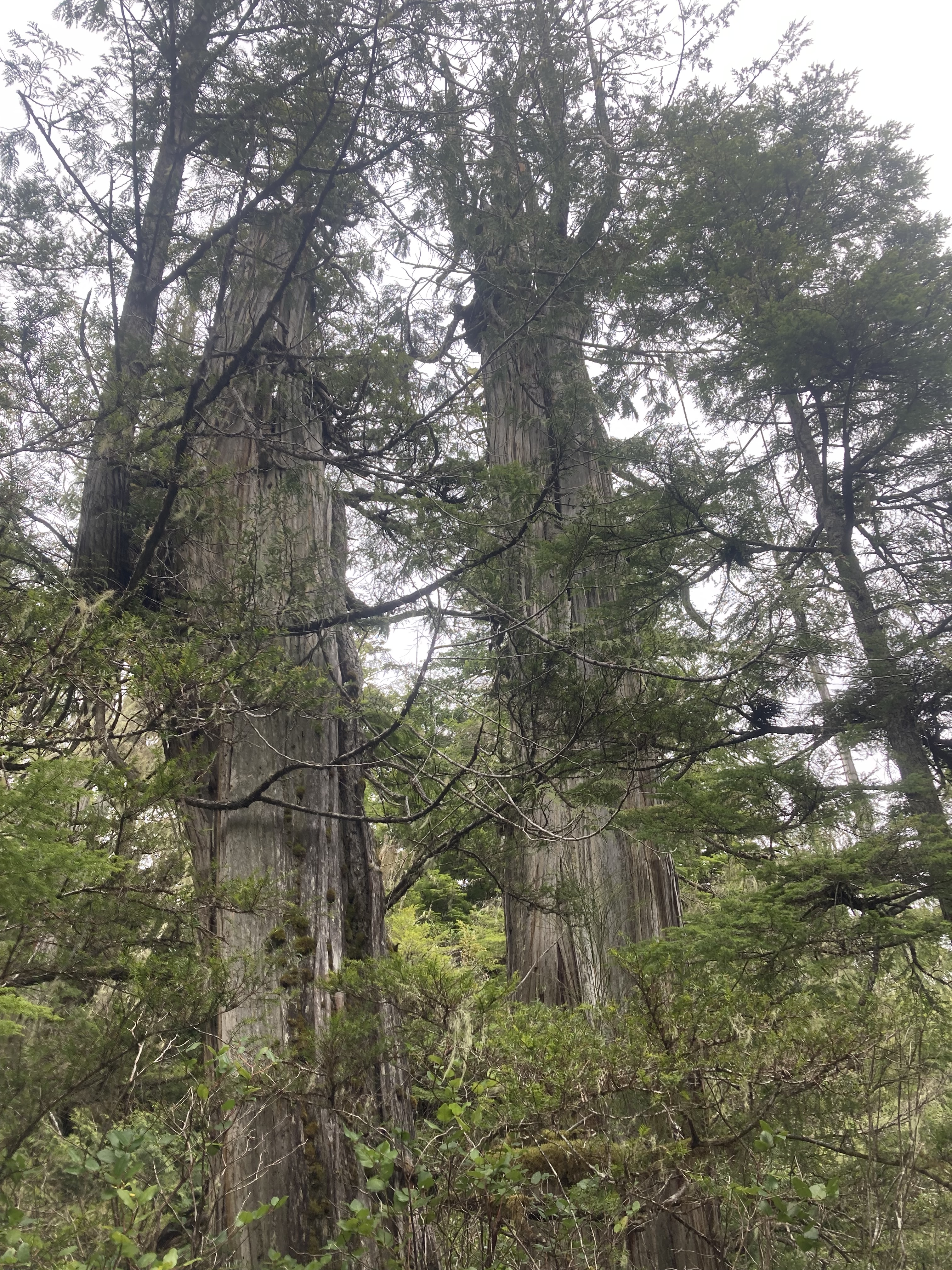
As Swanson, Cracroft, Parson, and Vancouver Island were stripped clean of timber, Walrus crawled sans-GPS through the salal to document the one thing that could spare the island known in the Kwakwaka’wakw language as Yukusam (‘shaped like a halibut hook’).
***

Red cedar is more than a sweet-smelling, rot-resistant wood that burns hot. Christened the ‘Tree of Life’ by the B.C. Coast’s First Nations, the tree was both canoe, house post, clothing, and basket. Centuries before the idea of forestry was an Anglo-Saxon fantasy, a natural ethos of conservation was a mainstay in Indigenous culture.

Life may have revolved around salmon, but cedar was the tool. Young cedars growing straight and true were set aside. They could be a basket today but, in a few generations, may be large enough to become a canoe, totem, or a corner house post.

Other trees were selected for bark harvesting. Outer bark was collected by making long, skinny incisions, which could then be dried and weaved into water-resistant clothing, baskets, even hats. The same oils that make cedars rot exceedingly slow even served as a natural bug repellent.

Instead of killing it, the harvesting increased the growth rate as the tree covered the exposed area. A cedar could rebound, survive, and even thrive if not too much was taken. The most formative and compelling case for conservation. The best argument that sometimes the word “enough” is the most important.

Prospective logging companies brushed aside the importance of Yukusam’s, “culturally modified trees” (CMTs), claiming that their in-house research showed there were only a couple hundred. Walrus and his team lived out of their active roadblock and pushed into every unlogged nook and cranny, documenting over 2,000 CMTs. For a region and people that had endured disease, assimilation, fish farms, potlatch imprisonments, and the heinous era of residential schools, CMTs are one of the remaining cultural touchstones. Carpet bombing Yukusam would be akin to nuking one of the few remaining strongholds.

Lawyers lawyered. Judges judged. Juries… juried?

And in the end, the remaining Yukusam old-growth was set aside. Walrus continued to live on his active roadblock, building gardens, cultivating shiitake mushrooms, and befriending the local steller jay population. The next generation of Kwakwaka’wakw filtered through the homestead, where elders taught cedar bark harvesting techniques.

Photo courtesy of Sharon Eva Grainger

These same Alert Bay residents pushed fish farms out of much of Kwakwaka’wakw territory, spurring returns of chum and pink salmon not seen in decades. It would be foolish and irresponsible to credit Walrus with this local revolution, but I wonder if seeing the power of a small team of forest-dwelling activists was another dry piece of kindling on an already growing fire.

***

For three winters, Walrus told me to climb the trail to Yukusam’s highest point. I’d smile, nod, and instead would walk back down the abandoned logging road for Orca Lab, unable to ascertain why. As my final winter as caretaker came to a close, I hiked to Walrus’s for the last time with a backpack laden with groceries. A nasty cough was making it harder and harder for him to lug supplies from sea level to 350 feet. Every couple of weeks, I’d arrive with a loaf of bread, eggs, and a couple beers.

“Did you get up the hill?”

I shook my head, feeling his disappointment, before grasping his hand and wondering if I’d ever see the sweet, eccentric Jedi Master again.

The cough forced Walrus to leave the longest active roadblock a few years later. In 2023, he took his final breath, finally able to breathe deep again.

***

The trail back to Walrus’s is easier to follow on the way down. I tour the old garden and study the pages clinging to the bulletin board. There are maps of the island showing the arterial trails he used to get from one CMT grove to another. Pictures of trees in mid-harvest and cross-cuttings of felled cedars, their age measured in centuries—quotes and documentation of Springer’s homecoming (another story for another day).

Near the front door is a notebook tucked safely in a Ziploc. Inside the little guestbook are the words of those who have visited this place since he passed. I clutch the little memento and stand before his resting place.

Before enlightenment, chop wood and haul water.

After enlightenment, chop wood and haul water.

I open to the next blank page and stare for a long time at the empty lines beneath my scribbled, “Dear Walrus,”

 It is somehow lifetimes and seconds since I was here… the longest active roadblock remains intact.

I finally made it up the hill. You were right, it is beautiful. I should’ve done it sooner, but I’m thankful I could return and make it happen.

I’m not who I am without Yukusam. It was orcas that drew me, but that’s not what brought me back. This place is green because of you. Cedars stand because of you, though I’m sure you’d brush that aside with a laugh and a cracking beer.

Chop wood and haul water.

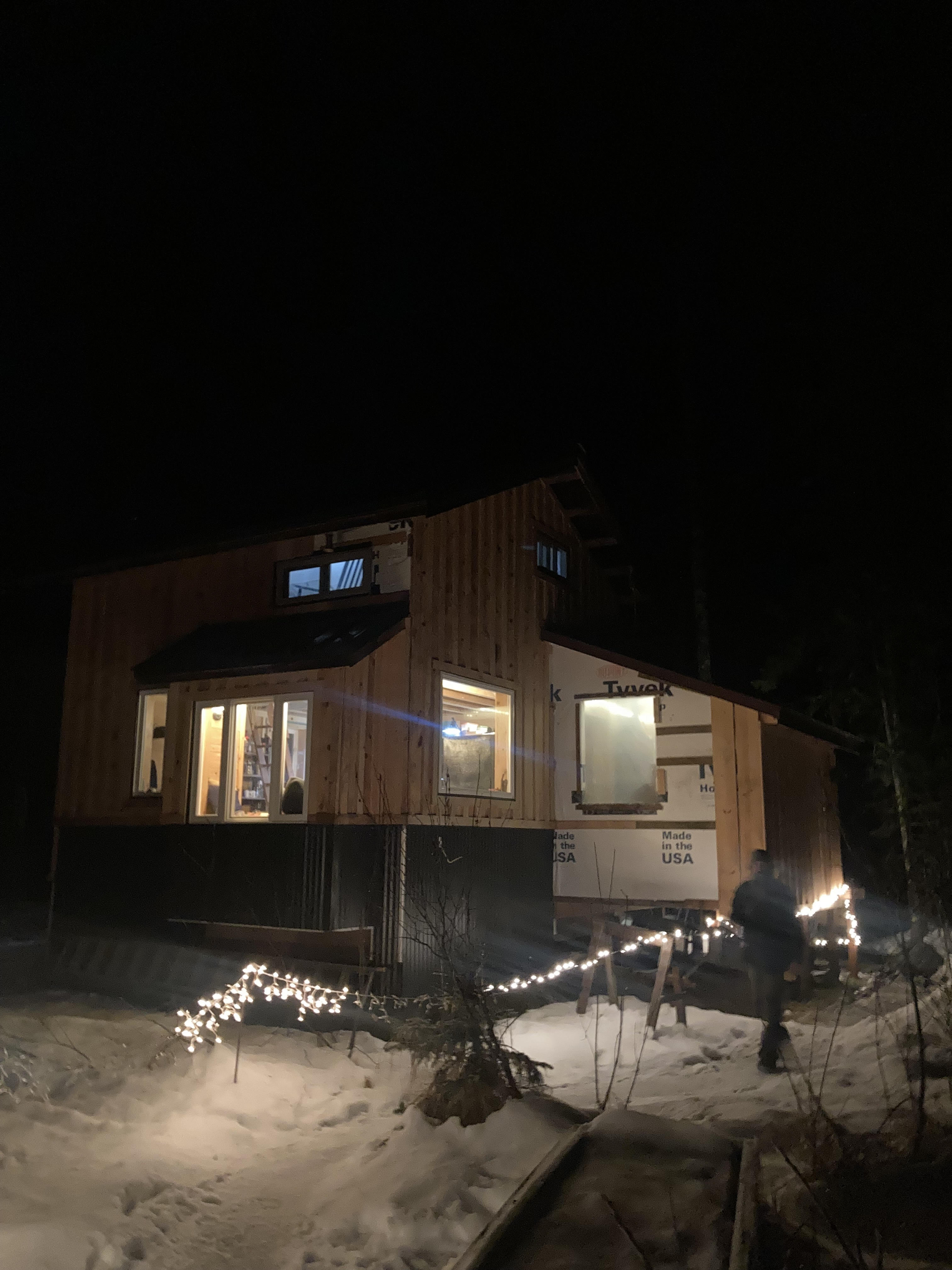
The phrase catches my heart; no five words better summarize my post-Orca Lab life. Wood for a fire, wood for 2x6s, and rafters and plywood. The promise of a warm house.
But the words are not simply literal. I repeat them like a mantra, a meditation, a reminder that some things must not be forgotten, no matter where in the journey we are. Ways of life that tether us to place and home and earth. Edicts as sturdy as a cedar house post.

Chop wood. Haul water. Climb the hills. Get dirty knees. Paddle the beaches. Drink the beer. Smile quickly. Laugh loudly. Forgive easy. Let go of anger.

A raindrop hits the page. I bend over and try to say goodbye.

Thank you for all you taught me. It took a while for some of it to sink in; I’ll never be done learning, never be done making mistakes, but I’ll never stop trying. I chop wood and carry water because of you. Rest easy, my friend. The beer is on me next time.

(C) Globe & Mail

I return the journal to a house built by trees to protect trees and retreat down a forgotten logging road that will never continue, forever stymied by a fence woven with sinewy salal and shaded by cedars growing in dignified defiance.  
Sights and Smells

I wonder what’s different.

The transportation for one. Greyhound no longer brings their gargantuan buses this far up Vancouver Island, and as we careen down the narrow two-lane road with six inches of shoulder, I can see why. The playlist blasting in my ears has changed, though I brought back some classics like Death Cab for Cuties’ Bixby Canyon Bridge and Snow Patrol’s Make This Go on Forever.

A myriad of greenery blurs outside the window. I watch these forests differently, too. Oh, my heart still flutters at the boughs of red cedar hiding secret pathways to 6,000-foot peaks. But I also see acres of young hemlocks scrunched together like matchsticks in neat little packages. Phrases like “stem exclusion” and “30-year harvest cycles” whisper with sullen voices. Countless watersheds line the east side of Vancouver, but the Tsitika River I just rumbled past is the only one that hasn’t been logged. Tsitiaka winds through the tallest mountains on the Island and reaches saltwater at a little place called Robson Bight.

Orcas. It always comes back to orcas.

For two days, I have ferried, flown, and ridden from Gustavus to Juneau to Seattle to Victoria and am now just an hour from Port McNeil. Despite my evolving playlist and old-growth forest opinions, it still feels impossible that my first trip to Port McNeil was 17 years ago. Surely it was just a couple of weeks ago that I hopped off the Greyhound. Wasn’t it last weekend that I drove a Nissan Pathfinder up this road with a cat and rabbit in the back seat?

These roads, islands, and waterways hold a lot of the stories and experiences that explain the evolution from basketball boy to kayaker, guide, naturalist, bum, redneck-hippy, writer, conservationist, and whale aficionado. I’m counting on it providing a few more.  

Ferried. Flown. Ridden.

I count the number of petroleum-driven vehicles that propelled me from Gustavus to the footsteps of Port McNeil, Johnstone Strait, and my precious Hanson Island. All to go on one more monkish retreat in the woods and waters of my youth. All to catch one more ride on a boat powered by an outboard motor or go paddling in a kayak made of, you guessed it, fossil fuels.

Too small to tip elections in favor of Mother Earth, I run to my favorite hiding place, sheltered by, you guessed it, Mother Earth.

Blackfish Sound

If the trees are passing judgment on my life choices, they keep it to themselves. If those replanted hemlocks are packed like matchsticks, what happens if one of them lights? I woke to the news that California was burning during the wet season.  A world getting drier, warmer, crazier, more unpredictable. Surely, it would be the earthquakes that doomed southern California. We beat San Andreas Fault to the punch.

***

Don’t cry. Whatever you do, don’t cry.

All those old names:

Blackfish Sound, Pearce Passage, Weyton Pass, Blackney Pass, Queen Charlotte Entrance.
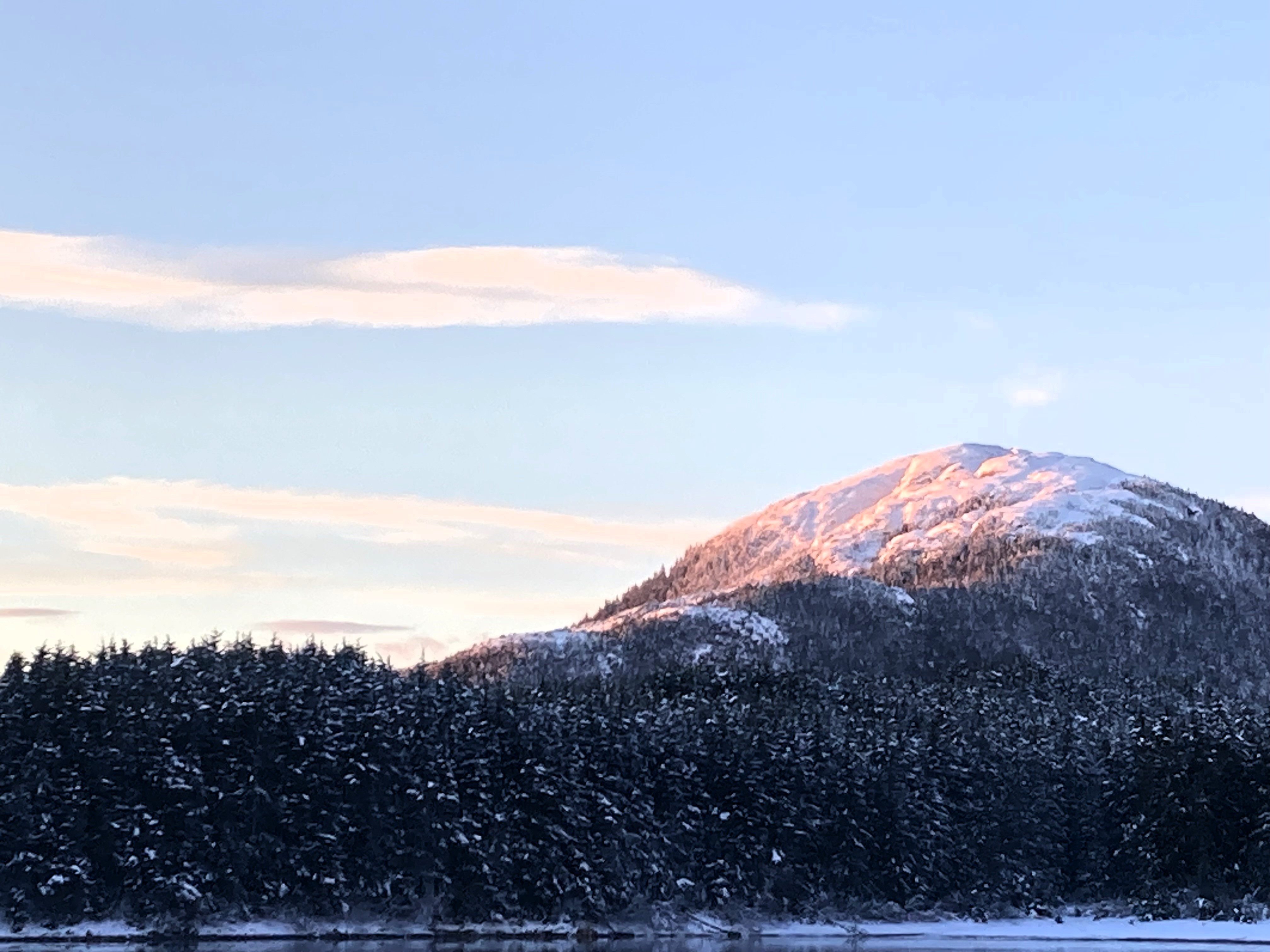
Bold Head and Cracroft Point. Blinkhorn Peninsula and Kaikash Creek.

I know them all, have stared covetously at their little faces for eight years, promising I’d see them again. I’m sure they’ve been getting on just fine without me.

I confess I left my guilt on the Port McNeil dock, catching one more 45-minute ferry ride to Cormorant Island and the town of Alert Bay—the end of public transportation. I wait two days for a weather window that finally comes as low pressure turns to high and the wind pivots from southeast to northwest.

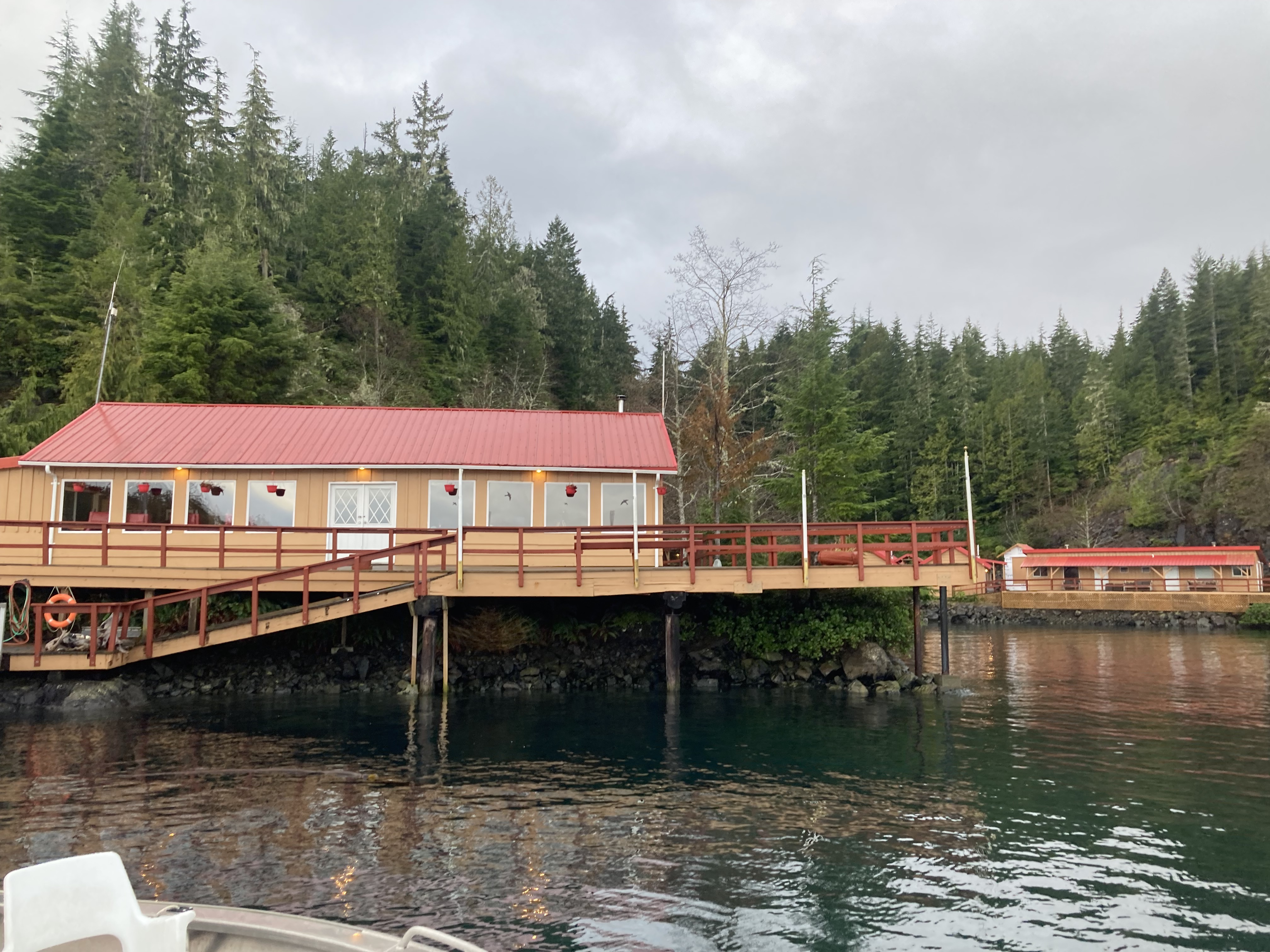
Every town run from Orca Lab to Alert Bay took me past Double Bay, its long boardwalk, floating dock, and cherry red rooftops. I shoulder my pack and follow the other caretaker, Laurene, up the dock. She directs me to a cabin on the right side of the horseshoe-shaped boardwalk, perched on the rocks with a view of Blackfish Sound and the first layer of the Broughton Archipelago’s islands.

The door opens, and the pack thumps from my shoulders. The cabin is bigger than my Gustavus design, with a half-loft upstairs, a functional shower, even a flush toilet. I would have settled for half-a-shabin and a cot. It’s not the high-end amenities that made the pack fall.

Don’t cry. Whatever you do, don’t cry.

Next to the kitchen table is a shelf. On it rests a radio receiver that looks all too familiar. Whether donated or purchased from Orca Lab, the ocean blares from the speakers—water gurgling, a distant boat engine, crackling shrimp. I swear I hear A pod.

“We have a hydrophone at the mouth of the cove,” Laurene explains, unaware I have been transported back in time. “There’s a volume knob on the right—”

“I know,” I interrupt. Not the best first impression.

I cross the room and crank the volume. How many nights did I fall asleep to this? She leaves me to unpack. I move quietly across the floor as if I’m in church. Clothes upstairs, tortillas and cheese in the fridge. Curry paste in the cabinet. I open the wood stove and smile. A pile of ash has calcified on the bottom and shrunk the stove’s space in half—a chronic problem with burning wood soaked in saltwater.

I pry the ash free and grab a handful of piled kindling. With eyes closed, I bring a stick of red cedar to my nose and inhale like an addict, listening to the hydrophone as my head spins and heart palpates. Our sense of smell pales in comparison to most mammals. Yet its ability to conjure memories is undisputed.

There is a smell to Hanson Island I have found nowhere else. Something in the ground, the water, the trees. Perhaps it’s as simple as it remains one of the few islands in the region that has not been clear-cut. Old-growth smells for a land that measures lifespans in centuries and seasons in seconds.

***

I weave between cedar and fir, balance on fallen skyscraper hemlocks, and plunge through salal undergrowth. I squish deer scat between fingers and spy on harlequin ducks perched on rocky beaches. Rumor has it a wolf has taken up residence on Hanson Island. I scan the hills with blind optimism for hazel eyes, ears cocked for the howl that proclaims that there are still things green and wild and true on this burning planet.

The rising northwesterly brings the forest to life with creaks and cracks. I settle against the hollowed-out trunk of a cedar, its innards charred from a long-ago lightning strike. Yes, even here, there can be fire from time to time. The stubborn cedars simply refuse to rot and fall, standing even in death in defiance of the decay and rebirth that comes for all.  

I scratch at the charred bark and sniff. Any smell of fire is gone. The forest around me vibrant and healing. I watch the treetops, content to let the afternoon crawl away. There will be time tomorrow to check in and learn what is expected of me here, how I can give back to this place that dreams of becoming a sanctuary and educational retreat. It took enough petroleum to get me here. I will live, write, and eat in a shelter made of wood. I’ll try to leave this place better than I found it.

Wet earth soaks into wool pants, a pleasant shiver travels up my spine. Ravens cackle, eagles retort. Somewhere, an orca explodes to the surface. I feared two months wouldn’t be enough time to find what I was looking for. But as eyes close and my soul rises to the island’s tallest canopy, I know it’s already been found.

Risk and Living

The tender splashes over the side, and the southeast breeze tugs at the bowline. I tie it to a cleat and give the anchor a firm pull. Find me a boat owner who’s more paranoid about their anchor than me.

Boat anchorages for this forecast don’t get much better than Lemesurier Island’s Hooter Cove. Tucked on the island’s west side beneath a steep hillside, it’s insulated from all but the worst southeasterlies.

Lemesurier Island on a nicer day

I wiggle into the little inflatable and paddle awkwardly for shore. I can’t imagine the designers of the Seahawk 2 had this in mind when they marketed her. Judging by the photo on the box, their grand plans included two full-grown men squeezing into this glorified raft for a magical day fishing on their favorite lake.

The raft zigzags at a glacial pace, and I keep glancing at the trees to confirm that I am indeed making progress. Even if I didn’t have my pack, rifle, and long legs, there doesn’t seem to be room for another dude in this thing, and I have no clue where you’d stash a fish bigger than a goldfish.

I nudge into the barnacle-coated rocks. Seahawk’s already sprung a pair of leaks, and we’ve agreed it’s a good idea to always take the hand pump. Despite the comical marketing and questionable durability, Zach and I have become strangely attached to the goofy inflatable that fits neatly in the back of our 20-foot skiff. I stash Seahawk above the tideline and, for the countless time this fall, pull my rifle from its drybag.

It’d be nice to have one more deer. The weather and daylight window for the day are tight, made worse by me forgetting my deer call on the bedside table and delaying our departure another 15 minutes. The ride to Lemesurier is just bumpy enough to remind me that the evening forecast calls for 20 knots and growing to 25 by Thanksgiving morning.

It’s mid-morning by the time I drop Tanner and Zach at their hunting spots and anchor. Four hours in the woods can vanish with astonishing speed. Depending on where you find deer and the difficulty of the drag, sometimes the day is done just as fast as it began.

I pause in spite of the tight schedule and look skeptically back at the skiff.

“It’s not drifting, is it?”

“No, it can’t be.”

“In your head. It’s all in your head.”

Some grow bolder the longer they tramp the woods, climb the mountains, and cross the straits, but I am not one of them. The more time out here, the more whitecaps and steep scrambles I traverse, the more cautious I’ve become. Too many close calls. Too many stories about boats with capable captains caught off guard by a rogue wave or experienced hikers disappearing on trails they’ve hiked dozens of times. I think about some of the stuff I got away with in my 20s and wonder how many of my nine lives remain.

Yet, here I am, boating across aptly named Icy Strait in weather that could best be described as “iffy,” and tramping down the beach after buck tracks in freshly fallen snow.

“Well,” I reason as I brush aside foliage and step into the forest. “There’s a balance between risk and living. Why live here if you’re going to be inside all day?”

I blink in the dim light and look around dumbfounded. I’ve never walked these woods despite passing this island dozens of times. This is Hank’s refuge, his go-to spot to hunt and shelter in a small, off-grid cabin. I’d heard him talk plenty of times about how much bigger and open the Lemesurier forest is compared to the Inian Islands, but I had to see it to believe it.  

Stately hemlocks with just a smattering of spruces tower high above an open floor devoid of menziesia, huckleberry, and devil’s club. The trees are spread wide, a myriad of deer trails weave hither and thither.

I look up the hill. I can see forever. So many great perches. I gain some elevation and settle on the soft moss, the rifle propped on a rotting deadfall.

I scan the full 360-degree view. This may not be as advantageous as I want. I can see forever, but so can the deer, and they’re a whole lot harder to see at 200 yards than me.

The big old trees give the impression of being watched. This place feels familiar, comfortable, like I’ve been here before. Not here exactly, but on an island pinned between the British Columbian mainland and Vancouver Island. A place I’ve thought about – for better or worse – every day for more than a decade.

It is no slight to Juneau, Gustavus, or southeast Alaska to say that the sweetest moments of my life came on Hanson Island, British Columbia, where I sat up nights starring over inky Blackfish Sound while orcas called from Robson Bight.

These Lemesurier trees echo Hanson Island’s mega old growth, where wizened red cedar and chunky fir trees persevere. Instead of looking for antlers, I daydream about magical harbor seal encounters and lugging batteries.

I can’t quit this place, and when I vowed to return, I had no idea it might happen so fast.

***

I had every intention of going somewhere warm for the winter. Hawaii sounded good, and I trolled the usual “workshare” websites and pestered my Hawaii friends for job opportunities. Something kept getting in the way. Schedules didn’t line up, the timeline either too long or too short (or too expensive).

Eventually, I did what usually happens when I have a new search engine open. I typed in “orca.” I scrolled through the workshare, and my heart skipped several beats when I saw Orca Lab’s profile staring back at me. After several minutes fantasizing about going full hobo and returning for the summer, I kept moving, scrolling past several opportunities along the B.C. coast that toted the chance of seeing “wild orcas.”

I stop at an overhead drone shot of red-roofed buildings and a floating dock. Orca Lab isn’t the only site of human habitation on Hanson Island. Double Bay is on the opposite side of the island in an appropriately named bay that cuts deep into the shore. It had been an inactive fishing lodge during my Orca Lab days and snapped up by a philanthropist some years ago with the ambitious idea of bringing Corky home. While far too old to ever go full ‘Free Willy’ and return to her pod, living out her final days in a large net pen adjacent to her native habitat seemed the least humanity and SeaWorld could offer after decades of imprisonment.

Help us Create an orca sanctuary. Caretakers needed for January and February.

***

Deer-less and cold, I hustle back to Hooter Bay, hoping Zach and Tanner saw more than my single doe/fawn pair. Knots of anxiety bend my stomach as the water comes into view. Terrible scenarios fill my head, including a broken anchor chain, a punctured Seahawk, a shifting low front, a chilly night, and a long walk to cell phone service.

But the skiff is there, and Seahawk is reasonably inflated. I paddle out and have to admit that the wind is picking up.

“There’s a balance between risk and living. Why live here if you’re going to be inside all day?”

The anchor pops off the bottom—big pull. Reset my grip—big pull. Reset. I pause, catch my breath, and look back at Lemesurier. It’s been several weeks since I reached out to Double Bay Sanctuary, and I’m dragging my feet on my final answer. Two months isn’t a big commitment, and it’s not like sitting in the middle of nowhere is some monumental life change. There’d even be two other people there. I wouldn’t have to go full hermit this time around.

Snow swirls around my head, and my fingers go numb. The anchor comes into view, and the skiff sways in the growing chop. I stare at the anchor, considering the balance between risk and living.

“Why do this?” I ask the cove.

“Why not do this?” the forest answers.

“Because… I don’t want to chase ghosts. I don’t want to be Uncle Rico.”

There’s no question who my celebrity lookalike is. While there are times I’d prefer to be comped to Damon or Pitt, at least Napolean Dynamite got to eat tater tots and dance. But it’s Napolean’s antagonizing Uncle Rico I’m scared of becoming.

Yes, I’d dreamed of going back, of cruising up Highway 19 in time to catch the evening ferry from Port McNeil to Alert Bay. Yet, if I was going to do this, it won’t be to relive some glory day or a feeble attempt to recapture my Orca Lab magic – the rambling equivalent of throwing a football over mountains or wondering what would have happened if coach put me in during the fourth quarter. After 18 months trying to look forward instead of backward, the last thing I needed was an excuse to relapse.

***

The anchor clangs, the boat drifts free, engine in gear. Choppy waves meet me at Lemesurier’s northwest corner. Low gray light and fog hide the setting sun. Tanner is right where he’s supposed to be, a marvelous 3×3 buck resting on the boulder-strewn beach. I abandon the helm and help lug his prize over the hull, trying to keep covetous envy out of my voice.

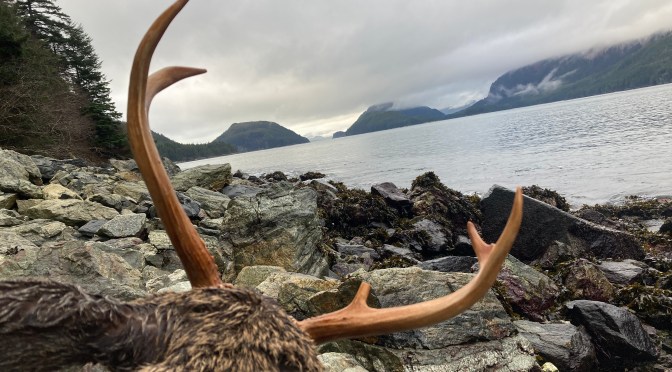
A deer of comparable (but still smaller) dimensions.

“Where’s Zach?”

Tanner drops his pack and checks the stern for rocks before we pull away.

“Just heard him on the radio, says he’s on a beach east of here.”

I shake my head: fading light, growing waves, temperature below freezing. We may find what our skiff can do on this 15-mile run home.  

I wouldn’t have given the crossing a second thought ten years ago. Invincible and drunk on life, I took Orca Lab’s teeny boat into all sorts of weather, tying it to the rocks off Cracroft Point and hustling to replace a battery or restart a generator while the tide fell and waves pounded. I took green water over the window and felt the hull wobble under an overloaded cargo of groceries, laundry, water, fuel, and batteries.

We cruise just offshore. Water sprays the windshield, and I taste salt.

“Where’d you find’em?” I ask, trying to take my mind off the weather.

“In a muskeg just a few hundred feet above the beach,” answers Tanner, not taking his eyes off the shore. He points towards a pebbly beach below a cliff. “There he is.”

Zach leaps aboard the lurching skiff with the ocean roaring in our ears. Spinning towards home, the bow dips unnervingly in the stacking four-footers. Tanner’s buck receives a dose of salt brine.

“We could use a little more weight in the stern,” I say grimly.

We shelter behind the little windshield and bounce like pool toys. I glance west into fading light. It’s gonna be close.

The boat goes quiet as we stare over sooty seas. My fingers go numb on the wheel, and we crawl forward. Home looks far away.

“There’s balance between risk and living. Why live here if you’re going to be inside all day?”

Lemesurier disappears in fog. Glacier Bay comes into view. I replay the route again and again. Lemesurier to Point Carolus. Across Sitakaday Narrows to Lester Point. Lester to Halibut Point. Halibut to the Bartlett Cove dock. The chop subsides near Carolus. Push the throttle down. 10 knots. 15 knots. 20 knots. The outboard purrs. We’re gonna make it.

I forget the weather and cold as my mind retraces another marine route that’s burned into my memory. A path that scoots across Cormorant Channel and through the Pearce Islands before hitting Weyton Pass at the slack. It meanders through the Plumper Islands and past a sea lion haul-out before navigating the tidal islets off Hanson Island. But instead of continuing down Blackfish Sound for Licka Point, I turn into a bay with two heads cutting deep into the island that will never let me go.

Hanson Island

***

Carolus’ rocky reef goes whizzing by. Sleet pelts our faces, but it seems that the worst is behind us. We breathe a little easier, our nervous jokes a little funnier. It’s impossible to always know where the line is between risk and living. The line moves without warning. A sunny day can be overrun with fog or variable seas replaced with small craft advisories.

We sprint across Sitakaday, and comprehension hits harder than the iciest salt spray. I cannot let fear stop me from loving the places that resonate. There are challenges around returning to Hanson Island. Memories and nostalgia would wiggle into my heart and try to drag me down—that oscillating line between risk and joy.

Bartlett Cove dock pokes out of the fog. Did I let the fear of a snapping anchor line or bouncing waves stop me? No, I tied the line tight, double-checked the weather, and trusted my skiff and friends. We cannot sit at home in fear of what may happen.

I am an unreliable narrator still learning the quirks and priorities of a reborn 36-year-old who stresses about his boat and runs after every report of orcas. Some things just won’t change. For 18 months, I looked forward, reclaimed home, and fell deeper in love with Icy Strait. I want the same for Hanson Island, for it to be part of past, present… perhaps future.

The skiff slides into the dock. The motor goes silent, and I flex my throbbing fingers as the blood returns and numbness fades. Did it—a bit of risk for another day in the woods. The sensation and payoff are inescapable, makes me thirsty for more. We walk up the ramp, keenly aware that we forgot to call for a ride home.

I pause against the railing and look across the water. Lemesurier and its big old trees peak out of the fog, and I give them a solemn nod, thankful not just for home but the opportunity to live a life that permits me to fiercely love two places. There is room for Hanson Island in this new life. Room to write a new chapter and make it part of home. I clap my stinging hands, heart filling with cautious excitement.

A great blue heron lands on the railing and stares with prehistoric eyes. The same bird that flew over the Shabin on my first visit and whose vestige now adorns the kitchen. I am not one for signs and imagery, but I take his presence as positive affirmation.

“Thanks,” I whisper. “It’s good to be going home.”

Hanson Island

Feed Me Twice

Time stops when antlers fill the scope. This muskeg looked empty before I crept behind a mossy tussock, blew the wooden deer call swinging from my neck, and summoned a doe from her hidden bed. I watch her unseen; a rare privilege to see a deer that doesn’t see you. A grunt grabs my attention. Forked antlers pad up the mossy hill.

“This is how it’s supposed to work,” my brain whispers. “Blow the call, attract a doe, and watch the buck come trotting in.”

The buck disappears beneath a slight depression and reappears at 20 yards. Either he doesn’t see me or doesn’t care. He’s full-grown – five years old in blacktail society – and lord of this expansive muskeg. Mature bucks aren’t supposed to show their faces in the middle of the day, but all bets are off when the rut is on. I have tricked him by imitating the call of a fawn in distress. Bleating fawns bring does, does bring bucks. As if a bolt-action 30.06 loaded with copper-tipped shells wasn’t enough of an advantage.

***

Yet, there is no moral ambiguity. My rifle misfired an hour ago when a large buck trotted past in pursuit of a pair of does. I can still see his startled expression when he looked up the hill. I reloaded in a panic and pulled the second shot. That had been enough. He’d bolted the way he’d come, and no bleating fawn would bring him back.

Hunting is challenging, even with a rifle, Google Earth, tide charts, and hand-carved deer calls. Blacktails camouflage beautifully into the brush and rarely move when the sun is high. Infinitely better ears and noses, they melt into the woods long before our primitive eyes spot them. I had patiently waited above their trail for that exact moment. It’s hard not to feel cheated. That life isn’t fair.

***

Minerva lays sprawled on the carpet. Her expression matches mine. Limp, apathetic, beaten, and lost. I refresh the New York Times, watch Wisconsin turn a little redder, shake my head, and close the laptop. I scratch behind her ears and pick up the guitar with an apology. Her eyes widen, and she bolts for her favorite hiding place beneath the bed. If I ever think my guitar playing is improving, I can rely on her to keep me humble.

I strum the opening chords to Brand New’s ‘137,’ a song about nuclear weaponry and destruction. Perhaps still a tad hyperbolic, but it feels appropriate at 9:00 pm on November 5th.

We’re so afraid. I prayed and prayed when God told me to love the bomb.

I want justice.

I want clean water, clean air. A habitable planet. For quiet spaces and open places to take precedence over fear, greed, and hatred. I gaze out the black windows toward the invisible willow sluice where moose nurse their calves and snipes build their nests. Closeted away on this swampy glacial outwash makes it hard to articulate or understand how people could choose profit and bigotry. I once yearned to understand. To comprehend and seek common ground with a sect that claimed Christ as lord but slammed their doors against anyone who didn’t look like them. Who chose to worship manifest destiny and convicted felons over the simple edict of “love thy neighbor” and “do unto others.”

Let’s all go and meet our maker. It won’t matter whose side you’re on.

I will not get justice. Any environmental or conservation progress has been reduced to fantasy. The best we can hope for is a fighting retreat. The Helm’s Deep culvert has been breached, and I don’t know if we can count on Gandalf arriving at first light on the fifth day.

***

Zach and I silently crack beers. Two days later and he’s still sporting the camo-tinged “Hunters for Harris & Walz” ballcap our buddy Sean made. There’s no reason to rehash what we already know. No need to talk about carbon levels, alternative energy, or the sixth extinction. What hope we had at reversing them has melted like so many glaciers.

We try to cheer each other up and allow one another to be angry. To curse and chuck an empty beer can at the hemlock paneling. It’s impossible not to think about Zach’s 18-month-old boy and what kind of world he’ll inherit. I feel guilty and selfish at my childless existence but thankful my parentage extends no further than a cuddly ragdoll cat.

Our vision narrows to the world we can comprehend: Icy Strait, Glacier Bay, Cross Sound. The mountains waiting to be explored and quiet mornings in the muskegs. Living at the north end of an ecosystem that runs from Alaska to northern California has some advantages in a warming world. Southeast Alaska is projected to receive more rain in the coming decades. A bit soggy, perhaps, but better than the well running dry or having the remaining reservoirs snapped up by corporations.

Mellower winters and protected old growth will be good for deer. Perhaps the salmon runs can persevere in the rivers free from clearcutting. We yearn to escape. To go on a wilderness bender. To return to one of the few places that makes sense. We pull up YouTube and watch videos of Sitka blacktail deer, counting the days until our turn to walk in the woods.

***

The buck fills the scope. Ten yards away, yet I receive only a sideways glance. The doe meandering up the hill has all his attention. He turns broadside. Crosshairs settle on his chest just behind the front leg. My finger flexes. The gun clicks. Panic returns. Another misfire. How old is this ammo? How many times have I taken it into the field? Even bullets have expiration dates.

Work the bolt, the dud flipping through the air and nesting in the moss. I didn’t reload after the previous mishap. I chamber my last shell. The buck takes an uncertain step towards the trees. Crosshairs on his heart.

“Please, please, please, please.”

The barrel recoils. I don’t hear the shot or the dull pain in my shoulder.

The doe glances over. There’s no fear in her face, only polite curiosity. Acrid smoke fills my nose. My heart pounds and my hands tremble. I’m no longer cold. No longer wet. A red mist envelops his chest as he collapses on the moss. Blood stains his soot-colored coat. His final breath escapes through the exit wound. The cloudy vapor hangs like a whale’s spout. But there is no arching back, no flipping tail, no pronouncement of life.

I collapse into the moss with ringing ears. My breath comes in tiny gasps, feeling relief more than anything. It’s only a few strides to his resting place. I grip the thick fur. My forehead touches his. Empty eyes, a pale tongue pokes from his mouth.

The doe saunters away, oblivious to the exchange that has taken place. Not comprehending or not understanding. She blissfully nuzzles at a the moss and comes up with a strand of something green and leafy.

I want my whole world to be this steep mountainside clinging to the north end of Chichagof Island, for every need and desire to be filled in the spaces between treeline and tideline. To watch the seasons come and go until the day I can no longer rise, and the snow gently covers what remains.

I guess I want to be a deer.

My knife slides across the belly’s white fur. His fading heat warms my fingers and steadies my hand.

I whisper my Deer Prayer, “You are the forest made flesh. I promise to think of you whenever I eat. To honor your memory. May wherever you are be peaceful and free of pain.”

I cup his heart in hands covered with blood and slippery with fat. My bullet pierced the aorta and pulmonary vein, but some of it may still be edible. The organ goes into a Ziploc along with the liver. Our hunting culture has few commandments, but one is to eat the heart and liver that evening while the story is told.

Field dressing complete, I sit on my heels and rub my hands clean. The doe has finally moved off, but I can still hear her rustling in the brush. There’s something eerie how, once a shot has been fired and a deer has fallen, how tame they become. In normal circumstances, the doe would have fled when she saw me. Now, she lingers. Paying her last respects? That sounds better than being oblivious.

There is contradiction in my hunting. Snuffing life from the very creature that represents all I crave and value. Their innocence and gentleness, self-sufficiency, and quiet beauty. The desire to get closer and closer, to reach out and almost touch this forest talisman and then decide which dies and which survives.

I stare into the dark eyes, already glassy with death.

“This isn’t fair,” I tell him. “Little in this life is.”

The muskeg faces the Fairweather Mountains. The Inian Islands and Hobbit Hole bow before them like fiefs declaring fealty. I grip the broad antlers and take a few unsteady steps up the hill. How can I feel enthralled and guilty at the same time?

Perhaps that’s why these muskegs and animals enthrall me but insist that I carry a rifle. The contradictions force me to examine my connection to place and attempt to comprehend it.

To understand how an easterly breeze catches my scent and how a northerly outflow bites the skin and sends deer running for cover. To examine the fairness in my own life and, most of all, escape. To connect with a part of me that pumps with vigor independent of elections, divorces, and frayed friendships. Because out here, deer or no deer, things make sense in a way they don’t where there’s cell phone service and wi-fi.

They say heating with wood warms you twice. Once when you split it and again when you burn it. If so, then deer feed me twice. Once in the woods and again on the plate. We depart the muskeg and dip into a small ravine. Sweat drips, and quads tremble. Hoof tracks crisscross snowy patches, ravens call on the wind, and squirrels chatter from hidden towers. Across another muskeg and down the mountain I wish I called home.

Why Would I Watch

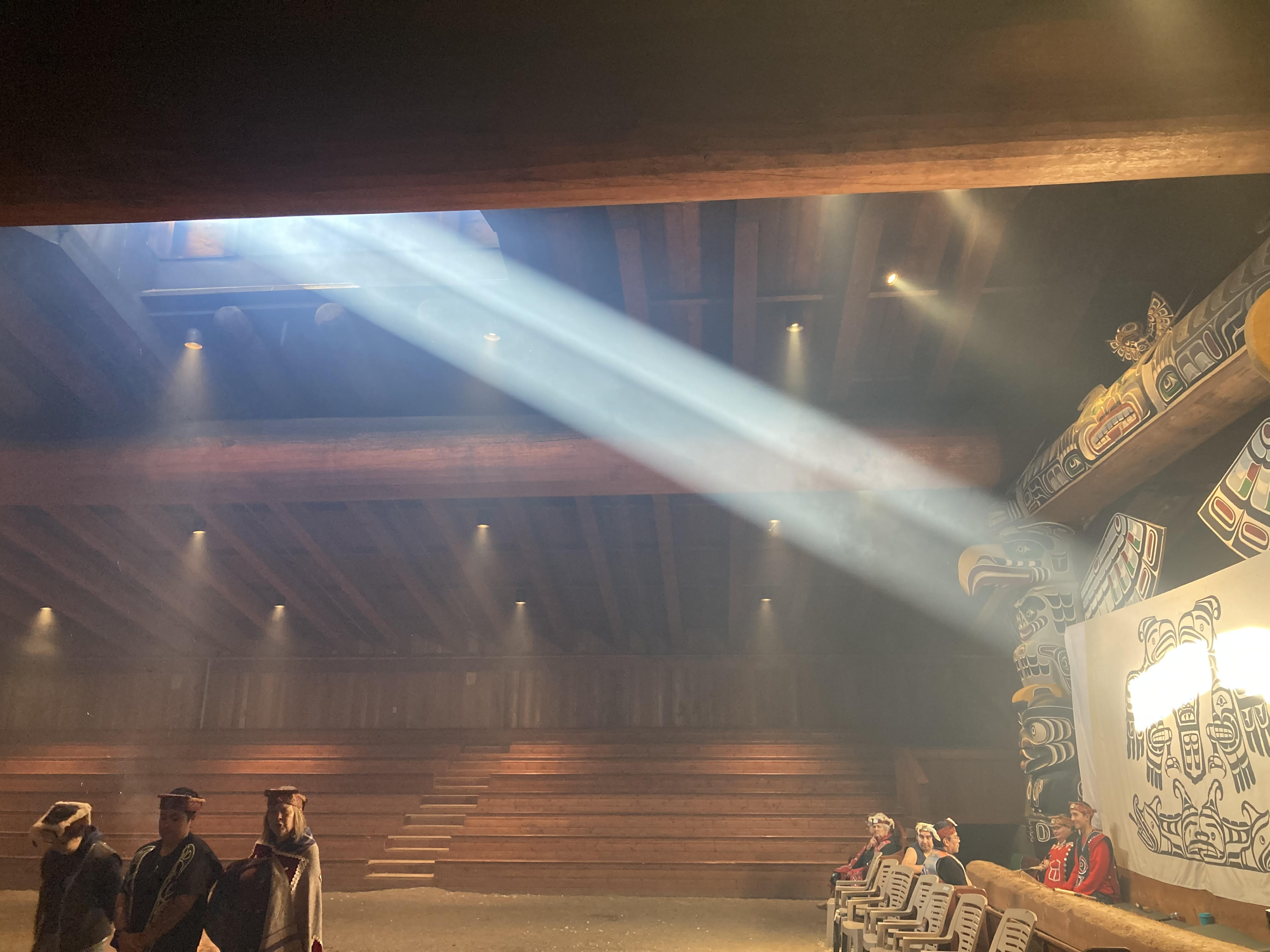
Smoke pours from the double doors. A fire lights up the dim interior of the Alert Bay Big House. A pair of totems adorned with thunderbirds glare from the far wall. Cedar logs crack and sparks lift skyward toward the hole in the roof.

I step away as the doors close and the thunderbirds disappear. I know what I’m missing: 60 minutes of the Northwest Coast brought to life through the songs, dances, and regalia of the Namgis First Nations. To the shock of no one, my favorite is the “Salmon Dance,” complete with a carved wooden orca that chases sockeye across the dirt floor with remarkable authenticity while nine community elders pound in unison on a booming drum.

 A steady mist falls. The muffled voices inside the walls go quiet. I turn and walk across a vacant soccer field and down a dirt road. I can see the islands beyond Cormorant Pass. All those names that make my heart pound and ache.

Plumper Islands. Weyton Pass. Robson Bight. Blackfish Sound. Hanson Island. Johnstone Straight. I am back where it all began.

I was born on the northeast coast of Vancouver Island, where the tides bottleneck through archipelagos and ancient fjords. Alaska may be home, but my dalliances with this place will never end.

Blackberry bushes infest the roadside ditches and stretch to the beach. Stacks of cedar and fir abandoned on the full moon tide guard a pebbled shore. I navigate the logs and turn left. I doubt what I’m looking for will still be there. I can’t decide if I want it to be. I glance at the note on my phone dated two years previous. Something kept me from exterminating this little artifact.

End of the road. Turn left. Approximately 100 paces. Look for a cedar tree with a split top. It’s a large piece of fir bark resting on the trunk.

“98… 99…100…”

There it is. The tree must be half a century old. The most precious commodity on the coast was and is an old-growth cedar. House posts, canoes, hats, clothing, baskets. It can be lived beneath, paddled, worn, and carried. No wonder Indigenous cultures revere it. I try to imagine a world older than this cedar. When the banks of the nearby Nimpkish River swelled with sockeye and the Namgis butterflied their fillets before cooking them over open fires. It must’ve felt like a miracle: food arriving at the front door every summer as the Tree of Life grew abundantly. The resources seemed limitless until we tried to feed and house the world instead of a community.

I put a hand on the cedar and stroke the sinewy outer bark. There aren’t many 500-year-old cedars left. This tree was a sapling when Columbus sailed the ocean blue. The forked trunk split as Washington crossed the Delaware. It listened to the chainsaw’s ceaseless roar as the forests of Cormorant Island fell in the name of siding and firewood.

I peer around the trunk and feel the familiar tugs of anxiety and longing. My teeth dig into my lips until I taste iron.

Pick it up. You’ve come this far.

I bend over and grab the slab of fir bark I placed here two years ago. It holds memories, just like everything on this coast. I can’t look at a fir tree and not remember combing Hanson Island’s shorelines for this bark known as “fisherman’s coal.” Stacked on top of a woodstove’s roaring flames, a couple of large pieces kept our cabin at Orca Lab toasty at night.

Memories domino: padding down the dark, narrow stairs to check the fire. The rabbit cage in the corner tucked beneath the windows. Penny nestled in her litter box, soft brown ears twitching. The hydrophone speaker above the bed and the ocean sounds bubbling through the cabin. Wind and rain on the roof. Deer on the beach. Harlequin ducks in the cove. The boat runs to Alert Bay to resupply. A hot bath. A sandwich and beer with my hero Paul Spong.

I pull myself from the past like a diver breaking the surface. Stalling, I look across the water at the islands I hold dearly. Hanson Island hovers on the horizon. Orca Lab, that cabin, is just a few miles away. I could be there in a few hours if I stole (excuse me, “borrowed”) a kayak.

The hypothetical brings me back to the slab of fir bark. I flip it over and run my fingers across the smooth brown surface. Someone has scrawled an untidy message into it. The penmanship is mine, but that’s where the similarities end.

I had vowed we’d return here and finish what we’d started. The Orca Lab caretaking era was supposed to be nothing more than a kayaking trip until it grew into so much more. But we never did get that paddle trip. Two years ago, when I returned to Alert Bay for the first time in five years, I scribbled this vow that we’d paddle here. I’d imagined finding this piece of bark and celebrating before we walked the familiar road to Paul and Helena’s house to laugh and reminisce.

The unfulfilled message has stuck in my mind like a sliver. Something insisted on finding it, making peace, and sending it on its way.

“Now what?” I ask the falling tide.

There’s no answer. No divine sign, magic rainbow, or miracle dorsal fin. I don’t expect one. I don’t need one. I flip the wood into the water and walk down the beach without a second glance. Not everything needs a proper burial.

***

Three hours later, the National Geographic Venture cruises east in Johnstone Strait, Hanson Island’s shoreline gliding past. I am giddy. My eyes ping pong between the spotting scope and my phone. I’m cheating. Thanks to Orca Lab’s streaming camera, I know orcas are swimming south towards Blackney Pass from Blackfish Sound. I watch them on my phone’s tiny screen before pushing my eyes to the scope. I find them at the east end of Hanson Island. Dorsal fins. Right where they’re supposed to be. One, two, three, four, five. I reflexively catalog them. Three females, one juvenile, and one adult male.

I should say something. It’s the only reason I’m on this boat. But I savor it a beat longer than I should. For 60 seconds, it’s just me and these five whales. They split the surface, the male raising his tail and slapping the surface. I permit a moment of anthropomorphism and tell myself he’s waving at me. Perhaps I am looking for that divine sign.

“Hey guys…” I radio to the bridge team. “We found them.”

A flurry of activity. An excited announcement rings through the boat. An orderly rush of binoculars and baseball bat-sized lenses arrive on the bow. But as the Venture turns into Blackney Pass, the orcas turn toward the Hanson Island shore.

I gaze across the pass toward Cracroft Point, remembering the dead wolf pup we found there. Off the bow is Parson Island, solar panels and remote camera visible on the cliff where I lugged eight backbreaking batteries, savoring every step and stumble.

We round the point… and there it is. From here, Orca Lab looks just as it did when I pulled away in April 2017. I think of that piece of fir bark floating in the current, reconciling memories, joy, and grief. How does one savor memories without drowning in them? And if those memories lead to stark regret, why would I watch?

The clicking of cameras fades into the ether. It’s still just me and those orcas. The Lab in the background with its observation deck and recording studio where I spent sleepless nights staring across a black ocean with chattering whales in my ears.

I step away from the scope, and my spot is immediately filled. The soothing bass of breathing orcas pirouettes across calm water and floats over the bow.

“If we’re quiet… we can hear them,” I say to no one in particular.

Why would I watch? Why do I watch? How long will I continue to watch?

The calf rockets from the water and hovers briefly before sending white water geysers high. I couldn’t stop watching, even if I wanted to. Couldn’t look away if my life depended on it. And if these animals, these places, these memories… if they bring a twinge of heartbreak syndrome from time to time… then that’s the bargain I’ll strike.

My fingers twitch, grasping at an invisible kayak paddle. The fir bark promise doesn’t need to go unfulfilled. The only thing keeping me from retracing these shorelines is the person rooted to the deck.

Reinventing Your Exit

The water goes calm. A spring sun emerges from the clouds and reflects off my glasses. I set down the clipboard, and a breeze rustles the pages. Wind and blizzards battered the Inians for weeks. The hydro failed more than it functioned. The solar panels were dormant. For one heart-stopping morning, the diesel generator wouldn’t turn over.

Fifty degrees and sunny feels like Tahiti.

The manuscript dances in another gust. Minerva yowls from the top of the dock. She fears the dock, mistrusts anything that floats. But she’ll stand sentinel until I decide I’ve had enough. That won’t be for a while.

My head thuds against the sauna. I am “crouch to drink from a mountain stream and pinch a nerve in your neck” years old. It may be days before my Xtra-tuffs are dry, but it can’t stop me from vibing on yesterday’s ranging along the Inian hills.

***

I find the deer in a grassy muskeg the color of wheat. Catching my scent, he slips behind a gnarled pine. Something brings him back. He weaves through brush and poses on the hillock. His nostrils flare, mouth open to taste my scent. We stare for eons or several seconds—long enough to confirm he’s the biggest deer I’ve seen. My index finger instinctively twitches.

If it was November…

He has important deer business to attend to. He turns reluctantly, but once he’s committed, gracefully bounds away. Postholing snow be damned. I follow the winding tracks for a mile, give up, and turn south. Down a steep ridge and up the north side where wet drifts congregate beneath old growth. I pause. It was here, wasn’t it?

I lean against the log and look at the little valley. I see the spike buck wandering up the steep ravine with his head glued to the patchy snow. The rifle cold and shaking in my hands. The Ravens are gone. Whatever’s left of the gut pile is buried. It doesn’t feel like five months since I fired two shots on a misty November day. I still don’t know how the first one missed. Find me a hunter who doesn’t have one of those stories.

Snow soaks my wool pants. I recline and look at the spot where he fell. He has given me life, energy, and hope in the form of stews, meatballs, backstrap roasts, and way too many burgers.

“Thanks,” I whisper.

It sounds empty. Hollow. Throwaway gratitude. But maybe gratitude can’t always be measured in syllables.

***

I’ve read my book 15 stinking times. I can’t decide if it’s getting worse or if I’m just sick of these stupid characters. I hear an engine. Unless you count my five-minute conversation with the Elfin Cove fuel attendant (I don’t), I haven’t seen a human in ten weeks.

So when the cherry red skiff pops through the cut, I feel like Tom Hanks floating on a raft. What are the niceties of human interaction? Eye contact is good, right? And hugs? Ayla leaps off the boat, curly Q tail raised high, permitting me a cursory sniff. Salix dozes in Laura’s arms; Zach has that shit-eating grin on his face.

“What’re you doing on my property, Brown?”

He holds up a Sierra Nevada Pale as tribute. We hug around life jackets. After so many goodbyes, it’s nice to say hello.

They have brought love, laughter, and fresh produce. I grab a package of venison for dinner, and we cluster around the worn Hobbit Hole table.

Laura points to the thicket on my head, “I like the hair, D. A real homesteader vibe.”

The mop wobbles when I laugh. I’ll pay Kathy whatever it takes to draw her out of hair-cutting retirement and thatch this mess. I have to share everything at once, a faucet that can’t be turned off.

We move to the sunny deck with open beers. We’re regrouping. So many goodbyes and farewells over the last few years. A pack of friends that once ran so deep they couldn’t fit in the house has dwindled. Life changes, the sun sets, and things that once seemed permanent vanish like smoke. Neighbors move, friends break up and disappear, and spouses…

It can be hard to know when to hold on and when to let go. The three of us have experienced all these farewells differently, but Gustavus is still home. We want to fish the streams, harvest carrots, and hunt the woods. Heat our homes with wood and piss off our front porches. We vow to find others who want to do the same.  

“I won’t make grand statements or promises I can’t keep,” I tell them. “I won’t say I’m never leaving, but I have no intention of going anywhere. If that ever changes, you’ll be the first to know.

Deal.

***

I watch the skiff putter through the Gut and wave goodbye. My Hobbit Hole stint is winding down and time does that funny thing where it feels like I’ve just arrived and spent lifetimes here. I confess I don’t want to leave. I want the groundhog to see his shadow (or not see his shadow?) and grant me six more weeks of winter to write, hike, and paddle my way through this comfortable existence. Minerva doesn’t want to go either. Not that she’s explicitly told me, but the Hobbit Hole’s predator-free nooks and crannies are kitty heaven.

But if Gustavus is truly home, then it’s time to go. I won’t find what I’m looking for here. Here, I can reset and rip myself to the studs. But I cannot build. The skiff disappears, and my heart swells with gratitude for friends, family, and neighbors who make sure I never get too low and remind me sunnier days are coming.

The list of people, places, and critters that have kept me afloat could fill pages. I doubt I’ll ever be able to fully articulate how much it’s meant. Maybe gratitude can’t always be measured in syllables.

Minerva braves the dock and coils around my legs. The float accordions in the waves, and she beats a hasty retreat towards the house. If she’s brave enough to take on the dock, I suppose I can go home, dig through the totes and mementos that demand my attention, and keep on trucking. I follow Minerva but pause long enough to soak up evening sun and hooting spruce grouse. It’s time to stop tearing down and saying goodbye. I’m ready to build up and say hello.

Between Ocean and Snow

The rising sun turns the hillsides purple. My kayak cuts through the water, leaving an ever-expanding “V” in its wake. Even with a down jacket, I can feel the bite of morning cold. The low tide leaves an exposed strip of rocks and kelp, frozen and crunchy, patiently awaiting the sun and thaw.

For 72 hours the Icy Strait Corridor has endured an unrelenting snowfall. Winds buffeted the trees and left huge drifts piled along the beach meadows. I shoveled five times trying to keep up with the snow’s metronome consistency.

Boats in Juneau’s harbor sank, the land frozen in winter’s fist. Trees bend double beneath the load. Cracks echo through the forest as these proud sentinels break under the weight.

At last, we have a respite, a window of calm before the outflow returns with gusts of 40 knots.

I have waited for this day. Snug and warm next to the woodstove I would peer through the windows at the blizzard and wonder how any animal could survive such conditions. This is my chance to find out.

The benefits of old-growth forests could fill volumes of text. The contrast between the muskegs and woods is shocking. Four feet of snow fill the open areas of the island with perhaps half that amount beneath the trees. It is these big trees, their massive boughs enveloping the land in a protective embrace that give the deer a chance. These causeways give them routes to the beaches, where they can slog through the drifts and find relief below the tide line. The table is set. Rockweed and bull kelp torn from their holdfasts wash ashore and provide some of the only accessible forage when snow of this magnitude hits.

I paddle south along the island’s southern peninsula, scanning the beaches. The first one yields a doe and fawn that scatter into the woods as I glide past. Eight more deer congregate along a 300-yard stretch while a small cove no more than 50 yards wide holds another six.

I bring the binoculars to my eyes and watch, the boat bobbing in the gentle swell. The rut is over, and the bucks have dropped their antlers. It will be something of an easter egg hunt in the coming months to find them hidden in the moss.

These deer are in my parking spot. I’d planned on landing here and climbing to the other side of the island to inspect the long stretch of east-facing beaches bathed in morning light. I hover offshore and watch them through the binoculars. Five adults and a yearling. They look in good shape, still fat and healthy.

Deer are ruminants, meaning they chew their food multiple times and have specific bacteria in their gut to maximize their caloric intake. But every food type has its own bacteria, and there’s a delay as these new bacteria colonize the stomach. Switching overnight from a diet of forest groceries to kelp can have dire consequences. A deer can eat kelp all day, but until the bacteria catch up, they may as well be eating dirt.

The six are foraging voraciously along the shoreline. How long had they waited for this opportunity? It’s easy to imagine them hiding beneath large hemlocks, watching the never-ending snow pile among them with stomachs growling and fat metabolizing. Landing will scatter them back into those snow-laden woods and I can’t bring myself to do it.

I paddle onto the next little cove.

This one too is spoken for. Three more deer graze among the rockweed. They’re so engrossed in their work they don’t notice me for several minutes. A large rock cuts this cove in two, and when they move to the far side, I ease my kayak into the beach, step out, and drag it to the snowline. I peek over the rock and see three sets of ears tuned to my frequency. Upwind of them they maintain a curious demeanor. A shift in the wind will send them scurrying, perhaps getting a whiff of the venison meatballs I’d eaten the night before.

I step towards the woods, sink through the snow’s crust, and posthole to my hip. It’s a quarter mile to the other side and it takes fifteen minutes of panting, gasping, and trudging to reach it. Sweat drips down my face and my lungs burn. How do these deer do it? By the time I reach the edge of the woods, I’m exhausted. It takes several minutes before I feel ready to climb down the cliff face to the rocks below. I remind myself to look for snowshoes when I get home.

My clumsy ascent sounds like a gong on the beach below. I watch two more deer scatter through gaps in the trees.

Whitecaps adorn Icy Strait, and Lemesurier Island looms in the distance, its forest frosty and frozen. I glass the beach ahead and see a lone deer near a washed-up hemlock deadhead.

Surprising. I figured there’d be more. I hug the waterline as I pass the hemlock, the deer watching suspiciously. On the other side of the log, another deer materializes, I stop, look up the beach, and they seem to apparate. One, two, three, four… eight. Eight more clumped in two groups of four.

I never think of deer as social animals, but they are. They may not have reliable herds, but there’s no doubt they enjoy each other’s company. Clicks and loose friendships form, safety in numbers, community. It resonates. Reminds me how alone I am.

There’s a difference between alone and lonely. I have enjoyed my solitude, the quiet, and the reflection. But there is no denying that I still reflexively reach for my phone when I remember an old inside joke, hear a new song from one of our bands, or find an Instagram reel she needs to see. Old habits, they die hard.  

The beach bends, and I creep among the boulders, peaking over the top of the last one. The 30th deer of the day has her head buried in the snow, rising every minute to slurp down another slippery string of kelp. I advance when her head’s down and freeze when it rises until I’m 50 feet away.

I settle on a boulder, open my backpack, and invite myself to lunch. As I munch trail mix and guzzle water a fawn stumbles out of the woods and joins its mother among the kelp. The scene brings an emotional response I wasn’t ready for. The pair moves to a young hemlock, and they strip the needles the way a bear forages for berries.

Icy Strait sparkles. The snow-covered mountains and hills pop. Eagles soar on the thermals. You can hear the land exhaling after the deluge of the previous days. There’s a tug at my heart, a desire to share this moment with someone. Some of House Stark’s words hover in my head.

“When the snows fall and the white winds blow, the lone wolf dies but the pack survives.”

The tide is rising, and the sun setting. I leave the little family to their work, padding back down the beach past watchful eyes and into the woods. Through the trees, I see a glimmer of red. No matter how far up the beach I bring my kayak, I never stop worrying until I see it right where I left it.

The trio of deer have disappeared, leaving the beach unoccupied. I launch and enjoy the sun on my face as it begins its downward trajectory over the Pacific. I feel full and content as I paddle for home, again overwhelmed by the incredible beauty of this place. The southern end of the Fairweather Range peaks above the islands to the north, with 14,000-foot peaks, and an icefield you can hide Rhode Island in.

I stop in front of the next cove and smile. The deer are still here. No longer foraging they lay among the sunbaked rocks. I can feel their contentment, their relief. The new bacteria in their stomachs beginning to work, metabolizing the kelp and hemlocks and blueberry twigs. Feeling warmth for the first time in days. A chance to breathe, to rest and recuperate.

I knew today was coming, had the 16th circled on my calendar even as the snow continued to pile up. The deer have no such luxury. What concept of time do they have? How long had the last three days felt for them? For those little fawns experiencing the first truly hard moment of their life? But now, the sun was out. More storms are coming, another foot of snow is expected in a few days.

Why worry now? With bellies full and warm rocks to rest on.

Storms come and storms go. We can’t always forecast when they’ll begin, end, or start again. Some may never end. Some may never come. I saw myself in these deer, huddled beneath a big hemlock, waiting for the blizzard to end, not knowing when. Clinging to the faith that the clouds will lift, the sun will return. There will be warm rocks and bull kelp for everyone.

I begin to feel that sun. Stepping out of the woods and powering through the drifts, knowing relief is near if I plunge forward just a little further. I can feel their eyes on me. And through the distance and isolation, sense the eyes and love of my own pack. The winds may howl, but I am not alone. The bow spins, the water parts around the keel and points for home, grateful that when the sun sets and the tide touches snow that I don’t have to retreat to the woods for shelter.

Inside the cabin, I pull out my notepad and consult my notes. 12 miles traveled in total, and somewhere between 38 and 45 deer depending on how confident I am I’m not double counting.

Minerva coils around my legs, reminding me it’s almost dinner time. I step outside and am greeted by a crescent moon. The hills are bathed in purple again. The winds have begun to rise, and the trees start to bend. I wrap my jacket around me, step back inside, and whisper thanks to the neighbors hovering somewhere between ocean and snow.

The Full Lentfer

One cat is curled on my hip. The other has decided my head is his preferred mattress. But when the alarm goes off, they both shoot off the bed like they were blasted by a cannon. It’s dark. I don’t want to. I let my eyes slam shut again and savor the warmth, the feeling made all the cozier by the patter of rain on the metal roof.

Feet out of the bed, wool socks. Crummy Carhartts, ragged Smartwool. Bartlett River Day. Salmon day. By mid-September millions of bright, silver, coiled balls of muscle are pulsing up countless southeast Alaska rivers. The region runs on them. The lifeblood of man, animal, forest, and the ecosystems they inhabit.

How many salmon does one person need to sustain them for a year? It’s a new question, but I know the answer is more than the twelve currently sitting in mason jars or the freezer. It was Zach and Laura’s idea to start before the sun had risen. Before even civil twilight we planned to hit the trail, letting our headlamps and the muscle memory of dozens of previous walks guide us to the river we know so well.

The Bartlett River mouth

We’ve come a long way from our first foray up this river together in 2017. There had been four of us that day too. Me, Zach, Laura, our buddy Patrick. Now Patrick lives in Anchorage. And the three of us feel like the last ones standing in a manner of speaking. Zach and Laura weren’t even engaged on that first hike up the river, their non-profit programs more theories than the vehicles for change they’ve become.

Now, they’re married. And four-month-old Salix has been left with Grandma for the morning in the hopes that we can recreate our Bartlett River Miracle. The fourth spot is Tal, young and wide-eyed. 26, a filmmaker making his second trip to Gustavus this summer to shoot footage for Zach and Laura’s Tideline Institute.

I pull in front of the house where he’s staying to find him waiting by the porch, backpack and fishing pole in hand. For 5:00 in the morning, he’s a ball of energy. A ray of innocent sunlight set on fire by this wild little hamlet clinging to the edge of glaciers and the outer coast.

“Where’s your sweetie?” He casts around the Honda Pilot as if expecting her to leap out of the backseat and yell surprise.

I put the car and gear and bump along the dirt road. “She’s not my sweetie anymore.”

***

This trail gets longer every year. 30 minutes to the mouth of the river. 50 minutes to the first good fishing hole. An exercise in patience. I came up yesterday and grinded my way to two fish. They’re in there. I watched them jump and rocket from one hole to the next. But no matter what I tossed in the water, nothing grabbed their attention. I’m more anxious than usual to get back up there, bring home the legal six, and feel their weight fill my pack.

Few things light Laura up like the prospect of coho. And the two of us practically sprint up the trail. When Salix was born, she and Zach had vowed that it wasn’t going to stop them from living, exploring and doing the things they loved. They hadn’t. With Salix in tow we’d explored the Mud Bay river valley, camped overnight on the Porpoise Islands, and delved into the Point Carolus watershed. But it’s hard to land a ten-pound coho and hold a baby at the same time.

The muddy trail along the river is strewn with the remnants of spawned-out pink salmon. Their sad little bodies turning mushy and rotten as they disappear into the soil. More than three-quarters of the nitrogen the Tongass Forest requires comes from the ocean. It comes from salmon struggling back up their streams only to spawn or be caught. Their bodies are dragged through the woods or consumed and deposited later deep in the trees. In this case, it’s important that a bear does indeed shit in the woods.

For a couple of weeks in July, I wondered if I could continue to live here. I feared the memories would be too sharp with every trail, beach, and bend in the shoreline containing memories of a love and life gone. But no. These streams and shores have been woven as deep into my heart and life as any love. I could no sooner walk away from the bounty of salmon, berries, deer, and garden veggies than remove my left hand. Hunt, catch, gather, and grow. A pressure canner rattling into the late night after a long day on the river.

We reach the first fishing hole at 6:15. The four of us, some bear scat, and a scattering of canine tracks. I free the hook from the pole and let it sing across the water. A sense of place. The intimate and hard-earned knowledge of this river.

Six years ago, I couldn’t tell you where to go on the Bartlett to find salmon. What was too high up. What was too close to salt water. Now? When I meditate, when I need a happy place, I float above this river, tracing its bends and shorelines like the lines in my hand. If the coho aren’t here, there many other places to check.

The line dances. The pole bends, pops, and bends again. There’s the flash of silver. Addicting. The head violently shakes back and forth and the coho bursts from the water, my pink lure hooked tightly in its mouth.

“First cast!” I yelp. Zach and Tal are still walking up the trail. The look on Tal’s face speaks of wonder and amazement. That places like this can still exist. That a bounty of food and magic are just an early alarm and hour hike away. I bring the fish to shore and guide it on the bank. I unsheathe my knife and look into its face. They are such beautiful animals. Brilliant sterling silver on the bottom and sides, an alluring emerald green on top.

I slide the knife beneath the gill plate and say in just above a whisper, “Thank you fish. For your gift. For sustaining me, my friends, and family through the winter. Please go peacefully into the next life.” There’s a spurt of blood and the fish quivers.

I don’t whisper my benediction because I’m afraid someone will hear me. But because what has happened is just between us. Only death can pay for life. I can choose to say that this fish “chose” this, that he offered himself to me. But he didn’t. He saw something pink and flashy, and instinct told him to bite it. His own DNA betrayed him. Now he’s food. Gratitude and joy mix with guilt.

It’s a bonanza. How many coho are in this little hole? Hundreds? Thousands? Lines whir, drags are adjusted, and fish go sprinting up and down the river with pink lures trailing from open mouths. We’re in them. The sort of day we dream about all winter. It’s Christmas morning and we can’t unwrap our presents fast enough.

I catch number six at 7:15. Six fish in an hour. We have a name for that, “The Lentfer,” in honor of our neighbor Hank Lentfer who routinely outfishes, hunts, and gardens us. With the other three still fishing, I start gutting and processing the catch. By the time it’s done, we have all hit our limit. 24 coho line the bank. How humbling. A reminder of the power we can yield, the food… and the destruction we can wreak in such little time.

We permit ourselves a couple of photos for posterity, for these days don’t come along very often. I keep glancing at Tal’s face. God, he’s really nine years younger than me. When did 35 feel old? When did 35 happen? I swear I’m still 23. I feel my position in life shift. I can no longer have that look of wide-eyed innocence and glee at the sight of 24 fish in 90 minutes.

But I can have a profound sense of joy and comfort, a grounding sense of place and home. There are precious few places left that afford this privilege. I have found one. It has wrapped me in its foggy and moisture-laden arms and held me tight. Told me to never let go. To trust it and I will never go hungry. Will never be cold. Will never be alone.

We load our packs and begin the slow walk home, talking of filleting and smoker loads and Lord of the Rings on in the background. It isn’t 2017. I will never again experience the Bartlett River Miracle for the first time. But I can share it. I can revel in it. And through Tal’s eyes, I can celebrate the sensation again.

The Building Tree

The smell of two-stroke fuel fills the air. Hands slick with chain oil, metallic teeth glinting in the sun. Behind me the forest is calm, quiet, unassuming. The trail, marked in pink fluorescent tape, billows slightly in the wind. It’s only twenty yards from where I stand to our house site. A site that we’ve exterminated of stubborn willows and optimistic shrubs. I’d be lying if I said it felt good clipping them.

But it’s child’s play compared to what I’m about to do. I grab the chain saw, set the choke, and give the string a confident pull. I’m out of my league. 12 months ago I couldn’t have told you the difference between a joist and a stud. Now, tucked beneath the pages of The Independent Builder is a stack of graph paper, erase marks and crinkles bleeding into the pages. But somewhere along the way, a structure appeared, represented by lead to be built with wood. It looks so pretty and neat with those perfect squares and right angles. Making it come to life will be another matter.

The saw vibrates in my hands as I walk towards my first obstacle. I take no pleasure in felling these trees. But it’s something I’m familiar with. I know how to notch them, make them fall just so. If our winters in British Columbia and the Inian Islands taught me anything, it was how to make a Stihl roar. The first tree is a pine. It looks withered, old and bent. A few stubborn green needles continue to poke from the limbs. If it isn’t rotting already it will be soon. Whatever life it has left ends now. Because I said so. Because 18 months ago we walked onto this property and decided this was where we would live.

With a guttural growl Stihl comes to life, fine papery shreds of bark and wood fly into the air, the sweet savory smell of the forest. Within seconds it’s over. The pine tips and cracks. I lock the saw and scurry for cover. It falls where it’s supposed to, the concussion quieter than I could have anticipated. In the years to come we’re going to need help. Pouring concrete will be like speaking a foreign language; intimidating and embarrassing. At least our inevitable mistakes with wood can be fixed with a cat’s paw if we catch them fast enough.

But this, the Stihl digs into the next tree and it begins to sway, this I can do on my own. No one needs to coach me anymore. And for the first step, simply clearing a path to the house site, it means a lot. It displays at least a modicum of competence. And for my ego if nothing else, that feels good.

Within an hour the path is clear. The final tree falls atop its comrades, the Stihl is extinguished, the surviving forest quiet. I walk back down the gap I’ve created with the simple grip of a trigger and a bit of fuel. Right in the middle of the trail stands one final Charlie Brown tree. The hemlock is only five feet tall, not even worth the saw. But as I stare at it I can’t shake the sensation that it’s staring back. Our land is wet. Last September when the rain pounded Gustavus our water table was plus 18 inches in some spots. The price one pays for a glacial outwash. A few big spruce have bucked the odds to grow 100 feet high. But this is the only hemlock I’ve found. I would no sooner cut this tree than kick a kitten.

But it can’t stay here. The excavator comes in a matter of days, if I don’t take it now it will be run over by the wheel’s of our personal progress. There’s only one thing to do. It must be relocated. We’ll find a quiet and (relatively) dry spot for our building tree. I’m aware of the irony. Saving this little tree when I just felled ten. A home built with the old growth of Chichagof and Home Shore. In no way does rescuing the hemlock acquit me of my lumber consumption. I’m not sure why it means so much. I walk past the homesite to one of the big spruces. The spruce that we vowed we’d never cut. I run my hands along the bark, “I think you need a friend.” 

Climb That Mountain

It’s been almost four years since the inception of Raincoastwanderings. I had no delusions of grandeur, of it drawing a large audience or translating into a job at Orion or Outside. It wasn’t going to make me Krakauer or Kerouac. And just as I predicted, it hasn’t. The biggest posts get maybe a couple hundred views, and I assume most of those are from my dear mother loyally visiting on different browsers to inflate the numbers. But that’s ok, for almost four years my mantra has been, “if one person is reading, I’ll keep writing.”

Raincoastwanderings has been a sort of public practice for me. If I knew one person was reading, that was enough for me to sit down and try to construct a narrative that was appealing and entertaining. Flooded with typos early on (and still making frequent appearances), I look back at some of those old posts and grimace. But this blog online journal marks the moment I sat down and vowed that I was going to make a legitimate go at this writing thing. The community that has supported and encouraged me over the years is humbling. So to all of you who have put up with me spamming your Facebook feed and inbox, thank you very much.

With that said, Raincoastwanderings is going on hiatus. Over the past few months it’s been difficult to give the site the attention it needs as I’ve been consumed with editing and submitting my first novel. That process is done for the moment and I’m now in the position of waiting and praying that some editor believes as much as I do in my 80,000 word baby. The good news and bad news is that for the next two months I still don’t foresee having much time for Wanderings.

I’ve been contracted by a travel company to edit and rewrite the Denali section of their upcoming travel book. The chapter is due in late June and it’s the opportunity that I’ve been working towards since I started writing. There is absolutely no way that I would have this chance without this forum and the people that have loyally followed it. So again, thank you for your encouragement, kind words, constructive critiques, and good humor. It has been a blast to keep this going all these years and I fully intend on returning to it once I hit ‘submit’ on the Denali chapter. Until then, I do intend on writing occasionally for the Inian Islands Institute and my work will hopefully be posted in their online journal. If you’re so inclined you can check here for occasional updates on the amazing work they’re doing.

Several Christmases ago, a certain individual (who rest assured is not reading this) climbed atop Mt. Soapbox and let me know that I couldn’t, “ride my skateboard forever.” Five years later I’m getting paid to ride the skateboard I’ve allegedly outgrown. And if the book ever gets published, he’s going to wake up to a box of them on his front porch, sitting on a skateboard.   

In the words of Jack Kerouac, “because in the end, you won’t remember the time you spent working in the office or mowing your lawn. Climb that damn mountain.”

Thank you all. Bless the harbor seals.