Tag Archives: kayak

Chop Wood and Haul Water

You don’t hike through salal; you swim through it. Buried in an acre-sized grove, I stand on tiptoe, gazing at the island of hemlock ahead. In my mind, salal was just a hybridized version of discount alder. A nitrogen fixer thriving wherever sunlight poked through the clouds.

I breaststroke another few feet, struggling against the plant’s willowy but strong branches. The individual plants weave together like plywood, forming dense barriers that feel like drowning. I try a few more desperate strokes, pause, and look around. There’s supposed to be a trail somewhere.

I plunge beneath the surface, crawling under branches instead of through. Things look clearer down here. Something resembling a deer trail cuts through the maze. More tunnel than path, it’ll have to do. I reach for my phone and stare at the little orange triangle. GPS tells me the Hanson Island summit is just a few hundred feet ahead. I wiggle a few more feet, wondering why I didn’t do this long ago.

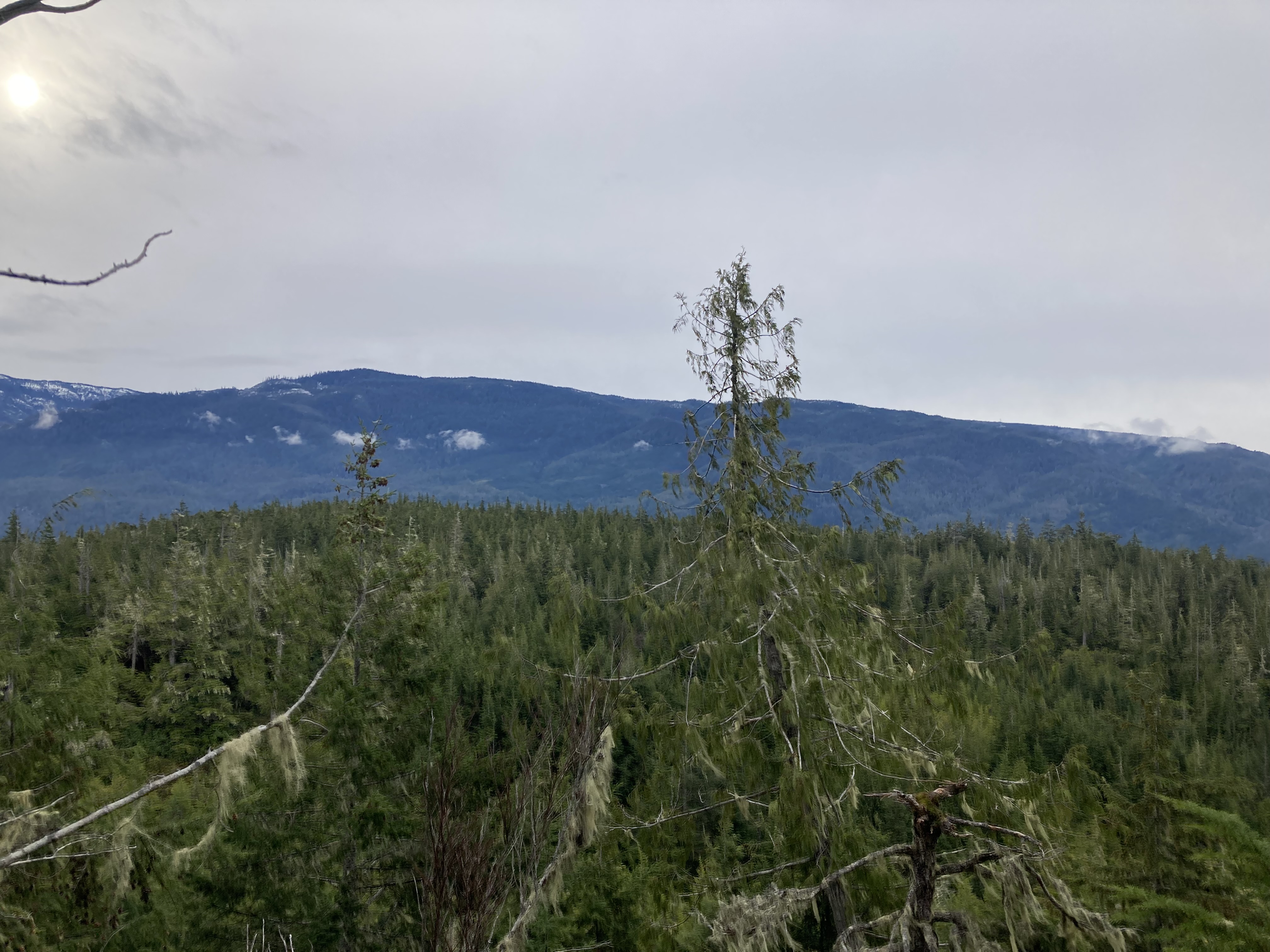
I’d be lost without my phone. It’s hard to admit, even by myself, without so much as a raven to judge me. The salal thicket blindfolded me, the small drainage spun me, and the few windows of sky reveal nothing. I follow the crutch in my hand, allowing it to guide me up one more embankment. A trio of big cedars with intertwined limbs shade a clearing festooned with deer beds. I push through one more wall of salal and gaze from the summit at Vancouver Island’s distant ridges. The hillside steepens, leaving just enough room for a viewshed and a clearing of rocks and lichen. I squeeze fatigued legs to my chest and stare at undulating greens and blues.
***

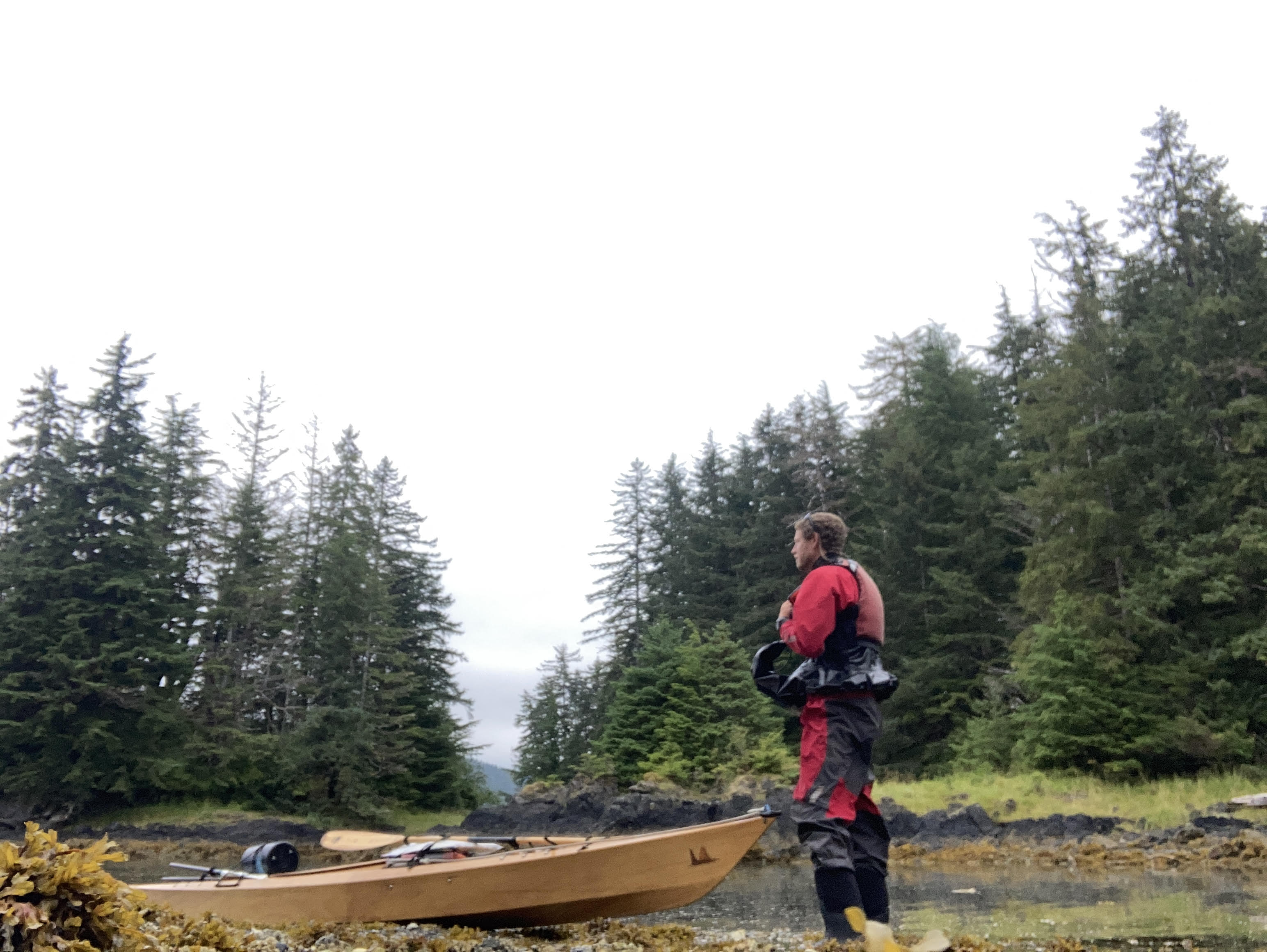
Harlequin ducks squeak in protest as I paddle by. They take to the water, necks bobbing forward and back as if to give themselves the illusion of more speed. Their rubber ducky chatter conceals their daredevil hobby of surfing southeasterly waves seconds before they break on the rocks. They dive like seals and fly like puffins, frantically beating their wings centimeters above the water. Every tidal rock holds another cluster of them, chattering away and admonishing the yellow kayak gliding past.

(C) Oregon Department of Fish & Game

Hanson Island crawls by. Every beach beckons to be explored, and twice, I slide into cobbled shores and poke into the woods. I’ve boated these waters dozens of times, always in too much of a hurry to pause. Always hustling either to Alert Bay or back to Orca Lab, usually in fading light or racing the next low-pressure system barreling up Johnstone Strait.

I’m hell-bent on savoring; I linger in non-descript woods for no reason other than they exist. At last, I swing into a narrow bay with steep shores plastered with ochre stars. A lone white buoy bobs at the head, and I pull into a small beach pockmarked with softball-sized rocks.

There’s the trail, just as I’d left it, through stands of alder and up a single-lane logging road recolonized by hip-tall hemlocks. I follow the steady incline under fallen trees and around puddles. A smattering of fish cut from plywood marks the trail with engraved names like “Bobby ‘Sparkplug’ Joseph” that demand exposition.

Past a slippery “bridge.” Clear-cuts glare at me—old ghosts rotting in choking shadow from dozens of same-aged hemlocks racing for sunlight. I stop at one such graveyard and try to remember. Had I noticed these old fallen trees in 2015? ‘16? ‘17? Had I been too naïve and unencumbered? Did the umbrella of protection now stretching across the beloved island somehow nullify the millions of board feet already removed?

I continue past spindly young cedars and gurgling streams, stopping at a fence woven with alder and salal. The gate swings open at a touch and the rusty old bell rings. A cedar shingle sign with weathered words welcomes me to “Earth Embassy.”

Trees sway in the wind, but it’s peaceful in the small courtyard between the old ramshackle buildings. Amongst the weathered old shingled walls, fraying tarps, and a bulletin board tacked with water-stained pages stand two new metal signs.  

“Respect this property,” the first sign commands, going on to recognize the site as the home and resting sight of one, David “Walrus” Garrick.

I wait for the creak of a wooden door and Walrus’s long gray beard and mischievous eyes. I listen for the echo of his dog Kessler’s booming bark or the rattle of the steller Jay fed peanuts every morning. But it’s just me in this quiet shrine with the work of one man’s lifetime.

The closest thing we had to a neighbor, I frequently made the hour-long hike from Orca Lab to Walrus’s. Equal parts Gandalf and Dumbledore with a liberal sprinkling of Original Trilogy Obi-Wan, Walrus would crack beers and tell stories he’d undoubtedly told a million times.

Wide-eyed, I’d listen to this living oracle talk about the founding of Greenpeace, protesting seal hunting in the Arctic and working as a cook on the first anti-whaling vessel before the Discovery Channel and Sea Shepard mainstreamed it.

The stories culminated in this place. His final act. The one he’ll be remembered for.

“The longest active roadblock in Canadian history,” he boasted, gesturing at his uninsulated cabin with a leaky vapor barrier, no insulation, and a smoky woodstove.

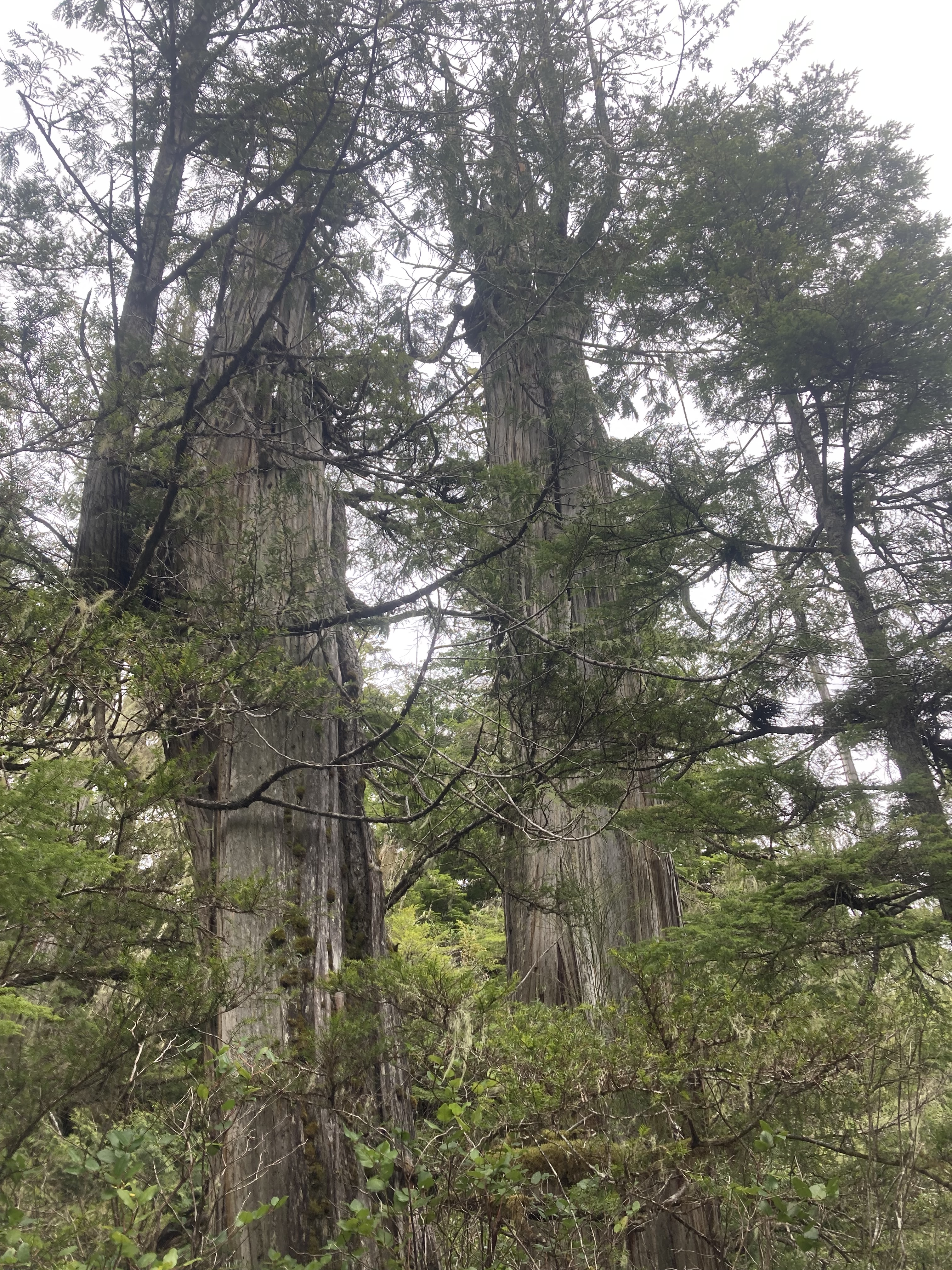
As Swanson, Cracroft, Parson, and Vancouver Island were stripped clean of timber, Walrus crawled sans-GPS through the salal to document the one thing that could spare the island known in the Kwakwaka’wakw language as Yukusam (‘shaped like a halibut hook’).
***

Red cedar is more than a sweet-smelling, rot-resistant wood that burns hot. Christened the ‘Tree of Life’ by the B.C. Coast’s First Nations, the tree was both canoe, house post, clothing, and basket. Centuries before the idea of forestry was an Anglo-Saxon fantasy, a natural ethos of conservation was a mainstay in Indigenous culture.

Life may have revolved around salmon, but cedar was the tool. Young cedars growing straight and true were set aside. They could be a basket today but, in a few generations, may be large enough to become a canoe, totem, or a corner house post.

Other trees were selected for bark harvesting. Outer bark was collected by making long, skinny incisions, which could then be dried and weaved into water-resistant clothing, baskets, even hats. The same oils that make cedars rot exceedingly slow even served as a natural bug repellent.

Instead of killing it, the harvesting increased the growth rate as the tree covered the exposed area. A cedar could rebound, survive, and even thrive if not too much was taken. The most formative and compelling case for conservation. The best argument that sometimes the word “enough” is the most important.

Prospective logging companies brushed aside the importance of Yukusam’s, “culturally modified trees” (CMTs), claiming that their in-house research showed there were only a couple hundred. Walrus and his team lived out of their active roadblock and pushed into every unlogged nook and cranny, documenting over 2,000 CMTs. For a region and people that had endured disease, assimilation, fish farms, potlatch imprisonments, and the heinous era of residential schools, CMTs are one of the remaining cultural touchstones. Carpet bombing Yukusam would be akin to nuking one of the few remaining strongholds.

Lawyers lawyered. Judges judged. Juries… juried?

And in the end, the remaining Yukusam old-growth was set aside. Walrus continued to live on his active roadblock, building gardens, cultivating shiitake mushrooms, and befriending the local steller jay population. The next generation of Kwakwaka’wakw filtered through the homestead, where elders taught cedar bark harvesting techniques.

Photo courtesy of Sharon Eva Grainger

These same Alert Bay residents pushed fish farms out of much of Kwakwaka’wakw territory, spurring returns of chum and pink salmon not seen in decades. It would be foolish and irresponsible to credit Walrus with this local revolution, but I wonder if seeing the power of a small team of forest-dwelling activists was another dry piece of kindling on an already growing fire.

***

For three winters, Walrus told me to climb the trail to Yukusam’s highest point. I’d smile, nod, and instead would walk back down the abandoned logging road for Orca Lab, unable to ascertain why. As my final winter as caretaker came to a close, I hiked to Walrus’s for the last time with a backpack laden with groceries. A nasty cough was making it harder and harder for him to lug supplies from sea level to 350 feet. Every couple of weeks, I’d arrive with a loaf of bread, eggs, and a couple beers.

“Did you get up the hill?”

I shook my head, feeling his disappointment, before grasping his hand and wondering if I’d ever see the sweet, eccentric Jedi Master again.

The cough forced Walrus to leave the longest active roadblock a few years later. In 2023, he took his final breath, finally able to breathe deep again.

***

The trail back to Walrus’s is easier to follow on the way down. I tour the old garden and study the pages clinging to the bulletin board. There are maps of the island showing the arterial trails he used to get from one CMT grove to another. Pictures of trees in mid-harvest and cross-cuttings of felled cedars, their age measured in centuries—quotes and documentation of Springer’s homecoming (another story for another day).

Near the front door is a notebook tucked safely in a Ziploc. Inside the little guestbook are the words of those who have visited this place since he passed. I clutch the little memento and stand before his resting place.

Before enlightenment, chop wood and haul water.

After enlightenment, chop wood and haul water.

I open to the next blank page and stare for a long time at the empty lines beneath my scribbled, “Dear Walrus,”

 It is somehow lifetimes and seconds since I was here… the longest active roadblock remains intact.

I finally made it up the hill. You were right, it is beautiful. I should’ve done it sooner, but I’m thankful I could return and make it happen.

I’m not who I am without Yukusam. It was orcas that drew me, but that’s not what brought me back. This place is green because of you. Cedars stand because of you, though I’m sure you’d brush that aside with a laugh and a cracking beer.

Chop wood and haul water.

The phrase catches my heart; no five words better summarize my post-Orca Lab life. Wood for a fire, wood for 2x6s, and rafters and plywood. The promise of a warm house.
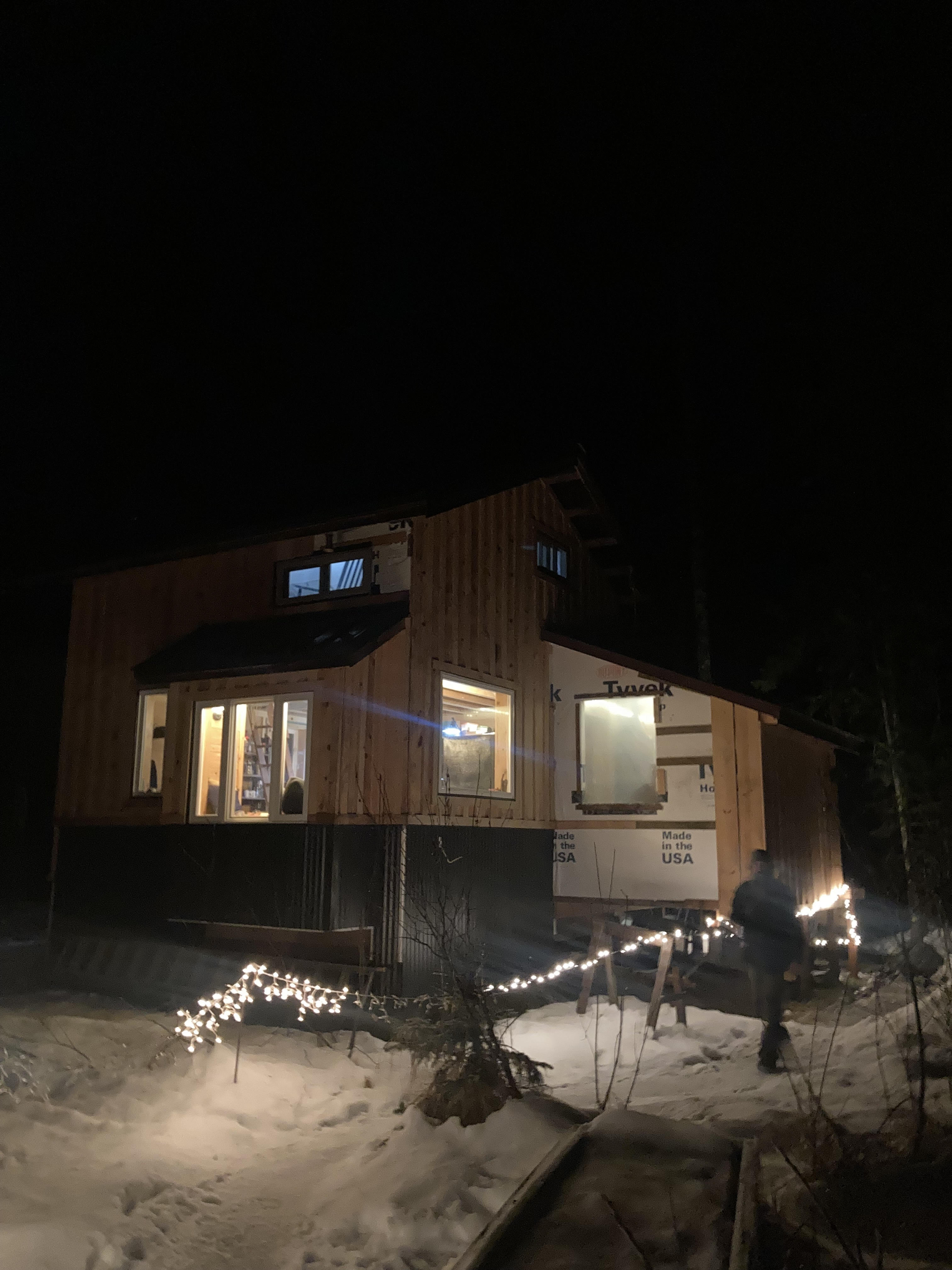
But the words are not simply literal. I repeat them like a mantra, a meditation, a reminder that some things must not be forgotten, no matter where in the journey we are. Ways of life that tether us to place and home and earth. Edicts as sturdy as a cedar house post.

Chop wood. Haul water. Climb the hills. Get dirty knees. Paddle the beaches. Drink the beer. Smile quickly. Laugh loudly. Forgive easy. Let go of anger.

A raindrop hits the page. I bend over and try to say goodbye.

Thank you for all you taught me. It took a while for some of it to sink in; I’ll never be done learning, never be done making mistakes, but I’ll never stop trying. I chop wood and carry water because of you. Rest easy, my friend. The beer is on me next time.

(C) Globe & Mail

I return the journal to a house built by trees to protect trees and retreat down a forgotten logging road that will never continue, forever stymied by a fence woven with sinewy salal and shaded by cedars growing in dignified defiance.  
Why Would I Watch

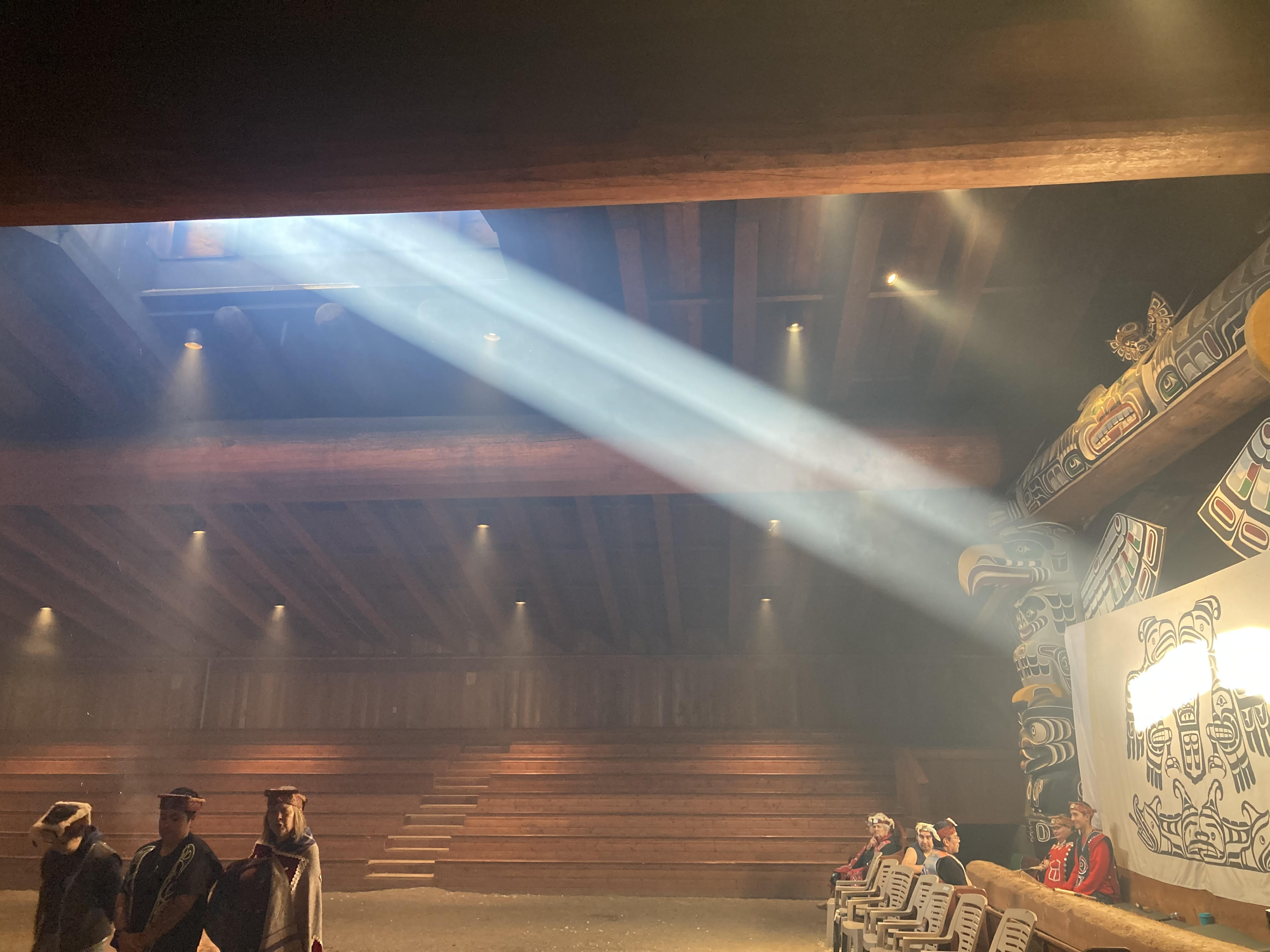
Smoke pours from the double doors. A fire lights up the dim interior of the Alert Bay Big House. A pair of totems adorned with thunderbirds glare from the far wall. Cedar logs crack and sparks lift skyward toward the hole in the roof.

I step away as the doors close and the thunderbirds disappear. I know what I’m missing: 60 minutes of the Northwest Coast brought to life through the songs, dances, and regalia of the Namgis First Nations. To the shock of no one, my favorite is the “Salmon Dance,” complete with a carved wooden orca that chases sockeye across the dirt floor with remarkable authenticity while nine community elders pound in unison on a booming drum.

 A steady mist falls. The muffled voices inside the walls go quiet. I turn and walk across a vacant soccer field and down a dirt road. I can see the islands beyond Cormorant Pass. All those names that make my heart pound and ache.

Plumper Islands. Weyton Pass. Robson Bight. Blackfish Sound. Hanson Island. Johnstone Straight. I am back where it all began.

I was born on the northeast coast of Vancouver Island, where the tides bottleneck through archipelagos and ancient fjords. Alaska may be home, but my dalliances with this place will never end.

Blackberry bushes infest the roadside ditches and stretch to the beach. Stacks of cedar and fir abandoned on the full moon tide guard a pebbled shore. I navigate the logs and turn left. I doubt what I’m looking for will still be there. I can’t decide if I want it to be. I glance at the note on my phone dated two years previous. Something kept me from exterminating this little artifact.

End of the road. Turn left. Approximately 100 paces. Look for a cedar tree with a split top. It’s a large piece of fir bark resting on the trunk.

“98… 99…100…”

There it is. The tree must be half a century old. The most precious commodity on the coast was and is an old-growth cedar. House posts, canoes, hats, clothing, baskets. It can be lived beneath, paddled, worn, and carried. No wonder Indigenous cultures revere it. I try to imagine a world older than this cedar. When the banks of the nearby Nimpkish River swelled with sockeye and the Namgis butterflied their fillets before cooking them over open fires. It must’ve felt like a miracle: food arriving at the front door every summer as the Tree of Life grew abundantly. The resources seemed limitless until we tried to feed and house the world instead of a community.

I put a hand on the cedar and stroke the sinewy outer bark. There aren’t many 500-year-old cedars left. This tree was a sapling when Columbus sailed the ocean blue. The forked trunk split as Washington crossed the Delaware. It listened to the chainsaw’s ceaseless roar as the forests of Cormorant Island fell in the name of siding and firewood.

I peer around the trunk and feel the familiar tugs of anxiety and longing. My teeth dig into my lips until I taste iron.

Pick it up. You’ve come this far.

I bend over and grab the slab of fir bark I placed here two years ago. It holds memories, just like everything on this coast. I can’t look at a fir tree and not remember combing Hanson Island’s shorelines for this bark known as “fisherman’s coal.” Stacked on top of a woodstove’s roaring flames, a couple of large pieces kept our cabin at Orca Lab toasty at night.

Memories domino: padding down the dark, narrow stairs to check the fire. The rabbit cage in the corner tucked beneath the windows. Penny nestled in her litter box, soft brown ears twitching. The hydrophone speaker above the bed and the ocean sounds bubbling through the cabin. Wind and rain on the roof. Deer on the beach. Harlequin ducks in the cove. The boat runs to Alert Bay to resupply. A hot bath. A sandwich and beer with my hero Paul Spong.

I pull myself from the past like a diver breaking the surface. Stalling, I look across the water at the islands I hold dearly. Hanson Island hovers on the horizon. Orca Lab, that cabin, is just a few miles away. I could be there in a few hours if I stole (excuse me, “borrowed”) a kayak.

The hypothetical brings me back to the slab of fir bark. I flip it over and run my fingers across the smooth brown surface. Someone has scrawled an untidy message into it. The penmanship is mine, but that’s where the similarities end.

I had vowed we’d return here and finish what we’d started. The Orca Lab caretaking era was supposed to be nothing more than a kayaking trip until it grew into so much more. But we never did get that paddle trip. Two years ago, when I returned to Alert Bay for the first time in five years, I scribbled this vow that we’d paddle here. I’d imagined finding this piece of bark and celebrating before we walked the familiar road to Paul and Helena’s house to laugh and reminisce.

The unfulfilled message has stuck in my mind like a sliver. Something insisted on finding it, making peace, and sending it on its way.

“Now what?” I ask the falling tide.

There’s no answer. No divine sign, magic rainbow, or miracle dorsal fin. I don’t expect one. I don’t need one. I flip the wood into the water and walk down the beach without a second glance. Not everything needs a proper burial.

***

Three hours later, the National Geographic Venture cruises east in Johnstone Strait, Hanson Island’s shoreline gliding past. I am giddy. My eyes ping pong between the spotting scope and my phone. I’m cheating. Thanks to Orca Lab’s streaming camera, I know orcas are swimming south towards Blackney Pass from Blackfish Sound. I watch them on my phone’s tiny screen before pushing my eyes to the scope. I find them at the east end of Hanson Island. Dorsal fins. Right where they’re supposed to be. One, two, three, four, five. I reflexively catalog them. Three females, one juvenile, and one adult male.

I should say something. It’s the only reason I’m on this boat. But I savor it a beat longer than I should. For 60 seconds, it’s just me and these five whales. They split the surface, the male raising his tail and slapping the surface. I permit a moment of anthropomorphism and tell myself he’s waving at me. Perhaps I am looking for that divine sign.

“Hey guys…” I radio to the bridge team. “We found them.”

A flurry of activity. An excited announcement rings through the boat. An orderly rush of binoculars and baseball bat-sized lenses arrive on the bow. But as the Venture turns into Blackney Pass, the orcas turn toward the Hanson Island shore.

I gaze across the pass toward Cracroft Point, remembering the dead wolf pup we found there. Off the bow is Parson Island, solar panels and remote camera visible on the cliff where I lugged eight backbreaking batteries, savoring every step and stumble.

We round the point… and there it is. From here, Orca Lab looks just as it did when I pulled away in April 2017. I think of that piece of fir bark floating in the current, reconciling memories, joy, and grief. How does one savor memories without drowning in them? And if those memories lead to stark regret, why would I watch?

The clicking of cameras fades into the ether. It’s still just me and those orcas. The Lab in the background with its observation deck and recording studio where I spent sleepless nights staring across a black ocean with chattering whales in my ears.

I step away from the scope, and my spot is immediately filled. The soothing bass of breathing orcas pirouettes across calm water and floats over the bow.

“If we’re quiet… we can hear them,” I say to no one in particular.

Why would I watch? Why do I watch? How long will I continue to watch?

The calf rockets from the water and hovers briefly before sending white water geysers high. I couldn’t stop watching, even if I wanted to. Couldn’t look away if my life depended on it. And if these animals, these places, these memories… if they bring a twinge of heartbreak syndrome from time to time… then that’s the bargain I’ll strike.

My fingers twitch, grasping at an invisible kayak paddle. The fir bark promise doesn’t need to go unfulfilled. The only thing keeping me from retracing these shorelines is the person rooted to the deck.

Between Ocean and Snow

The rising sun turns the hillsides purple. My kayak cuts through the water, leaving an ever-expanding “V” in its wake. Even with a down jacket, I can feel the bite of morning cold. The low tide leaves an exposed strip of rocks and kelp, frozen and crunchy, patiently awaiting the sun and thaw.

For 72 hours the Icy Strait Corridor has endured an unrelenting snowfall. Winds buffeted the trees and left huge drifts piled along the beach meadows. I shoveled five times trying to keep up with the snow’s metronome consistency.

Boats in Juneau’s harbor sank, the land frozen in winter’s fist. Trees bend double beneath the load. Cracks echo through the forest as these proud sentinels break under the weight.

At last, we have a respite, a window of calm before the outflow returns with gusts of 40 knots.

I have waited for this day. Snug and warm next to the woodstove I would peer through the windows at the blizzard and wonder how any animal could survive such conditions. This is my chance to find out.

The benefits of old-growth forests could fill volumes of text. The contrast between the muskegs and woods is shocking. Four feet of snow fill the open areas of the island with perhaps half that amount beneath the trees. It is these big trees, their massive boughs enveloping the land in a protective embrace that give the deer a chance. These causeways give them routes to the beaches, where they can slog through the drifts and find relief below the tide line. The table is set. Rockweed and bull kelp torn from their holdfasts wash ashore and provide some of the only accessible forage when snow of this magnitude hits.

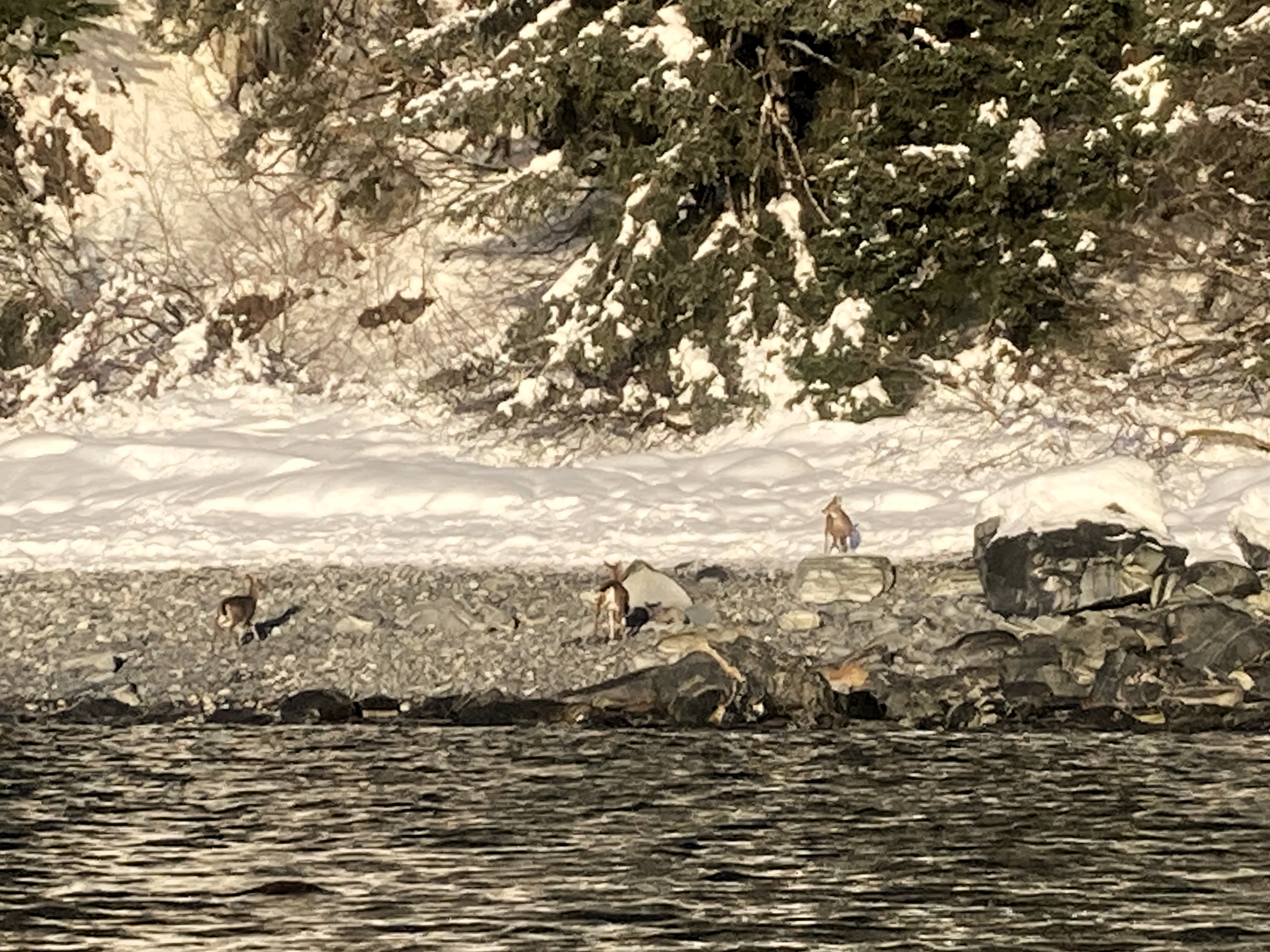
I paddle south along the island’s southern peninsula, scanning the beaches. The first one yields a doe and fawn that scatter into the woods as I glide past. Eight more deer congregate along a 300-yard stretch while a small cove no more than 50 yards wide holds another six.

I bring the binoculars to my eyes and watch, the boat bobbing in the gentle swell. The rut is over, and the bucks have dropped their antlers. It will be something of an easter egg hunt in the coming months to find them hidden in the moss.

These deer are in my parking spot. I’d planned on landing here and climbing to the other side of the island to inspect the long stretch of east-facing beaches bathed in morning light. I hover offshore and watch them through the binoculars. Five adults and a yearling. They look in good shape, still fat and healthy.

Deer are ruminants, meaning they chew their food multiple times and have specific bacteria in their gut to maximize their caloric intake. But every food type has its own bacteria, and there’s a delay as these new bacteria colonize the stomach. Switching overnight from a diet of forest groceries to kelp can have dire consequences. A deer can eat kelp all day, but until the bacteria catch up, they may as well be eating dirt.

The six are foraging voraciously along the shoreline. How long had they waited for this opportunity? It’s easy to imagine them hiding beneath large hemlocks, watching the never-ending snow pile among them with stomachs growling and fat metabolizing. Landing will scatter them back into those snow-laden woods and I can’t bring myself to do it.

I paddle onto the next little cove.

This one too is spoken for. Three more deer graze among the rockweed. They’re so engrossed in their work they don’t notice me for several minutes. A large rock cuts this cove in two, and when they move to the far side, I ease my kayak into the beach, step out, and drag it to the snowline. I peek over the rock and see three sets of ears tuned to my frequency. Upwind of them they maintain a curious demeanor. A shift in the wind will send them scurrying, perhaps getting a whiff of the venison meatballs I’d eaten the night before.

I step towards the woods, sink through the snow’s crust, and posthole to my hip. It’s a quarter mile to the other side and it takes fifteen minutes of panting, gasping, and trudging to reach it. Sweat drips down my face and my lungs burn. How do these deer do it? By the time I reach the edge of the woods, I’m exhausted. It takes several minutes before I feel ready to climb down the cliff face to the rocks below. I remind myself to look for snowshoes when I get home.

My clumsy ascent sounds like a gong on the beach below. I watch two more deer scatter through gaps in the trees.

Whitecaps adorn Icy Strait, and Lemesurier Island looms in the distance, its forest frosty and frozen. I glass the beach ahead and see a lone deer near a washed-up hemlock deadhead.

Surprising. I figured there’d be more. I hug the waterline as I pass the hemlock, the deer watching suspiciously. On the other side of the log, another deer materializes, I stop, look up the beach, and they seem to apparate. One, two, three, four… eight. Eight more clumped in two groups of four.

I never think of deer as social animals, but they are. They may not have reliable herds, but there’s no doubt they enjoy each other’s company. Clicks and loose friendships form, safety in numbers, community. It resonates. Reminds me how alone I am.

There’s a difference between alone and lonely. I have enjoyed my solitude, the quiet, and the reflection. But there is no denying that I still reflexively reach for my phone when I remember an old inside joke, hear a new song from one of our bands, or find an Instagram reel she needs to see. Old habits, they die hard.  

The beach bends, and I creep among the boulders, peaking over the top of the last one. The 30th deer of the day has her head buried in the snow, rising every minute to slurp down another slippery string of kelp. I advance when her head’s down and freeze when it rises until I’m 50 feet away.

I settle on a boulder, open my backpack, and invite myself to lunch. As I munch trail mix and guzzle water a fawn stumbles out of the woods and joins its mother among the kelp. The scene brings an emotional response I wasn’t ready for. The pair moves to a young hemlock, and they strip the needles the way a bear forages for berries.

Icy Strait sparkles. The snow-covered mountains and hills pop. Eagles soar on the thermals. You can hear the land exhaling after the deluge of the previous days. There’s a tug at my heart, a desire to share this moment with someone. Some of House Stark’s words hover in my head.

“When the snows fall and the white winds blow, the lone wolf dies but the pack survives.”

The tide is rising, and the sun setting. I leave the little family to their work, padding back down the beach past watchful eyes and into the woods. Through the trees, I see a glimmer of red. No matter how far up the beach I bring my kayak, I never stop worrying until I see it right where I left it.

The trio of deer have disappeared, leaving the beach unoccupied. I launch and enjoy the sun on my face as it begins its downward trajectory over the Pacific. I feel full and content as I paddle for home, again overwhelmed by the incredible beauty of this place. The southern end of the Fairweather Range peaks above the islands to the north, with 14,000-foot peaks, and an icefield you can hide Rhode Island in.

I stop in front of the next cove and smile. The deer are still here. No longer foraging they lay among the sunbaked rocks. I can feel their contentment, their relief. The new bacteria in their stomachs beginning to work, metabolizing the kelp and hemlocks and blueberry twigs. Feeling warmth for the first time in days. A chance to breathe, to rest and recuperate.

I knew today was coming, had the 16th circled on my calendar even as the snow continued to pile up. The deer have no such luxury. What concept of time do they have? How long had the last three days felt for them? For those little fawns experiencing the first truly hard moment of their life? But now, the sun was out. More storms are coming, another foot of snow is expected in a few days.

Why worry now? With bellies full and warm rocks to rest on.

Storms come and storms go. We can’t always forecast when they’ll begin, end, or start again. Some may never end. Some may never come. I saw myself in these deer, huddled beneath a big hemlock, waiting for the blizzard to end, not knowing when. Clinging to the faith that the clouds will lift, the sun will return. There will be warm rocks and bull kelp for everyone.

I begin to feel that sun. Stepping out of the woods and powering through the drifts, knowing relief is near if I plunge forward just a little further. I can feel their eyes on me. And through the distance and isolation, sense the eyes and love of my own pack. The winds may howl, but I am not alone. The bow spins, the water parts around the keel and points for home, grateful that when the sun sets and the tide touches snow that I don’t have to retreat to the woods for shelter.

Inside the cabin, I pull out my notepad and consult my notes. 12 miles traveled in total, and somewhere between 38 and 45 deer depending on how confident I am I’m not double counting.

Minerva coils around my legs, reminding me it’s almost dinner time. I step outside and am greeted by a crescent moon. The hills are bathed in purple again. The winds have begun to rise, and the trees start to bend. I wrap my jacket around me, step back inside, and whisper thanks to the neighbors hovering somewhere between ocean and snow.

Westeros

The Inians are splayed out like a handful of watermarks. Inians. Such an odd name. Even Zach isn’t sure where it came from. Like someone started to write Indian and lost interest halfway through. But we know where Hobbit Hole comes from. Zach’s mother Carolyn christened it long ago because “The Pothole” was just too secular, and Hobbit Hole is a much better name.

The little archipelago is sandwiched between some of the wildest water on earth. To the west is Cross Sound, which should be renamed “Small Craft Advisory Pass.” Even on days where the wind blows from the east ten knots or less, the ocean swell sends six foot waves crashing against the westernmost islands.

Icy Strait lies to the east, an indomitable stretch of wild water in its own right. Bracketing and connecting these two bodies of water are North and South Inian Pass. The nautical map we’re studying holds a warning both exciting and intimidating.

“Tidal currents in north and south Inian Pass can reach 8-10 knots. Mariners should use extreme caution.”

Extreme caution? Who knew there were categories of caution. What exactly would constitute minor or moderate caution? Staying home would be exercising all the caution. But if that was the case, there’d be no reason to be here.

We load a pair of double kayaks. Brittney, Zach, Laura, and myself have the hair brained idea of exercising minimal caution and paddling to the westernmost island in the Inians, an unnamed chunk of land stretched vertically as if the very pounding of the oceans storms had flattened it. It’s an island that, as far as we know, hadn’t been walked on by Xtra-Tuffs in a long time.

We name it Westeros, which sounds like a rejected Middle Earth landmark, and set off. From atop the main island yesterday, Zach and I saw an exposed peak on Westeros. A peak that would offer a 360-degree view of open ocean, Chichagof Island, the Inians, and the Fairweather Range/Glacier Bay. We cross the half-mile wide channel between Westeros and the other unnamed island in the Inian cluster. This channel was nicknamed “the laundry” by commercial fisherman because trying to cast nets in the channel on the flood was like being in a washing machine. A rock cliff on the east side is covered in graffiti, the signatures and dates of the boats that had anchored here. A good luck charm they said, at least until a boat sunk the day after scrawling their name on the granite.

We find a beach to land, tie the kayaks to the alder, and disappear into Narnia. There is a sense of wildness here that is not captured many places. A sense, some sort of intimate knowledge that man has not treaded here. And if he did, he did so with a light touch, without staying long enough to leave a mark. We scramble up a hill covered in the loose shale of the island. Atop sits the bones of a fawn. The tiny scapula and ribs bleached, the white stained with the green of the forest that is consuming it. The ribs are the length of my middle finger, delicate and innocent.

Trails criss cross the hills and cliffs. The deer are here. Zach looks slightly disappointed at leaving the rifle behind. After our big Coho day in September, harvesting a deer seems like the next natural step.

We follow the trails whenever we can, trusting they know the easiest way up steep cliffs with loose rocks, rotten tree trunks, and squirrely roots. The vegetation is not what I expected. Banzai shaped mountain hemlock and shore pine dot the island, grasses grow on the south facing slopes, muskeg gives off the impression that we are walking through a frozen Serengeti.

“How many people,” I wonder aloud, “can say they have walked in a place where no one else ever has?” The percentage has to be less than 1%. For the frontier is no more. Google maps has plastered everything, for better or worse. But here one can escape this discouraging fact. Here there is just us, the deer, and a Rock Ptarmigan in winter plumage. White as a ghost it sits beneath a banzai hemlock, it’s head twitching back and forth as we creep past and above it for the summit.

It has been 24-hours since I stood on the peak of Westeros and it is that summit that has made me appreciate John Muir all the more. For Muir wrote beautifully of course, but his amazing ability to capture the natural wonderment of this place and convey it in words is second to none. I am simply not gifted enough to do it justice. But imagine a 360-degree view, each 90 degree turn offering a completely different vista of breath taking beauty. An open ocean view that spans to a horizon that is almost dizzying. Horizontal vertigo, it pulls in and pushes away at the same time, like the swell that pounds at Westeros.

Chichagof. Tall hills covered in snow, unpassable thickets of devils club. Streams thick with salmon eggs. Brown bears slumbering in caves and beneath deadfalls. The Inians and the Hobbit Hole, the last of the homesteads. And the Fairweathers. Oh those big snow coated mountains, shining so unashamedly bright they hurt the eyes. Brady Glacier flows at the feet of La Perouse and Crillion. Peaks that are over 11,000 feet high. All hail the glacier makers. What would the leaders of this world think if, just for an hour, they could sit here and do nothing but slowly spin. Would development, profits, winning, still feel tantamount? What if they ate the most delicious sandwich ever made? Ate the carrots of the victorious and guzzled the tea of salvation.

“I feel like this peak needs a name.”

“Not everything needs to be named.” Brittney says. True.

The wind whips from the east. Clouds form in eastern Icy Strait and begin to come our way. Laura points out a Lenticular cloud forming like a hat atop La Perouse. Zach wanders about and finds his favorite Alder tree. It’s chilly up here, it is January after all. It may snow tomorrow. I hope it does.

With a reluctant final glance at La Perouse and its headgear, we begin to make our way back down toward the kayaks. Past the Ptarmigan and along the trails of the deer. Returning the island to its rightful owners.

“This forest is old,” Zach quips, quoting Legolas’ description of Fangorn.

“How old is it?” I ask.

“Very old.”

May it always be that way. We linger on the bones of the fawn again before we slide down the final hill and return from our commune with the gods of Cross Sound. The reality of sea level. There is a shared sorrow at the passing of the little deer. The unspoken irony that Zach wishes to go hunting tomorrow. That we hope he gets one. The painful reminder that to live is to die. And to die is to feed another. I remember Laura landing her first Coho. The grim look on her face as it lay at our feet. Her hand reaching out for the fillet knife.

“I want to do it.”

Brittney repeating the same action a week later. Patrick running his hand down the lateral line of a Coho. The one Coho I landed, stared into its eyes, and then returned. Because for some reason I couldn’t swing the pliers, couldn’t cut the gills. This is life out here. How life should be. Forgive my arrogance.

We paddle out from shore and ride the swell like a couple of murrelets. A sea otter with its pup bobs in the chop. And I am grateful, profoundly grateful that my life includes these people, those mountains, this ocean. The opportunity to come home with dirty Carhartts, numb fingers, and red noses. Zach and Laura’s mission is to ensure that more young people can do the same. That this island cluster would change lives. And as we turn the corner and into the wind, I know it already has.

The Wettest Paddle

My gloved fingers fumble with the catches on the stern hatch. I bury my chin deeper into my rain jacket, a vain attempt to stem the never ending stream of water that’s been barreling down on us for 48-hours. I don’t know where we are, and I’m nowhere near curious enough to dig the map out of its dry bag. But I’ve stared at it enough to know what I’m looking at. Or more accurately, what I should be looking at.

Mount Wright, a 6,000 foot cathedral that guards the east arm of Glacier Bay is just two miles to the south, but it’s taking the day off. As is Adams Inlet, the first of three inlets that alternate on each side of the arm. After years of waiting I was finally seeing the fabled east arm. The inlet known as Muir Inlet, our superhero and the patron saint of glaciers. I had set off with Brittney and three friends, set on finding God in a glacier and Muir in a sun ray. But so far all I’d found was rain. Rain and clouds.

The hatch cover finally comes free and I pull from its depths three identical bear cans. We’re not stopping long. We’d been paddling for just over three hours and watched the wind and rain approach from the West. Naively we tried to outrun it, but you can’t outrun anything in a kayak except your common sense.

Brittney comes over and digs through one of the cans, pulling out tortillas, cheese, and kale. For a moment we stare at the tortillas as a gust of wind buffets us. We’re on a ridiculous little glacial outwash that will soon be obliviated by the rising tide. Eagles and Ravens perch eerily on a cemetery of uprooted stumps and logs. We slice the cheese and tear the kale.

“Now.”

Brittney opens the ziploc bag and I grab a pair of tortillas. As soon as they’re free she slams the seal shut, but too late. The surviving tortillas will be taking rainwater with them. We wrap the cheese and greens inside in record time and sit huddled against the wind, devouring our lunch before it disintegrates in our hands.

Worst rain I’ve ever experienced. I scribbled in my journal later that night. Hands so wrinkled and pruney they resemble elevation contours on the map. 

But we’re counting ourselves lucky. Because the wind is coming from behind, sweeping us up the arm and toward McBride Inlet. In a bay defined by change, McBride is the champion sprinter. A map from 1990 shows no inlet at all, but a glacier that dominates the upper end of the arm. Almost 30-years later she’s described with adjectives like “catastrophic retreat.” She’s left a narrow mouth at the base of the inlet that at low tide you could lob a rock across. On a flood the inlet turns into a vacuum sucking in water, ice bergs, gulls, seals, and wayward kayakers.

Lunch takes less than five minutes. One of the first lessons of Glacier Bay is that the best way to stay warm is to paddle. It may seem counter intuitive—surely huddling under a tarp is warmer—but all gear, no matter how rubberized or seam sealed, will eventually fail in a torrent such as this. Best to keep moving and turn your upper body into its own personal Toyo. So we hop back on the Muir Highway and let the wind whisk us north.

There’s four of us now. That morning Ellie was forced to return early after slicing open her thumb. After getting her on the day boat we’d set out from Sebree Island, knowing it would be our second 20-mile paddle day of the trip. Three of the four are kayak guides: myself, Brittney, and Jessie Markowitz. We’re equally crazy, and there seems to be an unspoken agreement that none of us are going to be the one that taps out first. That left Jessie’s boyfriend Jake, an accomplished outdoorsman, skier, and climber in his own right as our voice of reason. And as he was positioned in the front seat of a double, there was precious little rebelling he could do without rudder pedals.

We hop from point to point, Jessie and Jake’s double setting the pace. Every few minutes I glance behind me, praying to see a lift in the weather. The fog and rain has socked in the entire bay. And while we’d never admit it, all of us kind of wished we were the one with the sliced thumb on the warm day boat with all the coffee we could drink.

Around Wachusett Inlet the rubberized raingear begins to fail. I feel the water seep into my mid-layer and with a shudder feel the first needle-like prick of rainwater reach my back. But Wachusett looks beautiful, a thin layer of fog is set afire by the sun, enough to give you hope and we bob in its mouth for a few long moments. The inlet cuts seductively right a mile in, leaving you wanting more. I know better. On the best of days Wachusett blows like the dickens, I don’t want to see the sort of wind that’s around that corner. We keep pushing. Past Kim Heacox’s old stomping grounds in Goose Cove, past Sealers Island and towards Nunatak.

We take a breather and find Brown Bear tracks as big as my outstretched hand in the sand. After the rain, a bear seems tame. Alaskan visitors have a Goldilock’s complex with bears. They want them not too far, not too close, but just right. Just right usually being within range of a 300mm DSLR.

Keep paddling. The Arctic Turn I’m paddling lives up to its name. No rudder, no skeg, no problem. She turns with a simple bend in the hips, drag free. We pass false point after false point. Each time convinced that this one will be McBride Inlet. Ice bergs float by, encouraging us further. Sirens in the fog, beckoning towards their home. Further, just a little further.

Everything hurts. 

We near yet another point. Jessie and Brittney are convinced that this one is the mouth of McBride. I’m not convinced. You have a lot of time to discuss these things when you’re traveling at 2.5 miles per hour. We round the corner to find more trees. No inlet, no Glacier God, no ghost of Muir dancing in the outwash in a wool trench coat. We pull out the map and Cliff Bars. I check my watch: just over seven hours of paddling. My hands feel fused to the paddle. And yet, and this is the weird thing, it feels so good out here.

What is wrong with me? I’m frozen, cold, most everything from the waist down went numb a long time ago. Whatever isn’t numb is wet. We’re convinced the next point leads to McBride. I suggest a vote. Brittney, Jessie, and I try to say yes first. Jake sighs, shrugs his shoulders, and sticks his paddle in the water. Welcome to the bay.

We hit the next point, turn, and there it is. Bergs swirl in the mouth of McBride. We paddle for shore, and the rainfall intensifies. And I yell at the Bay. At the Bay I love so much. How dare you punish our persistence like this? After everything we just did?

But of course Glacier Bay has little regard for my well being and prune covered hands. This place does not give, it sharpens and refines, just as the glaciers have done to her. Just as they will again if we’ll allow it. Just as they do to us.

We pull the boats above the tide and a miracle happens. The rain relents, the clouds being to lift. White Thunder Ridge emerges on the other side, dramatic slate gray cliffs loom further north. It is a beauty that must be witnessed. A beauty that can only be appreciated after paddling through fog and rain for seven hours. Like a bride on her wedding day the view is worth the wait.

Dry clothes are currency, and we lay out everything we can. We set up tents and pray the rain stays away. A sucker hole appears-a knot sized patch of blue sky—but  it brought friends. We cheer the blue colored beauties and cook pasta. We eat outside the confines of a tarp. And we fall under the spell. I find myself wandering in a daze down the beach. A mystic force pulling me towards the ice like some sort of ancestral magnet. How, I wonder, could people experience this and not be changed? How can someone look into the face of nature and be brought to their knees? I’m convinced that 100 senators in 50 doubles for a couple days would clear up a lot of problems.

But for a few days we’ll be blissfully ignorant of North Korea, Charlottesville, and the rest of the world’s silliness. Just us and McBride glacier’s offspring filtering out the inlet and sweeping south.

Keep Paddling

The clothes are unfamiliar. Gone is the soothing feeling of my Patagonia base layers and the whisper of Grunden rain pants. Instead I’m in stiff dress pants and a collared shirt. I can’t recall the last time I wore a shirt that buttoned, much less one that had a collar. I’m out of my element. The interior of the country club is beautiful and immaculate. But as I walk to the microphone I wryly think that I would take an erratic covered beach over this anytime. I take a deep breath and remind myself that my belittling thoughts are nothing more than a weak cover for my own insecurities. Besides, this day has nothing to do with me. It’s my brother’s wedding. And I wouldn’t miss it if they held it on the surface of the sun.

***

It’s impractical to be mad at a bay. But dang it all, I’m sick of the wind. Even more, I’m sick of the National Weather Service promising ten knot winds when twenty knots gusts are pounding the dock. But despite the wind, the waves haven’t begun to build so I send a pair of double kayaks out from the beach and follow in my single. Two children, James and Caroline man the bow, their parents in the stern. They’re hardy and determined. Every year their father John and mother Laurie take them on a tour of the national parks. Last year Yosemite, this year Glacier Bay. The young son James can barely reach the water with his paddle but he pushes forward resolutely, head up, eyes unblinking, not daring to risk missing a thing. After adding an extra layer, his older sister Caroline pushes forward with the same resiliency, their mother relieved to be secured in the boat laughs with an easy grace.

***

The wedding was an open bar. Generally it’s a luxury I would abuse. But not today. Not with my toast still to come. I sip at an IPA and down water, unsure of when my brief moment on Jonathan’s day will come. The moment comes and I cross the ball room and grab the mic, a glass of water in my hand. I speak to total strangers every day, but this is as nervous as I’ve felt in front of a crowd. I can feel the the trio of notecards in my front pocket. Can practically feel the ink bleeding across the pages. I hope I don’t need them.

***

“Did my Dad tell you what he does?”

The question is so random and unexpected I stop paddling. Caroline stares across the gap towards my kayak, awaiting my answer. In the stern her mother continues paddling. I can’t tell if she’s listening or simply blotting out our conversation.

“No,” I answer, “but I haven’t asked.”

“He works for the EPA.”

It was a mark of how fast the world had changed. Just eight months ago this information would been little more than a punctuation point on the day. But now… it sends tidal waves of emotion through our conversation and our fleeting interaction. Suddenly the lines are drawn, the horrible reminder that we are at war for clean water, clean air, and a habitable planet. And her father was one of the persecuted.

I don’t know what to say. I’m just a kayaker. But didn’t I say I was going to war too? Didn’t I say that if the park service was going rogue then I should too? But what am I doing? What have I done to combat the denial and anger and hatred and ambivalence that plagues our world? I feel a seed of guilt grow in my stomach. I look into Caroline’s eyes and wonder what that November night must have been like in their house. How many times they had wondered and feared for their father’s job and their livelihood.

I look ahead where John paddles with his son. James’ paddle barely reaches the water, but he’s still paddling, pushing the ocean behind him, bucking the wind and the current. Those big innocent eyes are opened wide. In the moment he looks fearless.

***

“How’s everybody doing?” The wedding guest’s indulge me with polite applause, a couple of the groomsmen give me a whoop. I smile and feel the knot loosen. I tell stories. Always tell a story when you can Kim Heacox once told me. I talk about spending time with Jonathan right after he met his bride, Lisa. How it was all he could talk about. How I could see the love in his eyes.

I look across the room to where they sit. Lisa’s hands are wrapped in his and she’s smiling, Lisa’s always smiling. I consider their future. They want kids. Probably sooner rather than later. I think about the world that awaits my nieces and/or nephews and in this moment of celebration, I feel a twinge of anxiety.

***

“Caroline told me what you do for work.”

I don’t know why I brought it up. But for some reason I needed him to know that I know and that I care. I care not just for his paycheck but for the world his kids will inherit. Would James one day have the honor of placing his young son in the bow of a kayak in Bartlett Cove? I’m sure John thought about it. I want him to know I do too.

John laughs. “It’s funny, I’ve had more people come up to me for the last few months when they found out what I do and assure me that they like me. That they think what I do is important.”

What does he do? He cleans up superfund sites. He was in the Gulf of Mexico for the oil spill, he makes place habitable again. And his department is looking at a forty percent cut. I’m about to ask him if he’s worried but stop. He’s here to escape. He’s here to savor the solitude and revel in the places that are wild and free. The last thing he wants to do is talk shop. But as we discuss superfund sites, Pebble Mine, and the Arctic Refuge he doesn’t sound like a man whose life is a risk. He sounds determined, even hopeful. Like his son he’s moving forward. One paddle stroke at a time, head up, eyes never blinking. Because life is like kayaking. There’s only one thing you can do. Keep paddling.

***

I finish my speech and set the mic down on the table. I take a swig of water and wipe the tears from my eyes. My brother’s are wet too and somehow that makes me feel better. I cross the room and wrap him in the biggest hug of his life. Somehow this has become my world. Incalculable highs and unfathomable moments where I fear all is lost. Like the wedding, like that day on the water with John and his family, they’re often within minutes of each other. An otter brings joy, the absence of the whales bring fear. The look on my brother’s face brings tears of gratitude, the thought of what could lay ahead anxiety.

But like John and James, there’s nothing to do but keep paddling. Keep fighting the current, keep bucking the wind. Just don’t let the boat go backwards. Because the day is coming when the tide will turn, the wind will shift, and the paddle will feel light. It may not be in my lifetime, but if it does for James, Caroline, and my unborn nephews and nieces, then it will all be worth it.

August Fog

For the first time this summer, there’s a bite to the breeze. When I step out the backdoor. The air tastes like Fall. It brings forth images of Cottonwood Trees changing color. The taste of Pumpkin flavored beer, pumpkin spice lattes, shoot, pumpkin flavored everything. Fall comes early in Alaska. The first week of August reminding us that each season but winter is short, to be savored.

With it comes rain. The rain that justifies our existence as a rainforest. A rain that makes everything green. A chilling nasty rain with curled lips and sharp teeth that bites at the back of your neck and crawls beneath the most impenetrable Gore-Tex.

But on days like today, when it doesn’t rain, oh what a beautiful setting. Bless the rare calm, and foggy mornings of August. Blue sky above, the land ensconced in curtains of fog.

There’s something magical about paddling in the fog. The shutters pulled over our eyes, every other sense becomes sharpened.

You smell your way through fog.

On low tide mornings like this one the odor of anoxic mud crawls into my nose. A rancid guide leading me back to shore when the trees disappear behind the milky white sheen. My ears orientate like a dogs, the cries of a crow lead me across the mouth of a cove. Land nowhere in site, paddle toward the crows.

As always I’m accompanied. Today it is the minimum two people. Mark and Laura. Middle aged, bouncy, and happy. The sort that are easy to talk to because the silences are never awkward. Everything is wonderful in their eyes. The fog, the water, the sea lion that interrupts my bear story. They make my job easy. The sort of people you wish you had every day. We paddle near the shoreline and let the fog wrap around us like a sweater. The smell of the beach and the noise of the crows guiding us.

Boats pass unseen in the fog. The intrusive foghorn of a cruise ship echoes off the mountains and trees every few minutes.

We float in a kelp bed two miles from the dock. Our paddling has been serene and relaxed. I’m in no hurry. If you’re in a hurry, kayaking isn’t for you. Easier to let the world come to you then to try to catch the world.

“Are you worried about the possibility of losing the glaciers because of global warming?”

The question comes from the husband Mark. It does after you talk about the retreat of the glaciers. How, in 1794, Glacier Bay was nothing more than a five mile divot on the north side of Icy Strait. Yes I know, no internal combustion engines spewing carbon into the atmosphere in the 18th century.

There’s something different about the way that Mark phrases the question though that gives me pause. Are you worried about the glaciers?

The glaciers? I mean, I guess so. It’s funny, I live in a land defined by them, created by them. If anyone should worry about the well being of the glaciers I guess it should be me. And I am, now that I think about it. For Glacier Bay with no glaciers is a sorry end indeed. What would we call it? Muir Bay National Park and Preserve?

But when I think about climate change, about the cliff that we’re either a) barreling towards or b) careening over (depends on who you ask), glaciers aren’t the first thing I think about.

“What I think about,” I say, “are murres.”

“Murres?”

“Murres, among other things.”

I explain about the blob, which they had never heard of. About thousands of murres washing ashore on the beaches of southeast and south-central Alaska. I describe their delightful noises, the joy of a muttering murres, their exasperated yells. We all seem to have that animal that touches us in a way no one else understands. Brittney loves Black Oyster Catchers. Hank Lentfer loves Sandhill Cranes. And I have Common and Thick Billed Murres.

“For me, Glacier Bay without Murres is no longer Glacier Bay.” I say. “Maybe that’s short sighted of me. But imagine if you stopped paddling, and it was quiet.”

We do just that and are serenaded by a timpani of birds. Marbled Murrelets, Canadian Geese, crow, raven, phalarope, and oyster catcher.

People talk about getting out in nature. “Getting away from it all.” We call it. The peace and quiet of wilderness. But here’s the thing, nature is never quiet. To walk into the woods and hear nothing would be… empty, desolate, unsatisfying. Nature isn’t supposed to be quiet. There should always be a squirrel rattling, a bird calling, a sea lion swimming.

What we’re really talking about, is getting away from ourselves. Away from the world we created. The artificial one sculpted from metal and concrete. The birds and squirrels and sea lions are not noise, they are music to our ears. And a world without them, glaciers or no, is no longer a world.

Snow

She lay in an old shipping container. The kind found on the back of trucks roaring up and down the concrete riverbeds we call interstates and highways. But this one had been laid to rest here. Tucked away in a corner of a lot in Bartlett Cove. Through the trees I can hear the wind, smell the air breeze, ear cocked for the sound of a humpback. How out of place the egg white box of metal looks here. No flowers or grasses growing around it. Just a strip of gravel turning dusty in the early July heat.

Inside lie her bones.

I feel a thrill of excitement as Chris Gabrielle pulls a key from her pocket and unlocks the deadbolt. Together we lift the big metal latch, its joints creaking and groaning as the big door slides open. I don’t notice the smell at first. But as Chris flicks a light switch and ignites a small bare bulb, it overwhelms me. It is musty, sweet but sickly. Something about it smells alive, even in her death. I walk into the container, breathing shallow, fighting the urge to cover my nose with my shirt.

After almost ten years, she still lives in some way. Organic matter and oils still seeping out of her ribs, humorous, and vertebrae. I can’t help myself. I reach out and touch one of the vertebrae. As big as a tire and bleached white, I run my hands up and down all that remains of Snow. Here along the racks and shelves, were all that was left of her forty-five foot, thirty-five ton body.

The year is 2001. Somewhere in the mouth of Glacier Bay swims Snow. Inside her new life is growing. Is she aware that she’s pregnant? That in half a year there will be a miniature her swimming and breathing? The baby will drink a milk that is 50% fat, the consistency of yogurt. I wonder if she heard the cruise ship. If she had any inkling of its approach. If she could have gotten out of the way. If the ship could have. The nose of a cruise ship is so far from the engines in the stern that they create “sound holes,” right off their bow. There’s a good chance Snow never knew what hit her.

Janet Neilson (then Janet Doherty) found her. Dead whales are rarely found. Usually they disappear. Sink to the bottom and vanish, presumed missing. But it’s as if Snow wanted to be found. Janet discovered her floating off Point Gustavus, not far from where an anonymous cruise ship passenger reported feeling a thump. They towed Snow to the beach, necropsied her body, and discovered a fractured brain case and crushed vertebrae.

Gustavus mourned, the park service gave press releases, security footage was seized, attorneys went to work.

“The crime wasn’t in accidentally striking the whale,” said a park employee, “the crime was in failing to report it.” I’m not sure Snow would agree. Neither do I.

In the middle of the shipping container is an old iron claw bathtub, the porcelain chipped and rusting. But it doesn’t leak, at least not yet. Chris hands me a great bucket of industrial kitchen degreaser and instructs me to fill the tub with the stuff and soak Snow’s bones one at a time. Oil, she explains, is still seeping out of her bones. The goal was to remove the rest of the organic matter from the bones so that they could be preserved for years. An exhibit was being prepared down by the beach. Where in a way, she could live forever.

On sunny days I climb onto the roof of the container, lining her ribs up neatly to bleach in the never ending Alaskan sun. I soak the vertebrae overnight in the degreaser, greeted each morning by the strong smell of leaching oil, a pearly iridescent sheen on the surface of the tub.

Down another road, behind a locked gate is her skull. My stomach twists the first time I see it. I run my hand across the deep fracture in the skull. If a passenger felt the collision, than surely the crew did as well. But who wants the headline: “Cruise Ship Kills Whale in National Park?” Bad for business. But thirty-five ton bodies don’t always disappear. I pressure wash her skull, obliviating the moss attempting to grow on her. When the yard empties I crawl beneath the skill and lay in her mouth, imagining. Rows of baleen, gallons of sea water, tons of wriggling herring.

And I’m indebted to them. The cruise ships I mean. Wouldn’t be here without them. Wouldn’t have had summer work in Juneau when I graduated from college. Would not be sitting at this wooden table in Gustavus watching the storms roll through, the moose calves grow up, and the rain pound on the roof. I owe my beautiful little life, in some way, to an industry that makes me uncomfortable. That kills whales, that leaves a massive carbon footprint. That shows a million people Alaska every year, even if it is a watered down, fast food version. 14,000 people a day in Juneau. But what’s the alternative? I can’t take 14,000 people kayaking in Bartlett Cove. Is seeing this place from ninth story better than not seeing it at all?

Edward Abbey would say no. But I should be confident enough to form my own opinion. But I can’t. Because like this bay, nothing is black and white. A single receding glacier does not signify climate change, just as an advancing one does not disprove it. We must step back, way back. Look at the big picture objectively, rationally. We don’t like the big picture. Step far enough back and we become mitigated, aware of how insignificant we are.

That’s the beauty of the kayak, the hiker, the backcountry camper. You have no choice but to confront your own significance. At how small you are away from the billboards and street lights. It’s uncomfortable. Change always is. Tough to be uncomfortable from the ninth story.

I don’t know what the answer is. Abbey wouldn’t be impressed.

Snow stands whole once again. Without her flesh she looks serpentine. Two tiny bones bent at obtuse angles are suspended by wires two thirds of the way along her vertebrae and a foot below it. They’re all that remains of her legs. In time evolution will remove them from whale’s entirely. Like our appendix they are vestigial, no longer of any use.

Every day a park ranger gathers a crowd in front of Snow to give a presentation. People flock to the talks until the trail is not passable. They are independent travels, for the cruise ships do not dock here. Our kayak sheds are right next to the skeleton and I often squeeze through the raptly listening crowd. Like the cruise ships and wilderness, the talk makes me uncomfortable. I hear the ranger joke about how Snow embarked on, “the longest over land migration a whale has ever done” to be rearranged and put back together by a professional.

The crowd titters and laughs, something about it makes my blood boil. I hear them talk about the collision as a horribly tragedy. But in the same way a loved one developing an illness is tragic. Unavoidable, no way to prevent it. Never have I heard a ranger say that the cruise ship failed to report the collision. That it was not until security footage was seized and viewed did they admit to striking the whale. Perhaps they do and I have simply missed it. I don’t wish to criticize or demean. For the rangers do a job I know I couldn’t. I don’t know why I think people need to know that part of the story, but leaving it out feels like an insult to her memory.

On one of the displays is a grainy picture showing the bow of the ship, a gray pixelated sliver in the water shows Snow, her back arched, attempting to dive. Maybe she did know.

“Snow moments before tragedy,” reads the caption. Meanwhile ten miles away two cruise ships a day enter the park, passing Point Gustavus, bound for the glaciers of the west arm. Do the passengers on board know the story? Do the rangers share that story when they board every morning at the south end of Sitakaday Narrows?

I don’t know what the answer is.

All I know is that it hurts my heart to have Snow here, condemned to life as a silent ambassador. How much more she could be, churning up the waters of Bartlett Cove.

Another sunny July day. Six years since Chris opened that container and introduced us. We walk the familiar trail toward the kayak sheds. Past the old Tlingit canoe, Snow’s display coming into view.

“Have you met Snow?” I ask.

Everyone has the same reaction, a quick intake of breath, mouth open, rooted to the spot. Their first view of Snow is head on, as if she’s diving right toward you, forcing you to confront her here and now. They snap pictures and lean across the ropes, aching to touch her. Invariably the question comes.

“How did she die?”

“A cruise ship hit her.” My guiding style is one of light hearted comments. Jokes and stories over facts and figures. But not here. No over land migration jokes at Snow’s expense. Here just the full truth. “They knew they hit her but didn’t report it.”

I don’t like starting the day with something so sad. But at the same time, what a reminder that we cannot expect to leave the world the way we found it. The warming acidic water of the world should be a good enough reminder. Every kayak on the beach crushes barnacles and mussels. The leave no trace etiquette is an impossible dream. From man to mosquito, no creature was meant to leave an environment as they found it.

We linger a moment longer and turn toward the beach where I hand out life jackets, spray skirts, boots, and paddles. The water is alive with life. Sea otters cracking open shells on their stomachs, sea lions growl in frustration, a timpani of birds. I slip into my kayak and feel the world slide into place. My heart rate slows and my breath becomes steady. I don’t know what the answer is, and in this moment I don’t need one.

Telling Stories

He wore cowboy boots. Amazing how quickly one can come to a whole list of conclusions by a shoe type, an accent. In this case the accent matched the boots. A drawl that can come from only one place. A drawl that says, “I will not be amused when you remind me that Alaska is three times bigger than Texas.”

So I skip it, not that it was ever funny. I worked with this boat captain several years back. Before every trip he would make the guests go around and say where they were from. When someone announced they were from Texas we’d burst out with all the pent up enthusiasm we could muster, “welcome to America my friend!” They either loved it or hated it. I haven’t used that line in forever. I gloss over that one too.

They introduce themselves. Bruce and Gail. Even their names sound like Texas. But they’re friendly, oh so friendly. Bubbly, energetic, polite, talkative. In their mid-60s and on their third trip to Alaska. They love it here. They’ll remind me of that ten more times before the day is done and I’ll appreciate it every time. They’ll marvel at the beauty, coo at sea lions and otters, stare with hungry eyes at a breaching whale a quarter mile away. To hear them talk it may as well have shaken their hand.

Perhaps they sensed it like I did. That when it came to politics, to life, our ethics, we stood on opposite ends of the spectrum. But here is the beauty, the magic, the power of this Bay. It makes all that stuff irrelevant. Here is common ground. The otters are arbitrators. What would it be like if our Senate and House of Representatives met here, inches above the water. Would some of this melt away? Let’s make a Republican paddle with a Democrat and see what happens. Forget crossing the aisle, see if you can cross Bartlett Cove.

For seven hours the talk is easy. The conversations are light. They own a ranch, 2,000 acres of Texas desert beauty. Bruce grass feeds his herd. He brings inner city kids out every year, teaches them to hunt the deer that flood their property. He show them everything from pulling the trigger to cleaning, packing, and preparing. Reminding them  that food does not appear on the Wal-Mart shelves through some sort of Harry Potter spell.

“Get’em away from their phones.” Says Gail. “Too many kids spend their whole lives doing this.” She mimes tapping away on an iPhone, her head bent low, chin to her chest. “They never look up to see the world. They walk right past it.”

They’re involved in wildlife conservation. Fighting to keep the areas near their ranch wild. Teddy Roosevelt Republicans. How amazing, that the father of conservation was conservative, was buddies with John Muir. I mention the parallels and Bruce nods.

“Amazing man. Did you know that while he was president he explored the Amazon? While he was their he got so sick that he told the others in his party to leave him behind. That they couldn’t afford to carry him… the president! Tell me if that’d ever happen now?”

The trip ends. But they’re not sick of me yet and invite me up to the lodge to have a drink. For a moment I hesitate. But I’m intrigued, so intrigued by what is happening here. By the opportunity to have what Melanie Heacox would call, “the interpretive moment.” Sometimes a cold beer in the revelry of a magic day is that moment.

Halfway through the first beer the door cracks.

“Where’s one place that you really want to visit in Alaska?” Gail asks.

“There’s a place,” I begin, “in the northeast corner of the state, the Arctic National Wildlife Refuge.” Only politicians use the acronym, slurring it into a gravelly, guttural grown, “Ahhnwarrrr.”

Gail’s face alights. “It looks beautiful.” She says. Like most people, she’s seen the pictures. They’ve been to Denali, the Alaskan Serengeti.

“This is supposed to be like Denali on steroids.” I say.

Bruce leans forward. He’s a talker, not one to sit back and listen. “What’s up there?” He asks.

“Everything and nothing.” The silence hangs for a moment and I step off the ledge. “In the refuge is the 1002 area. That’s where they want—”

“That’s where the oil fields are.” Bruce finishes. I nod but say nothing.

“That’s where it is?” Gail says with a gasp. “That’s where the oil is supposed to be?”

I nod again and watch her face change but don’t say anything, waiting for her to come to her own conclusion. But Bruce continues, “You could put what, five drilling platforms up there? Two acres each. Ten acres total. Take what you needed and… the land land grows back. We see it in Texas all the time. Three years after you leave you can barely tell they were there at all.”

Our talks all day have been civil. And even now there’s no threat in his voice. Nothing that’s inviting confrontation. If only we could always talk like this. Maybe we’d get somewhere.

“If it’s done responsibly—”

“Not always as easy as you’d think.” I say. I could talk about Caribou, I could talk about carbon dioxide in parts per million, sea level rise, or erosion. But something whispers in the back of my head. “Tell stories.”

“Let me tell you about how north slope oil exterminated a pod of Orcas. In Prince William Sound is a unique population of Orca Whales. They’re called the AT1 pod. When the Exxon Valdez struck Bligh Reef, the AT1’s swam through the slick the next day.”

“Orca’s have no sense of smell,” I explain, “they had no idea what they were passing through… they haven’t reproduced since. There’s only a handful of them left. Three or four I think. Within a few years, they’ll be all gone. For me, I can’t put a price on that.”

It’s hard to tell what sort of impact the story has.

“One drunk boat captain.” Bruce says.

“All it takes is one.” I answer, “Prince William Sound will never be the same.”

I point out over Bartlett Cove, in the distance beyond the forests of Lester Island are the Fairweather Mountains. The view the three of us have been marveling at them all day. “There’s precious few places like this left on the planet. We need them. We can’t exist without them.” They agree, they understand better than most that nature equals life.

“Beneath the Brady Icefield,” I continue, which is just beneath the Fairweather’s, are mineral deposits. Possibly oil. This view we’ve been raving about all day, what if there was an oil well at its feet? What if a mine tailling dam burst? If we drill in the refuge, what’s to stop this place from being next?”

I’m not expecting a deathbed conversion. Not expecting them to change their voter registration to democrat. To start a non profit climate change research association. But I want to be heard. Just like they do. Like we all do.

“We’re coming,” I say, “from completely different ends of the spectrum. That’s ok.”

“We have no love for Trump.” Gail interjects.

“Bless you,” I smile. “But it’s important that we can sit and talk civilly about these things. That we do it respectfully. This is how change happens. This is how we keep amazing places like Glacier Bay, like the refuge whole.”

I doubt I’ll ever see Bruce or Gail again. And at the end of the day, doubt that anything in their minds has changed. Strip all this stuff away and we’d be friends, were friends for an afternoon. They’re sweet people, loving people, giving people. They work hard, play hard, the sort of people that would pick you up and set you back on your feet without a second thought.

But that look in Gail’s eyes when she realized that Ahnwarrr was the refuge. That that was the place under siege. Maybe something stuck there, in the back of her head. And maybe next time it comes up she won’t see oil rigs, drills, or platforms. Maybe she’ll see the Caribou running across the tundra, and a young kayak guide, his eyes full of meaning talking about how badly he wants to run with them.

Subject to Change

I’m paddling through a minefield. Not a dangerous one mind you. Not one that threatens me immediate harm. No, this is a magic minefield. A minefield of humpbacks. They’re serenading me, us. Every few seconds we hear another breathe. The water’s north of Young Island in Glacier Bay are full of them. How many? Five? Ten? Twenty? Thousands? It doesn’t matter. They are many. They are here. They are near.  To the left of our kayaks the latest whale breaks the surface. He’s fifty yards away, his nose pointed straight at us. My God. For the millionth time in my life I watch the back arch, the body hesitate, and the tail rise high in the air. As tall and proud as a Spanish clipper. She’s diving straight towards us. My heart pounds, my legs feel weak. I strike the surface with my paddle, my stroke noisy. I want him to know where I am. For there to be no doubt. We point the bows of our kayak towards the nearest point of land half a mile away. There’s nothing to do but paddle, our course subject to change.

Subject to change… I’ve heard that before. Or did I read it? I read it. Just this morning, killing time before the trip. Pouring over the nautical charts of Glacier Bay. The maps that make my mind race and imagination cartwheel. All of this magic bay’s coves and inlets. Here a delineation in the shoreline. A potential beach to pull out on. A potential site for a miracle to occur, for a life to change. At the base of a glacier, represented by white are the words: “area subject to change.” Subject to change, I love that. As if NOAA finally threw up their hands and gave up.

“Forget it, we’ll never get this right. Just tell them we don’t know.”

Perhaps the bay is still speaking to us. Out of the mouths of the epochs with the voice of the ice age. Reminding us, prodding us to not get comfortable. We need upheaval, to be subject to change. To not just wait for the significant calving events of life, but to embrace them. We need galloping glaciers but we need retreating ones too. The wisdom and strength to accept them.

Five minutes go by. Still no whale. He could be in front of us, behind us, below us. Every stroke could be bringing us into her path or away from it. In a kayak there’s nothing to do but paddle. With me is a family of four. Mom, Dad, their college aged son and daughter. From the mountains of Utah. But they paddle strong, their hearts are wild, their minds open. Glacier Bay is rocking some minds today. I hope it’s doing the same to them. Somewhere is a forty foot submarine. Carbon based, cloaked in blubber, eating half a ton of food per day. I don’t want to distract her. Attached to her tail is a muscle. The caudal peduncle. Fun to say, but it fails to give credit to what it can do. It’s the strongest muscle in the animal kingdom. To send a humpback rocketing from the water like a rocket it generates the same amount of energy a 747 does taking off. Anything carrying that sort of power needs respect, demands it. Teeth or baleen.

Three miles up the Lamplugh Glacier. The site of a massive rock slide. Last Sunday half a mountain fell onto the glacier. How much? 68 million SUV’s worth. Who knew a sport utility vehicle could be such a great unit of measurement. They’re the passenger of the glacier now. Of the most powerful geologic force nature can muster. You can have your volcanoes, your earthquakes. Give me the glacier. Carving, destroying, creating. In no hurry. For what artist works on any schedule but its own? The news makes me quiver. I take some radical steps, a few creative liberties. What happens when that rock reaches the glacier’s face? It will surely fall to its feet. 68 million SUVs worth. But I know how glacier’s advance. They need a protective layer of rock and dirt at their base. A lateral moraine that insulates from the salt water. If enough snowfall is accumulated above, the glacier can advance, impervious to the melting power of the saltwater. What if the Lamplugh charges… no, gallops, a galloping glacier sounds better. What if it charges across the west arm, obliviating Russell Island and roars south, changing everything about Glacier Bay that we’ve known for 50 years. What if this simple rock slides makes my world, this bay, subject to change?

Still no whale. I glance at my watch. Eight and a half minutes. The unknown more nerve wracking than the knowing. Every few strokes I tap the side of my boat.
“We’re here!” I think.
I hope my taping transmits this message. A rumble, a deep bass. I swivel around. There she is. Close, so close. Fifty yards. Pointed straight at us again. She’s massive. Of course she is. Humpbacks exhibit sexual dimorphism, the females bigger than the males. Guide mode switched on, I almost blurt out the factoid for no good reason.
“Right behind us!” I call. I try to keep my voice calm. But how are you calm with forty tons directed right at you? Ahead of us is the kelp, the closest thing to a sanctuary. This is my world. Wanting, desiring, craving to be close… but not too close. I still want control of the situation, to know that I’m out of the way. She couldn’t care less. We paddle hard, the whale invisible behind us. Forty feet that disappears with nary a ripple. Add it to the list of Glacier Bay miracles.

We reach the kelp’s open arms and I exhale. The family coasts in behind me. Their faces are alive. Exhilaration with a sprinkle of fear. Perfect, just the way it should be. Just the way Glacier Bay, Alaska as a whole expects it. I don’t want to feel safe out here. I don’t want to be in charge. Thank God there are still places where man does not dominate. We paddle on. For that’s all you do in a kayak.

I glance at the daughter. She’s in the back of the double kayak, her father in the front. She’s not that much older than I was on a certain misty and overcast day in Johnstone Strait, British Columbia. The day everything changed. When an Orca by the name of Kaikash surfaced off the bow of my kayak and sent the compass of my world spinning out of control. Who knows whose life will change with the flip of a switch, with a single surfacing, a single rock slide, a single galloping glacier. But when it does, who will be brave enough to accept it and embrace it with open arms.