Tag Archives: healing

Jello Shot Edicts

Sparks fly into inky sky, and the fire burns just bright enough to sharpen the pine tree’s silhouettes. Little tea lights in clear little buckets and mason jars lead the way down the road and through the trail like scattered jelly beans.

Breanna and I ping-pong between the cabin, shabin, and fire pit, toting folding tables, food, and tequila. I don’t remember what year the ‘Wassail’ tradition began in the Good River neighborhood. In essence, jolly residents travel from house to house for cocktails and food to celebrate the winter solstice and the promise of returning daylight. It’s the closest we get to a bar crawl around here. The tradition has steadily grown as friends from other Gustavus Neighborhoods make the pilgrimage down our meandering roads that this year are covered in an inch of ice.

The last time I hosted, the cabin had a single floor and no insulation. The wood stove was in place but not ready for installation. Everyone crowded on the plywood floor and gazed at exposed rafters, slapping me on the back and promising me it was going to be a beautiful home. I smiled and tried to imagine the place in some semblance of completion.  

***

Christmas lights complete the trail to the bonfire. Headlamps filter through the trees, laughter and song precede the incoming revelers. We’ve filled two tables with venison sliders, chips, cookies, punch, and lime-flavored Jello shots.

“I’m pretty sure we’re the first people in Wassailing history to serve Jello shots.” I say as we high-five.

We sample our handy work.

“Damn,” I wince, “we made’em strong.”

“Too strong?” Breanna asks.

“Nah. Perfect.”

Breanna pours cocktails while I dispense food and keep stealing glances at the cabin. I love how it looks from this angle, with the soft glowing lights peering out the windows.
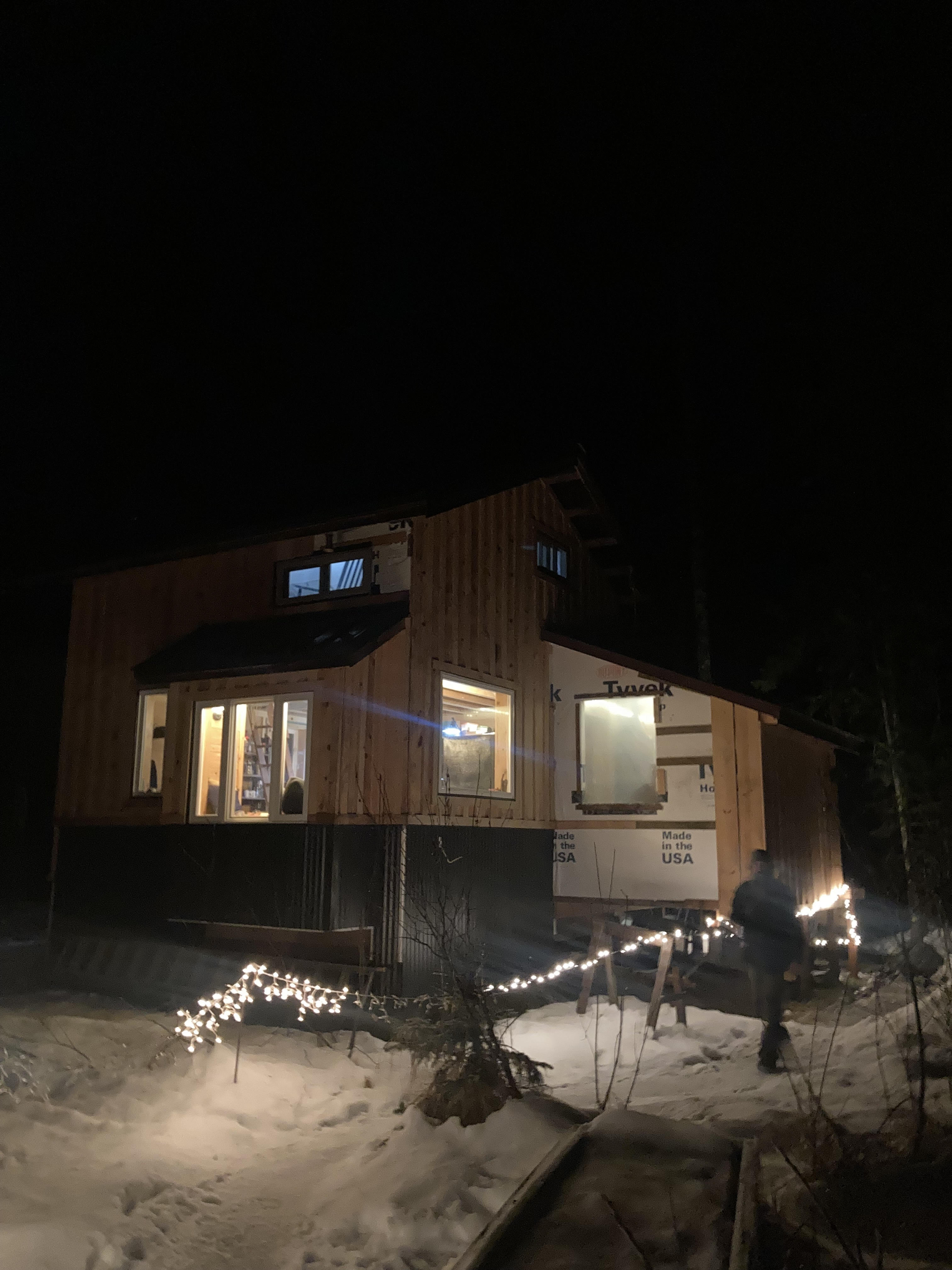
I missed this tradition last year, choosing to spend Christmas with my folks in Eagle River. I needed distance. Couldn’t wake up December 25th to Minerva and a quiet home. I listen to everyone’s laughter and watch the Jello shots steadily disappear. I was afraid we made too many, now it’s looking like we’re gonna run out before demand does.

The majority of the people slurping Jello and munching potato chips have picked me up in some capacity over the last year. Checked in on me, invited me to dinner, or simply listened. I breathe through a knot in my chest and join the crowd clustered around the fire.

Don’t get me wrong, I love these people. And man, does it feel good to be a part of this rambunctious neighborhood. I remember growing up and hearing some version of the phrase, “The holidays can be a difficult time of year.” That never made sense for a guy who never had much reason to be sad; it makes more sense now.

I crack a beer and chatter about where to find deer when the weather turns cold and windy, my favorite fishing spots on the Bartlett River, and if the rain will ever turn back into snow. Food and drink exhausted, the crowd rambles on. Breanna and I shove the remnants in the cabin and follow the footprints toward the next house.

It took a while to accept that someone else wasn’t going to fix this, share the weight, or better yet, remove it entirely from my shoulders. Grief and hardship don’t work that way. Contrary to Hollywood and countless musical tracks, burdens can’t be lifted by outside sources. But friends, family, laughter, jokes, hugs, and, yes, Jello shots make it a hell of a lot lighter. You’re not alone if the holidays feel a little heavy. It’s okay to ask for help, to lean on loved ones, it’s okay if you’re not okay. Believe that one day you will be.

***

“Slippery out here,” I mutter as we shuffle down the road for Tim and Katie’s.

There are no street lights in Gustavus. Stars and northern lights pop when the clouds allow. On overcast nights with little snow, the roads are just a different shade of black. Small candles lead the way, providing just enough illumination to see one foot in front of the other.

Darkness is the theme of the solstice, a celebration not of the lack of light but of the promise that brighter days are on the way. It may be imperceptible at first. What differences can a few seconds make? But those seconds add up, they turn to minutes, half an hour, an hour. Sometimes life emulates the pivoting sun: impossible to discern the longer days or if the sun is getting warmer. But those long, sun-kissed days are coming. Until then, there’s nothing to do but follow the candles down the road. May they lead you to a warm home.
Why Would I Watch

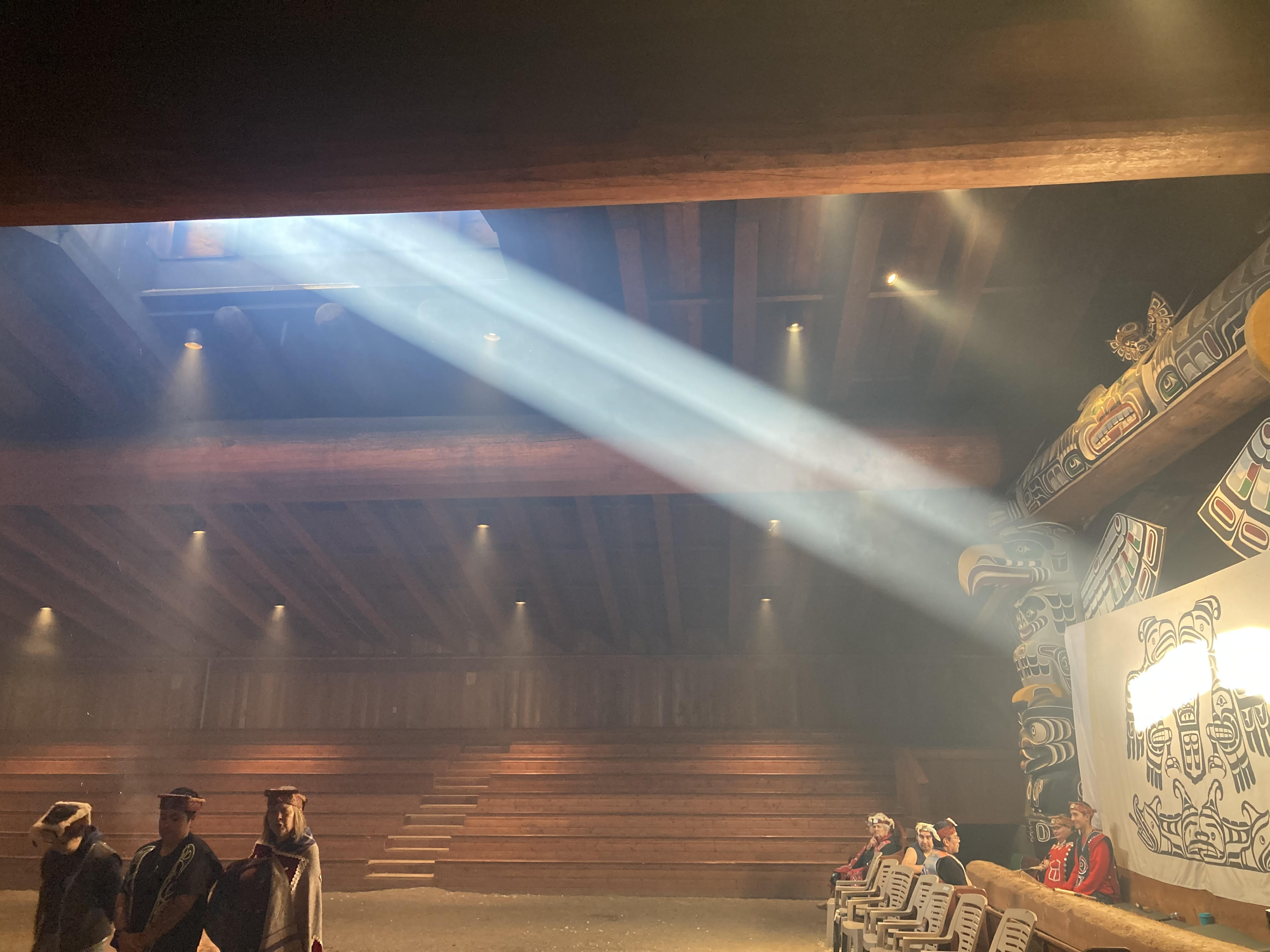
Smoke pours from the double doors. A fire lights up the dim interior of the Alert Bay Big House. A pair of totems adorned with thunderbirds glare from the far wall. Cedar logs crack and sparks lift skyward toward the hole in the roof.

I step away as the doors close and the thunderbirds disappear. I know what I’m missing: 60 minutes of the Northwest Coast brought to life through the songs, dances, and regalia of the Namgis First Nations. To the shock of no one, my favorite is the “Salmon Dance,” complete with a carved wooden orca that chases sockeye across the dirt floor with remarkable authenticity while nine community elders pound in unison on a booming drum.

 A steady mist falls. The muffled voices inside the walls go quiet. I turn and walk across a vacant soccer field and down a dirt road. I can see the islands beyond Cormorant Pass. All those names that make my heart pound and ache.

Plumper Islands. Weyton Pass. Robson Bight. Blackfish Sound. Hanson Island. Johnstone Straight. I am back where it all began.

I was born on the northeast coast of Vancouver Island, where the tides bottleneck through archipelagos and ancient fjords. Alaska may be home, but my dalliances with this place will never end.

Blackberry bushes infest the roadside ditches and stretch to the beach. Stacks of cedar and fir abandoned on the full moon tide guard a pebbled shore. I navigate the logs and turn left. I doubt what I’m looking for will still be there. I can’t decide if I want it to be. I glance at the note on my phone dated two years previous. Something kept me from exterminating this little artifact.

End of the road. Turn left. Approximately 100 paces. Look for a cedar tree with a split top. It’s a large piece of fir bark resting on the trunk.

“98… 99…100…”

There it is. The tree must be half a century old. The most precious commodity on the coast was and is an old-growth cedar. House posts, canoes, hats, clothing, baskets. It can be lived beneath, paddled, worn, and carried. No wonder Indigenous cultures revere it. I try to imagine a world older than this cedar. When the banks of the nearby Nimpkish River swelled with sockeye and the Namgis butterflied their fillets before cooking them over open fires. It must’ve felt like a miracle: food arriving at the front door every summer as the Tree of Life grew abundantly. The resources seemed limitless until we tried to feed and house the world instead of a community.

I put a hand on the cedar and stroke the sinewy outer bark. There aren’t many 500-year-old cedars left. This tree was a sapling when Columbus sailed the ocean blue. The forked trunk split as Washington crossed the Delaware. It listened to the chainsaw’s ceaseless roar as the forests of Cormorant Island fell in the name of siding and firewood.

I peer around the trunk and feel the familiar tugs of anxiety and longing. My teeth dig into my lips until I taste iron.

Pick it up. You’ve come this far.

I bend over and grab the slab of fir bark I placed here two years ago. It holds memories, just like everything on this coast. I can’t look at a fir tree and not remember combing Hanson Island’s shorelines for this bark known as “fisherman’s coal.” Stacked on top of a woodstove’s roaring flames, a couple of large pieces kept our cabin at Orca Lab toasty at night.

Memories domino: padding down the dark, narrow stairs to check the fire. The rabbit cage in the corner tucked beneath the windows. Penny nestled in her litter box, soft brown ears twitching. The hydrophone speaker above the bed and the ocean sounds bubbling through the cabin. Wind and rain on the roof. Deer on the beach. Harlequin ducks in the cove. The boat runs to Alert Bay to resupply. A hot bath. A sandwich and beer with my hero Paul Spong.

I pull myself from the past like a diver breaking the surface. Stalling, I look across the water at the islands I hold dearly. Hanson Island hovers on the horizon. Orca Lab, that cabin, is just a few miles away. I could be there in a few hours if I stole (excuse me, “borrowed”) a kayak.

The hypothetical brings me back to the slab of fir bark. I flip it over and run my fingers across the smooth brown surface. Someone has scrawled an untidy message into it. The penmanship is mine, but that’s where the similarities end.

I had vowed we’d return here and finish what we’d started. The Orca Lab caretaking era was supposed to be nothing more than a kayaking trip until it grew into so much more. But we never did get that paddle trip. Two years ago, when I returned to Alert Bay for the first time in five years, I scribbled this vow that we’d paddle here. I’d imagined finding this piece of bark and celebrating before we walked the familiar road to Paul and Helena’s house to laugh and reminisce.

The unfulfilled message has stuck in my mind like a sliver. Something insisted on finding it, making peace, and sending it on its way.

“Now what?” I ask the falling tide.

There’s no answer. No divine sign, magic rainbow, or miracle dorsal fin. I don’t expect one. I don’t need one. I flip the wood into the water and walk down the beach without a second glance. Not everything needs a proper burial.

***

Three hours later, the National Geographic Venture cruises east in Johnstone Strait, Hanson Island’s shoreline gliding past. I am giddy. My eyes ping pong between the spotting scope and my phone. I’m cheating. Thanks to Orca Lab’s streaming camera, I know orcas are swimming south towards Blackney Pass from Blackfish Sound. I watch them on my phone’s tiny screen before pushing my eyes to the scope. I find them at the east end of Hanson Island. Dorsal fins. Right where they’re supposed to be. One, two, three, four, five. I reflexively catalog them. Three females, one juvenile, and one adult male.

I should say something. It’s the only reason I’m on this boat. But I savor it a beat longer than I should. For 60 seconds, it’s just me and these five whales. They split the surface, the male raising his tail and slapping the surface. I permit a moment of anthropomorphism and tell myself he’s waving at me. Perhaps I am looking for that divine sign.

“Hey guys…” I radio to the bridge team. “We found them.”

A flurry of activity. An excited announcement rings through the boat. An orderly rush of binoculars and baseball bat-sized lenses arrive on the bow. But as the Venture turns into Blackney Pass, the orcas turn toward the Hanson Island shore.

I gaze across the pass toward Cracroft Point, remembering the dead wolf pup we found there. Off the bow is Parson Island, solar panels and remote camera visible on the cliff where I lugged eight backbreaking batteries, savoring every step and stumble.

We round the point… and there it is. From here, Orca Lab looks just as it did when I pulled away in April 2017. I think of that piece of fir bark floating in the current, reconciling memories, joy, and grief. How does one savor memories without drowning in them? And if those memories lead to stark regret, why would I watch?

The clicking of cameras fades into the ether. It’s still just me and those orcas. The Lab in the background with its observation deck and recording studio where I spent sleepless nights staring across a black ocean with chattering whales in my ears.

I step away from the scope, and my spot is immediately filled. The soothing bass of breathing orcas pirouettes across calm water and floats over the bow.

“If we’re quiet… we can hear them,” I say to no one in particular.

Why would I watch? Why do I watch? How long will I continue to watch?

The calf rockets from the water and hovers briefly before sending white water geysers high. I couldn’t stop watching, even if I wanted to. Couldn’t look away if my life depended on it. And if these animals, these places, these memories… if they bring a twinge of heartbreak syndrome from time to time… then that’s the bargain I’ll strike.

My fingers twitch, grasping at an invisible kayak paddle. The fir bark promise doesn’t need to go unfulfilled. The only thing keeping me from retracing these shorelines is the person rooted to the deck.

Reinventing Your Exit

The water goes calm. A spring sun emerges from the clouds and reflects off my glasses. I set down the clipboard, and a breeze rustles the pages. Wind and blizzards battered the Inians for weeks. The hydro failed more than it functioned. The solar panels were dormant. For one heart-stopping morning, the diesel generator wouldn’t turn over.

Fifty degrees and sunny feels like Tahiti.

The manuscript dances in another gust. Minerva yowls from the top of the dock. She fears the dock, mistrusts anything that floats. But she’ll stand sentinel until I decide I’ve had enough. That won’t be for a while.

My head thuds against the sauna. I am “crouch to drink from a mountain stream and pinch a nerve in your neck” years old. It may be days before my Xtra-tuffs are dry, but it can’t stop me from vibing on yesterday’s ranging along the Inian hills.

***

I find the deer in a grassy muskeg the color of wheat. Catching my scent, he slips behind a gnarled pine. Something brings him back. He weaves through brush and poses on the hillock. His nostrils flare, mouth open to taste my scent. We stare for eons or several seconds—long enough to confirm he’s the biggest deer I’ve seen. My index finger instinctively twitches.

If it was November…

He has important deer business to attend to. He turns reluctantly, but once he’s committed, gracefully bounds away. Postholing snow be damned. I follow the winding tracks for a mile, give up, and turn south. Down a steep ridge and up the north side where wet drifts congregate beneath old growth. I pause. It was here, wasn’t it?

I lean against the log and look at the little valley. I see the spike buck wandering up the steep ravine with his head glued to the patchy snow. The rifle cold and shaking in my hands. The Ravens are gone. Whatever’s left of the gut pile is buried. It doesn’t feel like five months since I fired two shots on a misty November day. I still don’t know how the first one missed. Find me a hunter who doesn’t have one of those stories.

Snow soaks my wool pants. I recline and look at the spot where he fell. He has given me life, energy, and hope in the form of stews, meatballs, backstrap roasts, and way too many burgers.

“Thanks,” I whisper.

It sounds empty. Hollow. Throwaway gratitude. But maybe gratitude can’t always be measured in syllables.

***

I’ve read my book 15 stinking times. I can’t decide if it’s getting worse or if I’m just sick of these stupid characters. I hear an engine. Unless you count my five-minute conversation with the Elfin Cove fuel attendant (I don’t), I haven’t seen a human in ten weeks.

So when the cherry red skiff pops through the cut, I feel like Tom Hanks floating on a raft. What are the niceties of human interaction? Eye contact is good, right? And hugs? Ayla leaps off the boat, curly Q tail raised high, permitting me a cursory sniff. Salix dozes in Laura’s arms; Zach has that shit-eating grin on his face.

“What’re you doing on my property, Brown?”

He holds up a Sierra Nevada Pale as tribute. We hug around life jackets. After so many goodbyes, it’s nice to say hello.

They have brought love, laughter, and fresh produce. I grab a package of venison for dinner, and we cluster around the worn Hobbit Hole table.

Laura points to the thicket on my head, “I like the hair, D. A real homesteader vibe.”

The mop wobbles when I laugh. I’ll pay Kathy whatever it takes to draw her out of hair-cutting retirement and thatch this mess. I have to share everything at once, a faucet that can’t be turned off.

We move to the sunny deck with open beers. We’re regrouping. So many goodbyes and farewells over the last few years. A pack of friends that once ran so deep they couldn’t fit in the house has dwindled. Life changes, the sun sets, and things that once seemed permanent vanish like smoke. Neighbors move, friends break up and disappear, and spouses…

It can be hard to know when to hold on and when to let go. The three of us have experienced all these farewells differently, but Gustavus is still home. We want to fish the streams, harvest carrots, and hunt the woods. Heat our homes with wood and piss off our front porches. We vow to find others who want to do the same.  

“I won’t make grand statements or promises I can’t keep,” I tell them. “I won’t say I’m never leaving, but I have no intention of going anywhere. If that ever changes, you’ll be the first to know.

Deal.

***

I watch the skiff putter through the Gut and wave goodbye. My Hobbit Hole stint is winding down and time does that funny thing where it feels like I’ve just arrived and spent lifetimes here. I confess I don’t want to leave. I want the groundhog to see his shadow (or not see his shadow?) and grant me six more weeks of winter to write, hike, and paddle my way through this comfortable existence. Minerva doesn’t want to go either. Not that she’s explicitly told me, but the Hobbit Hole’s predator-free nooks and crannies are kitty heaven.

But if Gustavus is truly home, then it’s time to go. I won’t find what I’m looking for here. Here, I can reset and rip myself to the studs. But I cannot build. The skiff disappears, and my heart swells with gratitude for friends, family, and neighbors who make sure I never get too low and remind me sunnier days are coming.

The list of people, places, and critters that have kept me afloat could fill pages. I doubt I’ll ever be able to fully articulate how much it’s meant. Maybe gratitude can’t always be measured in syllables.

Minerva braves the dock and coils around my legs. The float accordions in the waves, and she beats a hasty retreat towards the house. If she’s brave enough to take on the dock, I suppose I can go home, dig through the totes and mementos that demand my attention, and keep on trucking. I follow Minerva but pause long enough to soak up evening sun and hooting spruce grouse. It’s time to stop tearing down and saying goodbye. I’m ready to build up and say hello.

Wabi-Sabi

Eyes snap open, heart racing. Where am I? The boat vibrates, a cradle gently rocking, and I’m swaddled in the bunk of room 807. For the last three months, memories and reminders of what is and what is no longer come rushing in the morning. They have all the subtlety of a 747. A soft, blue light bleeds through the porthole. Along the British Columbia coast, mornings are coming later and later as the calendar flips to October.

My name is David. I am a naturalist aboard the National Geographic Venture. I am loved. I am treasured. I am ok.

I grope for my phone and pull up the GPS app. The islands, passes, and channels look up at me, friendly little faces with names that bring comfort and order to my life. Broughton and Blackfish. Johnstone and Harbledown. Parson, Blackney, and Robson Bight. My second home. My first home. The place where this human, whoever he is, was born. It was in the waters of Johnstone Strait that I bobbed in a kayak during the summer of 2007. The A36s came swimming by, stately tall dorsal fins guiding me. Not north like they do in all the stories, but south.

Aboard the National Geographic Venture, I return to these places every fall. Not as a caretaker or paddler or biologist, but something of an educator. A representative of this place that has meant so much to me. But like everything, this sanctuary comes with some baggage.

I step onto the bow with a coffee cup gripped in my hand and greet an early morning drizzle. The boat chugs through Blackfish Sound. Hanson Island is off the port, Orca Lab just a mile behind me, cloaked in morning fog.

And there are the Plumper Islands off north Hanson Island with their little passes and reefs I memorized during three winters of town runs from the Lab to Alert Bay. Another lifetime ago in so many ways.

I pull out the spotting scope and train it on the shoreline of the Plumpers. There they are. Humpback after humpback hits the surface and are greeted by flocks of greedy gulls that divebomb the forage fish pushed to the surface. The harsh edges of this clump of islands float in and out of the fog, the world blurry and slightly out of focus.

There’s a Japanese phrase, wabi-sabi. It means impermanent, imperfect, but aesthetically appreciated. A spoon’s wooden handle worn smooth from years of use. A torn and stained pair of Carharts with oil, blood, grease, dirt, and grass stains worn into the fiber. A stained cabinet edge from a beloved cat’s insistent nuzzling.

This stretch of coast is my, “wabi-sabi.” These islands, these whales, the tantalizing promise that a six-foot dorsal could appear at any moment. But inside I also feel wabi-sabi. Incomplete, under construction, and loved all the same.

I get to talk about it today. Share this place and this history with 80 people. They’ll give me a microphone and hang on my words. A chance not just to share but influence.

But there’s no way to speak of Hanson Island, Paul Spong, orcas, or quiet nights in Robson Bight without sharing my own history. And so that means opening a vein and scratching the scab that’s just starting to heal. How will it feel when I see the picture of us grinning at the camera with a rabbit and a cat clutched in our arms?

***

I step behind the little pulpit in the middle of the Venture’s forward lounge. I glance at the TV in front of me, my presentation loaded and staring back. There’s the lab, framed in cedar and fir. I remember the day I took this photo, a spring day in 2016 when I knew our time at the lab was coming to an end.

A down payment was soon due on 4.2 acres of Gustavus clay. An era was coming to an end. A final gulp of wanderlust. My tumbleweed wanted roots, and we were learning what it took to grow them. It meant saying goodbye to black nights with chatting orcas and salt spray on the windows.

I don’t know if I made the right choice.

I pick up the mic and begin to speak. There’s the photo of Paul next to the projector, focused and handsome. A black and white photo of Skana the orca he was hired to perform “research” on. Paul playing his flute to her beneath the headline “Friend Wants Orca Freed!”

I talk about Paul heading up Vancouver Island and setting off in a kayak around Hanson Island with nothing but a flute. Did he have a life jacket? I never asked. Something tells me he didn’t.

I tap a button and the calls of the northern Resident orcas’ blast through the lounge. A Clan and G Clan. Pings, squeaks, and whistles. Calling me home. I never truly left. This is still my home. My first love. And just because life has changed doesn’t make that love and time any less significant. It’s part of me. My journey. Part of my wabi-sabi. The lump rises in my throat. Damn it I miss this place.

A couple slides later and there we are. There she is. A smile on her faces as she looks out the lab over Blackney Pass. A photo of Brittney asleep in the cabin with Porter on her lap, Penny the bunny nestled in her little house. But opening this vein, scratching this scab isn’t bringing tears. The lump is gone from my chest. And I realize I am celebrating the adventure. The beautifully braided journey we made. My mind will not let my heart take that away.

The spoon’s worn handle feels comfortable in my hand.  

I finish with a crescendo. Underwater footage of orcas at the rubbing beaches. I love this shot. A female settles right in front of the camera and rests on the bottom. She gives a few happy wiggles along those smooth rocks that mean so much to them for reasons we don’t fully comprehend. Their calls once again ring through the lounge.

 I break.

A tear slides down my cheek, then another. I’ve been scared to think about my time in British Columbia, much less talk about it. But sometimes what we fear is what we need to do. Destigmatize our traumas and pain and instead glorify all that was great and beautiful and precious.

I catch a few wet eyes looking back at me.

“Thank you for your time. For letting me share this place and these animals that mean so much, that makes me who I am. It’s a pleasure to get to come back here. If you’ve had enough whale talk, I totally get it. But I’m happy to take questions and talk as long as you want.”

I suppress a grin and allow my ego a couple cartwheels as hands shoot into the air.