Tag Archives: camping

A Love Note for the Raincoast

Everyone has a natural habitat. A place that fuses perfectly with their soul, their love, their passions. Some may spend their entire life looking for it, opening and closing doors, rambling from place to place, searching for the location that moves in rhythm to their beating heart. I grew up in Eagle River, Alaska. A town that sits at the mouth of a valley, carved out by glaciers millennia ago. I loved watching the mountains turn the color of flames every fall as the birch trees downed their autumn best. Loved the female moose that would come down from those wise old mountains every spring to give birth in the safety of our neighbors yard. I loved my family, loved my friends, loved my school.

I had to get out.

Everyone needs to get out of their hometown, at least for a little while. If for nothing else than to look at some different mountains or buildings or street signs. I went north. To Fairbanks. 50 below and blowing snow.

“Not even close,” I thought.

I have since found a land where I fit snugly in its hand. In some ways, it’s not that much different from where I grew up. Glacier’s are the architect, but the valleys are filled with water, and rain falls more than snow. For years I hung a map of my natural habitat in my dorm room. Greens and blues dominated the map, towns and settlements little more than punctuation in the epic tale that requires nothing but imagination.
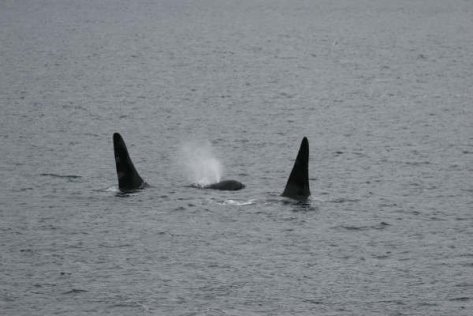
The raincoast, how I love it. From Vancouver Island up her spine of islands and into the shining face of the Alexander Archipelago, through southeast Alaska, following the march of the glaciers. And it is here that I pinball back and forth. From Hanson Island to southeast Alaska. Fjording fjords. Cruising past canals. Passing through passes. I could live a thousand years and never tire of exploring the silent coves and hidden secrets of this land, never camping in the same place twice, no two sunrises the same, each Orca encounter more enthralling and exhilarating than the last.

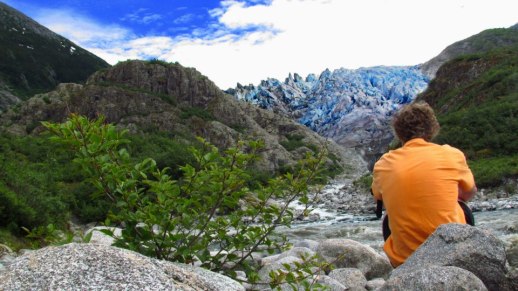
I love Alaska, I love British Columbia. For how can I refuse the chance to sit inches above the water and stare at the glacier’s that still stand guard at the headwaters of many an Alaskan fjord? And how can I ever turn away from the rich smell of cedar infused forest in the early morning light, the fog burning off of Blackfish Sound? The world becoming whole, feeling both old and new with each passing day.
8086_10151351163234852_1520975010_n
Early on in the winter we knew that six more months wouldn’t be enough. The glacier’s of our summer home beckon, our jobs as kayak guides await. But… what can I say? Hanson Island gets into your blood, syncs with your heart and spirit the way few places can. Can you love two places so fiercely you can’t live without either?

Early December, a rare calm day along the B.C coast. Brittney and I sit in the cabin, watching the sun struggle above the mountains of Vancouver Island. Before either of us open our mouths we know what the other will say. That two winters is not enough. That we need another winter with ears cocked to the speakers, waiting for the first whisper of an Orca’s voice. Another winter watching the deer trace the shoreline, sucking up every strand of kelp that washes ashore.
11008650_10155365472945858_1720255889708099310_o
“We’re so blessed,” Brittney says. “Our biggest problem is we can’t chose between the two places that we love.”

It’s true. For all our talk of buying property, settling down, being “normal,” Hanson Island doesn’t encourage normalcy. How can it? It’s founded on the tenants of faith in yourself, conviction, and passion. Pillars that don’t lead to nine to five jobs and mortgages in the suburbs. Every day I look out the window to where the lab stands on the rocks. I think of the time, the effort, the sacrifice, and risk that Paul, Helena, and countless others poured into this place. Out of a love for whales, for quiet places and open spaces, from a belief that man still can coexist with the world we seem determined to exterminate. To be a small piece in that, what a tremendous honor, to know these people not just as passing acquaintances, but as friends and mentors. It is this above all that pulls me back.

“I came for the place, I stayed for the people,” wrote Kim Heacox in The Only Kayak.

Ironically he was writing about Glacier Bay, the other place that pulls at our heartstrings. A place filled with beautiful people. A community defined by the bay, the Beatles, and bluegrass.
37367_467283714851_8103409_n
But we’re not ready to chose, not ready to force it. I want to drag myself out of bed at three in the morning because there’s Transients in Robson Bight. I want the tide and weather to determine when I go grocery shopping. I want to hear Paul’s smiling voice on the other end of the phone. When we walk away, we’ll never live like this again. Never have sea lions as neighbors, or have Harlequins knock on our front door. We are unique, we are blessed, we are insanely lucky.

Every day in the summer we’re asked the same question, “what do you do in the winter?”

And when we answer the follow up question is always the same, “what do you do there?”
292906_10151433415214852_720328661_n
How to explain that it is not what we do but why and for who we do it  that makes it so special. I watch the sun rise, listen to the ocean, talk to the trees, bond with the mink, and glorify the Orca. And above all, give thanks that I can have both places for another year.

Finding Light

Brittney has a great capacity for love. This compassion stretches deep through the animal kingdom. Every feather, every ball of fluff. Whether they have no legs, four legs, or eight legs, she cares for them all. A couple years ago she stopped killing spiders (or more accurately having me kill spiders) and insisted that they be relocated outside. Her fear of our wall climbing, web spinning roommates was no justification for murder. She still scrolls through the Juneau Humane Society website, cooing over ever whiskered face while our cat Porter looks at her with a betrayed look on his face.

Factory farming, greyhound racing, the egg industry, and of course, captivity all have room for remorse in her heart. And while many would turn their head, or acknowledge their plight and move on, Brittney doesn’t seem capable of that. She won’t rest until every “fur baby” is safe, happy, healthy.
10329311_10152867795949852_7120445375934915455_n
“Do you think they know that there’s people in the world that care? She asks as she fills out another petition to abolish greyhound racing. That there are people trying to help them?”

“I hope they do,” I say. Though I don’t know how they can.
I look at the picture on the screen, a greyhound with dark empty eyes alone in a crate, it’s head resting on a beam. It looks defeated. I feel sadness when I see this, but anger is my primary emotion. Anger and disgust. At the greed of man. Our selfishness. At the lengths we will go for profit. Our obsession and worship for the man made ideal, money. Somehow it’s become the measuring stick for our species. We’ll obliterate whatever is in our way to obtain it. Greyhounds, orcas, the very world we live in. How is it that we’ve forgotten that we cannot live without the natural world we insist on pillaging? Infinite growth in a finite world. Not the American dream, but the global fantasy.

I look back down at the picture, my mind returning to the present. The knot in my chest tightens, my heart rate increases. How could man look at this and not be enraged? Yet here is the proof that ambivalence lives.

It’s another storm ridden night at the lab. Similar Paul points out, to the night Corky was captured. It was a wave capped, howling winter gale when her family innocently swam into Pender Harbour and had their life change forever. In the name of corporate gain and human entertainment. How can we look at ourselves in the mirror?

Do you think they know that there’s people in the world that care?

Corky seems to. Why else would she withstand this torture, humiliation, and pain for so long? Does she believe there are others beside the ignorant masses that stand on the other side of the glass and snap photos with their camera phones?

“Corky’s plight makes me sad,” says Brittney, “but I feel more impassioned by factory farming, by animal testing. There’s millions of animals that die inhumanely, that live terrible lives. It’s 2015, but we’re more barbaric than ever.”

“Look what we do to our own species.” I answer, “we can’t stop murdering each other and we’re asking that same species to have compassion for other animals?”

Yet this is where we are. I pour whiskey over ice and settle on the couch. Here I am, in the middle of the natural world, and I can’t escape. ISIS, immigration, Donald Trump, SeaWorld, climate change. Running to the woods won’t make them go away.

“It’s important,” I remind Brittney, “not to get bogged down in the negative.” I’m reminding her as much as myself. “Our media, our world feeds off of negativity. It gets clicks, draws traffic in a way that heart warming, positive stories don’t. Seek these out, hang on to them. Celebrate the victories, the joy, the beauty. Because it is there. Even in darkness there is always some light.”
537318_10152372664114852_545974904_n
The chainsaw roars. I follow the ebbing tide down the beach, accepting the sacrifice of a massive Fir tree. It’s a beautiful piece of wood, undoubtedly an escapee from a passing barge. It didn’t deserve to be cut, but at least its death won’t be in vain. The sharpened teeth on the saw litters the rocks with wood shavings as I cut into the sweet smelling wood.

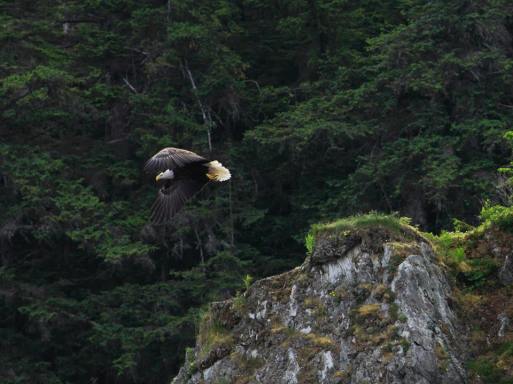
At the end of the log I stand and stretch the ache in my back, looking over Blackney Pass, over paradise. I drop the chainsaw and feel my heart lift. Blackney teems with life. Hundreds of gulls swarm a fifty yard patch of ocean in numbers so thick they look like a great feathered cloud. The bait ball has not gone unnoticed. An armada of eagles roar in from the trees, great black wings punctuating the ball of white. I count at least thirty eagles, shuttling back and forth between the trees near the cabin and the ocean. Again and again they swarm overhead, the silvery flashes of sand lance clasped tightly in their talons. Life, sustenance.
10540_10152009960619852_192033272_n
Brittney and I fall under their trance, the log lays forgotten at my feet. A lump rises in my throat. Why does this feeding frenzy have tears coming to my eyes? Because after everything the land has endured. Clear cutting, fish farms, live captures, predator control. They’re still here. The orca’s are still here. Is the world perfect? No. But here is a victory, here is joy. Here is a chance to celebrate.

“Do you know what I see?” I ask pointing out at the surging biomass before us.

Brittney looks at me, her eyes softened, the light glowing in her pupils.

“Hope.”


My Life as an Orca DJ

It starts with dolphins. They giggle like jackals, punctuated by the dull thuds of their echolocation. I shut my eyes and let the sounds of dolphins, crashing waves, and 30 knot winds rock me back to sleep. Moments later my eyes open. I sit up, Brittney’s feet swing out of the bed. The dolphins aren’t alone. The hee-haw of a donkey floats through the speaker that sits on the shelf just above our bed. G clan’s back.

1917778_229391884851_28180_n
“My turn,” Brittney mutters like the mother of a new born and staggers down the stairs, out the door, and to the lab. Moments later her voice comes out of the speaker as she begins the recording, mixing with the sounds of swirling water and cackling dolphins.

“This is Brittney, this is Hanson Island 2015, digital recording number…” my head hits the pillow and I drift away.

For the next few hours I fade in and out, coming to just long enough to see Brittney isn’t back and that the whales are still calling. They’re faint, maddeningly faint, but there. Three hours after they first pulled Brittney from the bed I rise. It’s a moonless December night with the clouds building for another low front, 7 am and still pitch black.

Brittney takes little convincing to go back to bed. She’s been at it since four and the whales seem to have barely moved. Their voices still distant in Johnstone Strait, at the limits of the Critical Point hydrophone. What compelled them to sit in one place and talk about it for so long? I wrap my sweater around me and feel the lab vibrate as another gust hits the south facing windows. I wipe the sleep from my eyes and brace myself as another tug rolls into range. The sound grows to a deafening roar, the orca’s voices extinguished. Feeling guilty I pull the headphones off and rub the headache emerging from my temple. If only they had such luxury.

The tug moves on and they’re still there. G clan somebody. I31s perhaps? Even Paul and Helena can’t say for sure. These late nights remind me of summer. When late night recording sessions were the norm rather than the exception. It’s warmer in July though. And the sun’s there to keep you company starting at about four in the morning. I am the night shift orca DJ, playing the hits of the A, G, and R clan on 92.1 the WHALE.

At long last the darkness lightens a shade, the whales almost inaudible, Vancouver Island distinguishable as a darker shade of black against a slowly lightening sky. The sun finds a gap and a splash of color transforms the world from black and grey. It’s all worth it. The water and mountains light up like ta water color and the orca’s go quiet. Maybe they too are watching the sun rise.

The sunrise doesn’t last long, extinguished by another fog bank rolling in. Waves topped with whitecaps intensify, the rain strikes like pebbles. Twenty minutes with no calls, than twenty-five, thirty, are they gone? A couple summers ago the A36s played a horrible trick on me, sitting silent in Robson Bight until I would end the recording before letting out a whispered giggle, letting me know that they were still awake and I should be too.
The I31s don’t have their sense of humor though. I end the recording and walk back to the cabin. The tree tops swirl and the waves thunder into the rocks twenty feet away on the high tide. My job, my office, my life. And to think a few years ago I was ready to work in a lab, studying herring bioenergetics. Let someone else wear the labcoat. I’ll go to the office in slippers and flannel.

Same Destination, Different Path

The sun breaks through, faces turning upward, mouths open, drinking in the sunshine.  A respite, finally. No better way to leave. We’re on the Alaska Ferry’s equivalent of the milk run. The grand tour of southeast Alaska with little concern for time of day. Juneau at 4 am, Hoonah at 9, Sitka in the evening, in and out of Kake under the cover of night. Weaving through the mouse maze. West, east, and slowly, tantalizingly south.
We’re not alone. High school volleyball and wrestling teams are bedded down in every lounge when we stagger aboard in the early morning twilight. It had been my idea to stay up until our 4 am departure from Juneau, a decision I’ve been regretting since midnight. Through bleary eyes, sleep clinging to our eyelids we maneuver the minefield of snoozing adolescents, looking for any gap on the floor for a pair of sleeping pads.
Mercifully teenagers aren’t early risers, and most of us are still asleep when the purser’s desk begins to scold us over the intercom in a voice reminiscent of Mr. Feeny. “It’s time to turn these lounges back into lounges! Chaperones, get those lounges cleaned up!”
He must get a kick back every time he says lounge. But as I look around the room at the draped arms and legs protruding out of the corners and between seats, I’d say the room is living up to its name the way it is.
By the time we’re squeezing through the minuscule pass between Baranof and Chichagof Islands, the sun is burning through the fog, the day turning from Late October to June in minutes. With the shore just yards away from both sides of the boat we curl up on the solarium and let Alaska dazzle us for the countless time. Ravens chatter in the woods like invisible sentinels. A pair of Kingfisher’s chase each other above the treetops, their punk rock haircuts matching the throaty screeches perfectly. A humpback surfaces. The hemlocks grow tightly together. Every now and than a flash of red among the green, a Cedar. An outlier, we’ll be surrounded by them soon. As if magnetically drawn by the sun’s cameo, the high schoolers filter to the open deck.
Electronics are sparse among them. In the cafeteria playing cards appear, they talk, joke, laugh, are kids. Not drones with their head’s pulled down to an HD screen with the world around them invisible. It makes me smile. No cell service, unplugged from the world but not each other. When phones do appear it’s to take pictures of the scenery, often with them and their friends in the foreground.
Selfies are the new currency of flirting. All a boy must do to receive the attention of his chosen girl pack is leap into the photo, eager to participate in the immortalization of the moment through the magic of sim cards and 10 GB hard drives. Can’t say I’d so anything different if I was them.
The water stays calm as we leave Ketchikan in the evening and push into Canadian waters. Once again, we leave under the cover of night as the ferry pulls into Prince Rupert at 4 in the morning. This means crossing the border and explaining what the hell we’re doing in this country will be done through two sleep deprived and bloodshot eyes. We’re fourth in line getting off the ferry and I scarf down our remaining two apples for breakfast in lieu of turning them over.     We reach the customs lady and I roll down the window. Usually Porter sees any open window as a gateway to his god given freedom. And after two days confined to the car I expected Brittney to have to pin him down to keep him from crawling up the lady’s uniform. But he sits politely on Brittney’s lap, the perfect gentleman, as if understanding the gravity of the situation and our history with cranky and stoic border guards.
But they seem as groggy as us. The only loss is the little pink can of mace Brittney has had on her key chain since she worked mornings at a coffee shop. Bear spray, we’re told, would’ve been permissible, but since her mace was designed to use on humans, we were a threat to the unsuspecting Canadian citizens.
The inhabitants of Prince Rupert spared a terrible mace induced terrorist attack, we drive into the sleeping town. It’s too much to hope that our pet friendly hotel would leave their door unlocked at 5 am. So we grab coffee and hole up in the parking lot, waiting for the sun to rise and the lights to come on.
It feels good to be transient again. With our bags piled up behind Penny’s house in the back of the Pathfinder, the cat on our lap. Home is the four of us together. Two hours later the door unlocks and we record history’s earliest hotel check in, dropping our bags on the floor and collapsing onto the beds. Penny leaps euphorically as she hops into every corner, free of her house for the first time in 48 hours. Everything must be smelled, tasted… and chewed. With a $200 pet deposit we watch her like a hawk.
Brittney retreats to the shower, our hot water days numbered, and I watch Porter try to keep his eyes open as he curls up on the bed. The simplicity of my joy, my contentedness, brings peace. We search for happiness everywhere, sometimes demanding much, sometimes little. Sometimes, it’s as simple as an early check in, a sleeping cat, and the knowledge that no matter where I go with these three, I’m already home.

With All Five Senses

We are visual animals. What we see is what we get. Our sense of smell, taste, hearing, and touch takes a backseat to what hits the retina, is fragmented and sent to our brains. And yet the world is so much more than what we see. Or why would we ever get off the couch, board the plane and travel? We don’t want to just see it for ourselves, on a deeper level we want to taste, hear, touch, and smell. And yet… when we arrive our supporting senses again fall away.

For nearly half a decade I’ve watched the behemoth vessels of Princess, Holland America, Norwegian and (gulp) Disney, trace the inside passage. From ten stories up the panoramic view must be breath taking. Never ending acreages of trees, oceans, whales, birds, and bears drifting below the eyes of those that have never seen the natural world in its element. Before their eyes is what brought them here. Is that enough to make one appreciate the land? To change lives? To understand what all can be lost if we don’t change and change fast?

Do we need more? Trees and mountains may inspire as they roll by. But they are visual descriptions, easy to imagine, see, digest, and forget. From atop the ship or within the walls of the lodge, so much is lost. Layers upon layers of the natural world lay hidden just beneath the surface, invisible.

They require us to step off the gangway, out the door, and into the woods and fjords. When we do we find what was hidden was the smell of the ocean, masked by exhaust. The sound of the gulls covered by engine noise. The bite of glacially fed canals, the taste of salt drifting seductively below. We must leave behind 4G and wi-fi and sit in our ancestral home while we still can

I can’t pretend like I’ve always known this.

For three years I worked as a whale and bear guide in Juneau, side by side with the great white boats. While every day brought transcendent moments of beauty, a part of me felt empty. With the rumble of boat engines we felt compelled to add our own commentary and exclamations to the scene. It’s understandable as excitement bubbles over. But the anthropogenic noises of the boat, our feet, and the babble from other boats added layer upon layer to the acoustic scene until the sound of the whales was nearly extinguished. The click of the camera the running questions, the chirp of the iPhone removed the intimacy.

I didn’t think I could be a kayak guide. Didn’t think I’d be able to handle watching whales vanish over the horizon while I paddle slower than I walk. I went into the summer unsure of how I’d adapt. Many days I came home without seeing a plume of whale exhaust, or the shadow of a bear. But when I did, an extraordinary thing happened.

Without the white noise of man’s busy hands, we fell silent. No horsepower no clicking cameras, no thundering feet on metal, no screams and shouts. We were muted by the silence of the natural world. A world so still that from 50 yards you can hear a bear’s claws on the rocks as it turns over boulders. A moment so powerful you don’t as much hear the whale breath but feel it as it explodes from the deep end of the kelp bed yards from your bow.

Sometimes we’d just bob meditatively on the tide. Glacier Bay holding us in a trance, hearing the voices we needed to hear; Murrelet, sea lion, harbor porpoise. It would be rude to interrupt.

I began to understand.

It’s not the pictures of the whale that I need. It’s the sound of their breath, audible from miles away. The slimy comfort of the kelp fronds wrapped around my kayak. The smell of salmon so strong that it permeates the ocean’s surface as they pulse beneath the surface. It’s blueberries on my tongue, Common Murres in my ears, whale breath in my nose.

It took slowing down, not speeding up. Paddle strokes over four strokes. Smaller boats, smaller town, smaller mindset.

One of the first questions of the day is invariably, “what will we see today?”

“Nature is unscripted,” I explain, “I can only tell you what we may see.”

“But,” I go on, “I promise you’ll feel the tide, hear more than you ever imagined, and won’t get the smell of salt out of your nose for days. Believe me, in the end, that’s what you really want.”

The Spirit Walker III

In the tent his eyes opened, a slimy sensation filling his mouth. He spat and saw scales and tail burst from his lips and spray the tent. The dead herring fell to the floor, its oily scent filling the room. The image of her remained burned into his retinas, vanishing slowly with every blink, the warmth of her head on his chest still tangible in the cool morning air. He hugged his legs to his chest, desperately trying to hold the sensation that spilled from his memory, the touch of her feathers… hand, against his. The pride in his chest as he handed her the herring, the way she called his name. And for the first time since they’d said goodbye, he didn’t feel alone.
The pain in his chest was worse today, his breathing only possible in brief, sharp gasps. His paddle strokes felt ragged, uneven, and awkward. The viscosity of the water seemed to have increased ten fold while he slept, as if he was paddling through syrup. The tide was flooding however, the bay itself pushing him onward, offering one last prod north, as determined as he was for him to reach the glacier. He passed, “beach where the bear caught the moose calf” and thought of the innumerable prints still sitting in his house snapped in desperation at the fruitless prospect of capturing the intensity and power of the scene.
For the first time, there was no camera strapped to the deck, there was no point in documenting, no future in which to flip through the album, no time to reminisce. From ahead he heard the ice before he saw it, cracking, groaning, and falling, Margerie and Grand Pacific Glacier bustling about their construction site, never satisfied with their work, never content to leave the land stagnant or utter the phrase, “it is finished.” They demanded constant remodeling, to reexamine what had been done and what remained to be altered. He had grown to emulate them, never settling, never stationary. Constant motion, constant change. Even in his retreats he opened new ground, new landscape for his own personal growth.
With a final stroke he rounded the corner where they stood in all their glory. Perched upon their thrones, overlooking the kingdom they had been carving for more than 200 years. He cruised past scores of ice bergs comprised of snow centuries old. Their journey like his was almost over, this stage of it at least. As they were pulled south they would shrink, evaporate and melt, until even the largest and proudest  were liquified and sent into the atmosphere or the ocean currents, pressing onward to their next voyage.
A reckless abandon overtook his spirit, and despite his labored breathing he paddled for the glacier’s face. Each stroke was savored, each twinge in his back exalted, never had the hard plastic seat cutting into his back beneath his life jacket tasted so sweet. His life jacket. With cruel decisiveness he unzipped it and stuffed it between his feet, letting his chest expand as far as it would allow.
His arms trembled as he neared his chosen beach that stood just to the left of the great icy throne. The serac steeples and arete cathedrals towered above him, beckoning him closer. But as he rode his own tiny wake into the shallows he hesitated, the finality of his journey descending upon him. For a final time he disentangled himself from the boat that had been his livelihood and salvation. Companion and confidant.
He pulled the forest green vessel above the rocks, tying the bow line to a boulder, assured that someone would be along for it eventually. The last thing he wanted was to tarnish the place whose unblemished face he’d fallen in love with half a century ago. So long ago by human measurement, and yet… he looked up at the wall of ice comprised of snow that had fallen before the nation had even existed. And even that registered as nothing more than a geologic heartbeat in the creature of deep time.
Arms still shaking with fatigue, he began to climb, his legs steady beneath him as he scrambled up the steep ridge, his fingers clenching tightly to whatever offered purchase, his boots digging into the tiny crevasses carved by the great glacier. Sweat poured in torrents, his chest seared with every breath, but he greedily insisted on inhaling every molecule of the rich, chilled oxygens savoring. Drinking more than breathing.
Reed heaved himself up the ridge’s peak and level with Margerie’s surface. “Margerie,” he thought, “such a domesticated name for something so powerful and wild.”
The bay held glaciers named for men and universities. Men of European fame and institutions. Named for the imprint of man, to prove that they had been here, gifted with the opposable thumbs that had made us judge, jury, and executioner. But not here, this would not be tamed. No matter how many cruise ships, tour boats, and kayaks stood in her shadow, cameras aimed at her massive face, waiting for her to sing. To tell us what we longed to hear even if we weren’t listening. Margerie didn’t do it justice, in his mind he renamed her, “glacier where I say goodbye.”
Reed placed a shaking foot on the ice, the first time he had stepped on any of the glaciers that he had idolized for so long, that had made his home. On his hands and knees he caressed her, his shadow stretching across as the sun peaked through the clouds to say its farewell. His vision swam as his breath caught in his throat, his lungs struggling valiantly against all odds to obey the command to breath. Nature has little interest in theatrics.
Curling into a ball Reed wrapped his arms around his legs, tucking his chin into his chest, the beloved wool hat tight around his head, green rain jacket zipped beneath his chin. His brain called for the oxygen that his lungs could no longer provide, neurons firing as he said goodbye. He had made it, in a small way he had won. A final flash of inspiration crept through his mind, John Muir’s words ringing in his ears as his body relaxed, “what chance did a low grippe microbe have up here?” and a weak smile melted onto his face.
A final tendril of breath escaped his lips, caught the breeze rushing down the glacier and rose into the sky. Higher and higher his final breath climbed, spinning in tight circles around the peaks of the Fairweather Range, catching and percolating with the warm, moisture laden air blown east from the Alaskan Gulf. Caught in the clouds it returned, suspended a thousand feet above the head of the glacier where the temperature plummeted below freezing until the cloud’s bounty was overcome by gravity. Reed’s final breath fell as snow, a single flake that tumbled and twisted in the great gusts of wind nurtured by the ice.
Soundlessly it settled high above the bay, falling among its brothers and sisters, compacting and pressing tightly together, forming ice so dense it reflected blue. And together they surged. Millions, billions, trillions of their brethren fell, piling higher and higher. And the Glacier Where I Say Goodbye charged south. Within twenty years it had swallowed up Tarr Inlet, pushing the Murrlets still bobbing in the deep green coves elsewhere. A century later it had decimated the west arm and pulsed past the middle bay. Unsatisfied the ice continued down, destroying what had been his home, the canvas becoming a pure white, a landscape of endless possibility. With a final thrust, the glaciers reclaimed the last of their bay, a tower of ice two thousand feet high smothering the land. Reed’s snowflake hovering on the pinnacle of an arete, suspended above Icy Strait which once again lived up to its name.
The glacier groaned, cracked, and hollered, the great chunk of ice broke free and fell end over end, leaving a massive crater in the strait that filled with great towers of white water that broke against the ice. Slowly the medial moraine fell away and the glaciers relented and retreated once again. The land reborn, uncovered, untouched, untrammeled. Two hundred years after his arrival, Reed finally floated away. The bay to which he belonged beginning to grow once again.

Glacier Rocks, Dirty Socks, Paradox, II

There’s an obvious fallacy, a selfish agenda to the prescription that can be found in the woods and secluded beaches. If the America public revolted against our vacation masters and went rogue. It we became independent travelers who once again slept on the ground and found our own way in lieu of setting foot on massive boats. How small 3.3 million acres of wilderness would become. The town of Gustavus swelling like a ballon and bursting as the masses flocked for the kayaks. The roads choked with car rentals, every Denali campground overbooked for years to come. In our lust for solitude, for wilderness, for our very roots, we eliminate any hope of finding it. There simply are not enough places left to support such a revolution.

We are no longer capable of supporting such a demand, hypothetical or not. Parks and wilderness areas are little more than satellites, little havens like Yosemite, Denali, and Yellowstone where wolves still roam and enjoy their birthright. But step outside these sacred borders and watch the canine be transformed. From symbol of wildness to pest, thief, scourge of the rancher and hunter. Fur, teeth, and claws mutating into a species not to be revered, but controlled. Our opposable thumbs giving us sovereign right to rule.

With so little acreage remaining, there is little choice for many but to blitz through with the concrete blurring beneath, the ocean rushing by ninety feet below.

“You can’t see anything from a car; you’ve got to get out of the gosh darn contraption,” wrote Edward Abbey using slightly more colorful language, “and walk, better yet crawl, on hands and knees, over the sandstone and through the thornbrush and cactus. When traces of blood begin to mark your trail, you’ll see something, maybe.”

But in the end, tourism won over the traveler. It’s cheaper, easier, safer. Certainly the first of these doesn’t garner enough attention. Many feel that financially the great white boats are the only way they’ll ever have a chance to see Alaska. Some combination of frugality and an unwillingness to endure the hardships of traveling cheaply and independently. Unwilling to sleep on a paperthin air mattress beneath canvas when a mattress and the rumble of engines beckons. The limitations of oats cooked above the gas stove compared to the all inclusive all you can eat, all you can drink, 24 hour a day buffet. The prepackaged, lowest common denominator overshadowing the simple and sublime.

But what do we come to Alaska for than? For the comforts of civilization? For floating casinos while the mountains cruise by? For bacon and eggs instead of oatmeal and peanut butter? Shouldn’t we be coming here to escape the familiar, the known, the comfortable? We have our whole lives to stay in pampered hotels, eat whatever we want, or play blackjack in Vegas. Hundreds of thousands of people migrate to Alaska every summer, their desire for the wild clearly not satiated. But something stops us short of truly acquainting ourselves at a deep, intimate, and personal level. How safe it is from the observation deck, where we can shelter when the wind gets too cold and there are no bears between us and the bacon. No worries, no cares, no magic. No John Muir epiphanies.

The revolution will never happen, we are tamed, domesticated. Skyscrapers block out the sun, roads smother the forests. We walk on pavement until the grass feels unnatural, the sun foreign and suspicious after years under fluorescence. Reality TV to forget our reality. Too much time looking for 3G, not enough tranquility. Facebook over of travel books.

Of course, we can’t afford to travel like this anymore anyway, so what’s the point of all this? To spend so much time prescribing a cure that people either don’t want or can’t have. I suppose it’s because every time I see a cruise ship pass by the lower bay I’m reminded of how much has changed, how there’s no going back. I feel no resentment towards those onboard, simply traveling the only way they know how.

I know the alternative, the west Arm overrun with fiberglass, a line waiting to pass through the Beardslee Cut on the high tide making my stomach turn all the more. The great contradiction of the wilderness guide. Secretly hoping not too many people listen to what he preaches, knowing his church cannot handle such a congregation.

“If everybody needed what you need, the wilderness would die.” Richard tells Kim Heacox in The Only Kayak.

“They do need it, but nobody’s telling them.”

“You are, with your writing.”

“Nobody reads my writing.”

“Good thing.”

Glacial rocks, dirty socks, the paradox.

Hanson Island Life Lessons

Every week and a half the fridge begins to look bare, the tortillas are gone, the beer and wine but a distant memory. The marine weather report is lit up in crimson, gale warning in Queen Charlotte, storm warning in Johnstone Strait, rain, wind, small craft advisories. On a good day Alert Bay is just thirty minutes by boat away, weaving through the Plumper and Pearce Islands, sending torrents of frothy white water over the deep green waters is nothing short of cathartic. It’s just finding enough of those days that can be the struggle.

And so we look for “windows.” Six hour blocks where the wind dies, the rain lessons, and the boat floats. As the storm inhales for another blow you run for town before the next exhalation. But after eight months of this game, pulling the boat up and down the beach so water lifts it off the rocks at just the right time, it feels commonplace. The fact that we once lived half a block from a Rainbow Foods absolutely absurd. We’ve traded the convenience of stores, bars, and restaurants for the simple tranquility of wilderness.

In a few weeks we’ll be gone, on our way back to civilization. At least our definition of it which entails residing in a town of 350 people. But right now that feels more like a metropolis than hamlet. Certainly there are things we’re looking forward to, I mean, we’ve talked to just a handful of people face to face this year. No longer having to correlate tide height and wind with fresh lettuce will be convenient. And I really do miss Alaskan IPA.

But more than anything, I’ve learned a lot about myself over the winter. I landed my first paid writing gig, wrote thousands of words for a novel that I’ll probably let no one ever see, and am just a season and a half away from watching the show, “Friends” all the way through.

Brittney loves the website, mindbodygreen.com and there are some great articles and information to be found. She hates me for pointing out however that the site is often flooded with “top 10” lists. Top 10 ways: to know your man has a good heart, yoga pants, fat burning foods, etc. Now it’s all she sees… she may never forgive me. But I’m going to conform, and walk through the ten things that I’ve learned this winter on Hanson Island.

1. How ever much time you think you have until the boat is aground, subtract by ten minutes. You’ll save yourself a lot of disappoint, frustration, and expletives.

2. Mice will find a way into your house. Steel wool, blockades, and a cat will only do so much. Accept the inevitable, keep the counters clean, and check under the propane stove frequently.

3. It is perfectly acceptable to wake up in a cold sweat because you just dreamed that you could hear orcas and aren’t recording.

10537056_10153151080044852_18244022817751455_n

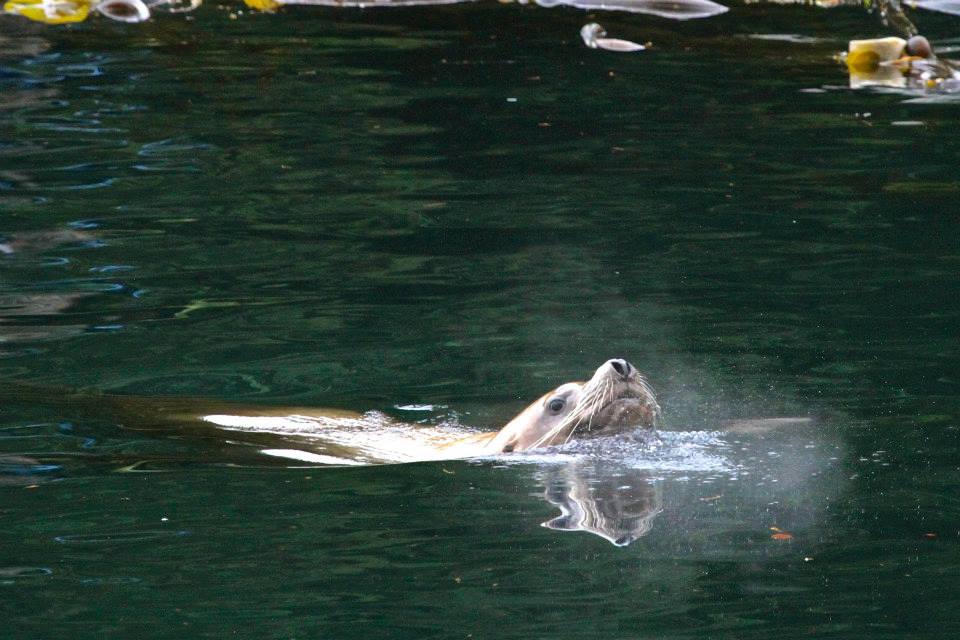
4. No matter how much you hoot and holler at them, Stellar Sea Lions will not give you the time of day.

10659202_10153342628774852_4448842526100652252_n

5. Orcas love to call at dinner time, so you stuff your plates into a plastic milk crate box and lug it all over to the lab and have dinner with headphones on.

1901153_10153342624724852_3285441612895050163_n

6. Bath Days are a gift from God and should be worshipped as such.

10995804_10153726757494852_7811731726412708212_n

7. Mink will live under the house, they’re cute but smell terrible, your cat will want to make friends, the mink will not acquiesce. 11081015_10155300238395858_6083581184589343527_n

8. Porch baths in December are a necessity. Treat them like a Nascar pit crew changes tires. If you’re not out and back inside in under five minutes you are a) doing it wrong and b) probably borderline hypothermic.

9. Bring pets. You’ll need someone to talk to when your wife gets mad at you for ruining her favorite website.

10994155_10153690504119852_621681021897676100_n

10. There is nowhere on earth like this place, nothing can replace it or come close. So enjoy every moment you have here regardless of the time of year.

_MG_9262

A Deathbed Lesson in Living

For my entire life I’ve been blessed to live in a place that other people visit. Not the Bahamas, or southern California, or Europe; Alaska. The Last Frontier, Land of the Midnight Sun and whatever other catchy tagline we’re using these days (Palin’s Pasture?).
For three summers I had a front row seat to those retracing the routes of John Muir, the gold rush and sled dogs. I worked in Alaska’s capital, Juneau as a whale watch guide, deckhand and bear guide (bear viewing that is, not hunting).
I was fresh out of college, and had just had the rug pulled out from underneath me. I had lined up an entry level position with NOAA (National Oceanic and Atmospheric Administration) only to have the federal budget frozen and my position unceremoniously tossed out four weeks before I was supposed to begin.
I didn’t know the first thing about guiding. But I knew whales, the ocean and my Dad had once been charged by a Grizzly so I felt qualified. Virtually the entire tourism industry in southeast Alaska centers around the cruise ship. The 2,000 passenger floating hotels that market themselves as holding everything you could ever want.     Upwards of 15,000 people can flood Juneau off the boats in the summer; a town with a population of about 33,000.
I fidget on the dock. Bright orange polo tucked into Carharts, black and orange ball cap jammed on top of curling blond hair. I feel like a 6’4” carrot. Slowly couples begin to gather around me; from Germany, Texas, Boston, and Australia. I hand out the weight sheets to ensure the planes are balanced for the flight portion of the tour and try to make conversation. A beer or two would’ve helped.
My last couple staggers slowly down the gangplank towards me. It’s immediately clear that all is not well. The husband’s steps are uneven, his breath ragged, he looks exhausted and beaten. Cancer will do that.
As we board the bus bound for the airport his wife pulls me aside. Yes, her husband was terminally ill, his life expectancy could be measured in months. But if I could, please, try to treat them as normally as possible.
I climb the steps behind her and collapse into my seat mind whirling. I was supposed to be in a lab, or a research boat measuring the bioenergetics of forage fish. Fish that couldn’t tell me their physical condition. That there last wish was to see the glaciers of Alaska.
What the hell had I gotten myself into? What did this man care how big a humpback whale was? How long a brown bear slept or how much fish they could devour in a day?
The trip slides by as the plane sends us over the glaciers and over to an island called Chichagof which has one of the largest concentrations of brown bears in the world. Naturally we see none. Nature doesn’t understand the concept of the storybook ending.
In the small native town of Hoonah, a boat collects us and we begin the three hour trip back to Juneau eyes scanning for whales. Slowly I begin to pluck up the courage to talk to him. His name is Dan, he’d lived his whole life in Houston, Texas and had just been diagnosed a couple of weeks ago.
He’d rejected chemotherapy and other treatments, emptied their bank account, and was seeing as many of the places he’d dreamed of experiencing before the sickness shackled him to a bed. Alaska had been his number one pick.
Juneau had been their boats first stop. “No pressure,” I told myself. I apologized that the bears hadn’t shown, that the glaciers had been partially obstructed by clouds.     He shrugs, “it’s just enough to know that I’m here.” he answers.
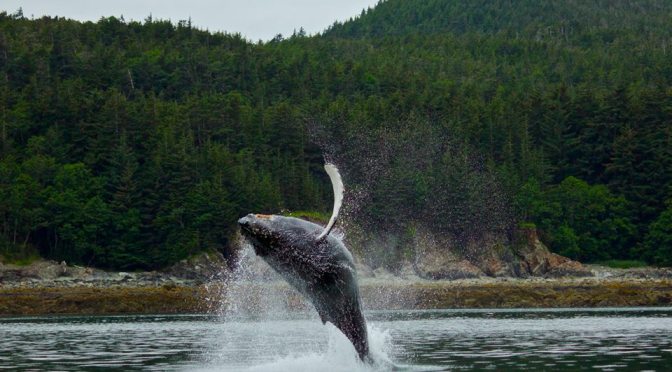
Twenty minutes later a humpback blasts out of the water like a rocket, sending a crescendo of foam across the surface and we cheer like our team just won the Super Bowl. There’s a spark in Dan’s eyes, a glint of joy and life that I can still see four years later. For a few seconds he looks reborn until another coughing fit sends him back into the boat’s cabin.
An hour later we’re within sight of Auke Bay, Juneau’s largest harbor. From the water, the Mendenhall Glacier looms over the boats bobbing along the dock. Even from two miles away it dominants the skyline like a giant frozen sky scraper. The boat captain screams the boat to a halt and ushers me onto the deck with Dan and his wife.
“Get their picture with the glacier,” he whispers.
They lean against the boat’s railing, the ice framed perfectly above them. I swallow a lump in my throat and blink away tears. For the second time Dan looks half his age as he dots a kiss on his wife’s cheek and wraps an arm around her as I click off a shot. The moment passes, the boat revs, and they slowly move back inside, wrapping their down jackets tightly against the wind.
Minutes later we’re on the bus, headed for the cruise ships 15 minutes away. I search for something comforting or inspiring to say. Some magic words that could somehow make their plight better. Instead I just listen as they talk about their kids, their work, their life. My ears doing more than my tongue ever could.
Feet from the dock Dan looks out the window and sighs, “it’s a magnificent place you have here, David.”
“Thanks, but it’s not mine, it’s all of ours. It grabs hold of something deep inside of us, resonates, makes us whole.”
He nods, “I wish I would have seen it sooner so I could climb the mountains. Maybe go fishing, you hunt?”
I confess that I’ve never killed anything bigger than a salmon.
“Well don’t wait,” he said, “live out your dreams while your young, don’t wait for your come to Jesus moment.” His wife sniffs and he gives her a little squeeze.
The bus stops, I shake Dan’s hand and hug his wife. Slowly they walk away, inching up the gangway, his last words echoing between my ears.
Don’t wait, live now. See what needs to be seen. Breath the air, walk the trails, climb the mountains, swim the rivers. Don’t let life get in the way of living.
Four years later I sit in a cabin perched on the shores of British Columbia, living. NOAA never called back, hallelujah. Maybe I’ll get a real job some day but I doubt it. Not after seeing that look in Dan’s eye as the humpback broke the surface, telling me everything I’d ever need to know.

In the House of Tom Bombadil

The trail winds through new and second growth foliage, their branches stretching like eerie arms onto the skinny trail, refusing to be thwarted by mans’ fruitless trials to contain them. Rocks thrust out of the mud, their surfaces slick with moisture. The continual December rainfall creates a steady trickle downhill, creating mud poles that go halfway up our boots. The forest is quiet besides the steady drip of rain bouncing from one leaf to another as they plummet to the trail and moss. We push further and further into the middle of Hanson Island, a weak winter sun battling the clouds.

After fifteen minutes of steady uphill hiking we round a bend and are met with a fence composed of a brilliant maze of branches. A gate sits partway open and we slide through and step onto the well trodden ground of what the weather beaten sign nailed to a tree announces is the earth embassy, a small crown of willow branches hanging above it. A few small buildings and a woodshed dot the clearing as we approach slowly. It’s a peculiar thing, to march into someone elses isolation. With no way to warn them that you’re coming. After months of solitude, the echo of our feet pounding up the trail had to sound like thunder.

Passing the door to the first building we hear a call from inside, a growl, a bark, and the door creaks open, giving way to a massive mountain of orange and white fur. The fur ball is recognizable as Kessler, the Hanson Island dog that had been exiled from Alert Bay, and now lived with the man we’d come to see. A man known to me only as Walrus.

We step out of the rain and around Kessler and into a library. Books cover a massive shelf in the entrance and litter the walls, meticulously categorized by subject. Conservation, religion, and history with subcategories such as: Greenpeace, Animism, and Mayan culture. There’s just enough room for a desk nestled right next to the door where Walrus sits, a journal out. He’s everything an old man living in the woods should look like. A massive grey beard coats his face. Even his eyebrows are preternaturally long, sticking almost straight out as long as my pinkie before finally succumbing to gravity and curling at the tips.

A sweet, musty, woody, smell permeates the tiny shelter and stepping behind the massive bookcase reveals an open space with a wood stove and table covered in fruit, crackers, and a bottle of rum. While I’m sure somewhere out there lives a reclusive old hermit who cringes at the very thought of social interaction, Walrus is not that man. His life in the forest seemed to give him remarkable preservation, and despite having reached an age where many would be comfortably retired, he’s bouncy and quick witted with an easy laugh that seems to go on forever. He is a marvelous cross between Obi-Wan Kenobi and any assortment of bearded, woodsmen, Tolkien characters.

His house was a jigsaw puzzle of scrap wood that he had scrounged from the surrounding woods. Small and efficient it was easy to keep warm when the temperature dropped below freezing. The site had been picked for him he explained, when he’d pitched his tent directly on the path we had just walked up. Decades ago it had been a logging trail and Walrus had stood resolute, refusing to allow them to have the island.

Wielding an education in anthropology Walrus had scuttled over every nook and cranny of Hanson Island, learning the island’s history and secrets, searching for a way to save it. Culturally modified cedar trees (CMTs) cover the island, evidence of the first nations presence here long ago. They would cut long horizontal strips of bark from the tree, using the wood to form baskets and string. Their cutting encouraged the trees to grow even faster, creating a resource that renewed faster with use, a concept unheard of in our modern day “advanced” world.

Citing the CMTs for their cultural and historical significance, Walrus helped save the island from the carpet bombing that had befallen the nearby islands of Swanson and Cracroft. His camp quickly became something of a heritage site in addition to his year round home starting in the early 90s. A place where he welcomed grade school kids in the summer to learn about the history of the forest, and showed them around a massive garden where he grew everything from kale, to potatoes (if he can keep the jays out), to garlic. Garlic, he said, he’d give away as gifts. What a stocking stuffer.

There seemed to be little that he hadn’t done on the conservation battlefield. He’d fought wolf hunters in northern Canada, been a cook aboard the early Greenpeace boats that put themselves between whalers and their cetacean targets, and become something of a legend. His quiet manner and humbleness hid all of this though as he enthusiastically showed off his garden, Kessler constantly bumping against our shins waiting for his ears to be scratched.

We walked back down the trail toward Orca Lab a couple hours later, inspired and motivated. Someday I hoped that I could look back on the decades of my life and see the world a better place from my actions. I imagined the feeling of gratitude and joy Walrus had to feel when he woke up and looked about his forest home. Hearing the birds call, the deer trampling through the undergrowth, the leaves whispering in the wind, and knowing that it still stands because he had. His feet planted firmly on the trail, loggers and equipment barreling up the hill, unaware of the man they were about to face.