Tag Archives: animals

We Must Speak for Those That Can’t

A few days ago I was sitting in my usual spot. During the winter that’s at the table, squeezed in a chair between table and couch. To my left is a great bay window and ten feet (depending on the tide) beyond that is the ocean. On this day I wasn’t writing, reading, or even watching basketball. I was refreshing fivethirtyeight.com, waiting for their election model to update. Like the rest of the world, I was waiting with baited breath, watching in terror as the odds slowly shifted closer to Donald Trump. The thought of a Trump presidency was unimaginable, but as it became more possible, the scenarios amplified in my head. I sat with an iron fist clenched within my chest, encircling my heart and crushing my lungs. Brittney walks by and sees the webpage refresh, the odds moving imperceptibly closer to Trump. I’m living and dying with every decimal point fluctuation.

“It’s going to be ok,” she says. From the beginning she’s maintained faith that, when the chips are down, America will do the right thing. That we won’t completely lose our minds. I’m not as confident. I’m terrified. But not necessarily for what will happen to me.

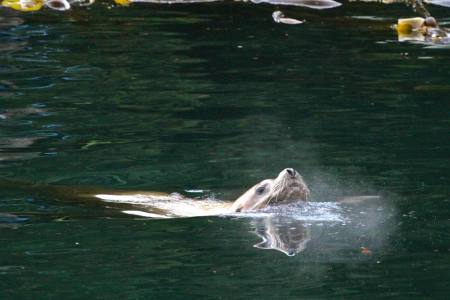
Out the window a trio of Sea Lions surface. Their loud breaths like snorts rumble along the cabin walls and into my head. A harbor seal rides the swells just off the rocks, sad puppy dog eyes wide and alert. The cutest rubber ducky ever made.

“I’m not worried about me.” I gesture out the window to the quartet of pinnipeds. “I’m worried about them.”
10659202_10153342628774852_4448842526100652252_n

(Stellar Sea Lion, British Columbia)

***

I fell in love with Bernie Sanders not because he was offering free state college tuition (Brittney and I have both graduated), or because of his health care plans (I’m on state medicaid), but because he alone said what environmentalists and scientists have been saying for years.

“The biggest threat to the country is climate change.”

It got lost in his message that revolved around health care, millennials, and the top 1%. But he returned to that subject as often as he could. Every time I felt a wave of relief.

“Here,” I thought, “was how you change the system. No super pacs, no Washington bandwagon, just a man, his army of donors, and a message that this is bigger than us.”

And it almost worked. Just a few super delegates short.

***

America is full of contradictions. Contradiction is the nice word for it. Hypocrisy may be the more honest one. Recent surveys show around 64% of Americans are concerned about global warming (from here forward called climate change). Fifty-nine percent believe climate change is already occurring with another 31% believing that changes will occur. Ninety percent of Americans in other words see climate change as an issue that needs to be addressed.

Other polls find the majority of Americans in favor of politicians who want to uphold environmental pillars like the Clean Air Act, the Clean Water Act, and the Endangered Species Act. Sixty-six percent of respondents said they don’t believe that we have to choose between the economy and the environment, and that it is necessary to preserve species from going extinct.

And yet…

Yet we have a man inches from the white house who is on record saying climate change is a hoax. Who has made threats to do away with any and all federal renewable energy programs. Yet this is never discussed. We’ll spend endless time on Donald Trump’s (henceforth known as he-who-must-not-be-named) hand size, Hillary Clinton’s foundation, and which candidate we dislike more (we have no room to complain, we nominated the dingbats).

What this says to me is a shocking truth that could be the end of it all. For Americans, the environment is a convenience. Brown bears, Humpback Whales, Timberwolves, and Sandhill Cranes are a luxury. The cherry on the Sunday when everything else fits together. If the tax break is right, if the Muslims are oppressed, if my house is big enough.

1016914_10152076989579852_539427979_n

(Breaching humpback in North Pass near Juneau, AK. Humpbacks were removed from the Endangered list this summer).

I’m here to say it doesn’t work that way. As the North Dakota Pipeline Protestors have reminded us, “Water is life.” If we drill every well and level every tree, we’ll find that we haven’t just lost the charismatic megafauna we are privileged to share the earth with, we’ll have lost ourselves too. If we’re going to categorize wolves and cranes as conveniences, then we do the same to clean water, healthy food, and our quality of life.

***
10857837_10153488489199852_5980215313637848356_n

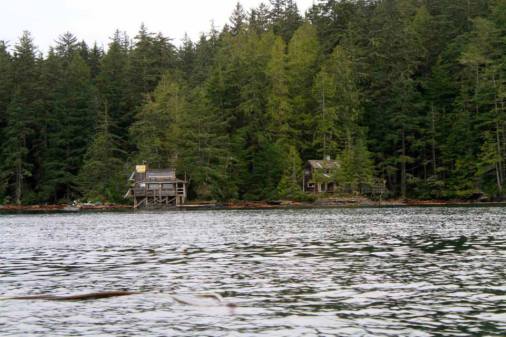
(OrcaLab, Hanson Island British Columbia)

Beyond the cabin, hidden in the trees, is a series of hills. Between two hills runs a creek. For me, Brittney, the cat, and the rabbit, that creek is life. A garden hose runs from the creek’s mouth to the cistern and supplies us with more water than we could ever use. A filter in the main house gives us the sweetest drinking water I’ve ever had (albeit with a bit of a Cedar aftertaste at times). When the flow from the tap turns to a trickle we climb the hill, find the clog, and clear it out. It’s a wonderful gift to know exactly where your water comes from.

How many others can say this?

Here is the disconnect, and here is the danger. When water comes from the tap, food from the store, and light from the switch, we remove ourselves from their sources. Trace them back far enough and you end up in the woods, a natural well, maybe a hydroplant if you’re lucky. But many will never trace the metaphorical garden hose all the way to the beginning. When we don’t see it, it’s easy not to care. When we don’t see it, it’s easy to forget. Until the lights go out, the pipes go dry, or the shelves go empty.

***

Seattle’s fine as far as cities go. But after two days here I can feel an invisible pressure pushing down on my spine. I need to get out. Too much concrete, too many people, not enough deer. As we sit at a stoplight, a man in tattered clothes staggers along the side of a convenience store. His eyes look in opposite directions and he walks as if one leg is an inch shorter than the other. His cheeks look shrunken, whatever life is in him is waining fast. Meth will do that to you.

We watch horrified as he stoops and grabs a piece of bread off the concrete. He shoves it in his mouth and gums it down.

In the car we discuss how sad it is. How horrible and unfortunate that this young man has fallen into such a sad and helpless life.

Someone should really do something.

The light turns green, the car turns left, and the addict disappears in the rearview mirror. Having had our sixty-seconds of sorrow we pull into a brew pub and have dinner.

***

We are in the sixth extinction. We may not see it, as separated from the green portions of the world the way we are, but it’s true. Remember those movies you watched as a kid about dinosaurs? The one with the meteors that came down from the sky and sent waves of ash across the globe? Temperatures skyrocketing, creatures dying. We’re in one of those right now. Maybe not as dramatic a collision, but it’s still happening. Except now it is man instead of meteors. Yes, we are the environmental equivalent of a meteor landing in the Gulf of Mexico with so much force that it empties.

Many of us have read the articles about extinction rates; about deforestations, shrinking habitats, skyrocketing ocean temperatures and acidity.

How horrible and unfortunate that this species has fallen into such a sad and helpless life.

Someone should really do something.

The light turns green, we turn left, and we buy the cheapest apple or bag of coffee we can find, the threatened species’ disappearing in the rearview mirror of our subconscious.

common_murre_gr

(Common and Thick Billed Murres died in the hundreds of thousands last winter due to unusually warm waters in the Pacific. This winter is once again showing surface temperatures several degrees above normal).

***

I’ve stopped refreshing fivethirtyeight.com. Brittney gently pulled the computer away from me an hour ago, her eyes filled with alarm.

“When was the last time you laughed?” She asked.

I try to put Tuesday, November, 8th out of my mind. We make dinner, watch Friends, listen to John Mulaney’s stand up comedy. And I laugh. I laugh so hard I almost cry. Both hands on the counter, bent at the waist, nervous energy coming up as roaring barks of euphoria.

But inside I marinate. I still obsess with what the people of New Hampshire, North Carolina, and Nevada are thinking. And the knowledge that not many of them are thinking about the world the way I am is disheartening. I know that sounds elitist and arrogant. I’m a 28-year seasonal employee that plays jump rope with the poverty line. I have no right to get all holier than thou. But if we’re going to glorify a man who brags about sexual assault, I think I should have my say. Because what I want won’t benefit me monetarily. In fact it’ll probably lessen my income and raise my taxes. I don’t care.

I am here to speak for those that can’t. For the trees on the hill behind the cabin and the harbor seal in the kelp bed. They aren’t luxuries or conveniences or necessities. They are life. And if we lose them, we lose ourselves. Whether we see it or not right now, we need these places and the green and blue world to support the ever growing gray one we are sculpting out of concrete.

Which is why, on Tuesday, you must vote for Hillary Clinton.

“But she’s untrustworthy.”

“I don’t like her.”

“What’s in her emails?”

To which I answer:

“I know”

“I don’t really either.”

And “who knows? Hopefully just lots of cat videos.”

This is not the time for a “protest vote.” Gary Johnson supports fracking for crying out loud. Nor is it time to “shake up the system.”

I mean, it is, but Bernie Sanders is kind of busy trying to keep Emperor Palpatine/Sauron out of the white house.

No, it is time for America to put its vote where its mouth is. It’s time to end the hypocrisy and put the environment first. It is time to save ourselves before it’s too late. And if the harbor seals get to thrive along the way, I couldn’t be happier.

If you’re still on the fence. If you’re still struggling with the idea of graying in that little circle next to Hillary Clinton, think of it this way. Don’t do it for her. Do it for yourself. For the places you fell in love with as a child. For the places you want your children to fall in love with. For the national park your parents took you to, for the bird on the tree outside your window. For the wonder and spiritual healing you feel every time you step into the woods. Do it for clean water. A protest vote won’t save that, nor will it save you. Don’t vote just to speak your mind, vote to speak for those that can’t. Along the way we may just find a way to save ourselves.

45631_488778539851_6865631_n

(Quiet places and open spaces).

Sources:

http://earthjustice.org/news/press/2015/new-national-poll-finds-90-percent-of-american-voters-support-the-endangered-species-act

http://www.gallup.com/poll/190010/concern-global-warming-eight-year-high.aspx

Common Murre Photo: wsl.ch

Midnight Humpbacks

Another year with no trick or treaters on Hanson Island. I shudder to imagine what we’d do if we heard a knock on the door right now. We’d glance terrified at one another, bodies taut, legs weak, hands shaking. What the hell? No one whose ever knocked on the door of a cabin on the rocks at 10:00 at night has ever done so with good intentions. But the night is calm and seems to be low on ghoulish or spiritual skullduggery. After a stormy month, it’s nice to hear the quiet. There’s not even boat traffic. All that comes out of the hydrophones is the occasional gurgle of water and the unexplained static like crackles.

But despite the quiet and despite the darkness, we’re not alone. Outside the door are sea lions and seals and mink and dolphins, and tonight, humpbacks. They never seem to favor the Hanson shore during the day. When they could be photographed and possibly identified. No, they wait until the sun disappears and the clouds devour what little moon there is. But in the pitch black, we can hear them. Their deep booming breaths shake the window as they surface somewhere out beyond the curtain of night.

And time and time again I rise from my seat and step out onto the porch. It’s not like I can’t hear them from inside. But somewhere embedded in my DNA is an instinct as natural as breathing. Go to the whales. I stand on the edge of the porch, my bare feet gripping the slippery wood. Out of habit I count the blows. One… two… three… Three!? When was the last time there was three humpbacks in front of the lab? In between their surfacings is the sound of sea lions. Their exhalations are minuscule next to their cetacean neighbors. They’re like flies. They zip and dive around the humpbacks, why no one really knows. Maybe their picking off stray fish, using the whales for protection from Transients, or maybe it’s a game. Some sort of Sea Lion chicken to see who can get closest to a 15-foot flipper and not get bludgeoned to death.

There’s something about whales at night. I love whales at night. Let’s be honest, I love them at all hours, but something about hearing them but not seeing them hits me hard. Humpback or Orca, hydrophone or above water makes no difference. I love to listen. It goes back to a night more than ten years ago, not far from where I live and write.

Eleven Years Ago:

It’s past midnight. The only dark stretch of this July night. I’m asleep in a two man tent with my Father when my eyes snap open. I sit upright in my sleeping bag, that DNA kicking on for the first time. I know what I heard, the only question is; was it in my dream. I only have to wait a few seconds when I hear it again.

Blows. Lots of them.

I spring out of my sleeping bag—Dad right behind—and step out onto the rocks. Johnstone Strait is ten feet away and five feet down. And somewhere in that eternal blackness, they’re swimming. Orcas. I hear them but can’t see them. It’s infuriating. We’ve traveled hear to see them, not hear them swim tantalizingly by just feet away. From my knees I stretch out into the nothingness above the water, eyes straining, heart praying. But they’re moving on. Going west.

Two days later I got my wish when the A36s, a trio of male Orcas swim past in the morning. From the seat of my kayak I watched Kaikash, Plumper, and Cracroft cruise by. If only I’d known their names that day. I would have paddled out and introduced myself.

Today I don’t mind. Let them approach in the dark and scurry across to the shadow of Harbledown Island in the sun. Even as I write the humpbacks continue to move back and forth in Blackney Pass. Sometimes close, sometimes further away. But in the stillness I can hear them, mixing with the sounds of the hydrophone, the crackling of the fire, and the snoring of the cat.

Home.

Somewhere along the way, this place became home. One of them at least. It can be easy to take some of the miracles of Hanson Island for granted when it’s at your feet 24-hours a day. But not tonight. Not when the humpbacks surface and reawaken the boy inside that fell in love with it all eleven years ago.

Hanson Heartbeat

The windows creak and groan. The world outside them is pitch black but I know tree branches the shape of withered arms stretch their wood clad fingers toward the cabin’s walls. The ocean pounds. It sounds so close I expect the next wave to come barreling over the porch and set us adrift in the sound. It’s the first storm of many, I’ve spent the summer dreaming about them. There’s something in the forty knot winds and blasting rain that’s soothing, secure. Hunkered down with the fire roaring and the cat asleep on the back of the couch. Just as long as the boat’s ok where it’s tied up in the back of the cove. It is isn’t it? I should go check.

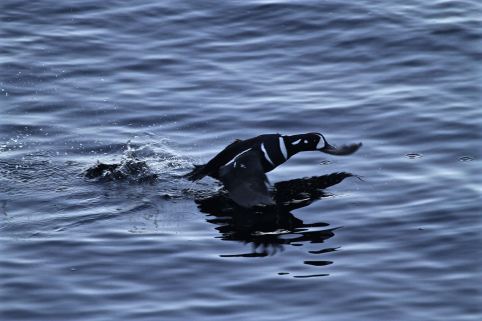
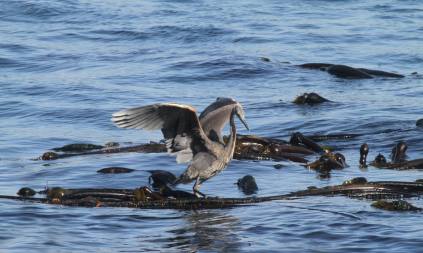
By morning it’s subsided. The low pressure monster taking a deep breath, preparing for the next exhale. Harlequin ducks poke their multi-colored heads out from behind the rocks, Sea Lions return to the haulout, Herons again perch on the worn out kelp that has been buffeted by waves for the last 12 hours. And like all the critters, we poke our heads out our door. All the roofs are still in place, the lab still humming along. All that’s changed is the growing collection of fallen branches and golden fingers of the Cedar trees that populate and soften the forest floor.
harlequin
If only the rest of the world was like this. Half a day of insanity and turmoil before everything returned to it’s relaxed state. Humpbacks in the pass, seals munching fish, deer scavenging for the kelp that just couldn’t hold on anymore. But human nature doesn’t work like this. Every day some new scandal flashes across the screen. It is the quintessential train wreck. I want to look away so bad but can’t. My stomach tightens as I scroll through article after article, my heart pounding against my ribs, eyes becoming glazed and unfocused.

How has it come to this?

Assault, repealing amendments, threats of political violence, the laundry list could go on for pages. Dear God, what century is this?

I step out onto the rocky face opposite the lab. The point here sticks out into Blackney Pass just a little further, but the difference is noticeable. Sea lions cruise by, calm and serene. They’re exhalations are like small explosions, as if there’s something stuck in their throat. After watching them gulp salmon whole it wouldn’t be a surprise. But it’s just business as usual for the pinnipeds. Eat salmon, have a nap, yell at your neighbor on the rocks.

Six big boys swim past not ten yards off the rocks. Even from the relative safety of the point I stiffen. I’ve spent enough time in a kayak to know these guys make me uneasy. I’ve been followed, growled at, and watched them zoom inches below my seat, feeling the kayak rise and fall as they passed. But they seem as unsure as I am. They stop off the rocks and we stare into each others eyes.

They’re a comical looking animal when you see them straight on, bobbing like corks. They have this perpetual look like they’re always surprised. Like the monster just jumped out of the shadows in a slasher movie. I wait for them to dive away and leave me be. But they stay. The curious magnetic quality of sea lion dynamics occurs, more and more appear out of nowhere. Appearing from their hidden trap door on the ocean floor. Seven, eight, nine, ten. We speak without making a sound.

There calmness unsettles me. I want to scream at them. “Do you realize what’s going on? Do you know what could happen on November 8th? Didn’t you read what he said now?”

The group blinks in polite puzzlement before disappearing beneath the waves. Thirty seconds later they’re back. My breathing is unsettled. I went for this walk for two reasons. To harvest mushrooms and leave the rest of the world behind for a bit. You’d think that’d be easy on Hanson Island, but it isn’t. There’s a sense of helplessness being so far away from it all in times like this. There’s nothing you can do but refresh the news and pray. I stare at the sea lions and they snort in my direction, nostrils flaring.

 I wish I could be more like you.

Wish I could be content with some salmon and a smooth rock to lay my head. Though I’m glad I don’t have to watch for a black pointed dorsal coming up behind me all the time.

    “So be like us,” they answer. “Just let go.”

    “I wish I could.”

    “It’s easy.”

    “I wish it was.”

    “Stop wishing and do. Control what you can control. Chop some wood, watch us swim, count the humpbacks. Be present.”

The sun streams in through the clouds. Vancouver Island is hidden but the clouds in front of it sparkle with late morning sun. There are chocolate pancakes in my belly. I write fifteen feet from the ocean. An ocean in which, right now there are two seals, a sea lion, and a humpback visible (who I should probably photograph and ID). I’m in control of our power, our fresh water, and some of our food supply. My heat comes not from propane but wood. I am in the most beautiful place on earth. If I cannot let go here, where can I?

I think of the miracles of this world, of this place. That humpback will soon leave for Hawaii. A 3,000 mile journey without a Lonely Planet book or compass. He or she will hit it square on the dot. No questions asked. Amazing. I memorize the beauty in the sad eyes of the harbor seal and the bouncing optimism of the Harlequins. The prehistoric cackle of the heron, the Pterodactyl incarnate.
heron
Breathe, be still, be present.

I smile, inhaling salt air and high tide. My hands run up and down the trunk of a Cedar tree. I close my eyes, and feel myself, at long last, let go. Surrendering to the pulse of the island.

Photos By Brittney Cannamore

The Shabin

There’s not much left of the road. Just two indention’s overgrown with weeds and grass. Blink and tilt your head and you can almost make out the tire tracks. But alder trees are growing in between the divots and it’s clear that no one has driven a car back here in a long time.

In my hand is a scrap of printer paper, a series of hastily scribbled squares and rectangles drawn on it. One of those rectangles is my future home, maybe. Brittney follows along right behind me. Just ahead is a man I admire and love. A man I want to be like, but with my own flair, my own style. After all, there’s only one Kim Heacox just like there’s one David Cannamore. At the youthful age of 65, Kim’s enthusiasm remains boundless and I find myself wondering what he must have been like when he was 30. I know I wouldn’t have been able to keep up with him.

He leads us through the properties acres, referring to it over and over again as, “our property.”

Our property.

My god. Is it really possible? A small cabin sits near the land’s southern border next to the remnant of the road. The rest is Spruce and Pine forest with a bit of bog, a bit of marsh, and sprinkled with berries. Oh the berries. High bush cranberries, neigoon berries, even some low lying blueberries. I pass an alder no more than knee high. I run my hands through its branches. The leaves are manicured and nibbled. A moose has been here recently. It feels like home.

We can’t stay away. We drive the two miles back to the little slice of heaven. We forgot the tape measure, so we measure the cabin’s tiny room the only way we can. I lay down on the wood floor and so does Brittney, her feet brushing my scalp. We can almost lay down all the way. Calling it a studio  would be generous. No running water, no toilet.

I doubt many would understand the appeal of a dry cabin devoid of plumbing. Cabin may not be the best description. It’s part cabin part shack. A shabin as it were. But both of us see it for what it can be. Knock out a wall, raise the roof, put in a loft. Definitely a bathroom. What are we missing? A sink! Should install a sink at some point.

But for the right price… we’ve lived rustically long enough. What’s a few more years?

I think about the homes we walked past in the Seattle suburbs. 700,000 dollar monstrosities on a quarter acre in tidy suburbs. Each home copy and pasted from the last. Each subdivision given some charming name like Shady Acres or Pebbled Brook. I don’t want a 30-year mortgage. I don’t want property tax. I don’t want my neighbor’s music echoing through my walls.

Give me simple. Give me peace. Give me trees and blueberries. In our minds it’s already ours and we haven’t even called the owner yet. The owner we know is looking to sell. You’re crazy if you think I’m telling you where in Gustavus it is.

It’s scary. Sure we’ve talked about buying a house in this city filled with magic for three years. But to be this close, our feet draped over the edge, just one step from going over. Maybe buying a house is like having kids. If you wait until you’re ready you’ll never do it. But I also know that this is what we want. That we’re ready to make this home.

Two Bears for Mark

I’m curled in my sleeping bag, the Alder trees at the back of my tent shelter me from the early morning sun. I’m somewhere in the world between dream and reality. So when I hear the sound of Mark’s boots making their way through the Reed grass, I’m not sure if it’s real or imagined until I hear his voice. His tone is calm and measured, but something in it makes my eyes snap open and heart rate quicken before he finishes his sentence.
“David? I hate to disturb you, but there appears to be two brown bears walking towards us along the beach.”

Hate to disturb me? I glance at my watch: 6:45 in the morning. Not that it matters. I want to be disturbed if there’s pair of brownies on the beach no matter the time of day. I unzip my tent and am greeted by my two hundred roommates. They’re small and elusive, rusty red and jet black. But the high pitched beat of their wings all sound the same in my ears. I’m inundated with the gnats immediately. But I brush them out of the way, pulling my bug net and can of bear spray along with me.

Mark is cool and collected as he points down the beach to the place where he last saw the bears. A lot calmer than I’d expect a guy from New York city to be during his first Brown bear meeting. Actually that’s not fair. It’s not like Mark Adams has never left the concrete behind. He’s hiked the mountains of Peru, gone where no white man has ever been in Madagascar. When you write like he does, people send you everywhere.

Which is why we’re here in the early morning light at the north end of Russell Island in Glacier Bay National Park. Mark’s writing a book about Harriman’s Alaskan expedition in 1899 and John Muir’s travels. When he needed a kayak guide, I was blessed with the opportunity to lead him into the wilderness. To travel as Muir did, one paddle stroke at a time. To explain and describe the land and creatures as they passed. And of course, to bring us back in one piece. The first part had been easy. The bears would make it tricky.

I walk down the rocks, trying to get a better angle of the beach. What a sight I must be. The weathered and experienced Alaskan guide, rubbing sleep from his eyes and pulling up his pajama pants that are a size too big. The pants are absurd. Navy blue with a pattern of wolves howling at the moon. The sort of thing you wear on rainy Saturday mornings while drinking coffee. Not fighting bears.

I step onto the tallest rock I can find and stare into the tall Rye grass at the back of the meadow. My body’s awake but not my eyes. I rub them again, trying to focus and keep my expression calm and collected. This happens all the time of course.

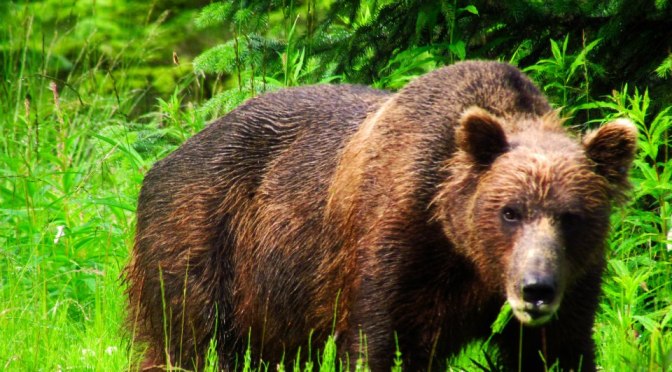
Two little brown ears pop up among the grasses. Little satellite dishes that recede the thin long face of a brown bear. Instinct kicks in. I clap my hands and call out good morning. I don’t shout, I want to save some volume, just in case. The bear looks at me, head tilted sideways, politely curious. As if he’s rising on an elevator another bear appears next to him. They’re skinny and young. Probably just got kicked out by Mom within the last month. Four year olds. Teenagers. Young, dumb, ready to take on the world. I can relate.

They saunter back into the woods as I call. Nonchalant and relaxed. I turn and beam at Mark. We’ve talked a lot about bears the last couple of days. I’m glad we saw one. He’s got his little waterproof notebook out, scribbling notes. A few minutes go by and there’s no sign of the bruins. I put on more respectable pants and pull out the Coleman stove, putting water on for coffee. I’m forgetting something… mugs!

Leaving Mark with the stove and food, I jog back up the beach and to the tent, digging for the thermoses. No sooner do I reach the tents and Mark’s voice floats up the beach.
“David? Your friends are back.” Uh-oh.

I come back down the beach, my pace a little quicker this time. I find a big rock and jump on top of it. I spread my legs and stand tall. Stretching my thin 6’4” frame as far as I can. I shout, I clap, I wave my arms. The bears spare me a half-second look and go crashing back into the Alder. From my vantage point I can see the trees shaking fifty yards back from the beach. They’ve cleared out.
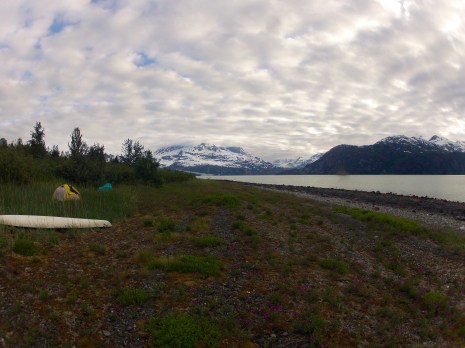
GOPR2088.jpg

(The beach the night before the bears. The bears came out of the Alder near the blue/green tent)
I reach Mark and the stove, setting the thermoses down and pouring the boiling water into a Nalgene we’re using as a coffee maker. While the coffee steeps I run back up the beach for socks. The bugs are eating my Chaco attired feet alive. I reach into a dry bag and freeze. Something is snapping twigs in the Alder feet from me. Boots forgotten I step back, clapping and shouting. I’d started at a six, my volume’s at ten now. I reach into my pocket for the bear spray. It’s not there. It’s on the beach with Mark.
As calm as I can I shout down the beach, “Mark, can you bring the bear spray up with you please.”
I feel caught. Food and author on the beach, tents and kayak near the trees. In my head I can hear the voice of the park biologist Tonya Lewis. “Don’t let the bears get your food.” I run back down the beach, clapping and shouting the whole time. A plan forms in my mind. Grab the food cans and stove. Pile it at the waters edge, break down the tents. Get the hell out of here. If they want the beach this bad, it’s all there’s. I meet Mark halfway, his arms laden with bear cans, the stove, and water bladder. I grab a handful of gear, turn, and feel my heart drop. The bears are back. Feet from Mark’s tent. For the first time in my life, there’s a bear between me and my kayak.

I grab the bear spray from Mark and charge up the beach, calling at Mark to follow me. In my panic, a tapestry of expletives flow from my mouth like water down a mountain. “You… bear! Get the… away from my… kayak!”

One of these bears is brave. Too brave for my liking. While one slinks into the woods just out of view, the bolder one moves between the tents. Three more strides and he’s at the kayak. I grab a baseball sized rock and close the distance to forty feet, Mark at my heels. “Look as big as you can.” I tell him.

I shout more words you can’t say in church. I pull the safety off the bear spray. The rock cocked like I’m Nolan Ryan, the bear my Robin Ventura. I’ve never fired bear spray at a bear before. Had proudly told Mark 36 hours ago that bears were misunderstood, shy gentle creatures. Leave it to nature to make me look bad.

I’m ten yards away. First and 10. Russell Island Bears versus Gustavus Kayakers. It’d be a route if it comes to that. I finger the bear spray and shout again, I feel my throat getting raw. At last the bear turns.

I’ve looked into the eyes of many wild animals. Orcas, humpbacks, moose, sea lion, seal, deer. But only a bear’s gaze has the ability to make me feel like I’m two feet tall. Nothing is more untamed, more wild. Daring you, defying you, to tell it otherwise. “This is my house,” they say. “Do you want to see what happens in my house?”

I don’t, and I have a feeling neither does Mark. Although his guide getting ripped limb from limb would make a hell of a chapter. The bear turns and gives a little huff. My knees go weak. The bear spray rising above my hip. Dimly I register that there’s no wind. A clear shot if it comes to it. The bear turns and starts to walk away from the kayak. My heart’s in my throat. Keep walking, keep walking.

He slips into the Alder like a phantom. But for how long? I cover the last few feet to the tent. Mark has stood calmly by the whole time. No panic, no fear. What’s going on inside is a mystery, but he’s a heck of a lot calmer on the outside than I am.

We drag our tents through the meadow and over the rocks, our sleeping bags and clothes still inside. We’ll dismantle them near the water. Right now I want as much room between me and the Alder grove that I can.

Fifteen minutes later we float 100 yards offshore in our double kayak. I glance at my watch and laugh. I’d set a timer for the coffee. It’s been steeping for 52 minutes. I hand Mark a thermos, a Cliff bar, and an apple as he scribbles notes. “Got it get it down while it’s hot.” He says.

The bears are on the beach, right at the water’s edge, digging for tidepool Sculpin and munching on Blue Mussels. They’re a lot cuter with 150-feet of water between us. My heart rate slows. This is all they wanted. Two hungry bears, learning to survive without mom. Trying to find a route to the low tide and the protein. We were just in the way.

I rub the side of the kayak, relieved and relaxed. I didn’t want my career defined by one wrecked kayak. The morning is gorgeous. The water is turquoise, that electric color that only the glaciers can mix. As we float Mark pays me the highest compliment he can. “This may be the most beautiful place I’ve ever been… nice choice.” As the bears work their way back into the woods I grin like a hyena and strike my paddle against the smooth surface.

GOPR2087.jpg

Somewhere Unoccupied

It’s good to be back. I squirm and fidget in the plastic seat, trying to make my life jacket sit against the combing. Again and again the jacket slides up. I give up, letting the combing press against my lower back. It doesn’t matter. Bartlett Cove is paper flat. Clouds are thrown across a deep blue sky at random. The only sound is my paddle in the water. Glacier Bay. I’d tell you to never change, but change is all you do.

On days like today I stop just beyond the dock. I look out into the mouth of the cove and drink in the lower bay. I stare out into Icy Strait, at the islands of Lemresier and Chichagof. I feel my heart slow down, my chest inflate, my body at peace. It’s a sensation that only a kayak can bring. Maybe it’s the angle, seeing this place from the vantage point of the Murre and Murrelet, otter and sea lion. Perhaps it has something to do with the knowledge that it is up to you and not diesel fuel and outboards to get where you want to go. Or maybe it’s something deeper. Something buried deep within our chromosomes. A treasure within each of us, waiting to be discovered.

Whatever it is, life is different from the seat of a kayak. It magnifies the soul while reminding you how small you are. What a wonderful reminder. There are no advertisements, no one telling you what you deserve or what you need. What you need is all around. Beyond Lester Point the upper portions of Glacier Bay come into view. The east and west arms beckon. A labyrinth of tide rips, adiabatic winds, and endless waves of mosquitoes await.

 Come on in. But leave security and your ego at the door. Leave your boots on. Keep your eyes open. Breath deep. Be free.

Some of the most memorable moments of my life have happened here. Just off the shore of Lester and Young Island. They’ve chiseled me like a piece of wood. Sculpted and refined me. A project never finished. There was the day the sea lion surfaced a foot behind me. That cunning, malevolent look in his eye, teeth curled into a snarl.     He still gives me the shivers. Still makes me tense when a sea lion approaches. Orcas in the middle of the channel. The perfect end to the perfect day. A humpback in the mist, the sound of his breath reaching out through the infinite nothingness. A siren, beckoning me closer. If I dare.

Swim with me. Commune with me. Guess where I’ll be next. Take another shifty look beneath your paddle. Look for my shadow.

The humpbacks. Too many memories and stories to retell them all.

“What’s the closest you’ve ever been?”

Such a simple question in theory. But mere numbers cannot begin to convey what it feels like to watch the water come alive. To watch it quiver as the head and back of a 40 ton creature breaks the surface ten feet away. To describe the simultaneous rush of euphoria and terror. Your gut screaming for you to run and to stand still. How three seconds can last lifetimes. What it’s like to watch a tail as wide as a Cessna break the surface. The sound of rushing and dripping water. And than… gone. Just like that. No trace, no markings save for some rippling water. It defies description. How does something so big just… disappear?

Somehow, through the beauty and grace of the universe, this became my job. To paddle among these animals. To learn the tides and eddies as intimately as a lover. And to pass that love on to others. To pull them gently from their comfort zones and into a world that continues to persevere. And above all, to show them that wilderness is something to worship. To love and cherish. That all we need to do is tap into those ancient desires deep within each of us. It’s not something to be feared, for respect and terror are not exclusive. Follow her rules, read her tides, understand her weather, and you will be rewarded beyond your wildest dreams.

This is home. Perhaps I cannot trace my ancestry back to the fog choked mountains of southeast Alaska. But I’ll love it as if I can.

These are the Places You Will Find me Hiding

In a land defined by mountains, Gustavus stands alone. Gustavus, prairie country. Well, as close as you can get to prairie country up here. At the mouth of Glacier Bay is a strip of land. An old glacial outwash that the glaciers of old used as a dumping ground for the remains of the rock they had ground to a pulp. What remains today is a stretch of land so flat the bubble on the level falls dead center. All around is regularly scheduled programming. Chichagof Island and its mountains to the south, the Fairweathers to the west, the Beartracks to the north, and the Chilkat mountains and Excursion ridge to the east. Distant yes, but never out of mind, even when shrouded in the blankets of clouds that dominate the sky.

It’s fitting that Gustavus is southeast Alaska’s little geographic rebel. One of the few towns that don’t have to concern themselves with building into a mountain or around pesky fjords or bays that jut into sharp cut glacial rock. Nothing but sand, trees, and moose to build around. Because like the land, the people of Gustavus are unique. A cast of people that have chosen love, laughter, cold beer, and blue grass over profit, capitalism, manifest destiny, and Justin Bieber.

This is a town where people still wave as they drive by, failure to do so the highest of insults. Where a run to the local store for a bag of oats turns into a 45-minute conversation about everything or nothing. No one brushes past with downcast eyes, avoiding contact. Smiles are plentiful, good vibes abundant, the people seem ageless. Yesterday I learned that a lady I’d took for somewhere between 30 and 35 was celebrating her fiftieth birthday by traveling to Iceland. In a nation obsessed with youth, with looking young, and banishing wrinkles, maybe Gustavus is the fountain of youth. Maybe smiles, a gracious heart, and a quick laugh can do what plastic surgery cannot, and for a much more reasonable price.

I will not pretend to be an expert on the normal American lifestyle. But from my limited exposure in what many would perceive to be a normal existence, the term community has become little more than window dressing. A way to lump together a group of people that happen to live in the same area. This is not Gustavus. Gustavus is a place where community is still community. To enter into this place is to become part of a family 400 strong. Want to spend a winter here? We’ll help you find a place, chop wood, fill the chest freezer with halibut, salmon, deer, and moose.

A couple of years ago a young man moved here. He knew no one. Two weeks after arriving, his house burned to the ground. Within hours, someone had moved a yurt onto his property for shelter. Food was left on the front porch, money and building materials donated.

“I don’t know any of you folks,” read the thank you letter he posted at the store, “but to all of you, thank you. I am truly moved and touched.”

Home. This is home. How can it not? How can we—myself and Brittney—not want to be a part of this? Suburbia? Fine for some I suppose. Who am I to say how others should live? But give me the place where I know everyone by name. Where, should the worst ever happen there will be 400 pair of hands to pick me back up. It’s impossible not to feel happy and blissful here. We’re isolated, but never alone. We are a people of guides, fisherman, businessmen, woodsmen, parkies, lodgies, seasonals, and locals. Democrats, Republicans, Christian, Mormon, Druid, Pagan, Atheist, John Muir apostles. But we are all residents of Gustavus. And in the end, that’s all that really matters.

Living “Rustically”

Spring on Hanson Island is bittersweet for us. As we celebrate the sun crawling higher and higher above the mountains of Vancouver Island, we trot outside, palms and heads held skyward. We lay out on the south facing deck all afternoon, soaking up the sun and getting the greatest outdoor bathtub in the world up and running. After a long, windy winter that was defined by the height of the waves and the thunder of the wind, these sunlit days are nothing short of Nirvana.

But in the back of our minds, we know the countdown has begun. That these days are fleeting, and the days of cleaning, organizing, and packing are fast approaching. We have less than a week remaining before, like the geese flying above, we flock north.

Didn’t we just get here? Weren’t we just winging our way south, watching the the islands and inlets crawl by? Winter always seems to slip through our fingers like sand. Blink and its April. This is our life. Every six months we pack everything and shove a resigned kitty and rabbit in the car, our penance for loving two places that are far from easy to reach.

But before we return to a land with bigger glaciers and smaller trees, we reflect on another winter that has taught us much. It’s hard to think of Hanson Island as rustic. Sure, there’s no warm running water or indoor plumbing. But we have a full size fridge, wireless internet, and the ocean at arms reach. In many ways, living in a New York apartment would feel more oppressive, more difficult. The constant artificial lights, the blaring car horns, the masses of humanity. More restraining than the borders of this little island. Where I walk into the forest and hear a Thrush and Woodpecker, or sit on the deck and hear the breath of an Orca a mile away. Things like warm water and flush toilets feel unnecessary. Give me creatures over convenience, stars over street lamps.

Which is all well and good, until the generator won’t turn over on a cloudy morning, the lab batteries failing and the lights flickering. Or the boat engine suddenly refuses to start as the water’s churn in Blackney Pass. Or you wake up in a cold sweat in the middle of the night, the window panes rattling the waves pounding, and your fear of the boat getting swept away in full swing. Than an apartment with running water, reliable lights, and a corner store sound pretty good.

So I remind myself of what these inconveniences do. They pull me back to my roots. Remind me that the things we take for granted we shouldn’t. That it’s important to know where our electricity, our fuel, our freshwater come from. And even more, it gives you a personal stake when the only one that can fix it, is you.

A month ago, the generator, died. Not an old generator mind you, but a brand new one. My generator knowledge began and ended with: “turn the key, push the choke in, go back inside.” I went inside, found the dusty owners manual, and marched back to the generator shed without the faintest idea of what I was doing. I opened the maintenance door and stared at its innards. I traced the fuel line, opened the spark plug compartment, and shook my head. If I lived in a city, I’d call the power company and wait impatiently for someone to fix the problem. I had no one to complain to, no one to lean on but me.

Thirty minutes later, my fingers coated with fuel, oil, and grime, I slammed the maintenance door shut. With a knot of apprehension, I filled the generator with gas, pulled the choke, and turned the key. Fifteen seconds later, the blasted thing came to life. I walked back to the cabin with a sense of accomplishment. I love having our source of fresh water, our power, our food squarely in my control. As hard as it can be, it gives me an emotional investment in their sources. Inconvenient or not, I’m grateful.

I want that sort of control, that responsibility when I have my own place. I want solar panels, ground water, a garden, and a wood stove. I have Hanson Island to thank for that. For giving me an intimate connection to the services that it’s so easy to take for granted. After 27-years of turning taps and opening the fridge with little knowledge of where their sources originated, I don’t think I can ever live that way again. Maybe I’ll just have to be rustic forever.

Unexpected Good News is the Best News

I wanted to write about something happy. Something hopeful and uplifting. But for the last couple months, it’s been hard not to feel cynical. What with all the political news, the hate and xenophobia that has infested and captivated all of us whether we’re for it or against it. Even here, on Hanson Island. I quit social media cold turkey for a few days. Every time I logged on I got mad, frustrated, defeated.

But not today. Not tomorrow, probably not for the rest of the week. I needed good news, needed a victory, something to reinstall my faith in humanity. It was SeaWorld of all places, that delivered it. Yesterday the aquarium giant announced an end to the breeding of captive Orcas and “circus style” performances. The finish line is still in the distant future, but at least it’s now visible.

There is of course, a PR spin on this, pivoting around the tenants of “world class care” and “more natural encounters.” We can peruse and scrutinize this is we want, but it’s been clear since the moment that Tilikum grabbed Dawn Brancheau’s ponytail, that SeaWorld couldn’t continue in its current state. Ever since it’s been a gradual slide. From the proposed ending of the circus shows in San Diego, to the “Blue World” proposal. Yesterday, SeaWorld in a way, admitted defeat. Though they’ll never come out and say it, announcing an end to captive breeding and by association, an end to Orca’s in captivity is admitting what animal activists have been saying for years. There is no ethical or conceivable way to keep a massive and intelligent animal in captivity.

Tilikum’s pending death may have had something to do with the announcement. The loss of one of their few breeding males would make the genetic logistics of their breeding program even more difficult and SeaWorld may have been planning for such an announcement. This is all speculation of course. Maybe they looked at their plummeting stocks, attendance records, and a new generation raised on Free Willy and realized there was no future.

But today, I’m not concerned with why SeaWorld is doing what they’re doing, or what their motives were. Today is one of celebration with potential domino effects sweeping across the globe. The end of breeding includes SeaWorld subsidiary Lolo Parque, home to four other Orcas and puts added pressure on the Miami Seaquarium, a small aquarium that is home to  Lolita, a southern Resident who has been in captivity nearly as long as Corky of the northern Residents. Without big brother to hide behind, the spotlight falls more brightly on Miami to, if nothing else, end their performance shows.

With SeaWorld’s focus on low adrenaline and educational shows, the door remains cracked for Corky to come home. After more than 45-years in captivity the prospect of Corky rejoining the A5s and swimming a hundred miles a day seems daunting. But just west of OrcaLab is a long, deep cove called Dong Chong Bay. It was here that Springer, an orphaned and lost Orca was successfully reintroduced to the wild. It would be both poetic and fitting for Corky to live out her days in the bay, chasing wild fish, hearing and associating with her family under the excellent care and attention that SeaWorld has touted for years.

As we celebrate, it’s important to remember the war is not over. Dolphins, Sea Lions, otters, penguins, and polar bears remain large parts of the SeaWorld empire. And while Orcas have deserved the lion’s share of the activism and spotlight, the time has come to tell them that more can be done. The dolphin trade remains one of the more despicable and darker aspects of human kind, with the dolphins life in captivity no better than the Orcas.

I never thought this day would come. I assumed SeaWorld would go down with the ship, beating the drum of education and quality care until they disappeared from existence. But, out of nowhere, they did the right thing. And for that they need to be applauded, commended, and encouraged to do more.

Dear Tilikum

Dear Tilikum,

First, I apologize for not writing this sooner. I’m sure you could have done with some more reading material with all your down time. I mean, how many times can you read the Harry Potter series before your eyes start to cross? What have you heard about this Harry Potter world in Orlando? Seems a bit silly if you ask me. Anyway…

May I call you Tilly? Tilikum just seems too aggressive. An unfair name for an unfair life I suppose. I don’t know what they’re telling you when they drop herring down your throat, inject you with antibiotics, and do whatever horrors they must to keep an amazing animal like you alive in such horrid conditions, but it’s not your fault.

None of it. You understand?

Anyone torn from their family, abused by strangers, and penned up in the dark night with the walls inches from their flippers would do the same. Let no one tell you different. In our desperate hours we do desperate things. You, like the rest of the wild world, is best left alone. To be revered, admired, and loved from a distance. Something we want to reach out and touch but can’t, or at least shouldn’t. He who loves a flower does not pick it to watch it whither and die in a jar. You water it, tend it, keep the weeds away. You should have been no different. Left to flourish in your aquatic garden. Left to swim next to your mother for your entire life, your birthright.

From the moment you were born you had everything you needed. But humans are an unsatisfied race. We’re not a happy race. We’re angry, we’re violent, we do unspeakable things to each other just because we have different ideologies, different skin colors. And sometimes, a lot of the time, that cup overflows, the toxic water splashing onto the innocent, precious species of this earth. Species like yours. Orca’s learned long ago to live and let live. Residents, Transients, Icelandic, Offshore. No wars, no clashes, not until we pushed you all together, in a tiny pen, and told you to get along.

I know you’re not feeling well Tilly. I don’t know how dire it really is. It’s hard to trust anything that SeaWorld releases. But it seems like you’ll be leaving us soon. I hope you’re not in pain, that you can breathe easy. I wish I could say that I hope you get well. But I don’t. The release of death is probably the most humane thing that can happen. Let that spirit go. Leave that imprisoned body. At long last, be free.

Do Orca’s have an afterlife? Here in B.C they’ve documented what may have been an Orca burial. Observers saw a mother disappear near a cleft in the rocks with her dead calf and return to her pod without it. Is it a burial ritual? Or are we anthropomorphizing you? Our arrogant human egos selling you short yet again? Wherever you’re off to next, I know it’ll be better, I hope you love it. Few Orca’s deserve it more.

When you take your last breath, when you finally fade away, please remember this. You are not alone. You are loved, and there are millions of people across the globe standing up and screaming at the injustice that has been your life. Your life, your death, will not be in vain. And the day is coming when the tanks will be empty. When the Orca will no longer be a commodity but a wonder. A sentient being instead of an asset. We’re going to keep fighting Tilly, in your memory, in your honor. I pray you know that there are humans that are good and decent to all creatures great and small.

Rest in peace Tilly. You are missed, you are loved, you are not forgotten.

Photo Courtesy of: http://kepplar.deviantart.com/journal/HELP-FREE-TILIKUM-425641192