Sparks fly into inky sky, and the fire burns just bright enough to sharpen the pine tree’s silhouettes. Little tea lights in clear little buckets and mason jars lead the way down the road and through the trail like scattered jelly beans.
Breanna and I ping-pong between the cabin, shabin, and fire pit, toting folding tables, food, and tequila. I don’t remember what year the ‘Wassail’ tradition began in the Good River neighborhood. In essence, jolly residents travel from house to house for cocktails and food to celebrate the winter solstice and the promise of returning daylight. It’s the closest we get to a bar crawl around here. The tradition has steadily grown as friends from other Gustavus Neighborhoods make the pilgrimage down our meandering roads that this year are covered in an inch of ice.
The last time I hosted, the cabin had a single floor and no insulation. The wood stove was in place but not ready for installation. Everyone crowded on the plywood floor and gazed at exposed rafters, slapping me on the back and promising me it was going to be a beautiful home. I smiled and tried to imagine the place in some semblance of completion.
***
Christmas lights complete the trail to the bonfire. Headlamps filter through the trees, laughter and song precede the incoming revelers. We’ve filled two tables with venison sliders, chips, cookies, punch, and lime-flavored Jello shots.
“I’m pretty sure we’re the first people in Wassailing history to serve Jello shots.” I say as we high-five.
We sample our handy work.
“Damn,” I wince, “we made’em strong.”
“Too strong?” Breanna asks.
“Nah. Perfect.”
Breanna pours cocktails while I dispense food and keep stealing glances at the cabin. I love how it looks from this angle, with the soft glowing lights peering out the windows.
I missed this tradition last year, choosing to spend Christmas with my folks in Eagle River. I needed distance. Couldn’t wake up December 25th to Minerva and a quiet home. I listen to everyone’s laughter and watch the Jello shots steadily disappear. I was afraid we made too many, now it’s looking like we’re gonna run out before demand does.
The majority of the people slurping Jello and munching potato chips have picked me up in some capacity over the last year. Checked in on me, invited me to dinner, or simply listened. I breathe through a knot in my chest and join the crowd clustered around the fire.
Don’t get me wrong, I love these people. And man, does it feel good to be a part of this rambunctious neighborhood. I remember growing up and hearing some version of the phrase, “The holidays can be a difficult time of year.” That never made sense for a guy who never had much reason to be sad; it makes more sense now.
I crack a beer and chatter about where to find deer when the weather turns cold and windy, my favorite fishing spots on the Bartlett River, and if the rain will ever turn back into snow. Food and drink exhausted, the crowd rambles on. Breanna and I shove the remnants in the cabin and follow the footprints toward the next house.
It took a while to accept that someone else wasn’t going to fix this, share the weight, or better yet, remove it entirely from my shoulders. Grief and hardship don’t work that way. Contrary to Hollywood and countless musical tracks, burdens can’t be lifted by outside sources. But friends, family, laughter, jokes, hugs, and, yes, Jello shots make it a hell of a lot lighter. You’re not alone if the holidays feel a little heavy. It’s okay to ask for help, to lean on loved ones, it’s okay if you’re not okay. Believe that one day you will be.
***
“Slippery out here,” I mutter as we shuffle down the road for Tim and Katie’s.
There are no street lights in Gustavus. Stars and northern lights pop when the clouds allow. On overcast nights with little snow, the roads are just a different shade of black. Small candles lead the way, providing just enough illumination to see one foot in front of the other.
Darkness is the theme of the solstice, a celebration not of the lack of light but of the promise that brighter days are on the way. It may be imperceptible at first. What differences can a few seconds make? But those seconds add up, they turn to minutes, half an hour, an hour. Sometimes life emulates the pivoting sun: impossible to discern the longer days or if the sun is getting warmer. But those long, sun-kissed days are coming. Until then, there’s nothing to do but follow the candles down the road. May they lead you to a warm home.
The tender splashes over the side, and the southeast breeze tugs at the bowline. I tie it to a cleat and give the anchor a firm pull. Find me a boat owner who’s more paranoid about their anchor than me.
Boat anchorages for this forecast don’t get much better than Lemesurier Island’s Hooter Cove. Tucked on the island’s west side beneath a steep hillside, it’s insulated from all but the worst southeasterlies.
Lemesurier Island on a nicer day
I wiggle into the little inflatable and paddle awkwardly for shore. I can’t imagine the designers of the Seahawk 2 had this in mind when they marketed her. Judging by the photo on the box, their grand plans included two full-grown men squeezing into this glorified raft for a magical day fishing on their favorite lake.
The raft zigzags at a glacial pace, and I keep glancing at the trees to confirm that I am indeed making progress. Even if I didn’t have my pack, rifle, and long legs, there doesn’t seem to be room for another dude in this thing, and I have no clue where you’d stash a fish bigger than a goldfish.
I nudge into the barnacle-coated rocks. Seahawk’s already sprung a pair of leaks, and we’ve agreed it’s a good idea to always take the hand pump. Despite the comical marketing and questionable durability, Zach and I have become strangely attached to the goofy inflatable that fits neatly in the back of our 20-foot skiff. I stash Seahawk above the tideline and, for the countless time this fall, pull my rifle from its drybag.
It’d be nice to have one more deer. The weather and daylight window for the day are tight, made worse by me forgetting my deer call on the bedside table and delaying our departure another 15 minutes. The ride to Lemesurier is just bumpy enough to remind me that the evening forecast calls for 20 knots and growing to 25 by Thanksgiving morning.
It’s mid-morning by the time I drop Tanner and Zach at their hunting spots and anchor. Four hours in the woods can vanish with astonishing speed. Depending on where you find deer and the difficulty of the drag, sometimes the day is done just as fast as it began.
I pause in spite of the tight schedule and look skeptically back at the skiff.
“It’s not drifting, is it?”
“No, it can’t be.”
“In your head. It’s all in your head.”
Some grow bolder the longer they tramp the woods, climb the mountains, and cross the straits, but I am not one of them. The more time out here, the more whitecaps and steep scrambles I traverse, the more cautious I’ve become. Too many close calls. Too many stories about boats with capable captains caught off guard by a rogue wave or experienced hikers disappearing on trails they’ve hiked dozens of times. I think about some of the stuff I got away with in my 20s and wonder how many of my nine lives remain.
Yet, here I am, boating across aptly named Icy Strait in weather that could best be described as “iffy,” and tramping down the beach after buck tracks in freshly fallen snow.
“Well,” I reason as I brush aside foliage and step into the forest. “There’s a balance between risk and living. Why live here if you’re going to be inside all day?”
I blink in the dim light and look around dumbfounded. I’ve never walked these woods despite passing this island dozens of times. This is Hank’s refuge, his go-to spot to hunt and shelter in a small, off-grid cabin. I’d heard him talk plenty of times about how much bigger and open the Lemesurier forest is compared to the Inian Islands, but I had to see it to believe it.
Stately hemlocks with just a smattering of spruces tower high above an open floor devoid of menziesia, huckleberry, and devil’s club. The trees are spread wide, a myriad of deer trails weave hither and thither.
I look up the hill. I can see forever. So many great perches. I gain some elevation and settle on the soft moss, the rifle propped on a rotting deadfall.
I scan the full 360-degree view. This may not be as advantageous as I want. I can see forever, but so can the deer, and they’re a whole lot harder to see at 200 yards than me.
The big old trees give the impression of being watched. This place feels familiar, comfortable, like I’ve been here before. Not here exactly, but on an island pinned between the British Columbian mainland and Vancouver Island. A place I’ve thought about – for better or worse – every day for more than a decade.
It is no slight to Juneau, Gustavus, or southeast Alaska to say that the sweetest moments of my life came on Hanson Island, British Columbia, where I sat up nights starring over inky Blackfish Sound while orcas called from Robson Bight.
These Lemesurier trees echo Hanson Island’s mega old growth, where wizened red cedar and chunky fir trees persevere. Instead of looking for antlers, I daydream about magical harbor seal encounters and lugging batteries.
I can’t quit this place, and when I vowed to return, I had no idea it might happen so fast.
***
I had every intention of going somewhere warm for the winter. Hawaii sounded good, and I trolled the usual “workshare” websites and pestered my Hawaii friends for job opportunities. Something kept getting in the way. Schedules didn’t line up, the timeline either too long or too short (or too expensive).
Eventually, I did what usually happens when I have a new search engine open. I typed in “orca.” I scrolled through the workshare, and my heart skipped several beats when I saw Orca Lab’s profile staring back at me. After several minutes fantasizing about going full hobo and returning for the summer, I kept moving, scrolling past several opportunities along the B.C. coast that toted the chance of seeing “wild orcas.”
I stop at an overhead drone shot of red-roofed buildings and a floating dock. Orca Lab isn’t the only site of human habitation on Hanson Island. Double Bay is on the opposite side of the island in an appropriately named bay that cuts deep into the shore. It had been an inactive fishing lodge during my Orca Lab days and snapped up by a philanthropist some years ago with the ambitious idea of bringing Corky home. While far too old to ever go full ‘Free Willy’ and return to her pod, living out her final days in a large net pen adjacent to her native habitat seemed the least humanity and SeaWorld could offer after decades of imprisonment.
Help us Create an orca sanctuary. Caretakers needed for January and February.
***
Deer-less and cold, I hustle back to Hooter Bay, hoping Zach and Tanner saw more than my single doe/fawn pair. Knots of anxiety bend my stomach as the water comes into view. Terrible scenarios fill my head, including a broken anchor chain, a punctured Seahawk, a shifting low front, a chilly night, and a long walk to cell phone service.
But the skiff is there, and Seahawk is reasonably inflated. I paddle out and have to admit that the wind is picking up.
“There’s a balance between risk and living. Why live here if you’re going to be inside all day?”
The anchor pops off the bottom—big pull. Reset my grip—big pull. Reset. I pause, catch my breath, and look back at Lemesurier. It’s been several weeks since I reached out to Double Bay Sanctuary, and I’m dragging my feet on my final answer. Two months isn’t a big commitment, and it’s not like sitting in the middle of nowhere is some monumental life change. There’d even be two other people there. I wouldn’t have to go full hermit this time around.
Snow swirls around my head, and my fingers go numb. The anchor comes into view, and the skiff sways in the growing chop. I stare at the anchor, considering the balance between risk and living.
“Why do this?” I ask the cove.
“Why not do this?” the forest answers.
“Because… I don’t want to chase ghosts. I don’t want to be Uncle Rico.”
There’s no question who my celebrity lookalike is. While there are times I’d prefer to be comped to Damon or Pitt, at least Napolean Dynamite got to eat tater tots and dance. But it’s Napolean’s antagonizing Uncle Rico I’m scared of becoming.
Yes, I’d dreamed of going back, of cruising up Highway 19 in time to catch the evening ferry from Port McNeil to Alert Bay. Yet, if I was going to do this, it won’t be to relive some glory day or a feeble attempt to recapture my Orca Lab magic – the rambling equivalent of throwing a football over mountains or wondering what would have happened if coach put me in during the fourth quarter. After 18 months trying to look forward instead of backward, the last thing I needed was an excuse to relapse.
***
The anchor clangs, the boat drifts free, engine in gear. Choppy waves meet me at Lemesurier’s northwest corner. Low gray light and fog hide the setting sun. Tanner is right where he’s supposed to be, a marvelous 3×3 buck resting on the boulder-strewn beach. I abandon the helm and help lug his prize over the hull, trying to keep covetous envy out of my voice.
A deer of comparable (but still smaller) dimensions.
“Where’s Zach?”
Tanner drops his pack and checks the stern for rocks before we pull away.
“Just heard him on the radio, says he’s on a beach east of here.”
I shake my head: fading light, growing waves, temperature below freezing. We may find what our skiff can do on this 15-mile run home.
I wouldn’t have given the crossing a second thought ten years ago. Invincible and drunk on life, I took Orca Lab’s teeny boat into all sorts of weather, tying it to the rocks off Cracroft Point and hustling to replace a battery or restart a generator while the tide fell and waves pounded. I took green water over the window and felt the hull wobble under an overloaded cargo of groceries, laundry, water, fuel, and batteries.
We cruise just offshore. Water sprays the windshield, and I taste salt.
“Where’d you find’em?” I ask, trying to take my mind off the weather.
“In a muskeg just a few hundred feet above the beach,” answers Tanner, not taking his eyes off the shore. He points towards a pebbly beach below a cliff. “There he is.”
Zach leaps aboard the lurching skiff with the ocean roaring in our ears. Spinning towards home, the bow dips unnervingly in the stacking four-footers. Tanner’s buck receives a dose of salt brine.
“We could use a little more weight in the stern,” I say grimly.
We shelter behind the little windshield and bounce like pool toys. I glance west into fading light. It’s gonna be close.
The boat goes quiet as we stare over sooty seas. My fingers go numb on the wheel, and we crawl forward. Home looks far away.
“There’s balance between risk and living. Why live here if you’re going to be inside all day?”
Lemesurier disappears in fog. Glacier Bay comes into view. I replay the route again and again. Lemesurier to Point Carolus. Across Sitakaday Narrows to Lester Point. Lester to Halibut Point. Halibut to the Bartlett Cove dock. The chop subsides near Carolus. Push the throttle down. 10 knots. 15 knots. 20 knots. The outboard purrs. We’re gonna make it.
I forget the weather and cold as my mind retraces another marine route that’s burned into my memory. A path that scoots across Cormorant Channel and through the Pearce Islands before hitting Weyton Pass at the slack. It meanders through the Plumper Islands and past a sea lion haul-out before navigating the tidal islets off Hanson Island. But instead of continuing down Blackfish Sound for Licka Point, I turn into a bay with two heads cutting deep into the island that will never let me go.
Hanson Island
***
Carolus’ rocky reef goes whizzing by. Sleet pelts our faces, but it seems that the worst is behind us. We breathe a little easier, our nervous jokes a little funnier. It’s impossible to always know where the line is between risk and living. The line moves without warning. A sunny day can be overrun with fog or variable seas replaced with small craft advisories.
We sprint across Sitakaday, and comprehension hits harder than the iciest salt spray. I cannot let fear stop me from loving the places that resonate. There are challenges around returning to Hanson Island. Memories and nostalgia would wiggle into my heart and try to drag me down—that oscillating line between risk and joy.
Bartlett Cove dock pokes out of the fog. Did I let the fear of a snapping anchor line or bouncing waves stop me? No, I tied the line tight, double-checked the weather, and trusted my skiff and friends. We cannot sit at home in fear of what may happen.
I am an unreliable narrator still learning the quirks and priorities of a reborn 36-year-old who stresses about his boat and runs after every report of orcas. Some things just won’t change. For 18 months, I looked forward, reclaimed home, and fell deeper in love with Icy Strait. I want the same for Hanson Island, for it to be part of past, present… perhaps future.
The skiff slides into the dock. The motor goes silent, and I flex my throbbing fingers as the blood returns and numbness fades. Did it—a bit of risk for another day in the woods. The sensation and payoff are inescapable, makes me thirsty for more. We walk up the ramp, keenly aware that we forgot to call for a ride home.
I pause against the railing and look across the water. Lemesurier and its big old trees peak out of the fog, and I give them a solemn nod, thankful not just for home but the opportunity to live a life that permits me to fiercely love two places. There is room for Hanson Island in this new life. Room to write a new chapter and make it part of home. I clap my stinging hands, heart filling with cautious excitement.
A great blue heron lands on the railing and stares with prehistoric eyes. The same bird that flew over the Shabin on my first visit and whose vestige now adorns the kitchen. I am not one for signs and imagery, but I take his presence as positive affirmation.
“Thanks,” I whisper. “It’s good to be going home.”
Time stops when antlers fill the scope. This muskeg looked empty before I crept behind a mossy tussock, blew the wooden deer call swinging from my neck, and summoned a doe from her hidden bed. I watch her unseen; a rare privilege to see a deer that doesn’t see you. A grunt grabs my attention. Forked antlers pad up the mossy hill.
“This is how it’s supposed to work,” my brain whispers. “Blow the call, attract a doe, and watch the buck come trotting in.”
The buck disappears beneath a slight depression and reappears at 20 yards. Either he doesn’t see me or doesn’t care. He’s full-grown – five years old in blacktail society – and lord of this expansive muskeg. Mature bucks aren’t supposed to show their faces in the middle of the day, but all bets are off when the rut is on. I have tricked him by imitating the call of a fawn in distress. Bleating fawns bring does, does bring bucks. As if a bolt-action 30.06 loaded with copper-tipped shells wasn’t enough of an advantage.
***
Yet, there is no moral ambiguity. My rifle misfired an hour ago when a large buck trotted past in pursuit of a pair of does. I can still see his startled expression when he looked up the hill. I reloaded in a panic and pulled the second shot. That had been enough. He’d bolted the way he’d come, and no bleating fawn would bring him back.
Hunting is challenging, even with a rifle, Google Earth, tide charts, and hand-carved deer calls. Blacktails camouflage beautifully into the brush and rarely move when the sun is high. Infinitely better ears and noses, they melt into the woods long before our primitive eyes spot them. I had patiently waited above their trail for that exact moment. It’s hard not to feel cheated. That life isn’t fair.
***
Minerva lays sprawled on the carpet. Her expression matches mine. Limp, apathetic, beaten, and lost. I refresh the New York Times, watch Wisconsin turn a little redder, shake my head, and close the laptop. I scratch behind her ears and pick up the guitar with an apology. Her eyes widen, and she bolts for her favorite hiding place beneath the bed. If I ever think my guitar playing is improving, I can rely on her to keep me humble.
I strum the opening chords to Brand New’s ‘137,’ a song about nuclear weaponry and destruction. Perhaps still a tad hyperbolic, but it feels appropriate at 9:00 pm on November 5th.
We’re so afraid. I prayed and prayed when God told me to love the bomb.
I want justice.
I want clean water, clean air. A habitable planet. For quiet spaces and open places to take precedence over fear, greed, and hatred. I gaze out the black windows toward the invisible willow sluice where moose nurse their calves and snipes build their nests. Closeted away on this swampy glacial outwash makes it hard to articulate or understand how people could choose profit and bigotry. I once yearned to understand. To comprehend and seek common ground with a sect that claimed Christ as lord but slammed their doors against anyone who didn’t look like them. Who chose to worship manifest destiny and convicted felons over the simple edict of “love thy neighbor” and “do unto others.”
Let’s all go and meet our maker. It won’t matter whose side you’re on.
I will not get justice. Any environmental or conservation progress has been reduced to fantasy. The best we can hope for is a fighting retreat. The Helm’s Deep culvert has been breached, and I don’t know if we can count on Gandalf arriving at first light on the fifth day.
***
Zach and I silently crack beers. Two days later and he’s still sporting the camo-tinged “Hunters for Harris & Walz” ballcap our buddy Sean made. There’s no reason to rehash what we already know. No need to talk about carbon levels, alternative energy, or the sixth extinction. What hope we had at reversing them has melted like so many glaciers.
We try to cheer each other up and allow one another to be angry. To curse and chuck an empty beer can at the hemlock paneling. It’s impossible not to think about Zach’s 18-month-old boy and what kind of world he’ll inherit. I feel guilty and selfish at my childless existence but thankful my parentage extends no further than a cuddly ragdoll cat.
Our vision narrows to the world we can comprehend: Icy Strait, Glacier Bay, Cross Sound. The mountains waiting to be explored and quiet mornings in the muskegs. Living at the north end of an ecosystem that runs from Alaska to northern California has some advantages in a warming world. Southeast Alaska is projected to receive more rain in the coming decades. A bit soggy, perhaps, but better than the well running dry or having the remaining reservoirs snapped up by corporations.
Mellower winters and protected old growth will be good for deer. Perhaps the salmon runs can persevere in the rivers free from clearcutting. We yearn to escape. To go on a wilderness bender. To return to one of the few places that makes sense. We pull up YouTube and watch videos of Sitka blacktail deer, counting the days until our turn to walk in the woods.
***
The buck fills the scope. Ten yards away, yet I receive only a sideways glance. The doe meandering up the hill has all his attention. He turns broadside. Crosshairs settle on his chest just behind the front leg. My finger flexes. The gun clicks. Panic returns. Another misfire. How old is this ammo? How many times have I taken it into the field? Even bullets have expiration dates.
Work the bolt, the dud flipping through the air and nesting in the moss. I didn’t reload after the previous mishap. I chamber my last shell. The buck takes an uncertain step towards the trees. Crosshairs on his heart.
“Please, please, please, please.”
The barrel recoils. I don’t hear the shot or the dull pain in my shoulder.
The doe glances over. There’s no fear in her face, only polite curiosity. Acrid smoke fills my nose. My heart pounds and my hands tremble. I’m no longer cold. No longer wet. A red mist envelops his chest as he collapses on the moss. Blood stains his soot-colored coat. His final breath escapes through the exit wound. The cloudy vapor hangs like a whale’s spout. But there is no arching back, no flipping tail, no pronouncement of life.
I collapse into the moss with ringing ears. My breath comes in tiny gasps, feeling relief more than anything. It’s only a few strides to his resting place. I grip the thick fur. My forehead touches his. Empty eyes, a pale tongue pokes from his mouth.
The doe saunters away, oblivious to the exchange that has taken place. Not comprehending or not understanding. She blissfully nuzzles at a the moss and comes up with a strand of something green and leafy.
I want my whole world to be this steep mountainside clinging to the north end of Chichagof Island, for every need and desire to be filled in the spaces between treeline and tideline. To watch the seasons come and go until the day I can no longer rise, and the snow gently covers what remains.
I guess I want to be a deer.
My knife slides across the belly’s white fur. His fading heat warms my fingers and steadies my hand.
I whisper my Deer Prayer, “You are the forest made flesh. I promise to think of you whenever I eat. To honor your memory. May wherever you are be peaceful and free of pain.”
I cup his heart in hands covered with blood and slippery with fat. My bullet pierced the aorta and pulmonary vein, but some of it may still be edible. The organ goes into a Ziploc along with the liver. Our hunting culture has few commandments, but one is to eat the heart and liver that evening while the story is told.
Field dressing complete, I sit on my heels and rub my hands clean. The doe has finally moved off, but I can still hear her rustling in the brush. There’s something eerie how, once a shot has been fired and a deer has fallen, how tame they become. In normal circumstances, the doe would have fled when she saw me. Now, she lingers. Paying her last respects? That sounds better than being oblivious.
There is contradiction in my hunting. Snuffing life from the very creature that represents all I crave and value. Their innocence and gentleness, self-sufficiency, and quiet beauty. The desire to get closer and closer, to reach out and almost touch this forest talisman and then decide which dies and which survives.
I stare into the dark eyes, already glassy with death.
“This isn’t fair,” I tell him. “Little in this life is.”
The muskeg faces the Fairweather Mountains. The Inian Islands and Hobbit Hole bow before them like fiefs declaring fealty. I grip the broad antlers and take a few unsteady steps up the hill. How can I feel enthralled and guilty at the same time?
Perhaps that’s why these muskegs and animals enthrall me but insist that I carry a rifle. The contradictions force me to examine my connection to place and attempt to comprehend it.
To understand how an easterly breeze catches my scent and how a northerly outflow bites the skin and sends deer running for cover. To examine the fairness in my own life and, most of all, escape. To connect with a part of me that pumps with vigor independent of elections, divorces, and frayed friendships. Because out here, deer or no deer, things make sense in a way they don’t where there’s cell phone service and wi-fi.
They say heating with wood warms you twice. Once when you split it and again when you burn it. If so, then deer feed me twice. Once in the woods and again on the plate. We depart the muskeg and dip into a small ravine. Sweat drips, and quads tremble. Hoof tracks crisscross snowy patches, ravens call on the wind, and squirrels chatter from hidden towers. Across another muskeg and down the mountain I wish I called home.
We cluster around the Carhartt-clad pilot, ballcap pulled low over short brown hair. He glances at a single sheet of people – the closest we get to a boarding pass around here – and calls last names like it’s the first day of school.
“Taylor, Taylor, Higgins, Parkins… Cannamore?”
We acknowledge our presence with nods. The paper disappears into a back pocket, and a key card opens the sliding doors. This is what amounts to security at Alaska Seaplanes. No TSA. No separate bag for your four ounces of liquids. No random bag checks or standing with arms above your head. Hell, you can carry your rifle onboard and barely get a second glance. It is almost moose season after all.
We ramble across the tarmac and squeeze into a plane with plywood floors and one giant propeller.
“Safety kit is in the nose hatch,” he calls over his shoulder as seatbelts click. “The back door has two latches. Open the top door by flipping the latch and turning the bottom handle like a car door. There’s a fire extinguisher under my seat.”
Flying to Gustavus costs as much as flying to Seattle. A fun piece of trivia that delights tourists until it’s time to drop their credit card on the table. After three weeks ping-ponging across southeast Alaska on the National Geographic Quest, I’d pay just about anything to be home.
The prop catches and roars to life—earbuds in my ears, volume up. The Lonely Forest belting out an anthem that speaks of home.
“Give to me miles of tall evergreens, the smell of the ocean, and cool mountain breeze.“
Juneau disappears beneath my feet. It has been several lifetimes since I called this place home. I still want to love and cherish it, for it is a beautiful place. How many other communities have more miles of hiking trails than paved roads? My stomach gives a little lurch that has nothing to do with the turbulence and confirms I still have some healing to do with that particular place.
The plane swings west, and Admiralty Island rolls past, wingtips level with the 3,000-foot peaks clad in September fog. Hank has teased the Admiralty Island alpine for years, describing an alpine so lush that the deer cluster in numbers too tantalizing to comprehend. I trace ridgelines, nose pressed to the glass.
Next year. It’s always next year.
Fatigue creeps in. I am tuckered and worn out. How many days off have I had since May? I replay the summer as Lynn Canal whitecaps replace Admiralty’s muskegs. The season’s workload looked reasonable in February. I said “yes” to everything I could, locking up weeks as a naturalist for Lindblad and multiple kayak trips. I added the paychecks in my head, stared at my bank account, shook my head, and added it again. I wanted to reach November feeling financially secure(ish) with the freedom to run somewhere warm if the opportunity allowed. Mission accomplished. I think.
Point Couverdon. Past the south end of the Chilkat Mountains. Porpoise Islands. Pleasant Island. The runway beckons. A little community hidden in the trees. Millions of tons of glacial clay beneath our feet and crisscrossed with the prints of bear, wolf, moose, and crane. Come January, a sunny beach may be preferable, but right now I want to drink coffee on my couch and watch the rain fall.
“I just wanna live here, love here, and die here… Give to me miles of tall evergreens…“
Breanna left the house spotless. I didn’t know a sink could be that clean. Minerva scurries down the ladder, and for a wild moment, I think it’s because I’m home. But it’s 5 pm, and niceties can wait until after dinner. I toss my backpack upstairs and collapse on the couch. Deep breath in. Deep breath out. This space hasn’t felt haunted in a while. I hear faded laughter echo off the walls and can feel that the space has been lived in and loved. Minerva licks her lips and permits me the honor of scooping her up and putting her on my chest. She purrs and nuzzles, wet food breath in my nostrils.
“You’ve had quite a few tenants this summer,” I tell her.
A consequence of the packed schedule has been I’ve been gone more than I’ve been home, and a rotating cast of house sitters have rolled through, spearheaded by Breanna, The Shabin’s current caretaker. Minerva has been the star of Swamp Castle Estates as Breanna and I have christened these four soggy acres.
“I didn’t know I liked cats.”
“I don’t like cats, but she’s the coolest.”
“Can we reinstall the Shabin’s cat door so she can come visit?”
I squeeze the ball of fluff. Three months together at the Hobbit Hole certainly knit us together, but it’s sweet to see her growing fan club and watch her adapt to the rotation of people who have occupied this space. We lay there for a long time, savoring the absence of anything pressing: no questions to answer, no hikes to lead, no presentations to give. My mind drifts to the potatoes in the garden, the cranes winging their way south, and the buzz of a fishing reel’s drag as spritely coho zip across the Bartlett River.
***
We tramp the familiar trail in a steady rain. If Gustavus held a fantasy football-style draft for the best Bartlett River angler, I might take my hiking companion with the first overall pick. Kyle Bishop’s chest waders are stained with mud, clay, and fish blood. Every year, we promise to spend more time together and carve out room in our schedules for dinner, drinks, and Mario Kart tournaments.
Next year. It’s always next year.
But come September, we’re inevitably drawn to this trail, this river, those coho. We can go months without exchanging a word or text and then chatter like squirrels when the cottonwood leaves turn yellow. We badger each other for life details and snigger at the passing out-of-towners lugging a five-gallon bucket to hold their theoretical catch.
Fifty minutes to the first decent fishing hole, but the place we really want to hit is further up. We weave past a well-mannered brown bear and drop our lines into a long, deep channel the coho favor. My rod tip bends, line runs out, and I see the beautiful flash of silver for the first time. The salmon breaks the water and thrashes. The hook sinks deep—elation skyrockets. I guide him to the shoreline, and the fillet knife ends the fight. I run cold, wet fingers down the scales, marveling at the miracle that is home.
The one place that offers the life I want happens to be where I can afford to live. Rain runs down my face, and the river’s cold presses against my waders. Kyle hoots, and white water materializes 30 feet in front of him. The season’s just beginning. The first of many pilgrimages to this spot. The first of many benedictions and prayers to the animals that feed us and bring us together.
I place the coho in the grass, reset the line, and let the hook sing across the water.
Ice. It always comes back to ice. Jagged, narrow inlets filled with saltwater hundreds of feet deep. Hills and mountains sculpted and rounded thousands of feet above the lapping waves. Humpback whales feed near the inlet’s shallow moraine, where the currents of Icy Strait and South Inian Pass meet. All because of glaciers that churned through thousands of years prior. The icy deserts have been replaced by a bounty of life that feels limitless in the calm August sunshine.
Our skiff glides down Idaho Inlet, cruising mid-channel and on course for the dogleg turn a couple of miles from the head of the inlet. Our heads crane upwards, eyes probing glowing green ridgelines and the hypothetical routes that lead to them. A few of these green fingers run towards sea level, a deceptive and alluring path that, in reality, is thick with salmonberry and alder. Better to take the wooded (albeit still thick) forests to reach that seductive alpine ridge.
Zach noses the boat towards a salmon stream and Seth leaps from the bow with a nod as he gives the boat a hearty shove. He disappears into the grass before the forest swallows him. I take the wheel, and Zach shoulders his own pack and rifle.
He points at a long rocky beach. “That one.”
I glance at the ridgeline. Sure. If I blink, squint hard enough, and imagine enough switchbacks, I can see a route through the trees to that coveted alpine. If Zach has any questions about the validity of his chosen mountain, he’s decided not to show it.
The keel scrapes the rocks, and he leaps clear.
“Good hunting.”
He waves in response. “See you tomorrow at noon.”
With a shout of, “Hey bear!” He vanishes into the trees.
I spin the skiff towards a small cove on the other side of the inlet. It’s an ideal anchorage in the shadow of another 2,000 peak that culminates in a long, straight ridge glowing in the setting sun.
For a third time, the skiff bumps the rocks. Out goes my pack and rifle before I putter away to lower the anchor. The anchor strikes bottom at 20 feet, and I spoon out several more feet before sliding the boat into reverse and feeling the anchor teeth dig into the soft mud. I brush my teeth and spit over the side, suddenly feeling oh so small.
It’s approaching 9 in the evening, and the mountain looks steep and foreboding. It will be disorientating in the woods. I pray for a game trail devoid of fallen trees and devil’s club. Idaho Inlet cuts into the north side of Chichagof Island, home to one of the largest brown bear populations on earth, and I left my bear spray sitting on the counter at the Hobbit Hole. I’d sooner wrestle a bear than rely on a round or two from a 30.06. It only makes me feel smaller.
I squeeze into a pack raft and splash for shore, shoulder the pack that feels too heavy, and crash into the darkening woods. Sweat soaks my sweater, and my breath comes in gasps as I hop from one deer trail to the next, yelling for the bears to keep clear every couple of minutes.
Why do this?
I pause and look at my GPS. 400 feet above sea level. 1600 feet to go. I’m not going to make it tonight. I look at the forest’s collection of blueberry, skunk cabbage, false azalea, and rotting tree trunks. Nothing looks remotely campable.
“Hey, bear!”
The words disappear with nary an echo. I am over my skis. A wanna-be Alaskan cosplaying as a hunter and homesteader. Discomfort wiggles in my mind, and whispers of self-doubt grow a little louder. I glance at the thickets below and, for a moment, consider retreating. I can camp at sea level and try for the alpine in the morning.
Why do this?
I tighten the pack’s belt and bush upwards. I can’t answer my own question, much less discern where I’m going to camp or how I’ll bear-proof my food while I sleep. Something keeps me climbing, keeps me gasping and sweating and pushing.
Tomorrow is Christmas morning. The allure of fat deer foraging on the cabbage that bears their name. The never-ending ridges of the island in the background. To stand where no one has stood for years (maybe longer). A reminder of the joy of public lands and wild places. The good health and fortune that lets me push higher and higher, one sweat-soaked step at a time.
At 800 feet, it’s too dark to climb any further. I cast around for anything resembling a campsite. I cram the tent against a hemlock perched on a ledge. At least the tree will catch me before I tumble should I roll over in the middle of the night. I’ve worn too many layers, and the bottom one is soaked through. I crawl into the tent without bothering to put on the fly. It’s been a soggy summer, but the last few days have been hot and dry, a forecast projected to continue tomorrow. I hear a stream tumbling down a gorge and murrelets returning to their nests. I brace against the hemlock and fall asleep.
Alarm at 4 am. I don’t bother packing the tent and hustle up the mountain with just the essentials: trail mix, rifle, extra shells, hunting knife, plastic bags, and Wild Berry Skittles. I pop out of the woods and into a mix of muskeg and yellow cedar, greeted by the rasping call of a doe.
My muscles tense as I slide rounds into the Springfield and watch the last one lock in the barrel. I squish through the muskeg, eyes trying to see everything at once. I am faced with the hunter’s dilemma, forced to choose between covering more ground or moving silently. Despite the doe’s call, the ground around me is sparse on sign, only a few trails and dry piles of scat. Discarding stealth, I bolt for the summit, already feeling a warm breeze as the sun inches towards the shady peaks. Idaho Inlet spills beneath me, a sinewy waterway that looks no bigger than a river. A jolt of anxiety runs through me as I imagine a poorly set anchor line and what it would be like to step out of the woods and into an empty cove. That’s a problem for Sea Level David hours down the road.
I bring the scope to my eye and work the ridges and meadows with as much patience as I can conjure. Two deer pop against the ridge 200 feet above. They weave through the rocks and grass, velvety antlers evident on the one in the lead.
My heartbeat quickens, but another peculiarly warm gust brings disappointment. The pair are traveling downwind, and the only approach for a biped is upwind. With no other deer visible, I begin to climb, hoping for a change in the wind.
I pause at the summit. The Fairweather Mountains explode from the other side of Icy Strait. Even from this distance, the 14,000-foot sentinel’s tower over my quaint little hill, blinding white peaks stretching north. Again, I feel small, but not in the diminished, intimidated manner of the day prior. The wildness of my home reverberates in my chest, and I barely mind when I realize the deer have disappeared around a steep and wooded point.
There’s no chance of following them without creating a ruckus, and the wind won’t stop blowing their direction. The ridgeline is a deceptive mix of mountain hemlock and yellow cedar the consistency of a hedge grove. I quietly push through them and feel the temperature drop. Minutes before 6 am, the promise of a sweltering summer day is already palpable. Too much sun means sheltering deer and poor hunting. The clock is ticking as I step out of the hedge on the west side. If I were a deer, this is where I’d be. Three mountains rim a bowl of alpine and sub-alpine habitat still sheltered from the rising sun.
I give the distant muskegs a scan, but a lip in the hillside keeps me from seeing the ground beneath me. I re-enter stealth mode, every step deliberate as I try to watch my feet and the emerging muskeg. I glance right, take another step, look down, and freeze.
A deer’s winter coat is grayish-brown and melts into the old growth, but its burnt orange summer one pops against alpine green.
The rifle jams against my shoulder. My god, he’s huge. A belly full of summer forage swings back and forth. He stands broadside to me, but when he raises his head, I can see broad, illustrious antlers culminating in three points on each side. The sort of deer Zach and I talk about after our fourth whiskey while snow falls on a gray January evening.
I take a breath, squeeze my eyes, and am overjoyed when the buck is still there when I open them. My mind freezes, and time slows to a halt as exhilaration mixes with the pressure not to blow this. He hasn’t seen me, but at this angle and distance, I’m not comfortable taking the shot without a brace. I can’t lay prone on this steep hill.
The pack slides from my shoulders, eyes on those antlers. The safety clicks. When I first started hunting, I anticipated some sort of moral conflict to play out inside me during these deliberate, pre-mediated actions. But there’s never room in my head for that. Once the safety is off, I’ve made my choice, my brain and heart acknowledging that we’re taking a shot. To take a life to sustain life. My inner monologue is filled with the same trite phrases:
Don’t blow this. Don’t blow this. Don’t blow this. It’s too hot. This is your one chance. The next 30 seconds will decide this.
I rest the barrel on my pack and kick my legs to the side. It’s awkward, but the rifle feels manageable with the pack holding the weight. I shift, and the buck looks up the hill. He fills the scope, and I stare covetously at his antlers. Ten minutes earlier or ten minutes later, and I would’ve missed him. I’d never claim to be a good hunter, but luck has been with me more often than not the last couple of years.
Deep breath, let it out. Wait. Wait. He keeps staring. Crosshairs split those beautiful, perfect antlers. Downhill shot, 200 yards. The bullet’s gonna drop. Compensate. I raise the barrel slightly just as the buck turns away to look at the alpine bowl beneath the mountains. The clock hits 6 am. A finger twitches. The blast echoes off peaceful peaks.
I unbolt the shell and catch the spinning casing. Another slides into place. Before I can stand, I know another shot won’t be necessary. His twitching slows as the nerves fire.
“Yes,” I breathe. “Oh, thank you, deer. Thank you.”
The safety clicks on. I fall more than run down the hill. The adrenaline letdown means everything is shaking. Balance and hand/eye coordination have become optional. My knees and hands tremble as I grip the fuzzy antlers that so filled my mind.
I mumble platitudes, take a deep breath, and get ahold of myself. As crucial as the last five minutes were, the next couple of hours are just as vital. The buck is too unwieldy to drag to sea level. The meat will need to be harvested here, the bones and fur left for scavengers. But not yet. I let the contradictions of my life run wild.
I’ve grown to fiercely love deer, finding them beautiful, gentle, charismatic, and, yes, delicious. To introduce violence and death upon a creature I treasure is something I fail to fully comprehend. Nothing is stopping me from climbing a mountain and simply watching these animals. No one would think less of me. I am not participating in some blind race for masculinity and affirmation.
Why do this?
I bury my fingers in his fur and bow my head. Because to eat of deer is to eat of the forest and mountains that make up my home. Because few things bring more pleasure than sliding a burger across the counter to a neighbor or loved one. Because there is something prehistoric and feral braided into my DNA that wants to hunt, catch, gather, and grow instead of blindly tossing deli meat in a shopping cart.
“I won’t call this a sacrifice,” I whisper, forcing myself to look into his empty eyes. “Because you didn’t wake up this morning set on giving your life. No, you were in the right place at the right time.” I pause, “or the wrong place at the wrong time. I hope your passing was as painless as it could possibly be. I promise to honor this gift and use as much as I can. I’ll think of you and this day every time I eat. I don’t know what the afterlife is like for a deer, but I hope it is peaceful and quiet and free of pain.”
I press my forehead against his. Velvet antlers rub my temples. The flies begin to buzz. No words can excuse the violence and bloodshed. But if my gratitude and respect can find a way into the calories I harvest… it matters how an animal dies. How it is treated even after it draws its final breath.
The muscles in my leg cramp, the plastic bags steadily filling with meat bound for canning jars. When the bags are bulging, and the work finished, I drag what’s left of the buck to a large rock, spreading the pelt across the top and resting the head to overlook the mountains he’d been watching. From behind, he could be sleeping.
I shovel Skittles into my mouth and wrestle the pack into position. My knees ache as I reach the ridge and appear in blinding sunshine. I glance back at the burnt orange fur and give him a final nod.
Why do this?
Idaho Inlet waits below. The Inian Islands and Hobbit Hole obscured from this angle. There will be stories to tell, beers to drink, a life to thank and remember as the pressure canner rattles. Tradition dictates that the heart of the deer must be eaten that night. The sort of meal that needs to be shared. Must be shared.
I take an uneasy step down the ridge. 1,998 feet to go. I may not be able to articulate how or why this has become the most integral part of my year, but there’s no going back . Home lays before me, rolling ridges behind, the biting straps of the pack a blessing in disguise.
Executive Directors shouldn’t be sweeping yurts. But Zach Brown does. Sawdust, spruce needles, and the detritus of countless Xtra-tuff boots fly before our brooms and billow out the door. Zach and Laura’s non-profit is already ten years old. Hundreds of students have already rolled through Gustavus and the Hobbit Hole. They are pebbles in a growing pool, ripples spreading across the globe in the name of climate justice and the dream of a world overflowing with clean water and a habitable climate.
Polishing a yurt and nailing rafters a few days before Tidelines Institute’s ten-year celebration bash is all part of a Friday afternoon for this guy. Never mind, he just got back from teaching a week-long course and has a sniffly one-year-old son at home.
I met this dude on a basketball court, politely flustered at his intensity on defense and speed that he pushed the ball up the floor. But that’s just how he operates. It doesn’t matter if it’s an open gym, thinning carrots, or a lecture on climate change. You’re going to get his best.
He pauses, broom in hand. “How you holding up, dude?”
I shrug. “Good days and bad. More good than bad.”
He strikes a Lebowski grin, “strikes and gutter balls?”
You can keep your love languages like “words of affirmation” or “quality time.” Zach and I speak in movie quotes. The highest form of affection.
“Well, you know,” I fire back, “sometimes you eat the bar, and sometimes…”
“You’re an injured fawn,” he continues, not missing a beat as he pivots from The Big Lebowski to Old School. “Nursed back to health and ready to be released back into the wild.”
“Speaking of deer… where are we going this August?”
There’s the gleam. Reserved for venison and adventures. “Ahhhh, well, I’ve got some ideas.”
Damn right, he does. Last August, we pitched a tent amongst the devil’s club near a tiny beach 40 miles west of Gustavus, falling asleep to fantasies of climbing into the alpine for big-antlered bucks. We awoke at 4 am to the type of rain that promises fog so thick you can’t see the glove in front of your hand. We stared at the roof for a few long minutes.
“Well,” Zach said, breaking the silence. “Guess I’ll go take a look.”
“This is no time for bravery. I’ll let ya.”
He pauses, hand on the rain fly. “Is that Cool Hand Luke?”
“Butch Cassidy.”
“Close enough.” He disappears, and I’m sorely tempted to fall back asleep, but he returns a few minutes later.
“What’s the verdict?” I ask.
“Well…” he’s already pulling on his wool pants. “What are we gonna do? Go back to sleep?”
We bushwhacked through 1500 feet of ferns, blueberry, cedar, and the aforementioned devil’s club before popping into paradise. Huddled against limestone rock and shoving Snickers bars in our mouths, we grinned like kids who’d broken into a candy store.
“Look at all the deer.” I breathed.
Zach’s binoculars were glued to his eyes, counting fuzzy brown specks as the fog rolled through. “There’s twenty on that ridge alone!”
I was hooked. In the same way I once dreamed of returning to British Columbia’s cedar-clad shores, I now dream of quiet mornings in the alpine, looking for the deer that fuel my soul and fill my body.
It was never about pulling the trigger. It was about last night’s rain soaking our knees, reflections in a mountain lake, deer cabbage sprouting past our shins, and fog lifting off Lisanski Strait. It’s the long hike home with heavy shoulders and the clinking of the best damn beers we’ve ever tasted when we reach sea level. It’s lengthy boat rides and late nights cramming cubes of venison into mason jars while The Fellowship of the Ring plays in the background. It’s squeezing around a laptop and pouring over ridgelines with Zapruder film intensity to plan the next alpine adventure.
I’m under no illusions. I’ve done the math. A huge percentage of my calories are brought to me via barge and airplane. There’s no “butter tree,” and I can’t grow chocolate chips no matter how many “seeds” I plant. But having a connection to my home and some of my food matters a lot.
The carrots and potatoes in the garden, the venison in the woods and mountains, the coho undulating silvery bodies up the streams. These creatures and opportunities, and the friends I share it with, have kept me tethered to this place, their braids winding tighter and tighter with every pound of potatoes and vibrating fishing pole on a September morning.
The relationships are evolving. When I look at those ridgelines, I feel the first vestiges of age in my knees. I now hobble the day after I play basketball and recently pinched a nerve in my neck while doing sit-ups. I have found gray hair in my comb and make groaning noises when I get off the couch. No, I’m not old, but I look at those ridgelines differently, reminded that there’s a finite number of Augusts in which we’ll be able to scamper up them and descend with 100-pound packs. God willing, that won’t be for decades. We don’t intend on wasting any of them.
“What if we spent a few days up there?” Zach asks, closing the door to the yurt and gazing at the cabin we’re building for the next wave of students.
“I was thinking the same thing. Getting into the alpine is so much work. I want to savor it.”
“We can roam the ridges, and on the third day, we each find a deer to bring home…” he pauses, “That means we’re lugging two deer and our camping gear down the mountain.”
“So we don’t bring the stove.”
“Peanut butter and jelly for every meal?”
“Exactly.” I slap him on the shoulder. “Thanks for asking about me,” I say, “August can’t get here soon enough.”
Our time together has been too sparse over the last year. It seems one of us is always running off somewhere. The Hobbit Hole, California, British Columbia, Sitka, Patagonia, another paddle trip, another fundraising obligation.
When we met, Zach didn’t own the Hobbit Hole. His non-profit was just a small kernel, one of those pebbles spreading across the lake. I look across the campus at the garden already overflowing with food, the clucking chickens in their neat little pen, and the new building that, at least to me, appeared overnight. What he and Laura have built in such a short time boggles my mind.
As life has waxed, waned, and changed, we still have, for better or worse, our alpine dreams.
I tighten my tool belt and clamber up the ladder. These barge rafters won’t install themselves. I wrestle one into position and yell up to Zach, who’s gripping the 2×6 jammed against the ridge board.
“Talk to me, Goose!”
I can hear his grin as much as hear it. “We’re going ballistic, Mav! Go get’em!” The nail gun echoes, a hammer bangs, and somewhere on a quiet mountain, a ridgeline waits to be explored.
Varied thrush make me smile, but cranes make me stop. I look up at the throaty call. It cannot be a coincidence that we “crane” our necks skyward. The long V’s circle past, wingtips kissing the treetops as they descend for the marshy flats two miles from my front door. They are spring. They are fall. They are the rhythms of the changing seasons personified. As steady as the sprouting fiddleheads and sweet-smelling cottonwoods. Hank Lentfer wrote about having the “faith of cranes,” the unshakeable belief that their long flight will be rewarded with soft landings.
I balance on the ladder and wrestle a two-by-four into place. It’s amazing. I lived in The Shabin (a part shack and part cabin that was on the property when we purchased it) for almost four years but have done more work in the last week on the structure’s bones than I ever did. For those four years, we huddled around the little Toyo stove stubbornly set at 55 degrees as snow fell and wind blew. Squirrels invaded the rafters, and thin windows meant we heard wolves on quiet nights.
The floor tilts to the north – not much that can be done about that—but now I’m adding to the porch roof, replacing rotten trim, and installing metal flashing to make the stapled-on side room watertight—okay, semi-watertight.
It feels good to make this place livable again. I wasn’t looking for a renter, but when Breanna reached out in search of summer housing, I leapt at the idea.
“I warn you,” I wrote back. “The space is a mess. There’s no running water and an outhouse. Worst of all, you have to live next to me.”
“I don’t mind,” she said.
Awesome.
I promised a habitable space by mid-April. I’m ahead of schedule, sweeping out the floor, scrubbing the walls, and the previously mentioned carpentry. No one makes their bones in Gustavus by themselves. After years of subsisting on other people’s time and knowledge, having something tangible to offer the next Gustavus generation feels good.
I look down at the sound of nails being pulled from wood. The poor idiot is yanking rusty fasteners from a stack of 12-foot 1x4s that are littered with 8D nails, staples, and tar paper. I know the sap. He doesn’t know the first thing about homesteading, much less how to build a home. But there’s a look of grim determination beneath that curly nest of blond hair. His 30-year-old face is set in a stubborn grimace. He doesn’t know why he’s pulling nails, much less what he’ll do with his salvaged 1-bys. It doesn’t matter.
“Dave.”
He looks up, caught by surprise. He peers at me as if through a foggy window. Recognizing but on guard.
“You’re…?” he gestures toward the (mostly) finished cabin beside the willow grove 100 yards away. The new spruce siding glows in the sun.
“Yeah, man. We pull it off.”
“No shit?”
“No shit.”
He beams and sets the hammer down, scarcely daring to believe it. I reluctantly descend the ladder. I’ve been waiting for this ghost. There’s too much to tell. Too much to recap. How to explain it? How to begin? It’s useless.
“But where’s…?”
My stomach clinches. Minerva pads over, gives the familiar stranger a look, coils around his legs, and darts for the woods. I look at the house, remembering how I walked inside last July and found it empty. Every shadow held a memory I’d rather forget. How can a months-old house already be haunted?
My neighbors, friends, and family kept me afloat. Zach, Tanner, and Hank listened deep into the night while the level in the whiskey bottle dropped. Amy told me to meditate, to control what I could control, and to let go of everything I couldn’t. Laura squeezed me tight and promised better days. So many others offered time, love, support, words, and ears. Very slowly, home became home.
I take a deep breath and look at the kid.
“You want the good part first?”
“Yes, please.”
“This is home. I’m done speaking in absolutes, but this sure feels like it’s going to be home forever.”
He looks through me and closes his eyes. The images flashing through his mind break my heart.
“What did it cost?” he asks.
For a minute, I want to be mellow-dramatic and say, “Everything.” Yet… that’s just not true. But it wasn’t cheap.
“What did it cost?” I repeat. “I hope it’s the hardest thing we ever have to do. You will feel like you’re drowning. People will throw you anything and everything that floats. You will grab every one of them and kick and scramble and paddle.”
Deep breath, let it out.
“And you will fail. You will make mistakes. You will screw up. You will do such a good job of convincing others that you’re ok that you’ll believe it yourself. You will hurt people and find yourself trying to atone for things you cannot atone for.”
“None of this sounds like good news.”
I shrug. This is one person whose feelings I don’t mind ruffling. “Sorry, kinda pivoted straight to the other part.”
He looks at the hammer hanging limply in his hands. I watch his mind race.
“Don’t do that,” I say.
“What?”
I smile. “I know how our brain works. You’re looking for every answer in real time. Give up. You can’t do it.”
I scuff the 2×6 porch with a toe, bend over, and pull a long curling hair from between the boards. Snow Patrol lyrics barrel through my subconscious.
“Two weeks later like a surplus reprieve. I found a hair the length of yours on my sleeve. I wound it round and round my finger so tight; it turned to purple, and a pulse formed inside.”
“Then tell me what we’re atoning for?” he asks.
“Not everything needs to be said in the light of day. We’ll do that down the road.” Another deep breath. “I know you think you’ve cracked some code to life and understanding. Don’t deny it. I remember that feeling—safe, secure, confident, arrogant, and wide-eyed. Scour that from your mind and outlook. We know nothing. And the further we travel both physically and emotionally, the more convinced I am of that.”
“And I knew the beat because it matched my own beat…”
The cranes are back, flying their big, slow circles overhead, the croaking calls of tribe and community.
“If loons are the voice of loneliness,” wrote Kim Heacox, “then cranes have the cry of togetherness.”
“So where do we go from here?”
“No clue.”
The answer terrifies him.
“What,” I challenge. “Weren’t we so proud of our tumbleweed lifestyle? Weren’t we so eager to talk about embracing the unknown and or seasonal jobs? Benefits, health care, and 401ks be damned? You’d certainly tell anyone within earshot about it.”
I shake my head. “That’s nothing in comparison. It is what it is. Strap in. Quit planning for every possibility, open those eyes, hang on tight, and be where your feet are.”
He gives a little nod and watches cranes go swooping by.
“You’re gonna learn a lot in these five years, and I’m not talking about home building, hunting, gardening, or homesteading. The more you learn, the less you’ll know.”
I’ve bummed this poor kid into silence. The hair around my finger snaps and breaks the spell.
“In the books,” he says, “these sorts of conversations generally lead to some sort of closure.”
“This isn’t a book, dude. It’s life. It’s happening, and it can be beautiful. Don’t waste it because of who’s gone.”
I take the hammer from his hands, clap him on the shoulder, and gesture to the cabin. “Take a break. Go look at what you built with the help of your neighbors and friends. People call it cozy. We like that. Maybe cozy is just a polite word for, ‘small’ but it sure feels cozy to us.”
He wanders up the narrow path. I tug a few nails from the one-bys, recognize the futility, and toss the hammer aside. I step inside the Shabin. It still smells the same despite the cleaning, and memories come flooding back. I know the house I built isn’t much bigger, but the Shabin feels tiny by comparison.
I like that someone else gets to add their story to this space. I’m looking forward to having a neighbor who likes cats, venison burgers, quiet places, and open spaces. After months of clinging to floatation devices, it’s nice to give instead of take.
In a few days, we’ll cram a dozen people in the Shabin, strike a match in the fire pit, and have an old-fashioned Gustavus potluck. The thought fills my bucket. May the doors always be unlocked (I don’t know where the key is anyway), the root cellar full, and the vibes immaculate. I think about Hank, Kim, Melanie, Miller, Justin, Craig, Kathy, Elm, Patrick, Zach, Laura, Patrick, Jen, Brittney, and the legacy of all the other people who helped this home become a reality. I crack the Shabin door and let a fresh breeze waft the scent of disinfectant away.
I watch that 30-year-old kid turn slow circles around the house, marveling at everything he has to learn. I glance over my shoulder, bracing for the spectral ghost of 40-year-old me waiting to dispense more life lessons with the gift of hindsight, warning me of mistakes made and mountains climbed. This time I won’t be caught off guard, won’t expect every answer to the test or a false sense of clairvoyant accomplishment.
I weave up the trail toward the willows, and more of Kim Heacox’s words wash over me like a warm summer day.
“I live in the shadows of glaciers and in the sunlight of friends.”
Ice may advance, it may recede, but it is never done changing, evolving, and sculpting. There is beauty in a charging glacier and infinite possibility in recently scoured earth. 36 inches of glacial clay rests beneath my feet, my world a product of dancing ice. It could have been anything, but it became this, a miracle in process.
Minerva returns from the woods, bounds up a shore pine, and pauses at eye level. I scoop her up and squeeze her close.
“What do you think?” I ask, gesturing at the house. Her purrs vibrate in my chest. “Yeah, I dig it too.”
I thought getting divorced was hard. Drawn out and complicated and bitter, with plenty of legal documents and court appearances that stretch for months or years. Instead, six short months since this began, it was over with a few scribbled signatures and a 15-minute phone call.
“Do you acknowledge that this is what you want?” The judge asks, her voice coming through the phone with a hint of static and echo.
I hesitate, the silence suspended in air. I can feel the boxing match going on between my heart, brain, and body.
How did this end so fast? Who am I? Who is that voice on the other end quietly answering, “Yes, ma’am” or “No, ma’am?” Where the hell do I go from here?
***
Blood drips from the tip of my nose, turns clean snow crimson. I partly run and mostly fall down the hill, sliding to a stop beside the fallen buck where my blood mixes with the deer’s. I am 1,000 feet above sea level in fading light with a deer at my feet and a deep gash on the bridge of my nose.
The technical term is “scoping yourself.” You hold the sight too close to your eye, and on the recoil, it slams into your face. I’m a repeat offender and judging by the throbbing pain in my forehead and steady, ‘drip, drip,’ this is a bad one. I dig into my bag and pull out my med kit, slapping gauze and tape onto the awkward area as best I can. I chug some water, mow down trail mix, and try to control my shaking hands.
My klutziness cannot take away from the exhilaration of the moment. As my world descended into chaos, I sought sanctuary in the woods. It wasn’t the fresh air and exercise that kept me sprinting back to the forest every chance I got. No, it was the reminder that even when life is turned upside down, the trees are still growing. Deer still forage. Ravens still chatter. The tide will rise and fall. Consistently, reliably, always there. If we permit it.
For years southeast Alaska has been my playground as well as home. The national forest and park that surround Gustavus brought adventure. But as I pull out my knife and prepare the deer for the drag to sea level, it’s now so much more. These places are keeping me sane, in control, alive.
***
“Mr. Cannamore, did you hear the question?”
I look around Dad’s office for a solution squeezed between framed photos of Alaska Airlines 737s and World War II aircraft. Where does all that love go when it no longer has an outlet? It seeks every corner, every alternative, desperately searching for a way home. There’s no home to go to.
“Truthfully, no.” I cannot bring myself to tacitly agree. “This isn’t what I want… but I have agreed to it.”
Good enough. A few more questions. A smattering of “yes’s” and “no’s.”
“Mr. Cannamore, you may hang up.”
I stare at the phone’s black screen and shock fills my body. Did I just hear her voice for the last time? It seems impossible.
Close my eyes, deep breath. Let go, just let go.
I am hovering above the water, retracing a paddle route down Chatham Strait. Every rock and point is vivid. Waves ricochet off cliffs. Humpbacks rise and fall in long summer light. Bear tracks in the sand. Loons greet the rising sun.
Camping in Chatham Strait
What’s the difference between distracting and coping? Running and rebuilding?
***
I lean against the shopping cart and ponder my cheese future. How much dairy does one human need for three months? I grab two large bags of mozzarella, hesitate, and drop a block of cheddar on top. Better safe than sorry.
I have agreed to go full Obi-Wan Kenobi and caretake the Hobbit Hole until March. The thought of long days exploring from the seat of my kayak and discovering more of the island’s secrets sounded like the perfect tonic. Lonely, yes, but necessary. But I’m not willing to risk running out of cheese.
I need a place to grieve, mourn, accept, rebuild, rewire, heal. Most importantly, learn to love myself. To be ok on my own and affirm that I don’t need another human to feel validated. What better way to face that than a little self-imposed exile? Sink or swim. Adapt or die.
The Hobbit Hole
How fortunate to have a place like the Hobbit Hole to retreat to. Through all of this, I have tried not to lose sight of the positives. The friends, family, and neighbors that have held me, fed me, and handed me beer. Solitude doesn’t mean I’m alone; the internet and phone means community will still be a click away. But the time has come to prove I can rely on myself.
For months I have worked to accept things outside my control and harness my energy into things I can.
Hanging up that phone meant the return of control over my life. I can sit and stew on the hard luck. I can rail that this is unfair, that life has done me dirty. That I don’t deserve this. Or I can acknowledge that this sucks and that I’m not ok. But I will be.
I may not have control over what has happened, but I control what comes next. And isn’t that one hell of a gift? Many on this planet go their entire lives without that sovereignty. But I get to look in the mirror and say whatever comes next is up to me.
I’ll take my cheese and venison and cat and retreat to the land that has always been there for me. Hike the mountains or search for orcas on the flooding tide. Commune with sea birds and argue with sea lions. Write, sleep, laugh, and indulge in the gift that is time set aside for me.
I speak of trauma and pain with no authority. All I can do is convey what it has felt and done to me, my situation, and how I’ve chosen to approach it. Hiding it, burying it, never felt like an option. It’s okay to struggle, to ask for help. I’m under no illusion that I can outrun this. The pain and hard days will find me in Gustavus, the Hobbit Hole, or Tijuana. It’s been a hard six months; more hard months await. That. Is. Ok. This is hard. It should be hard.
“If you were fine,” my friend Amy reassured, “it probably means you’re a sociopath.”
South Inian Pass at sunset
We don’t forget. I expect I’ll carry some sadness and melancholy the rest of my life. But I hope that my memories return. That these hard months do not outweigh 12 beautiful years that overflowed with joy and love. May these hard times not define me but become part of my story.
***
Smoke rises from my cabin chimney. The fire cracks, afternoon coffee in the French press. Minerva coils her body up against me and buries her face in my arm. Home. A deep love, a sense of place. The acceptance that my future is blurry and distorted. How intimidating, foreboding, and… exciting?
“To look forward, sometimes we must look back.” Has been one piece of advice. “Who was David before all of this?”
Before I left my parent’s house, I flipped through old photo albums and stared at that grinning goofball looking up at me. 13-year-old me seemed to think that giving someone “bunny ears” was about the funniest thing one could do during a photo.
But there’s something else. In nearly every photo, my arms are around someone. Squeezing my brother, best friend, girlfriend, parents. The desire to love and hold those dear to me close has been there for a long time. And as I feel that now-familiar ache in my heart, I know it still is.
I hope someday it finds another outlet. But for now, the time has come to turn it inward. To build what it can and put everything away in its proper mental file cabinet.
I take another deep breath and rub the wooden deer call I wear whether I’m hunting or not. Snow is falling in the field that still holds moose and snipes. I hear wolves when I step on my porch and see northern lights when the clouds break. I have changed, but this place perseveres. I will too.
Sometimes love means letting go. Sometimes love means holding tight. Sometimes it means doing both at the same time.
Fog to the waterline. Chichagof just a mile away, but all we see are the shores of Inian Island. The four of us stand on the stern of the Magister and pick up a bucket.
It has been a bountiful two weeks at the Hobbit Hole. Every hunter who has walked into the woods or landed on a beach has come back with at least one deer. The Hobbit Hole’s freezers are fit to burst with the promise of burgers, stews, and roasts that were born, raised, and harvested from the places we call home. They’re so full that Kathy, Bill, and I are going home with a load of venison to make room. The larders are packed, and winter has come in the form of 60-knot gusts and a foot of snow.
In the buckets are the final pieces of the deer, their bodies now sustenance for us that, as Zach vows, “will fuel good work.”
We whisper benedictions and watch the hides and scraps drift away on the tide of Inian Pass. It takes but a minute for a pair of eagles, a raven, gull, and otter to find our burial site. The eagles divebomb with precision. The otter swims away clutching a head with a piece of intestine trailing behind like a line. Nothing is wasted. Life is honored. Traditions are savored.
Zach puts the Magister in gear. We round the corner, and I watch the island fade into the fog. We travel in milk, but I know the way. Can clearly picture us zipping toward Lemesurier where more friends are communing and hunting. And ten miles beyond “Lem” is home. Home. I let the rock fill my stomach, stare at the fog, and convince myself that it’s simply mist making my cheeks wet.
I feel a hand on my shoulder and turn. Kathy’s eyes look through mine, and I can’t hide behind the smile that comes too late. When it comes to Catan, Kathy is ruthless. When it comes to matters of the heart, well, let’s say she won’t block your attempt at the Longest Road. She knows loss. Has experienced it herself. And I get the feeling her eyes have looked like mine before.
***
Dinner done. The dishes put away. A cake that took 13, yes 13 eggs and a pound of butter sits in the middle of the table. Full as we are, as rich as it is, we’re still eating. And I am waiting. Waiting for Zach to do what he does every Thanksgiving. We aren’t the only people who resort to that time-honored tradition of going around the table and saying what we’re thankful for. There’s nothing wrong with it. A lovely perspective to have, I admit. And it was a year of gratitude for many.
Kathy and Bill got married. Zach and Laura welcomed their son Salix into the world. Beth and Elm bought property and finally, after both were raised in Gustavus, have a piece of land to call their own. Very good years with blessings worthy of being celebrated and shared.
Beth finishes her gratitudes and looks at me. I stare at my coffee cup for several long seconds, feel the table’s eyes on me. Everything spoken and unspoken hovers in the room like smoke.
In years past, I haven’t taken this ritual seriously. It was simple to say the obvious. I was thankful for my little patch of Gustavus clay. For health that allowed me to tromp in the woods and look for deer. To have work that I loved.
I. I. I. I. I.
What sort of gratitude does one have when they’ve stripped that person to studs, dug deep beneath the foundation and asked, “Who am I?”
“Ahhhhh,” I finally say. “This has… not been the best year for me.”
Have you ever been the only person at a table to share bad news? Is it their pity I feel? As if I have contracted some terrible sickness that leaves those nearby speaking in hushed tones of sympathy and condolences.
No. It’s love. It’s acceptance. It’s… community. For Gustavus has that in spades. I forgot that at some point. Forgot that was the reason I wanted to call this place home in the first place. It wasn’t just whales and glaciers, salmon runs and quiet homes in the woods. Kim Heacox’s words materialize in my head.
Ilive in the shadow of glaciers, and in the sunlight of friends.
I remember now. I will never doubt it again.
It was people like this. People that are neighbors in the truest sense of the word. Not just someone you wave at when you grab the mail or need a cup of sugar. And neighbors close ranks and pick each other up, permitting vulnerability, intimacy, and, yes, a home.
“A few months ago… I wasn’t sure I’d be here. But it’s the people at this table that wouldn’t let me leave. I can’t quit you guys. I can’t quit this place. And as strange as this sounds, everything that’s happened has given me a firmer grasp and sense of place. How precious you are to me. And that is my gratitude. To know that I truly have a home. That I truly belong. That my love of this place was bigger than one person.”
“So…” I bang my coffee cup on the table and hear their mugs answer. “Thank you for being home.”
We cheers, we smile. And we brush that intimacy aside, crack beers, and break out a game of “Liar’s Dice.”
Insults, quips, and jokes boomerang around the table. Elm’s laugh echoes off the walls. Beth giggles. Zach and I exchange movie quotes at a rapid-fire pace. Laura grins. Bill gives his quiet smile. And there’s Kathy’s piercing stare, trying to figure if there really are “six-fours” hidden under our hands.
***
Kathy and Bill leave me on my doorstep with two totes of frozen meat and a fire roaring in my wood stove. Minerva comes hopping out the cat door chittering and meowing. I scoop her up, bury my face in her fur, and step inside. I love how my house smells. The earthy richness of the hemlock paneling, the faint smell of stove ash. The promise of bright summer days piercing the south-facing window.
I load the meat in the freezer and put the kettle on for a pot of afternoon coffee. As the water boils, I look around the room. I’ve done some remodeling the last few weeks. Moved some pictures, bought some new dishes. Tossed an old blanket and regretted it when I felt the chill of winter.
There’s more orca paraphernalia on the wall. Getting back to my roots. Maps of Icy Strait and the Broughton Archipelago have been promoted to artwork. But the frame I stare at now has neither animal nor geography. It is words, penned by my neighbor Hank Lentfer. A mantra. A creed. A promise. A prayer.
A prayer for place. If you choose to come into our lives you will be born into a place of abundance and peace. On this curve of the earth the land is thick with life. The trees hold memories of centuries, the moss lies deep like a continuous featherbed. The waters are full too. All summer, salmon leap like silver needles and whales roll their slow arched backs. You will not know hunger. Food is easily gathered from all that walks, swims, flies, and grows in this rain-soaked land. Scarcity is a word born in distant lands.
The kettle whistles and the smell of coffee sinks deeper into the drywall. I have chosen. I have been accepted. I have a hot wood stove, cold clean water, and a freezer fit to burst. And that is worth all my gratitude.
Snow coats the hemlock boughs like icing. At sea level, we’re oscillating between sleet and snow on a minute-by-minute basis. From South Pass, the Gulf of Alaska is visible and foreboding. The constant swell an undulating steppe that bottlenecks through this passage that in many places is just a half-mile wide.
My double kayak is sheltered by the biggest of the Inian Islands, the bow rising high in the air with each swell. Instead of another paddler, the bow seat is occupied by a rifle and dry bag. If all goes according to plan, there will be a four-legged occupant in that seat on the way home.
The Inians are four watermark islands at the west end of Icy Strait, a breakwater between the inside waters and open gulf. They’ve been designated as wilderness by the U.S Forest Service, with one exception – The Hobbit Hole.
How to describe the Hobbit Hole? It’s a picturesque homestead. Five acres of old growth nestled in an ideal harbor accessible through a narrow cut. A mile west can be some of the most dynamic, challenging, and downright dangerous waters on the coast. It’s the last harbor. The last shelter. The last hearth. And it has become a tradition to spend Thanksgiving here in the name of fellowship, deer, and gratitude.
I have a spot in mind. A little pocket beach near the south end of the island. It’s too shallow for a boat, but a kayak can squeeze in there when the swell allows. The kayak catches the surf and slides up the pebbled beach. I jam my paddle into the rocks and the boat holds fast as the ocean retreats. I scramble free and drag the kayak to the pile of drift logs at the feet of the forest.
I tie the kayak to the logs and step out of my raingear. I’m wrapped in wool. Not as dry, but quieter when creeping through the forest. Five shells slide into the magazine of the 30.06, the last one clicking into the chamber with a deathly click.
Safety on. Backpack shouldered, GPS tracker on.
I follow the drainage, letting the sound of crashing surf and running water muffle my footsteps. I am not a quiet hunter. If there’s a stick to crack or a rock to send down a hillside, I will find it. The deer I’m looking for can hear better, smell better, and probably see better. They have home-field advantage, and the myriad of deer trails tells me that there are multiple escape routes if they feel the need.
But the Springfield slung around my shoulders does a hell of a job at leveling the playing field. I prefer to sit and wait. Find a perch, try to get comfortable, and exercise some patience. It’s that last bit I struggle with. But the human eye doesn’t see well when it’s moving, and the odds of me seeing a deer before it sees me when I’m in motion are slim.
I find a small rise looking up the hillside. It’s reasonably open for the Inian Islands where the forest is defined by thick groves of blueberry, devils club, and muskeg. I bring a wooden deer call to my lips and give a few bleats. I’ve been wearing it every day since July. It’s become something of a talisman, a worry stone I can hold onto when the feelings get big. But I finally get to use it for something besides startling my cat when she falls asleep on my lap.
I settle in. All my tramping surely scared everything off, time to let the woods go quiet, to melt into the moss and pretend I’m not there, to give the – there’s a deer.
Top of the hill, to my left, moving right. Weaving along a well-worn trail. I bring the scope to my eyes. There are antlers. I’ve been in the woods thirty minutes, and I’ve found antlers. I blow the call. He keeps disappearing behind hummocks and thickets. But he’s moving towards me. My heart pounds and I’m embarrassed by how much my hands are shaking. Halfway down the hill, he vanishes behind a fallen spruce. I bring the scope to my eye, aiming to the left of the blowdown, and wait.
But a sound further down the hill distracts me. The raspy call of a doe echoes through the woods. The buck isn’t coming towards me. He’s heading for her. Can’t blame him. She’s much cuter than I am. But she has no interest in what he’s selling. For a moment I have them both in the scope, but the view is fleeting. The doe scrambles back up the hill and the buck vanishes. He doesn’t take the rejection very well.
For a while, I try to follow their tracks in the scattered snow. But they’re downwind of me and the trail is hard to follow. The wind blows from the southeast, so I turn around, still feeling the exhilaration of the sighting. The relationship I have with deer is often met with raised eyebrows and skepticism from those down south.
It’s hard for me to imagine deer as pests piling up on the side of the interstate or rummaging through petunias. They are the perfect forest emissary. Quiet, fragile, and mysterious. Beautiful and delicate. Surefooted and swift. Able to sprint straight uphill without making a sound. Simply finding deer in these woods can feel like a miracle. It makes every encounter intimate and unique. Hours of inactivity followed by seconds of exhilaration.
30 minutes later I find two more deer. This time a doe and a fawn rummaging through a muskeg. They paw at the snow and bury their noses in the earth. From my vantage point, I wait for something with antlers to wander out of the woods. A raven croaks from a branch above me and the doe’s head snaps up to scan the tree line.
What did that raven say? The bird takes off and lands on another branch closer to the pair. The call fits this place like the intertwined fingers of lovers. For centuries ravens and wolves have found deer together, ravens calling out locations like a beacon, drawing the pack in while the ravens get the carrion.
As we spend more and more time plying the forests of the Inians, are local ravens picking up on this? We don’t leave the scraps a wolfpack does, but a big gut pile is nothing to sneeze at. Whether it’s the call of the raven or the deep snow in the muskeg, the pair wanders off into the woods. I munch on a sandwich and watch the empty muskeg, still hoping a buck may appear and follow their trail. My patience disappears with my lunch. I shoulder the pack and rifle, continuing along the ridge.
I vaguely remember a hunt last fall in this area. There’s an open section where I saw a doe and fawn. I drop down another hill, acutely aware of the sound of crunching snow beneath my boots. I find a deer trail and follow it along the side of the hill. Lots of blueberry in the valley below and trees clustered together. I pause near a potential perch that offers a better view. The hill bends to the left ahead of me, and a raven calls around the corner. If a deer is the forest’s soul, then a raven is the voice. I must keep going, something insists on it. I stand and follow the croaking raven. The view is a little better around this bend, and a downed spruce makes a perfect brace.
I slide off my pack and look up at the branches for the raven, the forest quiet again. I bring the deer call to my mouth and look back down at the little valley. The call falls from my lips without making a sound. A deer. Walking straight towards me. Scope to my eye. Antlers. He’s what we call a “spike.” His antlers haven’t forked yet, they’re just two rigid pieces of bone sticking out behind his ears.
He continues to move towards me, and I hear the raven again. The buck seems unconcerned with the calls and continues to work toward me, nose to the ground. He reaches a small clearing 40 yards ahead. Now or never.
I miss.
One would expect a deer to bolt at the sound of a gunshot. But the sound is so sudden and foreign, that they often pause. That’s what he does, staring right down the barrel. The second shot is clean.
I sit near the deer and lay my hand on his chest. I stare at those little antlers, and he looks so tiny. Spikes tend to be two years old, and with a swell of guilt, I wonder if this is the fawn I saw the previous fall. Did he work this hillside his entire life? Walk this drainage countless times? It’s likely I’m the first human to set foot in this spot in a year.
That old mixture of gratitude, grief, and yes, pride swell up inside.
Wings beat above me. The raven perches along the bough, the call filling the empty woods that I have just filled with violence. As I prepare the deer for the half-mile drag to the beach, I listen to the raven. He sounds impatient. Can’t you do that faster? He’s soon joined by another, they touch beaks, and take turns calling through the woods. Not content to reap the bounty of the impending gut pile, it must be shared with their friends.
I remove the heart and liver and drop them in a Ziploc. I feel the same. Back at the Hobbit Hole, we’ll eat the organs tonight. Together. Sharing stories around mugs of cold beer and a sizzling blueberry crisp.
I am home. With soaked pants and a gentle rain melting the snow. The deer, this place, this life, it’s a miracle. Everything else falls away. I would not trade this moment, this sensation, for anything. Some hunter-gatherer DNA has its claws in me and will not let go.
The deer is ready. The ravens are too. 700 feet of elevation and a nasty drainage are between me and the kayak. But I’m not ready to leave the glen just yet. I lean against a tree and look at the birds, waiting so patiently.
“Did you know he was here? Did you know I was close?”
Black eyes stare. Revealing nothing.
“I’m going to pretend like you did. That we have this bond. That you watched me hunt this hillside a year ago, that you remember me. Things are different now. Things once in order now seems so strange. But this, this is my constant. This is my heartbeat. I hope you eat well. I hope this sustains you. Let’s waste nothing of this miracle. I’ll see you two soon.”
I shoulder the pack and grab the line tied around the neck. The rifle bangs against my hip, the deer slides across the snow. With a final caw, the ravens descend, and the forest goes silent once more.

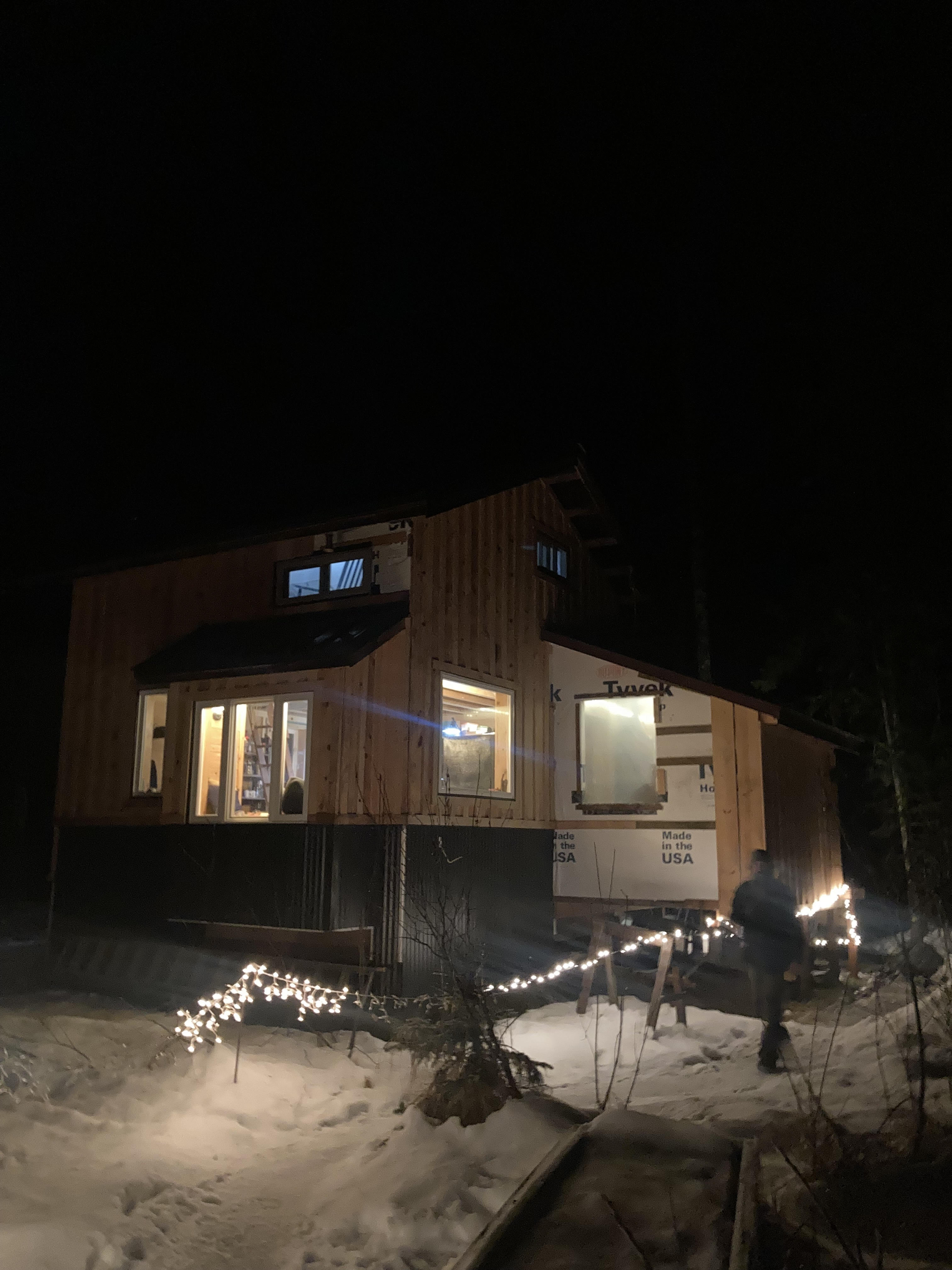


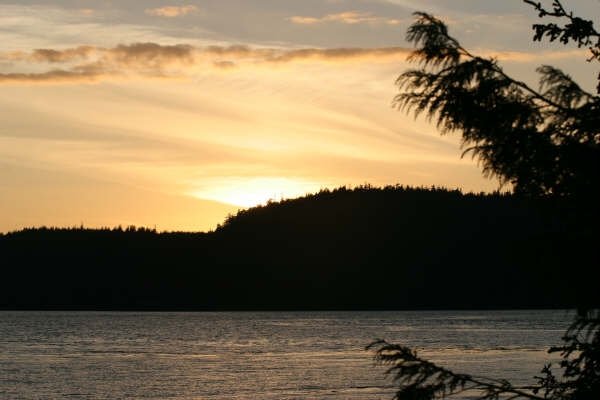
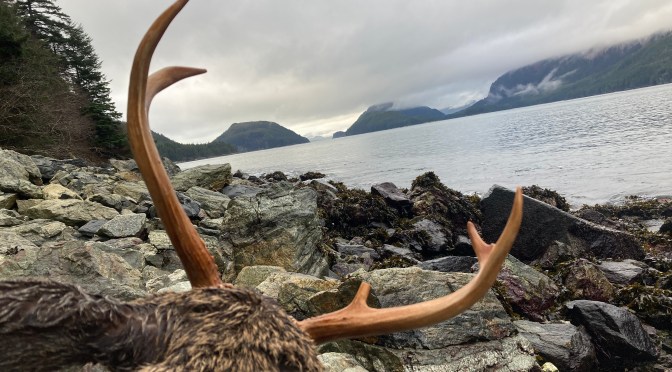


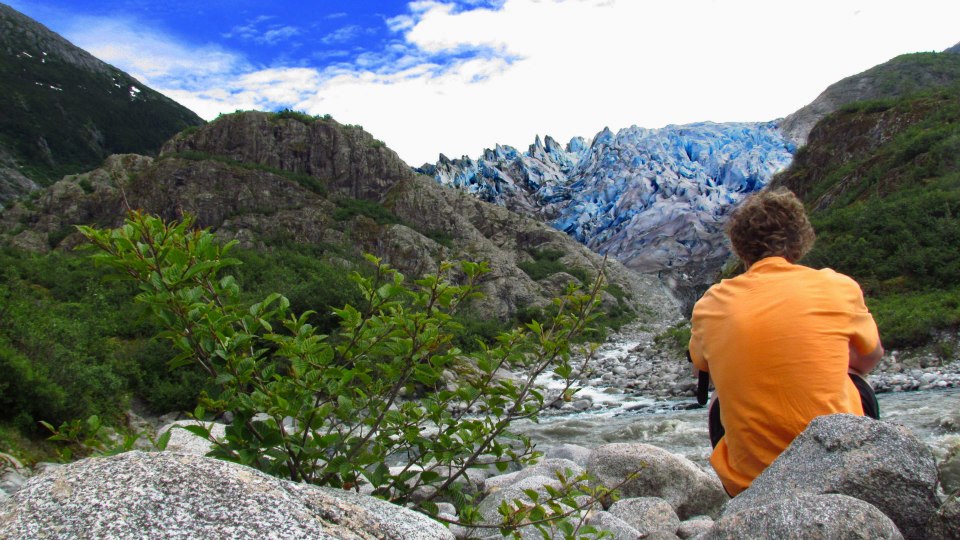


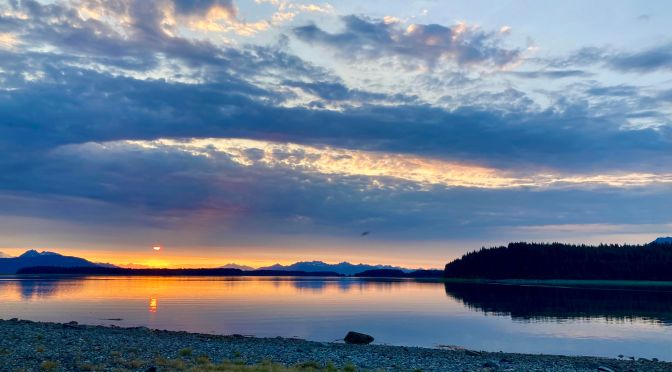


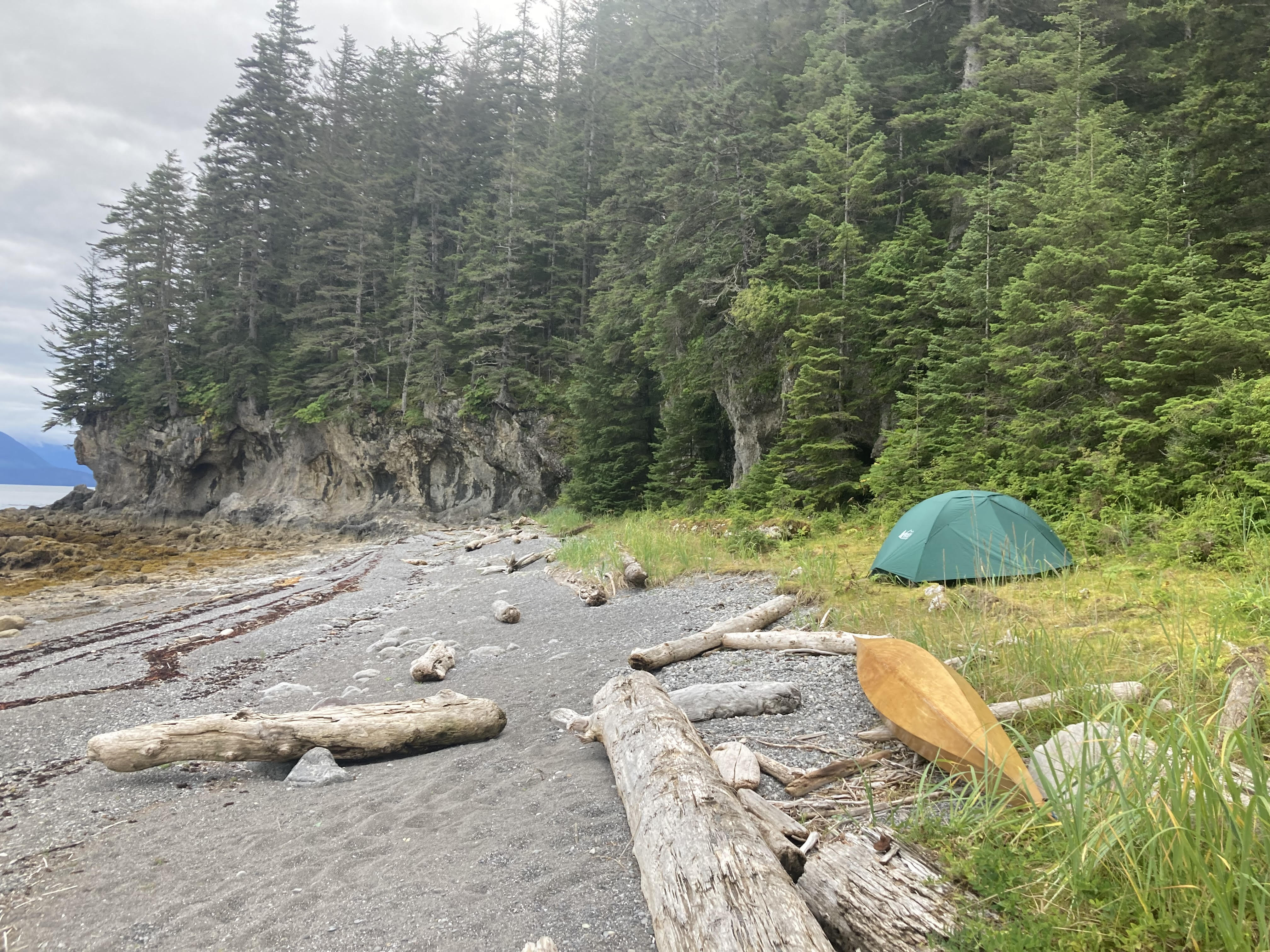

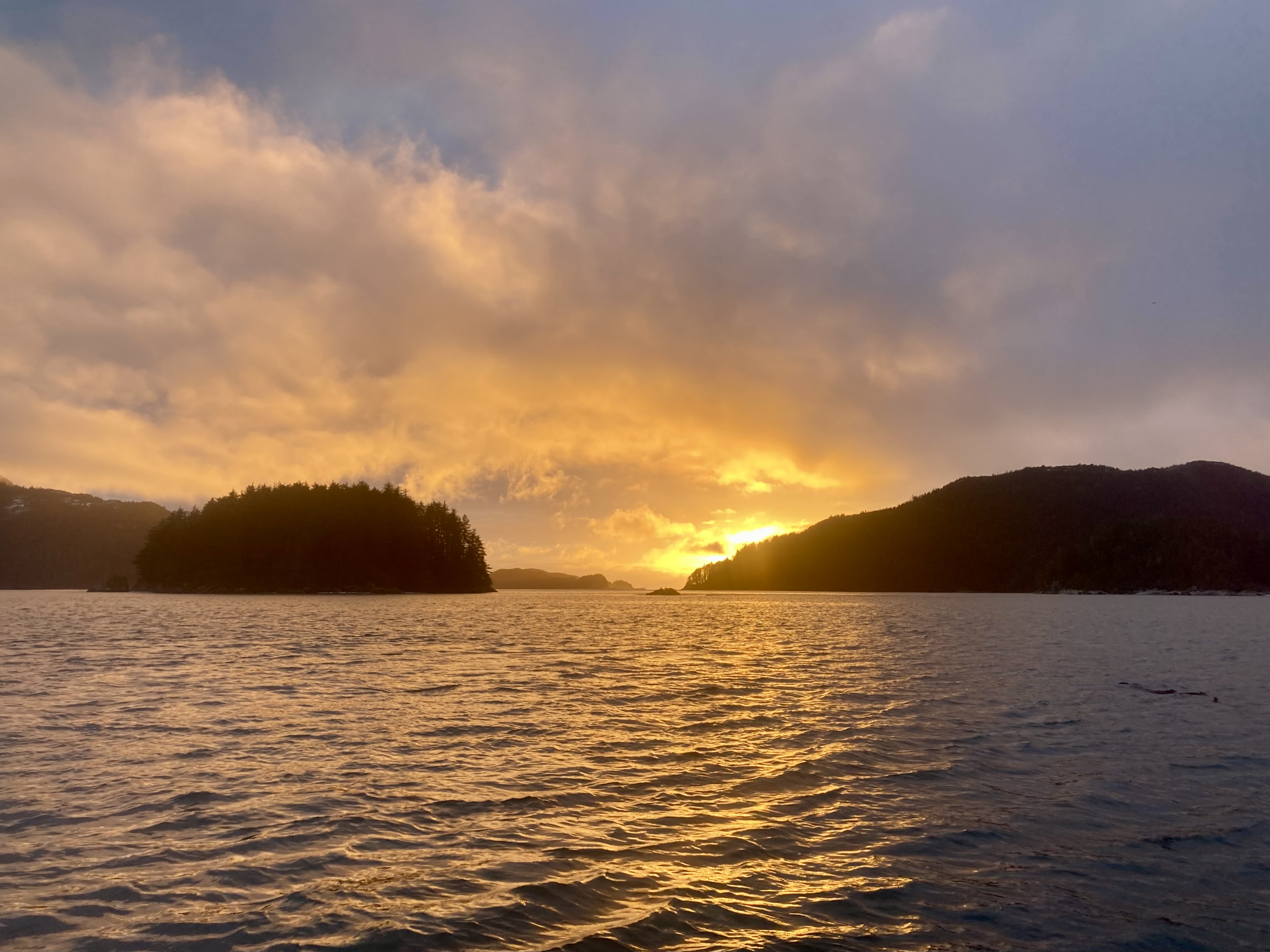
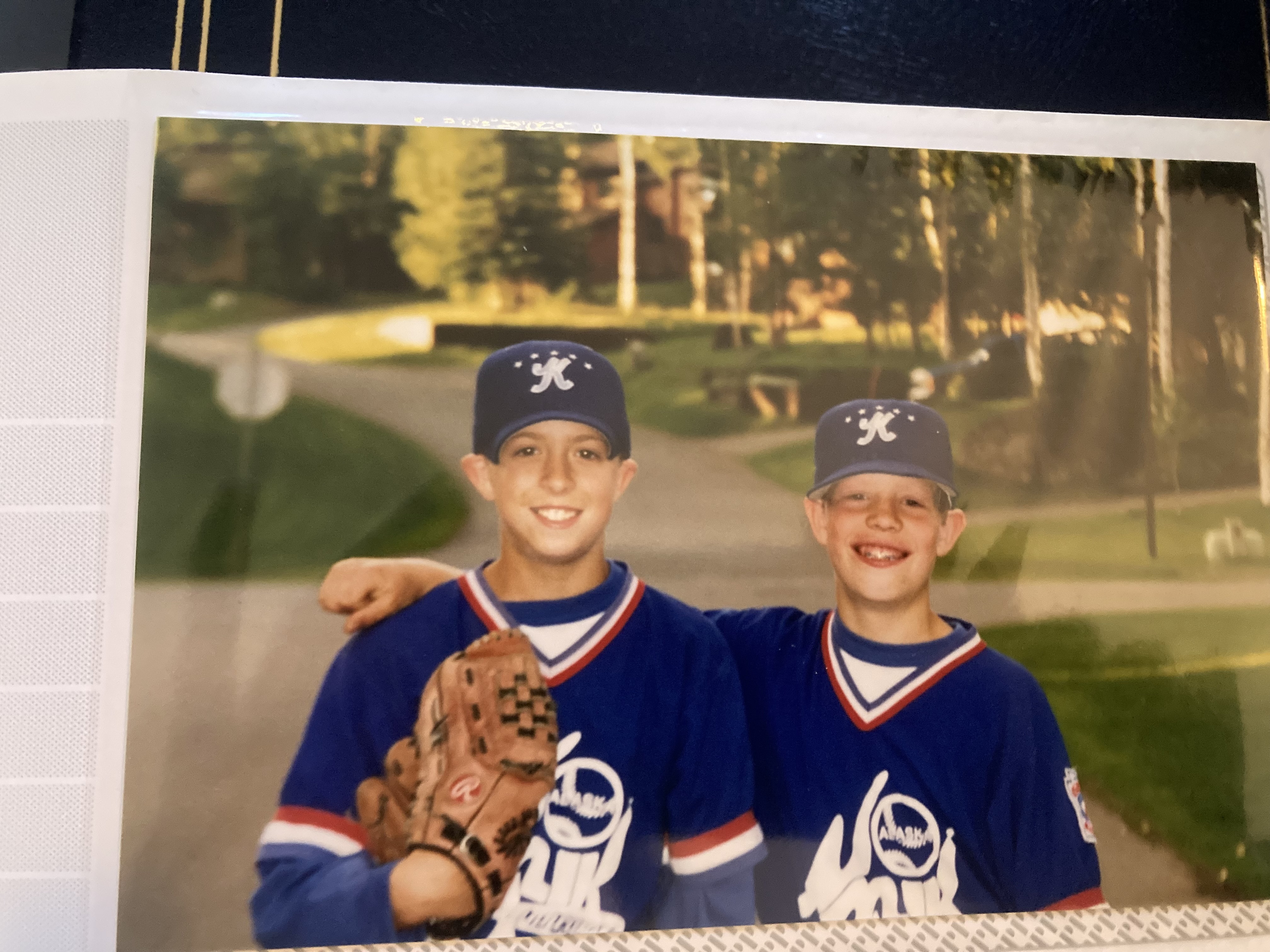
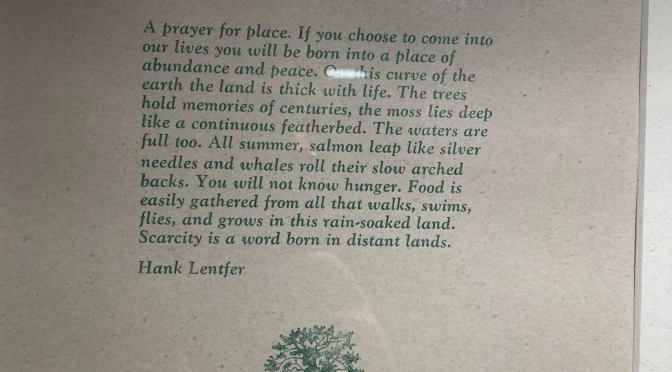
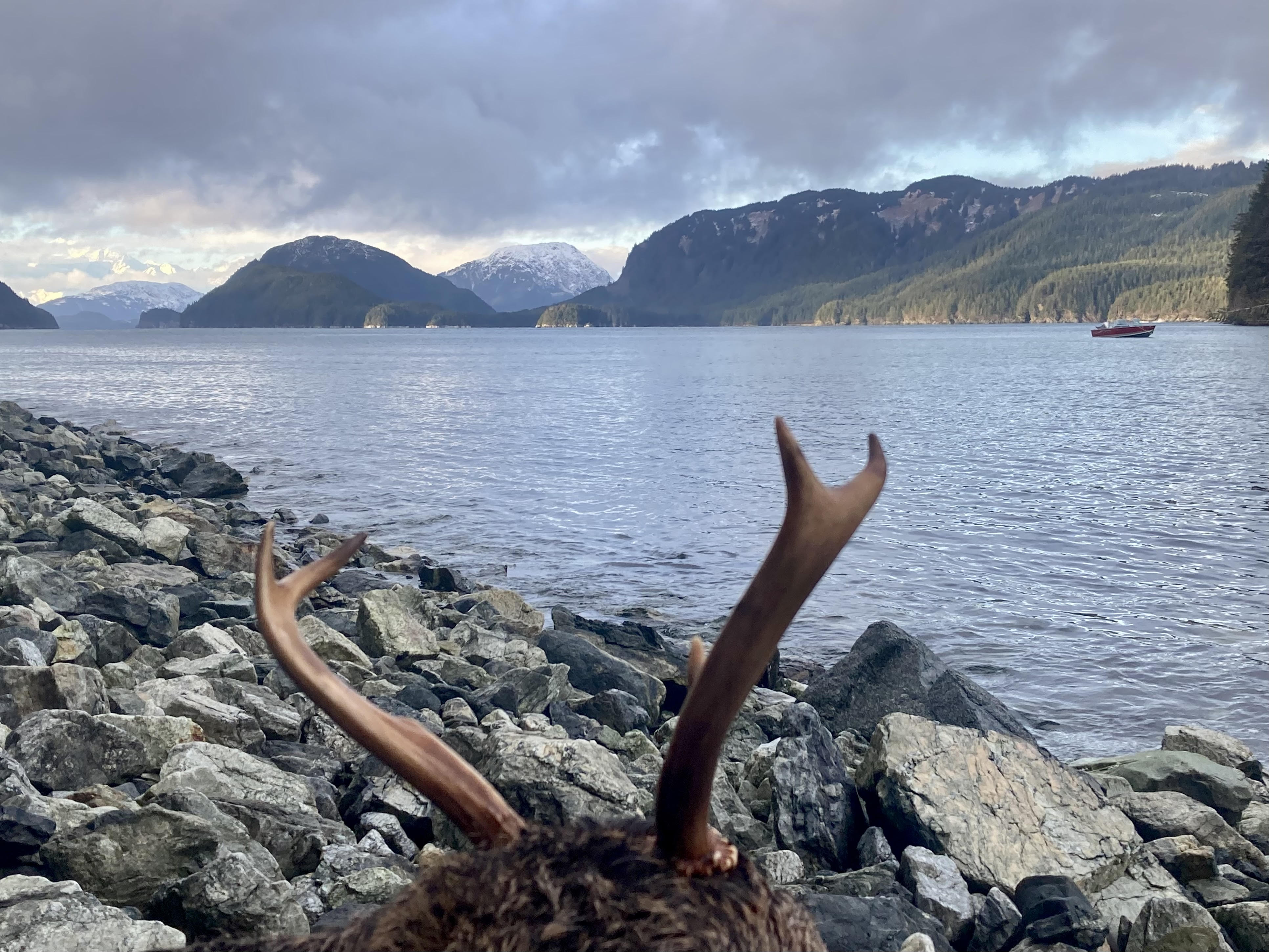
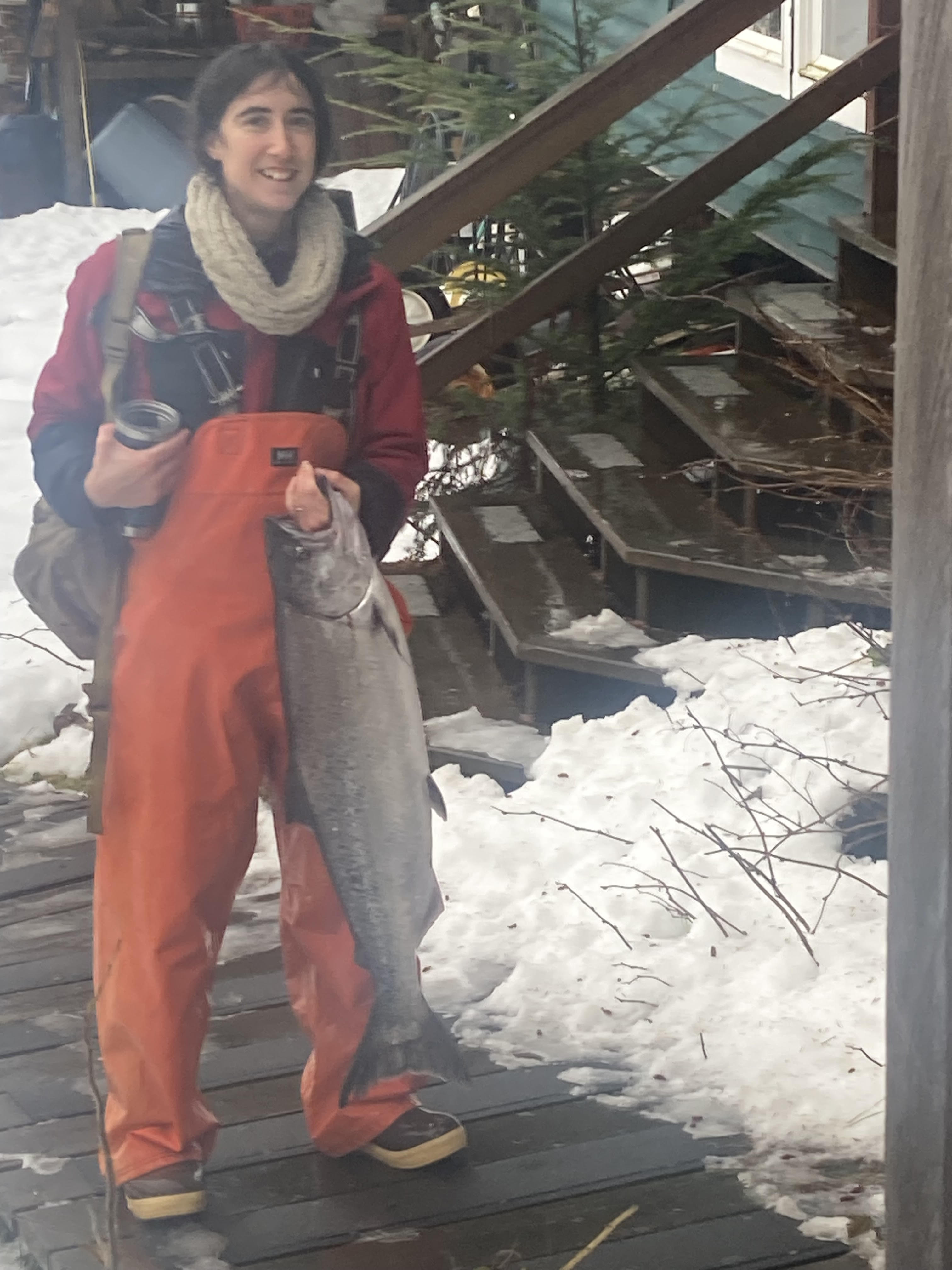
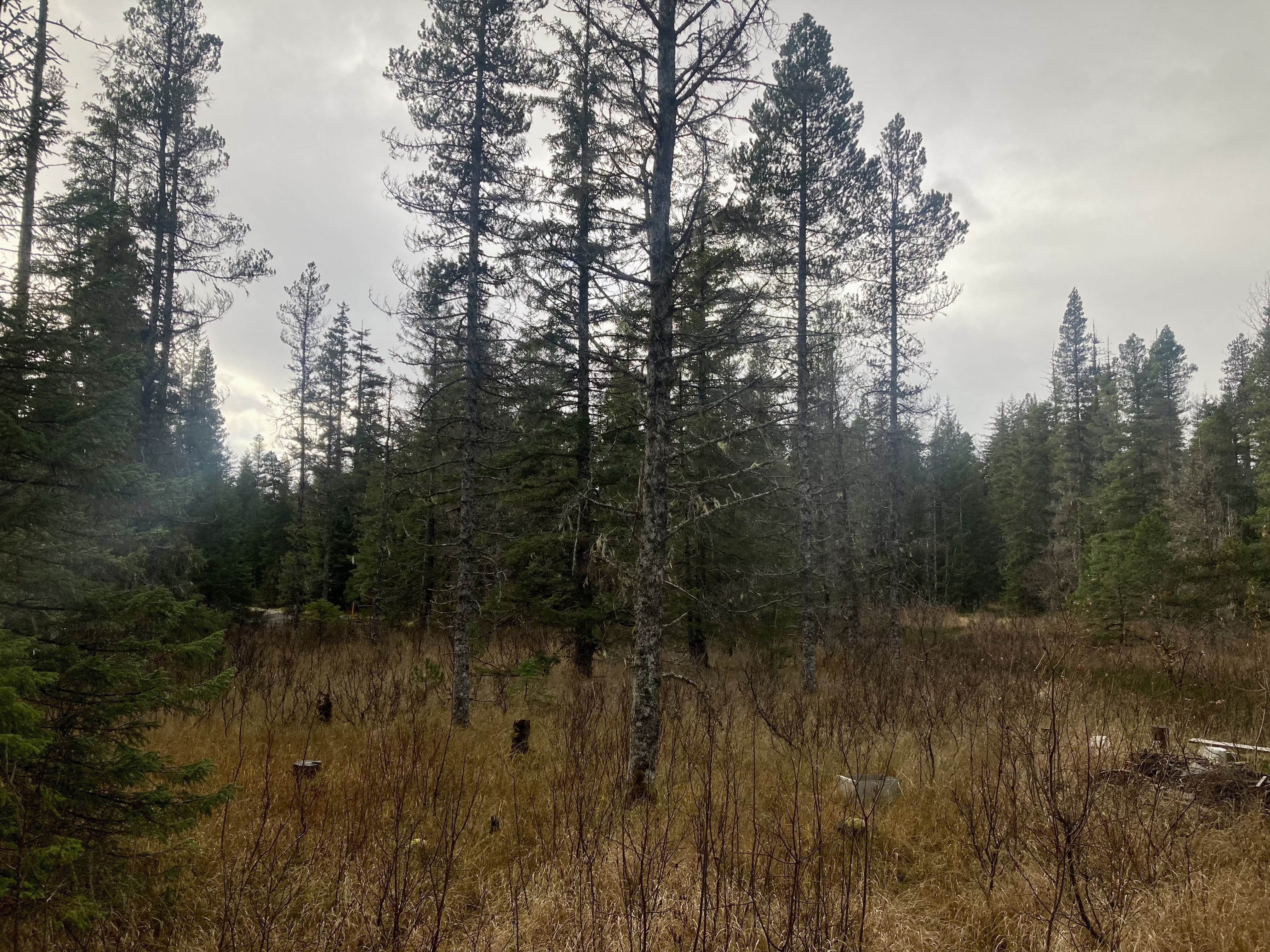
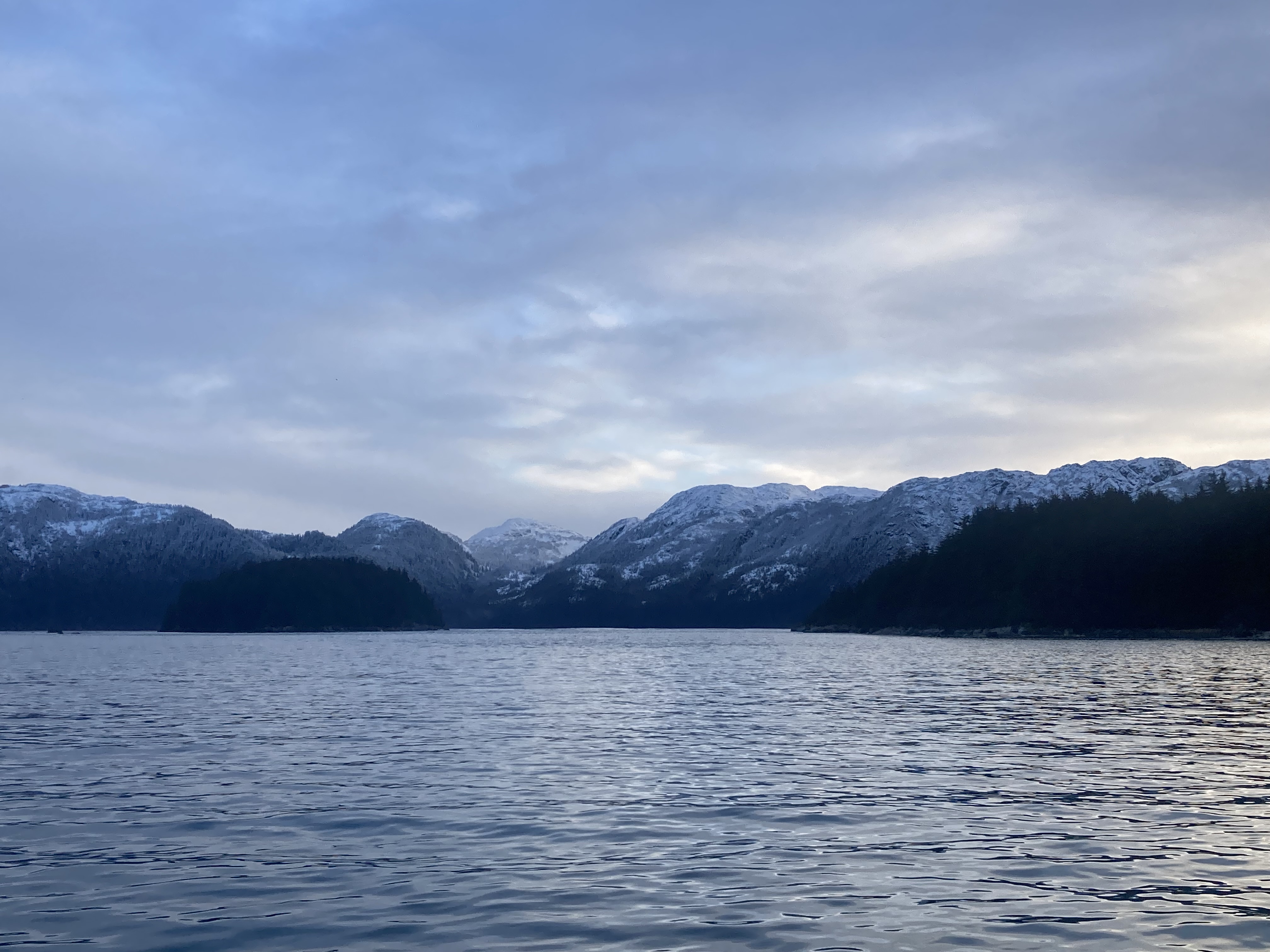

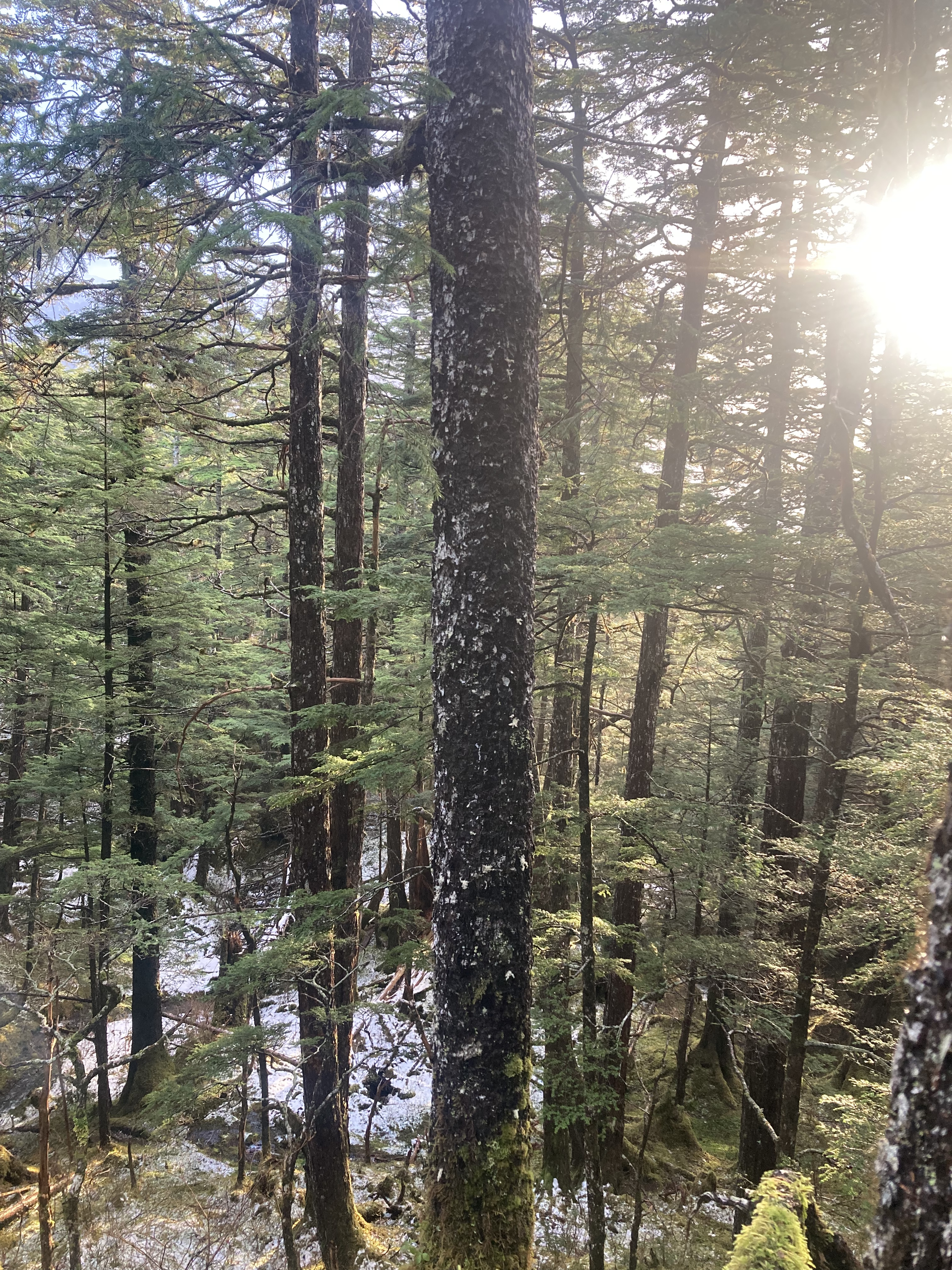

 Raincoast Wanderings