Tag Archives: Johnstone Strait

Chop Wood and Haul Water

You don’t hike through salal; you swim through it. Buried in an acre-sized grove, I stand on tiptoe, gazing at the island of hemlock ahead. In my mind, salal was just a hybridized version of discount alder. A nitrogen fixer thriving wherever sunlight poked through the clouds.

I breaststroke another few feet, struggling against the plant’s willowy but strong branches. The individual plants weave together like plywood, forming dense barriers that feel like drowning. I try a few more desperate strokes, pause, and look around. There’s supposed to be a trail somewhere.

I plunge beneath the surface, crawling under branches instead of through. Things look clearer down here. Something resembling a deer trail cuts through the maze. More tunnel than path, it’ll have to do. I reach for my phone and stare at the little orange triangle. GPS tells me the Hanson Island summit is just a few hundred feet ahead. I wiggle a few more feet, wondering why I didn’t do this long ago.

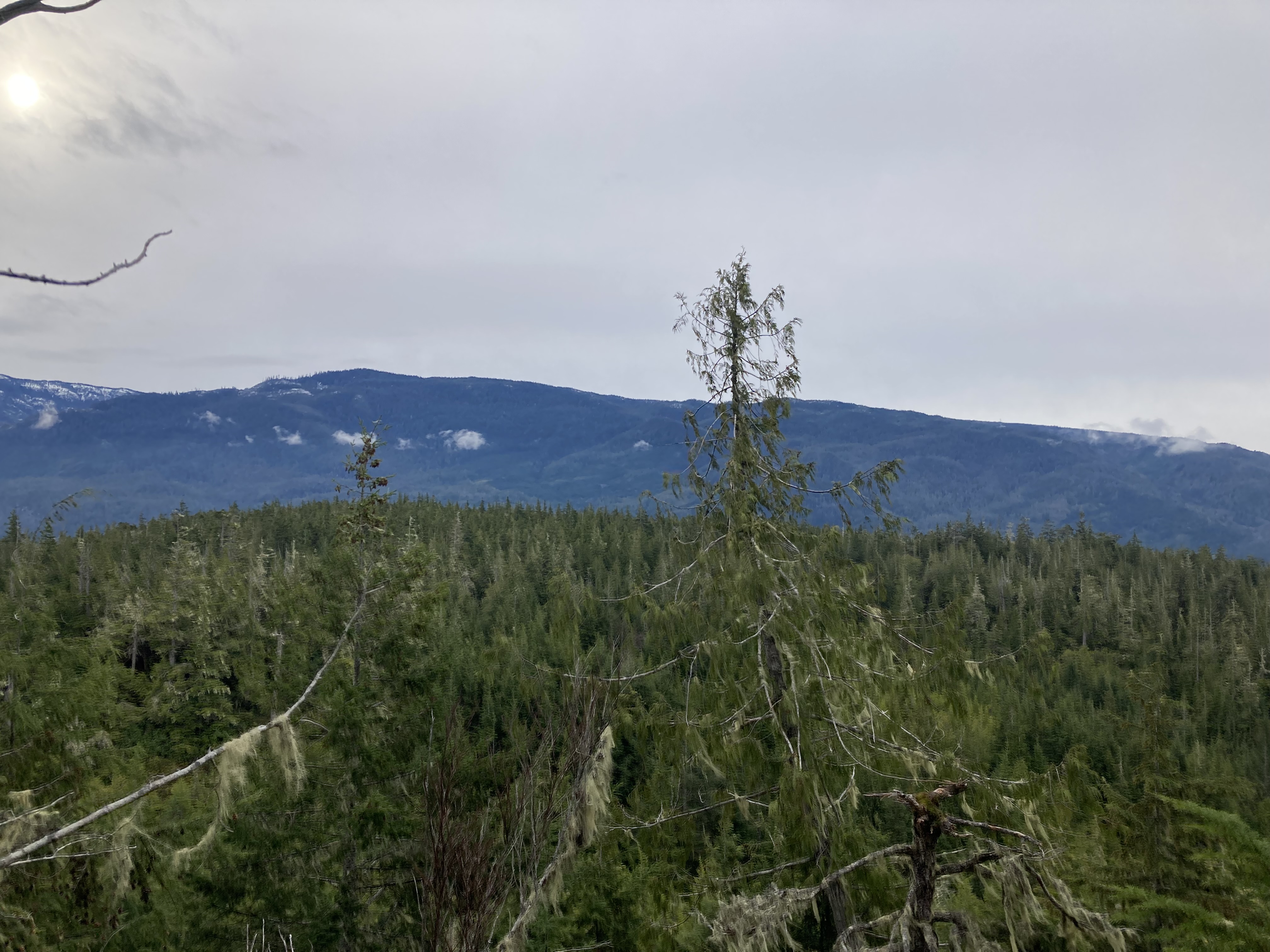
I’d be lost without my phone. It’s hard to admit, even by myself, without so much as a raven to judge me. The salal thicket blindfolded me, the small drainage spun me, and the few windows of sky reveal nothing. I follow the crutch in my hand, allowing it to guide me up one more embankment. A trio of big cedars with intertwined limbs shade a clearing festooned with deer beds. I push through one more wall of salal and gaze from the summit at Vancouver Island’s distant ridges. The hillside steepens, leaving just enough room for a viewshed and a clearing of rocks and lichen. I squeeze fatigued legs to my chest and stare at undulating greens and blues.
***

Harlequin ducks squeak in protest as I paddle by. They take to the water, necks bobbing forward and back as if to give themselves the illusion of more speed. Their rubber ducky chatter conceals their daredevil hobby of surfing southeasterly waves seconds before they break on the rocks. They dive like seals and fly like puffins, frantically beating their wings centimeters above the water. Every tidal rock holds another cluster of them, chattering away and admonishing the yellow kayak gliding past.

(C) Oregon Department of Fish & Game

Hanson Island crawls by. Every beach beckons to be explored, and twice, I slide into cobbled shores and poke into the woods. I’ve boated these waters dozens of times, always in too much of a hurry to pause. Always hustling either to Alert Bay or back to Orca Lab, usually in fading light or racing the next low-pressure system barreling up Johnstone Strait.

I’m hell-bent on savoring; I linger in non-descript woods for no reason other than they exist. At last, I swing into a narrow bay with steep shores plastered with ochre stars. A lone white buoy bobs at the head, and I pull into a small beach pockmarked with softball-sized rocks.

There’s the trail, just as I’d left it, through stands of alder and up a single-lane logging road recolonized by hip-tall hemlocks. I follow the steady incline under fallen trees and around puddles. A smattering of fish cut from plywood marks the trail with engraved names like “Bobby ‘Sparkplug’ Joseph” that demand exposition.

Past a slippery “bridge.” Clear-cuts glare at me—old ghosts rotting in choking shadow from dozens of same-aged hemlocks racing for sunlight. I stop at one such graveyard and try to remember. Had I noticed these old fallen trees in 2015? ‘16? ‘17? Had I been too naïve and unencumbered? Did the umbrella of protection now stretching across the beloved island somehow nullify the millions of board feet already removed?

I continue past spindly young cedars and gurgling streams, stopping at a fence woven with alder and salal. The gate swings open at a touch and the rusty old bell rings. A cedar shingle sign with weathered words welcomes me to “Earth Embassy.”

Trees sway in the wind, but it’s peaceful in the small courtyard between the old ramshackle buildings. Amongst the weathered old shingled walls, fraying tarps, and a bulletin board tacked with water-stained pages stand two new metal signs.  

“Respect this property,” the first sign commands, going on to recognize the site as the home and resting sight of one, David “Walrus” Garrick.

I wait for the creak of a wooden door and Walrus’s long gray beard and mischievous eyes. I listen for the echo of his dog Kessler’s booming bark or the rattle of the steller Jay fed peanuts every morning. But it’s just me in this quiet shrine with the work of one man’s lifetime.

The closest thing we had to a neighbor, I frequently made the hour-long hike from Orca Lab to Walrus’s. Equal parts Gandalf and Dumbledore with a liberal sprinkling of Original Trilogy Obi-Wan, Walrus would crack beers and tell stories he’d undoubtedly told a million times.

Wide-eyed, I’d listen to this living oracle talk about the founding of Greenpeace, protesting seal hunting in the Arctic and working as a cook on the first anti-whaling vessel before the Discovery Channel and Sea Shepard mainstreamed it.

The stories culminated in this place. His final act. The one he’ll be remembered for.

“The longest active roadblock in Canadian history,” he boasted, gesturing at his uninsulated cabin with a leaky vapor barrier, no insulation, and a smoky woodstove.

As Swanson, Cracroft, Parson, and Vancouver Island were stripped clean of timber, Walrus crawled sans-GPS through the salal to document the one thing that could spare the island known in the Kwakwaka’wakw language as Yukusam (‘shaped like a halibut hook’).
***

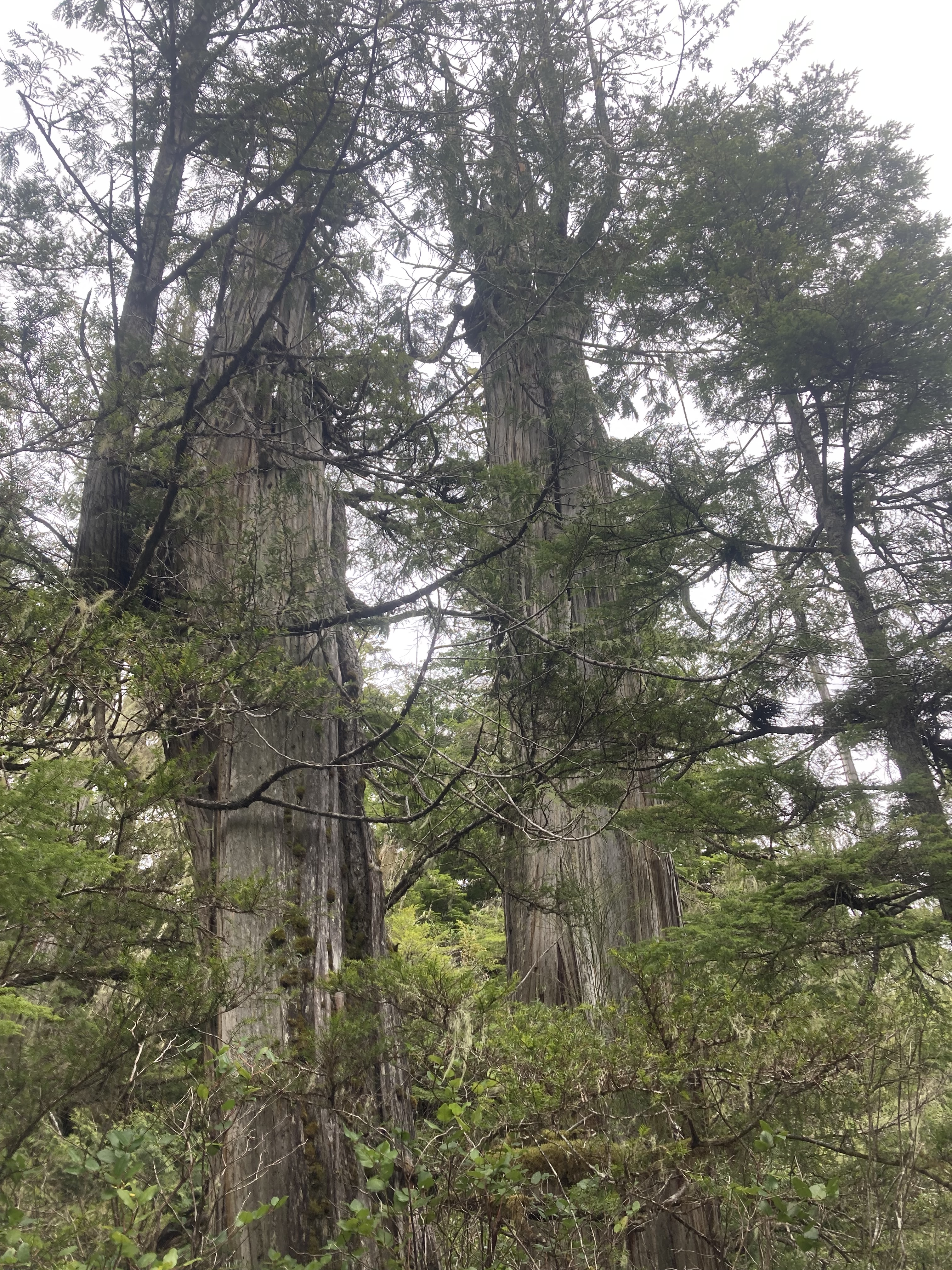
Red cedar is more than a sweet-smelling, rot-resistant wood that burns hot. Christened the ‘Tree of Life’ by the B.C. Coast’s First Nations, the tree was both canoe, house post, clothing, and basket. Centuries before the idea of forestry was an Anglo-Saxon fantasy, a natural ethos of conservation was a mainstay in Indigenous culture.

Life may have revolved around salmon, but cedar was the tool. Young cedars growing straight and true were set aside. They could be a basket today but, in a few generations, may be large enough to become a canoe, totem, or a corner house post.

Other trees were selected for bark harvesting. Outer bark was collected by making long, skinny incisions, which could then be dried and weaved into water-resistant clothing, baskets, even hats. The same oils that make cedars rot exceedingly slow even served as a natural bug repellent.

Instead of killing it, the harvesting increased the growth rate as the tree covered the exposed area. A cedar could rebound, survive, and even thrive if not too much was taken. The most formative and compelling case for conservation. The best argument that sometimes the word “enough” is the most important.

Prospective logging companies brushed aside the importance of Yukusam’s, “culturally modified trees” (CMTs), claiming that their in-house research showed there were only a couple hundred. Walrus and his team lived out of their active roadblock and pushed into every unlogged nook and cranny, documenting over 2,000 CMTs. For a region and people that had endured disease, assimilation, fish farms, potlatch imprisonments, and the heinous era of residential schools, CMTs are one of the remaining cultural touchstones. Carpet bombing Yukusam would be akin to nuking one of the few remaining strongholds.

Lawyers lawyered. Judges judged. Juries… juried?

And in the end, the remaining Yukusam old-growth was set aside. Walrus continued to live on his active roadblock, building gardens, cultivating shiitake mushrooms, and befriending the local steller jay population. The next generation of Kwakwaka’wakw filtered through the homestead, where elders taught cedar bark harvesting techniques.

Photo courtesy of Sharon Eva Grainger

These same Alert Bay residents pushed fish farms out of much of Kwakwaka’wakw territory, spurring returns of chum and pink salmon not seen in decades. It would be foolish and irresponsible to credit Walrus with this local revolution, but I wonder if seeing the power of a small team of forest-dwelling activists was another dry piece of kindling on an already growing fire.

***

For three winters, Walrus told me to climb the trail to Yukusam’s highest point. I’d smile, nod, and instead would walk back down the abandoned logging road for Orca Lab, unable to ascertain why. As my final winter as caretaker came to a close, I hiked to Walrus’s for the last time with a backpack laden with groceries. A nasty cough was making it harder and harder for him to lug supplies from sea level to 350 feet. Every couple of weeks, I’d arrive with a loaf of bread, eggs, and a couple beers.

“Did you get up the hill?”

I shook my head, feeling his disappointment, before grasping his hand and wondering if I’d ever see the sweet, eccentric Jedi Master again.

The cough forced Walrus to leave the longest active roadblock a few years later. In 2023, he took his final breath, finally able to breathe deep again.

***

The trail back to Walrus’s is easier to follow on the way down. I tour the old garden and study the pages clinging to the bulletin board. There are maps of the island showing the arterial trails he used to get from one CMT grove to another. Pictures of trees in mid-harvest and cross-cuttings of felled cedars, their age measured in centuries—quotes and documentation of Springer’s homecoming (another story for another day).

Near the front door is a notebook tucked safely in a Ziploc. Inside the little guestbook are the words of those who have visited this place since he passed. I clutch the little memento and stand before his resting place.

Before enlightenment, chop wood and haul water.

After enlightenment, chop wood and haul water.

I open to the next blank page and stare for a long time at the empty lines beneath my scribbled, “Dear Walrus,”

 It is somehow lifetimes and seconds since I was here… the longest active roadblock remains intact.

I finally made it up the hill. You were right, it is beautiful. I should’ve done it sooner, but I’m thankful I could return and make it happen.

I’m not who I am without Yukusam. It was orcas that drew me, but that’s not what brought me back. This place is green because of you. Cedars stand because of you, though I’m sure you’d brush that aside with a laugh and a cracking beer.

Chop wood and haul water.

The phrase catches my heart; no five words better summarize my post-Orca Lab life. Wood for a fire, wood for 2x6s, and rafters and plywood. The promise of a warm house.
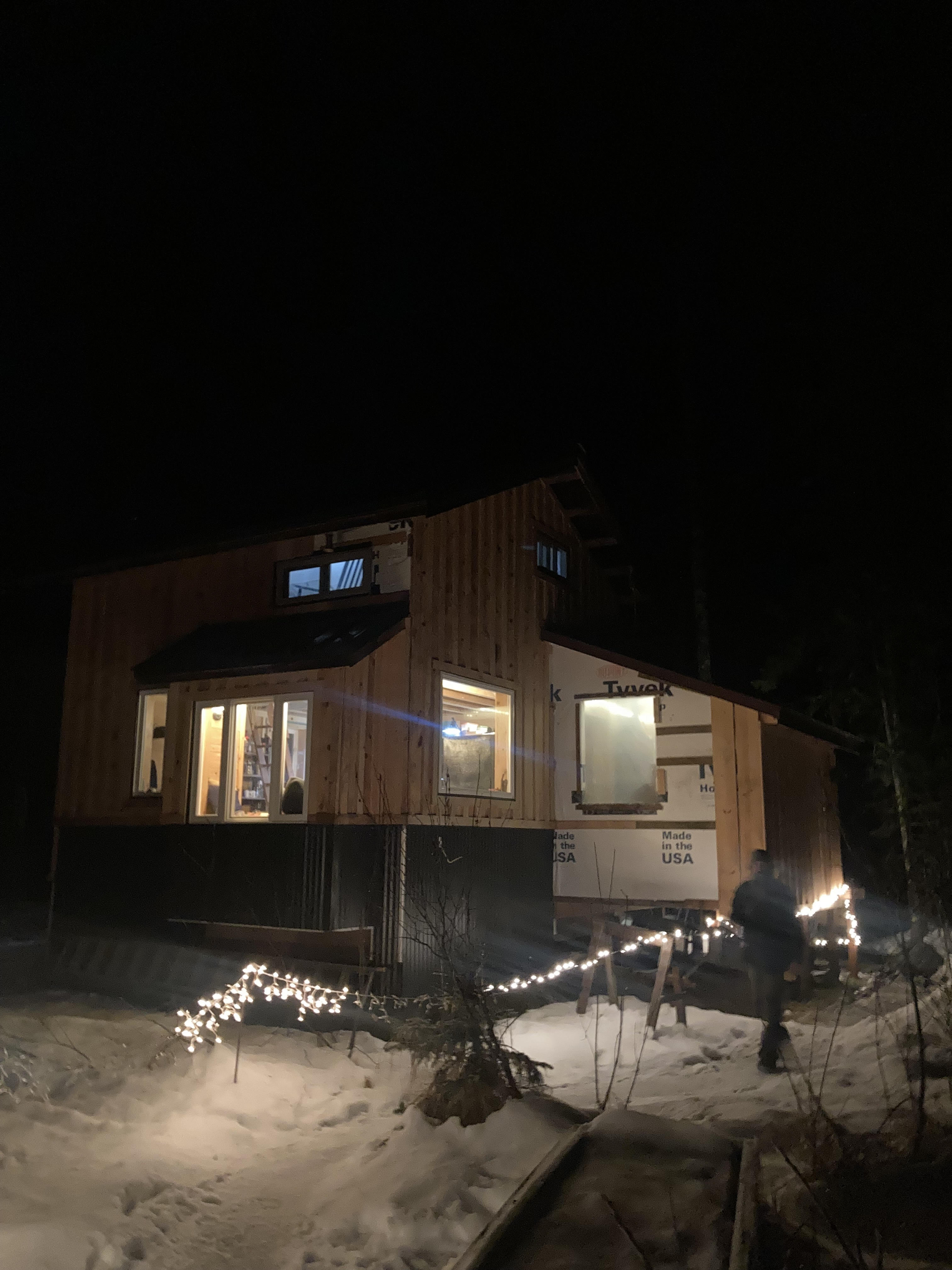
But the words are not simply literal. I repeat them like a mantra, a meditation, a reminder that some things must not be forgotten, no matter where in the journey we are. Ways of life that tether us to place and home and earth. Edicts as sturdy as a cedar house post.

Chop wood. Haul water. Climb the hills. Get dirty knees. Paddle the beaches. Drink the beer. Smile quickly. Laugh loudly. Forgive easy. Let go of anger.

A raindrop hits the page. I bend over and try to say goodbye.

Thank you for all you taught me. It took a while for some of it to sink in; I’ll never be done learning, never be done making mistakes, but I’ll never stop trying. I chop wood and carry water because of you. Rest easy, my friend. The beer is on me next time.

(C) Globe & Mail

I return the journal to a house built by trees to protect trees and retreat down a forgotten logging road that will never continue, forever stymied by a fence woven with sinewy salal and shaded by cedars growing in dignified defiance.  

Risk and Living

The tender splashes over the side, and the southeast breeze tugs at the bowline. I tie it to a cleat and give the anchor a firm pull. Find me a boat owner who’s more paranoid about their anchor than me.

Boat anchorages for this forecast don’t get much better than Lemesurier Island’s Hooter Cove. Tucked on the island’s west side beneath a steep hillside, it’s insulated from all but the worst southeasterlies.

Lemesurier Island on a nicer day

I wiggle into the little inflatable and paddle awkwardly for shore. I can’t imagine the designers of the Seahawk 2 had this in mind when they marketed her. Judging by the photo on the box, their grand plans included two full-grown men squeezing into this glorified raft for a magical day fishing on their favorite lake.

The raft zigzags at a glacial pace, and I keep glancing at the trees to confirm that I am indeed making progress. Even if I didn’t have my pack, rifle, and long legs, there doesn’t seem to be room for another dude in this thing, and I have no clue where you’d stash a fish bigger than a goldfish.

I nudge into the barnacle-coated rocks. Seahawk’s already sprung a pair of leaks, and we’ve agreed it’s a good idea to always take the hand pump. Despite the comical marketing and questionable durability, Zach and I have become strangely attached to the goofy inflatable that fits neatly in the back of our 20-foot skiff. I stash Seahawk above the tideline and, for the countless time this fall, pull my rifle from its drybag.

It’d be nice to have one more deer. The weather and daylight window for the day are tight, made worse by me forgetting my deer call on the bedside table and delaying our departure another 15 minutes. The ride to Lemesurier is just bumpy enough to remind me that the evening forecast calls for 20 knots and growing to 25 by Thanksgiving morning.

It’s mid-morning by the time I drop Tanner and Zach at their hunting spots and anchor. Four hours in the woods can vanish with astonishing speed. Depending on where you find deer and the difficulty of the drag, sometimes the day is done just as fast as it began.

I pause in spite of the tight schedule and look skeptically back at the skiff.

“It’s not drifting, is it?”

“No, it can’t be.”

“In your head. It’s all in your head.”

Some grow bolder the longer they tramp the woods, climb the mountains, and cross the straits, but I am not one of them. The more time out here, the more whitecaps and steep scrambles I traverse, the more cautious I’ve become. Too many close calls. Too many stories about boats with capable captains caught off guard by a rogue wave or experienced hikers disappearing on trails they’ve hiked dozens of times. I think about some of the stuff I got away with in my 20s and wonder how many of my nine lives remain.

Yet, here I am, boating across aptly named Icy Strait in weather that could best be described as “iffy,” and tramping down the beach after buck tracks in freshly fallen snow.

“Well,” I reason as I brush aside foliage and step into the forest. “There’s a balance between risk and living. Why live here if you’re going to be inside all day?”

I blink in the dim light and look around dumbfounded. I’ve never walked these woods despite passing this island dozens of times. This is Hank’s refuge, his go-to spot to hunt and shelter in a small, off-grid cabin. I’d heard him talk plenty of times about how much bigger and open the Lemesurier forest is compared to the Inian Islands, but I had to see it to believe it.  

Stately hemlocks with just a smattering of spruces tower high above an open floor devoid of menziesia, huckleberry, and devil’s club. The trees are spread wide, a myriad of deer trails weave hither and thither.

I look up the hill. I can see forever. So many great perches. I gain some elevation and settle on the soft moss, the rifle propped on a rotting deadfall.

I scan the full 360-degree view. This may not be as advantageous as I want. I can see forever, but so can the deer, and they’re a whole lot harder to see at 200 yards than me.

The big old trees give the impression of being watched. This place feels familiar, comfortable, like I’ve been here before. Not here exactly, but on an island pinned between the British Columbian mainland and Vancouver Island. A place I’ve thought about – for better or worse – every day for more than a decade.

It is no slight to Juneau, Gustavus, or southeast Alaska to say that the sweetest moments of my life came on Hanson Island, British Columbia, where I sat up nights starring over inky Blackfish Sound while orcas called from Robson Bight.

These Lemesurier trees echo Hanson Island’s mega old growth, where wizened red cedar and chunky fir trees persevere. Instead of looking for antlers, I daydream about magical harbor seal encounters and lugging batteries.

I can’t quit this place, and when I vowed to return, I had no idea it might happen so fast.

***

I had every intention of going somewhere warm for the winter. Hawaii sounded good, and I trolled the usual “workshare” websites and pestered my Hawaii friends for job opportunities. Something kept getting in the way. Schedules didn’t line up, the timeline either too long or too short (or too expensive).

Eventually, I did what usually happens when I have a new search engine open. I typed in “orca.” I scrolled through the workshare, and my heart skipped several beats when I saw Orca Lab’s profile staring back at me. After several minutes fantasizing about going full hobo and returning for the summer, I kept moving, scrolling past several opportunities along the B.C. coast that toted the chance of seeing “wild orcas.”

I stop at an overhead drone shot of red-roofed buildings and a floating dock. Orca Lab isn’t the only site of human habitation on Hanson Island. Double Bay is on the opposite side of the island in an appropriately named bay that cuts deep into the shore. It had been an inactive fishing lodge during my Orca Lab days and snapped up by a philanthropist some years ago with the ambitious idea of bringing Corky home. While far too old to ever go full ‘Free Willy’ and return to her pod, living out her final days in a large net pen adjacent to her native habitat seemed the least humanity and SeaWorld could offer after decades of imprisonment.

Help us Create an orca sanctuary. Caretakers needed for January and February.

***

Deer-less and cold, I hustle back to Hooter Bay, hoping Zach and Tanner saw more than my single doe/fawn pair. Knots of anxiety bend my stomach as the water comes into view. Terrible scenarios fill my head, including a broken anchor chain, a punctured Seahawk, a shifting low front, a chilly night, and a long walk to cell phone service.

But the skiff is there, and Seahawk is reasonably inflated. I paddle out and have to admit that the wind is picking up.

“There’s a balance between risk and living. Why live here if you’re going to be inside all day?”

The anchor pops off the bottom—big pull. Reset my grip—big pull. Reset. I pause, catch my breath, and look back at Lemesurier. It’s been several weeks since I reached out to Double Bay Sanctuary, and I’m dragging my feet on my final answer. Two months isn’t a big commitment, and it’s not like sitting in the middle of nowhere is some monumental life change. There’d even be two other people there. I wouldn’t have to go full hermit this time around.

Snow swirls around my head, and my fingers go numb. The anchor comes into view, and the skiff sways in the growing chop. I stare at the anchor, considering the balance between risk and living.

“Why do this?” I ask the cove.

“Why not do this?” the forest answers.

“Because… I don’t want to chase ghosts. I don’t want to be Uncle Rico.”

There’s no question who my celebrity lookalike is. While there are times I’d prefer to be comped to Damon or Pitt, at least Napolean Dynamite got to eat tater tots and dance. But it’s Napolean’s antagonizing Uncle Rico I’m scared of becoming.

Yes, I’d dreamed of going back, of cruising up Highway 19 in time to catch the evening ferry from Port McNeil to Alert Bay. Yet, if I was going to do this, it won’t be to relive some glory day or a feeble attempt to recapture my Orca Lab magic – the rambling equivalent of throwing a football over mountains or wondering what would have happened if coach put me in during the fourth quarter. After 18 months trying to look forward instead of backward, the last thing I needed was an excuse to relapse.

***

The anchor clangs, the boat drifts free, engine in gear. Choppy waves meet me at Lemesurier’s northwest corner. Low gray light and fog hide the setting sun. Tanner is right where he’s supposed to be, a marvelous 3×3 buck resting on the boulder-strewn beach. I abandon the helm and help lug his prize over the hull, trying to keep covetous envy out of my voice.

A deer of comparable (but still smaller) dimensions.

“Where’s Zach?”

Tanner drops his pack and checks the stern for rocks before we pull away.

“Just heard him on the radio, says he’s on a beach east of here.”

I shake my head: fading light, growing waves, temperature below freezing. We may find what our skiff can do on this 15-mile run home.  

I wouldn’t have given the crossing a second thought ten years ago. Invincible and drunk on life, I took Orca Lab’s teeny boat into all sorts of weather, tying it to the rocks off Cracroft Point and hustling to replace a battery or restart a generator while the tide fell and waves pounded. I took green water over the window and felt the hull wobble under an overloaded cargo of groceries, laundry, water, fuel, and batteries.

We cruise just offshore. Water sprays the windshield, and I taste salt.

“Where’d you find’em?” I ask, trying to take my mind off the weather.

“In a muskeg just a few hundred feet above the beach,” answers Tanner, not taking his eyes off the shore. He points towards a pebbly beach below a cliff. “There he is.”

Zach leaps aboard the lurching skiff with the ocean roaring in our ears. Spinning towards home, the bow dips unnervingly in the stacking four-footers. Tanner’s buck receives a dose of salt brine.

“We could use a little more weight in the stern,” I say grimly.

We shelter behind the little windshield and bounce like pool toys. I glance west into fading light. It’s gonna be close.

The boat goes quiet as we stare over sooty seas. My fingers go numb on the wheel, and we crawl forward. Home looks far away.

“There’s balance between risk and living. Why live here if you’re going to be inside all day?”

Lemesurier disappears in fog. Glacier Bay comes into view. I replay the route again and again. Lemesurier to Point Carolus. Across Sitakaday Narrows to Lester Point. Lester to Halibut Point. Halibut to the Bartlett Cove dock. The chop subsides near Carolus. Push the throttle down. 10 knots. 15 knots. 20 knots. The outboard purrs. We’re gonna make it.

I forget the weather and cold as my mind retraces another marine route that’s burned into my memory. A path that scoots across Cormorant Channel and through the Pearce Islands before hitting Weyton Pass at the slack. It meanders through the Plumper Islands and past a sea lion haul-out before navigating the tidal islets off Hanson Island. But instead of continuing down Blackfish Sound for Licka Point, I turn into a bay with two heads cutting deep into the island that will never let me go.

Hanson Island

***

Carolus’ rocky reef goes whizzing by. Sleet pelts our faces, but it seems that the worst is behind us. We breathe a little easier, our nervous jokes a little funnier. It’s impossible to always know where the line is between risk and living. The line moves without warning. A sunny day can be overrun with fog or variable seas replaced with small craft advisories.

We sprint across Sitakaday, and comprehension hits harder than the iciest salt spray. I cannot let fear stop me from loving the places that resonate. There are challenges around returning to Hanson Island. Memories and nostalgia would wiggle into my heart and try to drag me down—that oscillating line between risk and joy.

Bartlett Cove dock pokes out of the fog. Did I let the fear of a snapping anchor line or bouncing waves stop me? No, I tied the line tight, double-checked the weather, and trusted my skiff and friends. We cannot sit at home in fear of what may happen.

I am an unreliable narrator still learning the quirks and priorities of a reborn 36-year-old who stresses about his boat and runs after every report of orcas. Some things just won’t change. For 18 months, I looked forward, reclaimed home, and fell deeper in love with Icy Strait. I want the same for Hanson Island, for it to be part of past, present… perhaps future.

The skiff slides into the dock. The motor goes silent, and I flex my throbbing fingers as the blood returns and numbness fades. Did it—a bit of risk for another day in the woods. The sensation and payoff are inescapable, makes me thirsty for more. We walk up the ramp, keenly aware that we forgot to call for a ride home.

I pause against the railing and look across the water. Lemesurier and its big old trees peak out of the fog, and I give them a solemn nod, thankful not just for home but the opportunity to live a life that permits me to fiercely love two places. There is room for Hanson Island in this new life. Room to write a new chapter and make it part of home. I clap my stinging hands, heart filling with cautious excitement.

A great blue heron lands on the railing and stares with prehistoric eyes. The same bird that flew over the Shabin on my first visit and whose vestige now adorns the kitchen. I am not one for signs and imagery, but I take his presence as positive affirmation.

“Thanks,” I whisper. “It’s good to be going home.”

Hanson Island

Crawling the Last Few Miles: My First Trip to Hanson Island. Part: 3

24383_376048174851_4648308_n

The engine sputtered, coughed, and died as the June Cove glided slowly to a stop on the calm water, bobbing in the channel between Alert Bay and Hanson Island. From my seat atop the cabin I spun around and peered down at the stern deck. There was no smoke or flame, nothing that would indicate we would need to start practicing a frantic dog paddle. The door to the helm slid open and Paul opened the engine hood, looking down into a maze of wires and metallic mystery. He pulled his wool hat off, running his hands through his thinning, long dark hair. Years later Paul would describe the Mercury engine as a, “big bloody monstrous thing.”

But right now the monster was pissed, we were almost exactly halfway between the lab and the Alert Bay boat harbor, and the sun was setting. After performing what he hoped would be an accurate amount of mechanical wizardry Paul moved back to the helm and the engine coughed and sprang back to life. The four other volunteers and I smiled as the June Cove slowly picked up speed. Less than a minute later though the engine quit again.

Again Paul marched onto the deck, this time glancing up at me and the kiwi, Shane who was perched on the roof of the cabin with me, “how well can you boys paddle?” he asked, a little laugh in his eye. Shane and I exchanged uneasy grins and I smiled back nervously, imagining how my mother would feel if I was lost at sea my fourth night in Canada.

Three more times the June Cove roared to life and died. A pod of Pacific white sided dolphins had begun following the wounded vessel, giggling no doubt at mans’ vain attempt to conquer this aquatic medium. Finally Paul threw up his hands and told us to get comfortable, the engine would run as long as the RPM’s were kept painfully low, and we slowly puttered to the lab, I swear a kayak passed us along the way.

An hour later we rounded the final point, and there, perched heavenly on the rocks just above the cove was the lab. Tucked back and nearly invisible among the fir and cedar trees was the house. Big bay windows overlooked the cove and Blackney pass, a tiny chimney sat on top, silt gray smoke pouring out, it was the picturesque homesteaders cabin. A board walk ran just above the jagged rocks of the intertidal to the “lab.” Much smaller, the lab had a wraparound porch that overlooked the pass giving a 180 degree view of the water and anything that moved up or down it. On the board walk was Paul’s wife Helena, her slender frame and flyaway white hair visible even from the water, a large husky at her side sent booming bark after bark flying across the cove, a marvelous welcoming committee.

Six years later there is still so much that vividly stands out from that first night. The mac and cheese and garden salad we had for dinner. Watching the sun set through those big beautiful bay windows, and just how easy the conversation was.

There were seven of us around the table that night representing five countries and different walks of life. Shane the New Zealander, slowly traveling around the world. Tomoko and Momoko, two girls from Japan where Paul was revered by many for his anti-whaling stance (and obviously hated by some). And Evan Landy, who, like me, was a biology major with an orca fascination that, like me, boarded on obsession. Helena was, interestingly enough, the only Canadian born citizen among us, who had been a school teacher in Alert Bay before meeting Paul.

I fell asleep that night not in the tent I had lugged all those miles, but on the wraparound porch overlooking the ocean, the occasional waves lapping at the rocks and the soft underwater noises emitting from the speakers connected to the six hydrophones strategically placed around the lab. Passively listening for the orcas to come into range.
I dozed off almost instantly, reveling in the smell of salt on the air, the intimate sounds of the ocean, both above and below, and the magnificent realization that I was finally, actually, here.

Boats, Busses, and Cougars: My First Journey to Hanson Island. Part: 1

In the last nine months I’ve learned how to carry three plates of food at once, how to make a passable latte, and how to describe where the hell Hanson Island is in the amount of time it takes to make change for a tall caramel mocha with whip. But since there are no lines or lunch rush on the internet, I’ll happily go into more detail now about the island, the lab you can find there, and the man that started it all. There aren’t that many ways to reach the island, it’s not like Alaska Airlines and Northwest offer nonstop service or anything. So I’ll share the way 18-year old David got there in the summer of 2008:

A flight from Anchorage to Seattle, a celebratory cinnabon and a thirty minute flight got me to Vancouver with thirty pounds of sugar in my stomach and a maze of public transportation between me and my hostel. Three buses and two trains later, lugging a fifty pound Army duffel bag (I had yet to discover the miracle that is expedition backpacks) and I was in the heart of Vancouver. I couldn’t find that hostel again if I tried. My reward was a room the size of a closet, that had last been cleaned sometime during the Reagan Administration, and a broken air conditioner that seemed to welcome in the late June humidity with open arms; I’d never felt better.

The next morning, I boarded a greyhound bus leaving from the most stereotypical bus station of all time. Complete with filthy bathrooms, empty liquor bottles and an abandoned bag of weed under one trash can. The greyhound took me to the ferry and across the channel to Vancouver Island and another seven hours north to the tiny logging town of Port McNeil. The road along the eastern side of Vancouver Island is punctuated by coastal towns; Parksville, Courtenay, Fanny Bay (giggles), Cumberland, and Campbell River. Right after Campbell River though, highway 19 veers sharply inland through the rigid, majestic mountain range that composes Vancouver Island’s backbone. For two hours there are no towns or ocean views, just a never ending tunnel of trees, with whitecapped mountains peaking through the green framed windows. Port McNeil, is the second to last stop on the line, with only Port Hardy further to the north. It’s also the nearest the bus could get me to Hanson Island. With bus to submarine conversion technology still being decades away.

I planned to spend the night in Port McNeil and it was just another mile walk, dragging my duffel behind me to the campground and the campground host who, upon learning that I planned to sleep in a tent, felt it wise to inform me that there were three black bears…. and a cougar prowling about the campsites on a nightly basis.

Cougar? What the hell is a cougar? Black bears, fine. Alaska was filled with the mischievous spry critters. In the trees, in the undergrowth, occasionally in a garbage can. But cougars were a whole different animal, no pun intended. I was one year into a degree in wildlife biology and I had no clue what to do with a large cat. I could explain how it’s muscles received oxygen and how it’s cells had divided as it grew in it’s mother womb, but nothing that would help me if it came knocking on my tent flap at three in the morning.

But I was eighteen, naïve, and feeling invincible. I threw down my credit card and asked for one cougar free campsite. Walking to my site I passed two teenage girls, excitedly reliving their thrilling encounter last night with….. the cougar. I’m sure they were exaggerating its snarling and charging behavior though. My night was cougar free and I fell asleep with steak, potatoes, and rice in my belly thanks to the sympathetic retired couple across the camp who took pity on me after my bowl of cooking ramen fell into the fire. Putting my tent away the next day I happened to look up and found a black bear looking back as he stood near the dumpster fifty feet away. After all the jungle cat talk though a bear felt almost tame, I shrugged and went back to packing my tent.

All I had to do now was catch a ferry to Alert Bay, the miniscule village on the comma shaped island of Cormorant Island, just a couple miles to the east. But that was as far as B.C’s public transportation would take me. Because my final destination was not a city or a town, there is no dock, road, or parking lot. Just a tiny little unnamed cove with a trio of small buildings constructed in homage to the 1970’s back to the earth design.

This is the place known as Orca Lab. Paul Spong and Helena Symonds home and research station. Strategically placed at the mouth of Johnstone Strait, the lab overlooks Blackfish Sound, the highway in which 200+ orcas swim down every year, chasing salmon. I had arranged to meet Paul at the ferry terminal and sat on my duffel bag bouncing in anticipation watching cars drive onto the ferry bound for Alert Bay and realized that I had one small problem. I had no idea what Paul Spong looked like.