Tag Archives: community

Jello Shot Edicts

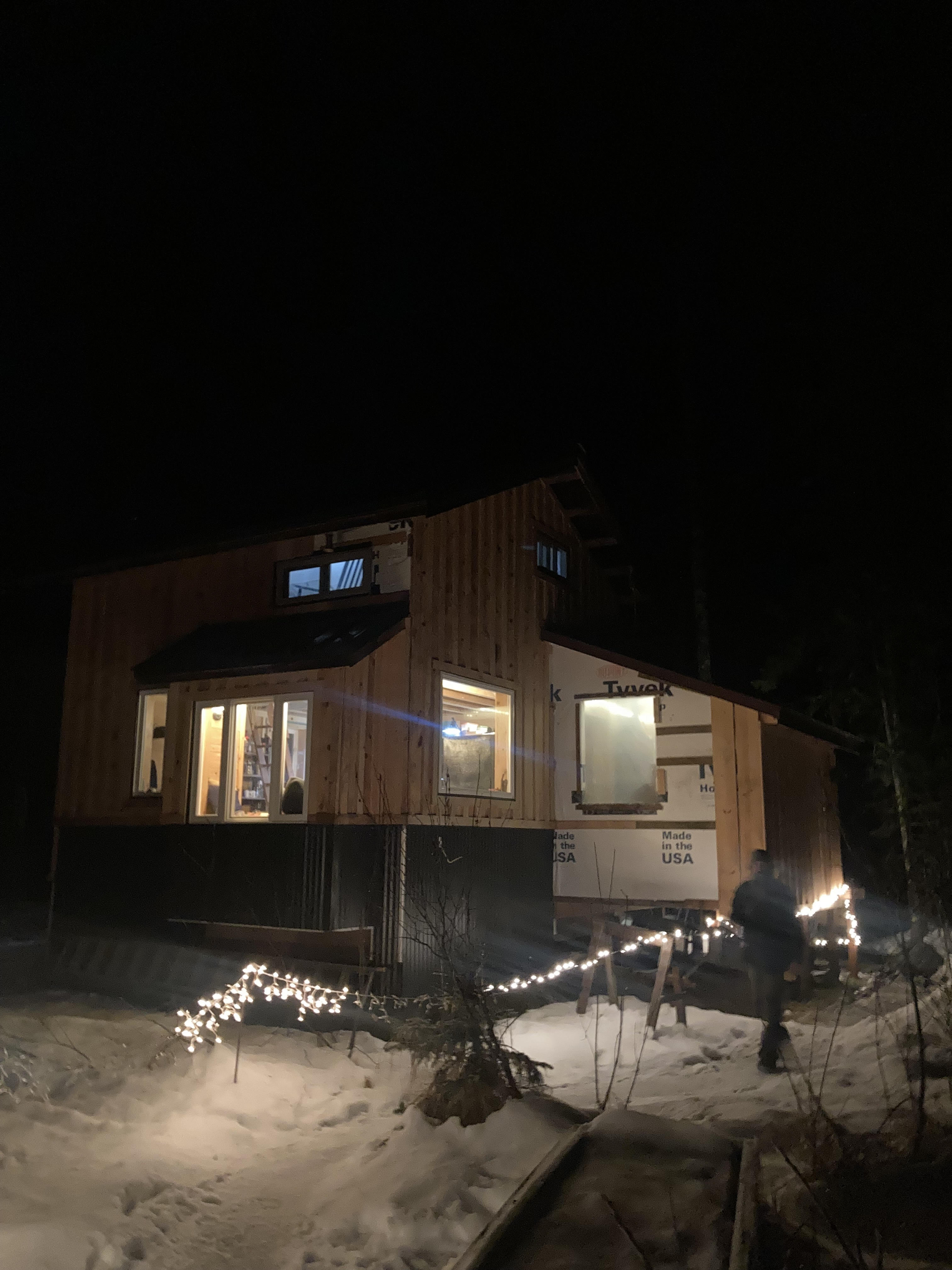
Sparks fly into inky sky, and the fire burns just bright enough to sharpen the pine tree’s silhouettes. Little tea lights in clear little buckets and mason jars lead the way down the road and through the trail like scattered jelly beans.

Breanna and I ping-pong between the cabin, shabin, and fire pit, toting folding tables, food, and tequila. I don’t remember what year the ‘Wassail’ tradition began in the Good River neighborhood. In essence, jolly residents travel from house to house for cocktails and food to celebrate the winter solstice and the promise of returning daylight. It’s the closest we get to a bar crawl around here. The tradition has steadily grown as friends from other Gustavus Neighborhoods make the pilgrimage down our meandering roads that this year are covered in an inch of ice.

The last time I hosted, the cabin had a single floor and no insulation. The wood stove was in place but not ready for installation. Everyone crowded on the plywood floor and gazed at exposed rafters, slapping me on the back and promising me it was going to be a beautiful home. I smiled and tried to imagine the place in some semblance of completion.  

***

Christmas lights complete the trail to the bonfire. Headlamps filter through the trees, laughter and song precede the incoming revelers. We’ve filled two tables with venison sliders, chips, cookies, punch, and lime-flavored Jello shots.

“I’m pretty sure we’re the first people in Wassailing history to serve Jello shots.” I say as we high-five.

We sample our handy work.

“Damn,” I wince, “we made’em strong.”

“Too strong?” Breanna asks.

“Nah. Perfect.”

Breanna pours cocktails while I dispense food and keep stealing glances at the cabin. I love how it looks from this angle, with the soft glowing lights peering out the windows.
I missed this tradition last year, choosing to spend Christmas with my folks in Eagle River. I needed distance. Couldn’t wake up December 25th to Minerva and a quiet home. I listen to everyone’s laughter and watch the Jello shots steadily disappear. I was afraid we made too many, now it’s looking like we’re gonna run out before demand does.

The majority of the people slurping Jello and munching potato chips have picked me up in some capacity over the last year. Checked in on me, invited me to dinner, or simply listened. I breathe through a knot in my chest and join the crowd clustered around the fire.

Don’t get me wrong, I love these people. And man, does it feel good to be a part of this rambunctious neighborhood. I remember growing up and hearing some version of the phrase, “The holidays can be a difficult time of year.” That never made sense for a guy who never had much reason to be sad; it makes more sense now.

I crack a beer and chatter about where to find deer when the weather turns cold and windy, my favorite fishing spots on the Bartlett River, and if the rain will ever turn back into snow. Food and drink exhausted, the crowd rambles on. Breanna and I shove the remnants in the cabin and follow the footprints toward the next house.

It took a while to accept that someone else wasn’t going to fix this, share the weight, or better yet, remove it entirely from my shoulders. Grief and hardship don’t work that way. Contrary to Hollywood and countless musical tracks, burdens can’t be lifted by outside sources. But friends, family, laughter, jokes, hugs, and, yes, Jello shots make it a hell of a lot lighter. You’re not alone if the holidays feel a little heavy. It’s okay to ask for help, to lean on loved ones, it’s okay if you’re not okay. Believe that one day you will be.

***

“Slippery out here,” I mutter as we shuffle down the road for Tim and Katie’s.

There are no street lights in Gustavus. Stars and northern lights pop when the clouds allow. On overcast nights with little snow, the roads are just a different shade of black. Small candles lead the way, providing just enough illumination to see one foot in front of the other.

Darkness is the theme of the solstice, a celebration not of the lack of light but of the promise that brighter days are on the way. It may be imperceptible at first. What differences can a few seconds make? But those seconds add up, they turn to minutes, half an hour, an hour. Sometimes life emulates the pivoting sun: impossible to discern the longer days or if the sun is getting warmer. But those long, sun-kissed days are coming. Until then, there’s nothing to do but follow the candles down the road. May they lead you to a warm home.
Heart Medicine

“Anyone here going to Gustavus?”

We cluster around the Carhartt-clad pilot, ballcap pulled low over short brown hair. He glances at a single sheet of people – the closest we get to a boarding pass around here – and calls last names like it’s the first day of school.

“Taylor, Taylor, Higgins, Parkins… Cannamore?”

We acknowledge our presence with nods. The paper disappears into a back pocket, and a key card opens the sliding doors. This is what amounts to security at Alaska Seaplanes. No TSA. No separate bag for your four ounces of liquids. No random bag checks or standing with arms above your head. Hell, you can carry your rifle onboard and barely get a second glance. It is almost moose season after all.

We ramble across the tarmac and squeeze into a plane with plywood floors and one giant propeller.

“Safety kit is in the nose hatch,” he calls over his shoulder as seatbelts click. “The back door has two latches. Open the top door by flipping the latch and turning the bottom handle like a car door. There’s a fire extinguisher under my seat.”

Flying to Gustavus costs as much as flying to Seattle. A fun piece of trivia that delights tourists until it’s time to drop their credit card on the table. After three weeks ping-ponging across southeast Alaska on the National Geographic Quest, I’d pay just about anything to be home.

The prop catches and roars to life—earbuds in my ears, volume up. The Lonely Forest belting out an anthem that speaks of home.

Give to me miles of tall evergreens, the smell of the ocean, and cool mountain breeze.

Juneau disappears beneath my feet. It has been several lifetimes since I called this place home. I still want to love and cherish it, for it is a beautiful place. How many other communities have more miles of hiking trails than paved roads? My stomach gives a little lurch that has nothing to do with the turbulence and confirms I still have some healing to do with that particular place.

The plane swings west, and Admiralty Island rolls past, wingtips level with the 3,000-foot peaks clad in September fog. Hank has teased the Admiralty Island alpine for years, describing an alpine so lush that the deer cluster in numbers too tantalizing to comprehend. I trace ridgelines, nose pressed to the glass.

Next year. It’s always next year.

Fatigue creeps in. I am tuckered and worn out. How many days off have I had since May? I replay the summer as Lynn Canal whitecaps replace Admiralty’s muskegs. The season’s workload looked reasonable in February. I said “yes” to everything I could, locking up weeks as a naturalist for Lindblad and multiple kayak trips. I added the paychecks in my head, stared at my bank account, shook my head, and added it again. I wanted to reach November feeling financially secure(ish) with the freedom to run somewhere warm if the opportunity allowed. Mission accomplished. I think.

Point Couverdon. Past the south end of the Chilkat Mountains. Porpoise Islands. Pleasant Island. The runway beckons. A little community hidden in the trees. Millions of tons of glacial clay beneath our feet and crisscrossed with the prints of bear, wolf, moose, and crane. Come January, a sunny beach may be preferable, but right now I want to drink coffee on my couch and watch the rain fall.

I just wanna live here, love here, and die here… Give to me miles of tall evergreens…

Breanna left the house spotless. I didn’t know a sink could be that clean. Minerva scurries down the ladder, and for a wild moment, I think it’s because I’m home. But it’s 5 pm, and niceties can wait until after dinner. I toss my backpack upstairs and collapse on the couch. Deep breath in. Deep breath out. This space hasn’t felt haunted in a while. I hear faded laughter echo off the walls and can feel that the space has been lived in and loved. Minerva licks her lips and permits me the honor of scooping her up and putting her on my chest. She purrs and nuzzles, wet food breath in my nostrils.

“You’ve had quite a few tenants this summer,” I tell her.

A consequence of the packed schedule has been I’ve been gone more than I’ve been home, and a rotating cast of house sitters have rolled through, spearheaded by Breanna, The Shabin’s current caretaker. Minerva has been the star of Swamp Castle Estates as Breanna and I have christened these four soggy acres.

“I didn’t know I liked cats.”

“I don’t like cats, but she’s the coolest.”

“Can we reinstall the Shabin’s cat door so she can come visit?”

I squeeze the ball of fluff. Three months together at the Hobbit Hole certainly knit us together, but it’s sweet to see her growing fan club and watch her adapt to the rotation of people who have occupied this space. We lay there for a long time, savoring the absence of anything pressing: no questions to answer, no hikes to lead, no presentations to give. My mind drifts to the potatoes in the garden, the cranes winging their way south, and the buzz of a fishing reel’s drag as spritely coho zip across the Bartlett River.

***

We tramp the familiar trail in a steady rain. If Gustavus held a fantasy football-style draft for the best Bartlett River angler, I might take my hiking companion with the first overall pick. Kyle Bishop’s chest waders are stained with mud, clay, and fish blood. Every year, we promise to spend more time together and carve out room in our schedules for dinner, drinks, and Mario Kart tournaments.

Next year. It’s always next year.

But come September, we’re inevitably drawn to this trail, this river, those coho. We can go months without exchanging a word or text and then chatter like squirrels when the cottonwood leaves turn yellow. We badger each other for life details and snigger at the passing out-of-towners lugging a five-gallon bucket to hold their theoretical catch.

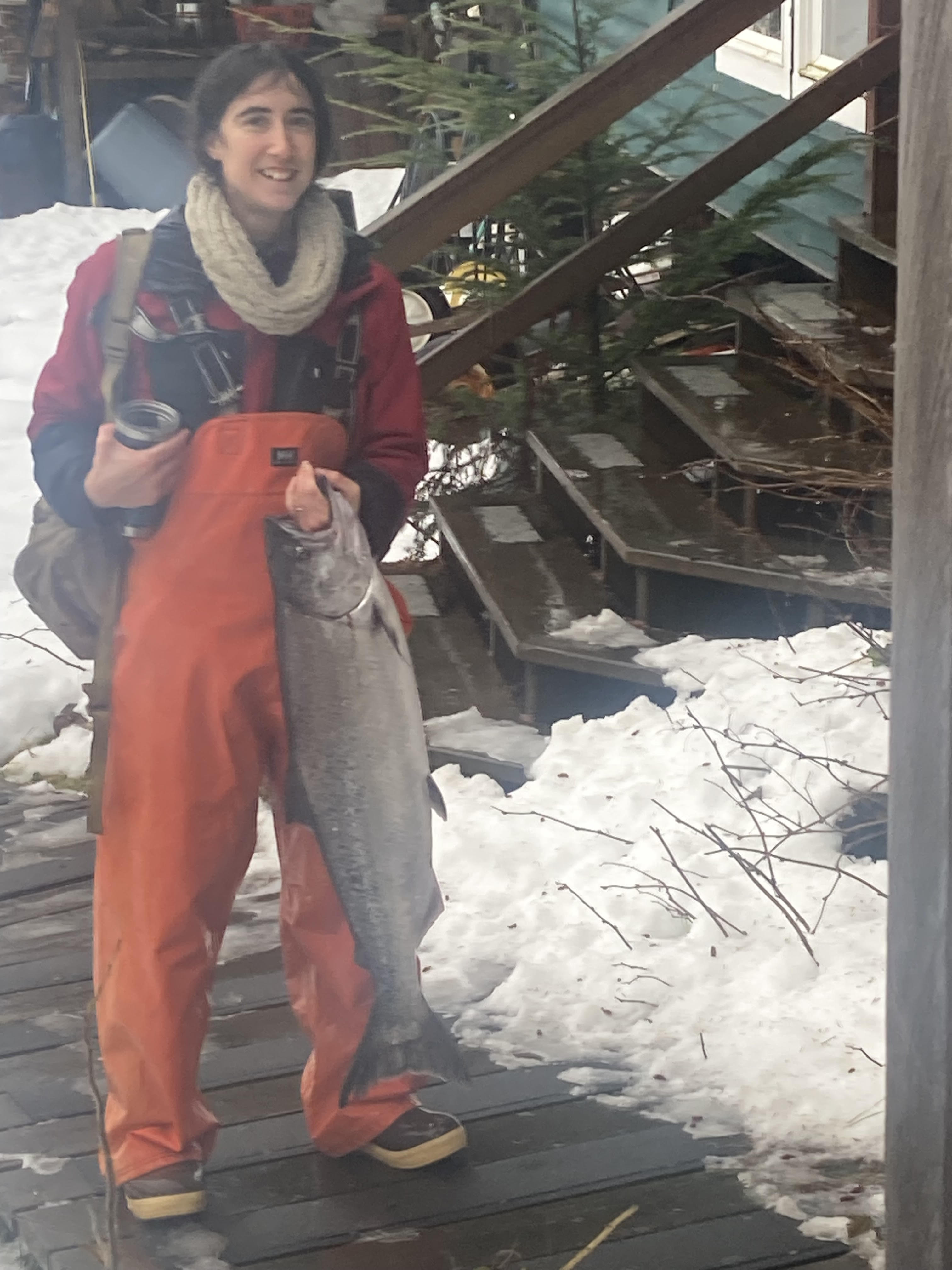
Fifty minutes to the first decent fishing hole, but the place we really want to hit is further up. We weave past a well-mannered brown bear and drop our lines into a long, deep channel the coho favor. My rod tip bends, line runs out, and I see the beautiful flash of silver for the first time. The salmon breaks the water and thrashes. The hook sinks deep—elation skyrockets. I guide him to the shoreline, and the fillet knife ends the fight. I run cold, wet fingers down the scales, marveling at the miracle that is home.

The one place that offers the life I want happens to be where I can afford to live. Rain runs down my face, and the river’s cold presses against my waders. Kyle hoots, and white water materializes 30 feet in front of him. The season’s just beginning. The first of many pilgrimages to this spot. The first of many benedictions and prayers to the animals that feed us and bring us together.

I place the coho in the grass, reset the line, and let the hook sing across the water.

A Prayer for Place

Fog to the waterline. Chichagof just a mile away, but all we see are the shores of Inian Island. The four of us stand on the stern of the Magister and pick up a bucket.

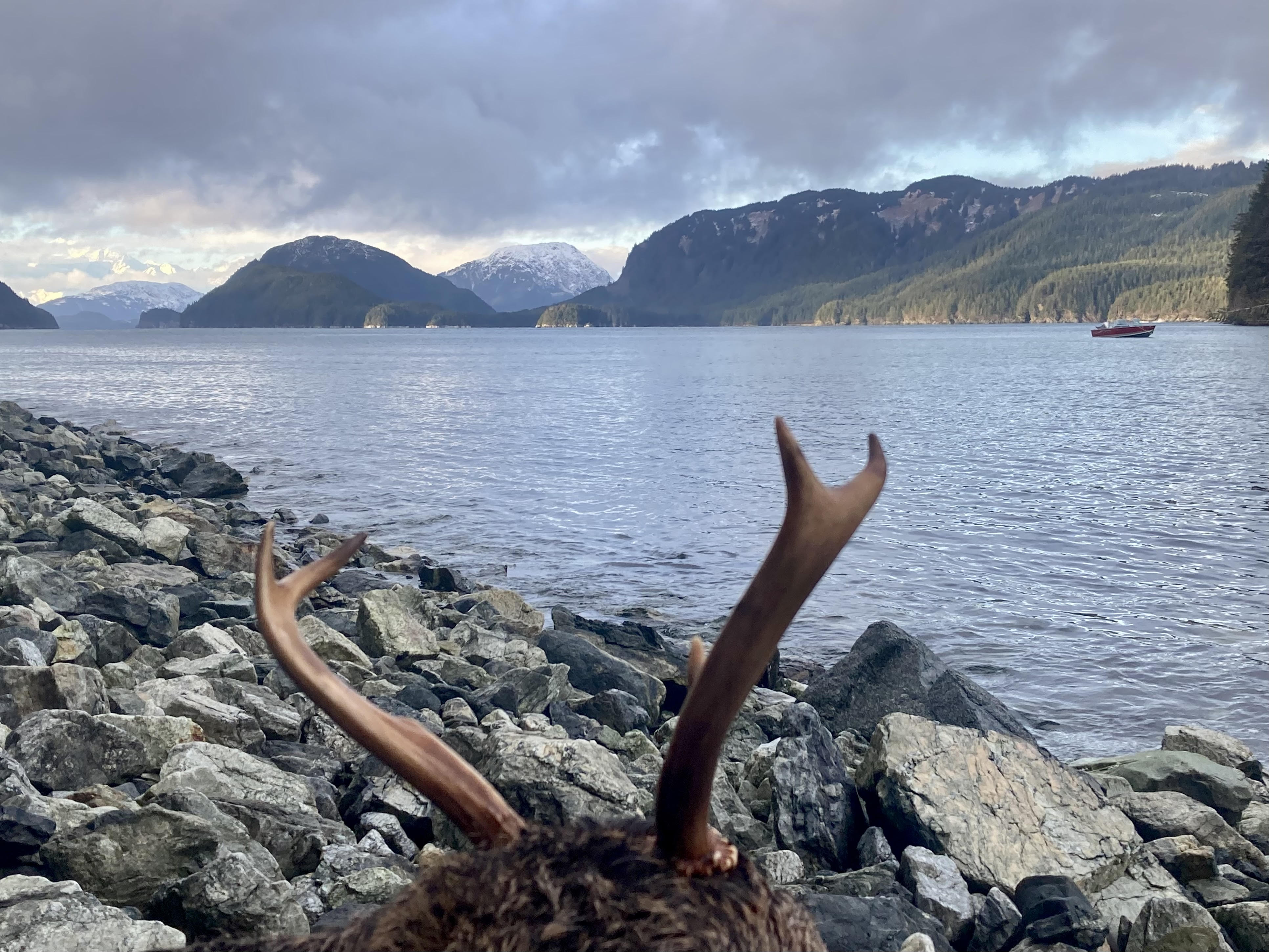
It has been a bountiful two weeks at the Hobbit Hole. Every hunter who has walked into the woods or landed on a beach has come back with at least one deer. The Hobbit Hole’s freezers are fit to burst with the promise of burgers, stews, and roasts that were born, raised, and harvested from the places we call home. They’re so full that Kathy, Bill, and I are going home with a load of venison to make room. The larders are packed, and winter has come in the form of 60-knot gusts and a foot of snow.

In the buckets are the final pieces of the deer, their bodies now sustenance for us that, as Zach vows, “will fuel good work.”

We whisper benedictions and watch the hides and scraps drift away on the tide of Inian Pass. It takes but a minute for a pair of eagles, a raven, gull, and otter to find our burial site. The eagles divebomb with precision. The otter swims away clutching a head with a piece of intestine trailing behind like a line. Nothing is wasted. Life is honored. Traditions are savored.

Zach puts the Magister in gear. We round the corner, and I watch the island fade into the fog. We travel in milk, but I know the way. Can clearly picture us zipping toward Lemesurier where more friends are communing and hunting. And ten miles beyond “Lem” is home. Home. I let the rock fill my stomach, stare at the fog, and convince myself that it’s simply mist making my cheeks wet.

I feel a hand on my shoulder and turn. Kathy’s eyes look through mine, and I can’t hide behind the smile that comes too late. When it comes to Catan, Kathy is ruthless. When it comes to matters of the heart, well, let’s say she won’t block your attempt at the Longest Road. She knows loss. Has experienced it herself. And I get the feeling her eyes have looked like mine before.

***

Dinner done. The dishes put away. A cake that took 13, yes 13 eggs and a pound of butter sits in the middle of the table. Full as we are, as rich as it is, we’re still eating. And I am waiting. Waiting for Zach to do what he does every Thanksgiving. We aren’t the only people who resort to that time-honored tradition of going around the table and saying what we’re thankful for. There’s nothing wrong with it. A lovely perspective to have, I admit. And it was a year of gratitude for many.

Kathy and Bill got married. Zach and Laura welcomed their son Salix into the world. Beth and Elm bought property and finally, after both were raised in Gustavus, have a piece of land to call their own. Very good years with blessings worthy of being celebrated and shared.

Beth finishes her gratitudes and looks at me. I stare at my coffee cup for several long seconds, feel the table’s eyes on me. Everything spoken and unspoken hovers in the room like smoke.

In years past, I haven’t taken this ritual seriously. It was simple to say the obvious. I was thankful for my little patch of Gustavus clay. For health that allowed me to tromp in the woods and look for deer. To have work that I loved.

I. I. I. I. I.

What sort of gratitude does one have when they’ve stripped that person to studs, dug deep beneath the foundation and asked, “Who am I?”

“Ahhhhh,” I finally say. “This has… not been the best year for me.”

Have you ever been the only person at a table to share bad news? Is it their pity I feel? As if I have contracted some terrible sickness that leaves those nearby speaking in hushed tones of sympathy and condolences.

No. It’s love. It’s acceptance. It’s… community. For Gustavus has that in spades. I forgot that at some point. Forgot that was the reason I wanted to call this place home in the first place. It wasn’t just whales and glaciers, salmon runs and quiet homes in the woods. Kim Heacox’s words materialize in my head.

I live in the shadow of glaciers, and in the sunlight of friends.

I remember now. I will never doubt it again.

It was people like this. People that are neighbors in the truest sense of the word. Not just someone you wave at when you grab the mail or need a cup of sugar. And neighbors close ranks and pick each other up, permitting vulnerability, intimacy, and, yes, a home.

“A few months ago… I wasn’t sure I’d be here. But it’s the people at this table that wouldn’t let me leave. I can’t quit you guys. I can’t quit this place. And as strange as this sounds, everything that’s happened has given me a firmer grasp and sense of place. How precious you are to me. And that is my gratitude. To know that I truly have a home. That I truly belong. That my love of this place was bigger than one person.”

“So…” I bang my coffee cup on the table and hear their mugs answer. “Thank you for being home.” 

We cheers, we smile. And we brush that intimacy aside, crack beers, and break out a game of “Liar’s Dice.”

Insults, quips, and jokes boomerang around the table. Elm’s laugh echoes off the walls. Beth giggles. Zach and I exchange movie quotes at a rapid-fire pace. Laura grins. Bill gives his quiet smile. And there’s Kathy’s piercing stare, trying to figure if there really are “six-fours” hidden under our hands.

***

Kathy and Bill leave me on my doorstep with two totes of frozen meat and a fire roaring in my wood stove. Minerva comes hopping out the cat door chittering and meowing. I scoop her up, bury my face in her fur, and step inside. I love how my house smells. The earthy richness of the hemlock paneling, the faint smell of stove ash. The promise of bright summer days piercing the south-facing window.

I load the meat in the freezer and put the kettle on for a pot of afternoon coffee. As the water boils, I look around the room. I’ve done some remodeling the last few weeks. Moved some pictures, bought some new dishes. Tossed an old blanket and regretted it when I felt the chill of winter.

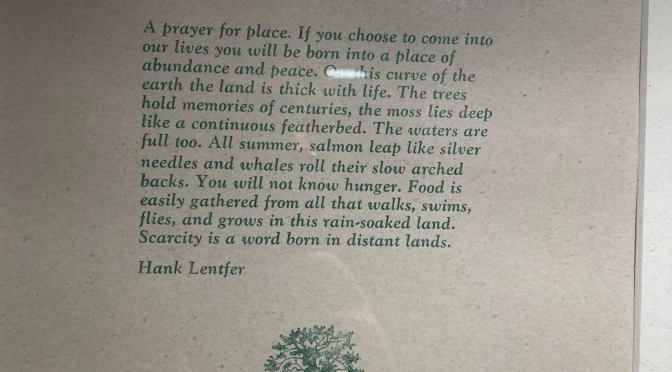
There’s more orca paraphernalia on the wall. Getting back to my roots. Maps of Icy Strait and the Broughton Archipelago have been promoted to artwork. But the frame I stare at now has neither animal nor geography. It is words, penned by my neighbor Hank Lentfer. A mantra. A creed. A promise. A prayer.

A prayer for place. If you choose to come into our lives you will be born into a place of abundance and peace. On this curve of the earth the land is thick with life. The trees hold memories of centuries, the moss lies deep like a continuous featherbed. The waters are full too. All summer, salmon leap like silver needles and whales roll their slow arched backs. You will not know hunger. Food is easily gathered from all that walks, swims, flies, and grows in this rain-soaked land. Scarcity is a word born in distant lands.

The kettle whistles and the smell of coffee sinks deeper into the drywall. I have chosen. I have been accepted. I have a hot wood stove, cold clean water, and a freezer fit to burst. And that is worth all my gratitude.

Tangible Progress

Light is fading. Beneath the tarp the tape measure’s black dashes are starting to blur together. Brittney huddles over the top of the tape, her nose almost touching it. Every few seconds I hear the carpenter’s pencil scratch against a two by four. I bend another 20-foot piece of rebar and drop it into the forms. For the last two years the cabin has been a figment of our imagination. It exists on graph paper, our minds, our hearts. But soon it’s will be physical. A sign of what Melanie Heacox calls, “tangible progress.”

For the last hour snow has been falling. Under normal circumstances the first snowfall would be cause for celebration. An excuse to drink coffee and watch the world go white and quiet. Tonight I’m cursing it. Concrete needs to stay above freezing after it’s poured. Special blankets can be placed on top of the pour, holding the heat produced by the chemical reactions of the setting cement. All we need is four hours above freezing to mix, pour, and scree. Snow seems problematic. But maybe snow on concrete day is a sign of good luck, rain on a wedding day.

The light drains like water from a bowl. Brittney sets the tape measure on the table and we stand there for a moment. The forms are a foot wide and six inches high, a square trench 17-feet in length. Tomorrow they’ll be filled with 1.2 cubic yards of Portland cement, sand, and rock, we think. We hope. With a chill I remember Elm’s words a month ago when the house site was cleared and leveled.

“You screw up the concrete you may as well put the house somewhere else.”

Gulp.

We drive back to the little second story apartment we’re renting for the winter. We’ve brought the bags of concrete with us so we can put them in front of of the wood stove for the night and keep them as warm as possible. After a day of setting rebar, measuring, and general scrambling we’re both drained. The final act of lugging the 94-pound bags of concrete is a fitting conclusion. I’m struck by the irony of carrying our house in our arms, keeping it warm for one more night. It seems like a small penance to pay for what could be decades of faithful weight distribution and sturdiness beneath our feet.  I lie awake far too long. My head filled with 4:1 ratios, stem walls, square, level, right angles. Build a box.

Morning comes. The snow stuck but the day is dawning clear and crisp. A little too crisp. We lug the concrete back down the stairs to the car and wrap it in a tarp like Christmas presents. How bold it had felt to travel up and down the Pacific Northwest, all we owned in the back of our car. There had been times we didn’t know where we’d be in six months, where the next steady job was. I remember that freedom being more exciting than daunting, child’s play compared to this. As we close the car doors and back out the driveway I’m aware my mouth is dry, my stomach churns. There was no going back, no running now. We’ve never built a birdhouse. Now we’re building a cabin? What have we gotten ourselves into? Muir’s words float through my head, “we must risk our lives in order to save them…”

Gustavians are notoriously late. Like wizards they arrive precisely when they intend to. But when you tell them concrete pouring is at noon, they show up at 11:50 and bring wheelbarrows, shovels, soup, and beer. As I watch Craig, Emily, Zach, Laura, Elm, and Patrick walk up the clay infested trail towards the house site, the fear that has had a hold the last 24-hours disappears. We’re not alone. We’re never alone. Elm and Craig have poured concrete many times before. Elm fires up the small gas powered mixer and begins shoveling in sand, rock, and cement. He goes by feel, an artist who knows when it’s right.

When the recipe is just so we hurry wheelbarrows beneath the churning machine and half push half carry them to the forms. A curious dance begins, the clock begins to tick. One advantage to pouring in 39 degree weather is the concrete sets slower. More time to shore up a corner, fill an edge, scree it all flat. For the next hour and a half I don’t breath. I don’t think I blink. Wheelbarrow after wheelbarrow falls into the forms. My knees are soaked, gloves dripping with concrete. It’s going well though I’m insanely glad I bought one last bag of concrete that morning. Zach, Laura, and Craig have to leave at 1:30 to catch a boat. They stay until the final minute. So does Emily who’s late to her daughter’s parent-teacher conference and arrives with concrete on her forehead. As Patrick helps us dump the last wheelbarrow and Elm shuts off the mixer the gorgeous silence of this place returns.

We stop and breath. Elm cracks a beer, his voice carrying through the woods, he sounds as excited as we are. It’s level, it’s square, just let it sit for a few minutes he advises. Brittney can’t stop. She grabs a 2×4 and lovingly runs it over the top of the forms, leveling the concrete beautifully. Kim and Melanie show up with smoothies and smiles. Kim congratulates us on a successful pour and compliments us on our site selection that overlooks the willow sluice. I remind him that if it wasn’t for him we’d never know this spot existed. So much owed to so many.

Eventually Elm and the rest of our help return home, leaving the two of us to finish the leveling and wrapping it blankets to keep it warm. After this it’ll have to sit for a week. That’s fine with me, I’m ready to breath, turn my attention to wood and nails and table saws. The sun begins to set and we stand in the middle of our crawlspace, grinning at each other. It feels as if we’ve entered some sort of exclusive club. We’d earned our concrete badge. From here on out our mistakes can be corrected with a cat’s paw and hammer.

We pile the leftover food in the car and drive home. I glance at the weather forecast and one last grin crosses my face. There’s nothing but freezing temperatures for the weeks to come. We’d literally grabbed the last window of the year. Nothing like waiting to the final minute. Professional procrastinators.

These are the Places You Will Find me Hiding

In a land defined by mountains, Gustavus stands alone. Gustavus, prairie country. Well, as close as you can get to prairie country up here. At the mouth of Glacier Bay is a strip of land. An old glacial outwash that the glaciers of old used as a dumping ground for the remains of the rock they had ground to a pulp. What remains today is a stretch of land so flat the bubble on the level falls dead center. All around is regularly scheduled programming. Chichagof Island and its mountains to the south, the Fairweathers to the west, the Beartracks to the north, and the Chilkat mountains and Excursion ridge to the east. Distant yes, but never out of mind, even when shrouded in the blankets of clouds that dominate the sky.

It’s fitting that Gustavus is southeast Alaska’s little geographic rebel. One of the few towns that don’t have to concern themselves with building into a mountain or around pesky fjords or bays that jut into sharp cut glacial rock. Nothing but sand, trees, and moose to build around. Because like the land, the people of Gustavus are unique. A cast of people that have chosen love, laughter, cold beer, and blue grass over profit, capitalism, manifest destiny, and Justin Bieber.

This is a town where people still wave as they drive by, failure to do so the highest of insults. Where a run to the local store for a bag of oats turns into a 45-minute conversation about everything or nothing. No one brushes past with downcast eyes, avoiding contact. Smiles are plentiful, good vibes abundant, the people seem ageless. Yesterday I learned that a lady I’d took for somewhere between 30 and 35 was celebrating her fiftieth birthday by traveling to Iceland. In a nation obsessed with youth, with looking young, and banishing wrinkles, maybe Gustavus is the fountain of youth. Maybe smiles, a gracious heart, and a quick laugh can do what plastic surgery cannot, and for a much more reasonable price.

I will not pretend to be an expert on the normal American lifestyle. But from my limited exposure in what many would perceive to be a normal existence, the term community has become little more than window dressing. A way to lump together a group of people that happen to live in the same area. This is not Gustavus. Gustavus is a place where community is still community. To enter into this place is to become part of a family 400 strong. Want to spend a winter here? We’ll help you find a place, chop wood, fill the chest freezer with halibut, salmon, deer, and moose.

A couple of years ago a young man moved here. He knew no one. Two weeks after arriving, his house burned to the ground. Within hours, someone had moved a yurt onto his property for shelter. Food was left on the front porch, money and building materials donated.

“I don’t know any of you folks,” read the thank you letter he posted at the store, “but to all of you, thank you. I am truly moved and touched.”

Home. This is home. How can it not? How can we—myself and Brittney—not want to be a part of this? Suburbia? Fine for some I suppose. Who am I to say how others should live? But give me the place where I know everyone by name. Where, should the worst ever happen there will be 400 pair of hands to pick me back up. It’s impossible not to feel happy and blissful here. We’re isolated, but never alone. We are a people of guides, fisherman, businessmen, woodsmen, parkies, lodgies, seasonals, and locals. Democrats, Republicans, Christian, Mormon, Druid, Pagan, Atheist, John Muir apostles. But we are all residents of Gustavus. And in the end, that’s all that really matters.