Tag Archives: Canada

In the House of Tom Bombadil

The trail winds through new and second growth foliage, their branches stretching like eerie arms onto the skinny trail, refusing to be thwarted by mans’ fruitless trials to contain them. Rocks thrust out of the mud, their surfaces slick with moisture. The continual December rainfall creates a steady trickle downhill, creating mud poles that go halfway up our boots. The forest is quiet besides the steady drip of rain bouncing from one leaf to another as they plummet to the trail and moss. We push further and further into the middle of Hanson Island, a weak winter sun battling the clouds.

After fifteen minutes of steady uphill hiking we round a bend and are met with a fence composed of a brilliant maze of branches. A gate sits partway open and we slide through and step onto the well trodden ground of what the weather beaten sign nailed to a tree announces is the earth embassy, a small crown of willow branches hanging above it. A few small buildings and a woodshed dot the clearing as we approach slowly. It’s a peculiar thing, to march into someone elses isolation. With no way to warn them that you’re coming. After months of solitude, the echo of our feet pounding up the trail had to sound like thunder.

Passing the door to the first building we hear a call from inside, a growl, a bark, and the door creaks open, giving way to a massive mountain of orange and white fur. The fur ball is recognizable as Kessler, the Hanson Island dog that had been exiled from Alert Bay, and now lived with the man we’d come to see. A man known to me only as Walrus.

We step out of the rain and around Kessler and into a library. Books cover a massive shelf in the entrance and litter the walls, meticulously categorized by subject. Conservation, religion, and history with subcategories such as: Greenpeace, Animism, and Mayan culture. There’s just enough room for a desk nestled right next to the door where Walrus sits, a journal out. He’s everything an old man living in the woods should look like. A massive grey beard coats his face. Even his eyebrows are preternaturally long, sticking almost straight out as long as my pinkie before finally succumbing to gravity and curling at the tips.

A sweet, musty, woody, smell permeates the tiny shelter and stepping behind the massive bookcase reveals an open space with a wood stove and table covered in fruit, crackers, and a bottle of rum. While I’m sure somewhere out there lives a reclusive old hermit who cringes at the very thought of social interaction, Walrus is not that man. His life in the forest seemed to give him remarkable preservation, and despite having reached an age where many would be comfortably retired, he’s bouncy and quick witted with an easy laugh that seems to go on forever. He is a marvelous cross between Obi-Wan Kenobi and any assortment of bearded, woodsmen, Tolkien characters.

His house was a jigsaw puzzle of scrap wood that he had scrounged from the surrounding woods. Small and efficient it was easy to keep warm when the temperature dropped below freezing. The site had been picked for him he explained, when he’d pitched his tent directly on the path we had just walked up. Decades ago it had been a logging trail and Walrus had stood resolute, refusing to allow them to have the island.

Wielding an education in anthropology Walrus had scuttled over every nook and cranny of Hanson Island, learning the island’s history and secrets, searching for a way to save it. Culturally modified cedar trees (CMTs) cover the island, evidence of the first nations presence here long ago. They would cut long horizontal strips of bark from the tree, using the wood to form baskets and string. Their cutting encouraged the trees to grow even faster, creating a resource that renewed faster with use, a concept unheard of in our modern day “advanced” world.

Citing the CMTs for their cultural and historical significance, Walrus helped save the island from the carpet bombing that had befallen the nearby islands of Swanson and Cracroft. His camp quickly became something of a heritage site in addition to his year round home starting in the early 90s. A place where he welcomed grade school kids in the summer to learn about the history of the forest, and showed them around a massive garden where he grew everything from kale, to potatoes (if he can keep the jays out), to garlic. Garlic, he said, he’d give away as gifts. What a stocking stuffer.

There seemed to be little that he hadn’t done on the conservation battlefield. He’d fought wolf hunters in northern Canada, been a cook aboard the early Greenpeace boats that put themselves between whalers and their cetacean targets, and become something of a legend. His quiet manner and humbleness hid all of this though as he enthusiastically showed off his garden, Kessler constantly bumping against our shins waiting for his ears to be scratched.

We walked back down the trail toward Orca Lab a couple hours later, inspired and motivated. Someday I hoped that I could look back on the decades of my life and see the world a better place from my actions. I imagined the feeling of gratitude and joy Walrus had to feel when he woke up and looked about his forest home. Hearing the birds call, the deer trampling through the undergrowth, the leaves whispering in the wind, and knowing that it still stands because he had. His feet planted firmly on the trail, loggers and equipment barreling up the hill, unaware of the man they were about to face.
When the Outflow Arrives

Wool socks, down jackets, long underwear. All them and more have been deployed to combat the latest northeasterly outflow that has descended upon Hanson Island; freezing the intertidal pools, our waterline, and our toes. We had the bright idea last night of dragging our mattress downstairs from the loft and putting it at the base of the fireplace stacked with bark and fir, Penny’s house placed snugly in the corner. And while the cold seemed to paralyze us in the early morning light, numbing any motivation to rise from the comforters, the Orca’s seemed impervious to it all.

Shortly after nine we begin to hear the faintest Transient calls in Johnstone Strait, leading us to the lab where the temperature hovered just a couple degrees above freezing. After just half an hour of sporadic calling the sounds vanished as the whales disappeared into acoustic parts of the strait unknown. Silently I gave thanks that all I had to do to catch my breakfast was crack a couple eggs over a skillet. I don’t think I could catch a harbor seal in this weather.

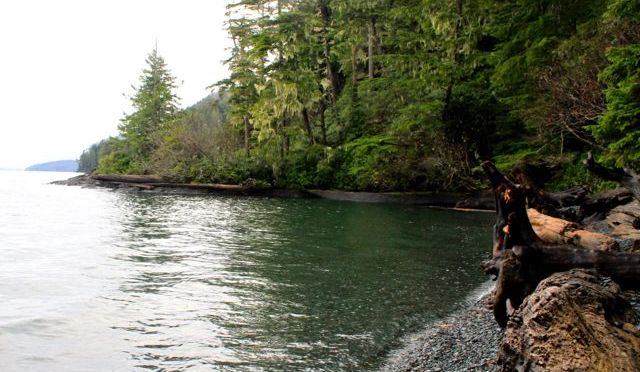
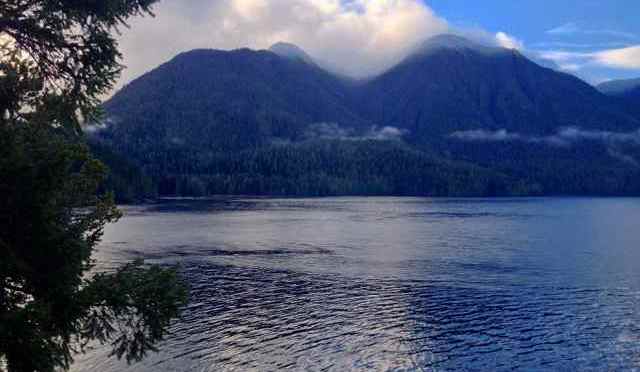
But despite the cold, the view atones for it and than some. The palest of blue skies and the whispiest of clouds frame the mountains on Vancouver Island, their peaks clinging grimly to their traces of snow, illuminated in the weak December light. The solar panels greedily suck in the beams’ power, giving our generator a belated reprieve. Blackney Pass sits immobile, or at least as still as it can as the tides pull the waters north and south cutting trails in the surface like tiny intersecting roads. It’s still odd to have Orca Lab so quiet. Besides the occasional Transient celebrating its catch the speakers tell the story of cycling hydrophones, insistent tugs, and at low tide, the cries of eagles as they soar past.

The beauty and peace is priceless and there is little more soothing or funny than ten Harlequin ducks bobbing into the cove every morning chirping at one another as they cut tiny wakes through the water. They dive one at a time, vanishing in the blink of an eye, their bodies barely visible in the dark green water, wings flapping incessantly. When they come up for air they shoot clear of the water like little rubber duckies bouncing on the surface, tiny bits of food clasped in their beaks.

But the deep waters of Blackney feel empty with no Guardian or KC or any of the other humpbacks that felt like friends in September, leaving us with the thirty odd sea lions down the beach for company. Today they huddle like a single sentient being on their rocks, stinky but warm I’m sure. It leaves us with nothing left to do but read, drink tea, and chop wood at a frantic pace before running back inside to the warmth of the fire that has been dancing for three days straight. The thermal pane windows have been worth every penny, thank you: Paul and Helena.

In the Holy of Holies

The boat slides into the rocks and triggers a memory. Not a visual one, or olfactory, but auditory. The sound of pebbles racking against the hull of the boat almost makes me turn around, half expecting to see a dorsal fin gliding across the water behind us. Both boat and orca move the smooth, tiny rocks of this beach sound the same way. But today we were alone, just the two of us cautiously approaching the main rubbing beach of the Northern Resident orcas.

I step to the stern of the boat and look back over the water. It’s weird to see for the first time a place I feel I already know so well. High atop an old weathered tree hangs a white box looking for all the world like a security camera. For a summer that was my keyhole. And I would press my eye against it as close as I could, drinking in the scene. But now, for just an afternoon, I got to stand here and see and smell and feel a piece of orca lore. If the bight is hallowed ground, this is the holy holies.

Twenty minutes east of Robson Bight as the orca swims lays this beach where, for all eternity as far as we know, the orcas have come. This beach, an outlier itself in a land of jagged rocks, steep cliffs, and deep water. The beach is smooth and gradual, the reflection of the trees turning the water turquoise, like some tropical paradise. In the shallows, sometimes with barely enough water to cover them, the whales come and rub vigorously on the smooth, quarter sized pebbles that compose the beach.

I step up and over the top of the boat and onto the bow, the waves rocking the boat gently against the shoreline, emitting the sound of rushing pebbles with every crest. I hop lightly off the bow and feel them crunch and slide under my feet. I step clear of the surf and see my footprints imprinted in the rocks. Damning evidence of my intrusion into this mystical place. I lay on the beach and, like the orcas, begin to squirm and roll back and forth on the pebbles, their sounds filling my ears. If it’s good enough for them it’s good enough to me. Brittney laughs and rolls her eyes as she steps gently from the boat. We talk in hushed voices, as if we’ve just entered a church, and prod slowly up the shore.

We had a reason to be here. The rubbing beaches are strictly closed off to the public, giving the orcas their own private sanctuary much like Robson Bight. But someone had to pull the batteries of the long defunct rubbing beach hydrophone, the victim of a fifty knot storm in October that had torn the cable free. Without this premise we’d go nowhere near this place, even in December, when the orcas hadn’t neared the beach in a month, it felt almost taboo to stand here.

A steep cliff makes up one edge of the beach and stretches out to a point into Johnstone Strait. I boulder up and walk to the edge, the bottom still visible even on this massive 17.1 foot high tide. I find the batteries and the second camera, the one that looks straight down into the water off the cliff face where the orcas would cruise right past just before they reached the pebbles. Like at Robson Bight I see them in my minds eye, cruising peacefully past, bound for their favorite spot in the strait. We get the batteries off the cliff and perch on a massive log washed against the shoreline. We dig out some food and stare out at the water, this unassuming little stretch of earth that means so much. Camera in hand I snap pictures while I eat, hoping to capture as much of it as possible and failing to do justice. It’s tough to think about leaving so soon, and I a great longing fills me to see the whales here, just once while I hide unseen in the bushes. It’s a dream that will have to remain a dream, and I look up at the camera, thankful that it gives me the opportunity to enjoy it from a distance. We climb into the boat and gently push back into the water, gliding across the brilliant blue/green waves, bound for the gray surf of the straight, the southeasterly starting to turn up the current.

Before we go home there’s one more place I want to find, and we shoot across Johnstone Straight, heading for Cracroft Island. As we reach the shore I slow down and and we move slowly west toward Hanson Island. I see the hollow wooden skeletons of a camp. Structures with no roofs or walls, tiny wooden platforms and benches on the rocks. This is it. I stop and look at this unassuming little kayak camp. “This is my birthplace,” I thought.

It was here, seven years ago that I had visited, kayaked, and fallen in love with this place. Straining my eyes for that elusive dorsal fin that has dictated so much of my life. I look behind me and remember the A36s, cruising west past our camp, oblivious to the life they were altering forever with every surface, every breath. A part of me wants to find a place to land, to step ashore here and crouch where I did those nights when the A4s swam by, allowing me to hear but not see. But the wind has other ideas, as does the quickly fading sun of the second shortest day of the year. We pick up speed and continue west, picking our way through the deadheads and kelp, tracing the footprints of the orcas that would be back to chase the salmon. Like they have every summer. For all eternity.

On Hallowed Ground

Traveling south from the lab and through the tiny bottleneck that is Blackney Entrance leads to the wide open expanse of Johnstone Strait. After almost four months and countless trips to Cracroft Point, the image springs to mind instantly. The high peaks of Vancouver Island casting a deep green shadow onto the water, turning it the color of jade as you approach the Vancouver shoreline. The mountain range seems to stretch on forever to the East down the strait, looming over the water with their mighty shadows extinguishing what little winter sun there is. It had been seven years since I had been in the strait past the edge of Cracroft Island. Yet I could still remember the shapes and curves of the shoreline.

Back home I would habitually pull out maps and trace the expanse of the strait, and mouth the names of places I hadn’t seen in years. Boat Bay, the Cliff, Robson Bight, the Rubbing Beaches. The bight and the beaches held a special lure, the forbidden fruit of the strait where no one was allowed save for the whales and the fishing boats. Locations I had listened to through headphones for hours but never saw. The bight is now an ecological reserve, set aside as critical habitat for the northern Residents, the boundaries expanding east to encompass the whales’ rubbing beaches. The maps show the bight as a subtle nick in the Vancouver Island shoreline. It’s as if the strait scooped out a chunk of the island with an ice cream scoop, leaving a crescent shaped divot. In the back of the bight sits the headwaters of the salmon rich Tsitika River.

From Cracroft Point, the lab’s out camp, you can almost make out the bight down the strait, straining your eyes through the glare of the sun, the small bay camouflaged by the steep slopes of the St. John, Tsitika, and Derby mountains, standing like sentinels, the guardians of the bay. It is in this unassuming bit of water, that so much of our understanding and knowledge of orcas has arisen. It is here that they have rested, played, and hunted for untold generations. The place holds an uncontrollable draw, a magnetic attraction pulling me in.

But of course, it is all closed off. Which, is probably for the best. And though the commercial fishing boats are still aloud to clog the bight as the sockeye run every year, it gives the whales at least some semblance of escape and privacy from those of us that perhaps love them too much. But there is no law against hydrophones, and on the east side of the bight hangs a crucial piece of Orca Lab’s research; the Critical Point hydrophone. Anything that makes a sound west of the hydrophone in Johnstone Strait is picked up and transmitted through a thin cord of wire, piping back to the lab the calls of orca, dolphins, and humpbacks as well as the drone of barges, fishing boats, and the abominable log tows.

As the days get shorter and the clouds thicker, the solar panels that power the hydrophones throughout the network begin to sputter. The batteries stationed are asked to supply more of the power each day until finally, they too begin to crack under the increased workload. Critical Point, shrouded in shade most of the time thanks to the mountains, was the first to begin to protest. Clicks and oscillations eventually giving way to hours of pure static, especially at night. The occasionally sunny day would give the batteries a brief reprieve but the only long term solution, was to replace them.

So last week, when Brittney and I came to town, we were met on the dock by Paul. Bouncing out of the car with his usually vigor, he excitedly announced that today was as good as any to take the one hour run from Alert Bay to the bight and replace the batteries. My chance to set foot in the hallowed ground had come and we climbed back into the minuscule boat thirty minutes later, prepared to battle an ebbing tide down the strait.

The sun broke through the clouds as we entered the bight, brilliant rays of sunshine stabbing through the gaps, illuminating the dark green of the mountain sides. The water becoming that brilliant jade on one side, sapphire blue on the other. Paul brought the boat to rest near the rocks on the far side and I clambered out, soaking in the beauty and silence. It was easy to see why the orcas loved it here so much. The water was calm and the bight would seem to funnel the fish toward the mouth of the river, giving them ample opportunity to catch dinner. The steep rock face we stood on fell directly into the ocean with no gradient. One step to many and you plunge feet down into the frigid waters of the channel. In my minds eye I saw an orca pass an arms length from the rocks, it’s massive body gyrating majestically feet below the surface as it cruised past, bound for the rubbing beaches.

It was, as I’d been told, “just trees and rocks and water.” But my prior knowledge of what lived here, what had happened here, made magic spring from the trees, rocks, and water. It was here that Erich Hoyt and his team had first dove with the orcas. Where Robin Morton had first filmed them rubbing their bodies on the smooth pebbles of the beaches. In these waters the A36s had swam during those nights when they kept me up in the lab, their calls echoing off these very rocks and into the hydrophone between my feet. And now, even if just for an afternoon devoid of orcas, I got to stand on this hallowed ground, staring up at the massive mountains and experience it all for myself.

One Day in the Bay

As many of you know, today marks the 45th anniversary of Corky’s (A23) capture and subsequent imprisonment. She currently resides in Sea World San Diego, hundreds of miles from her home that centers around Johnstone Strait, British Columbia. Her family was a consistent fixture in the straight this summer, and every sighting of them is a stark reminder that she deserves to be here so much more than I do. Much today has been written and shared about this amazing whale who continues to buck the odds and survive in her tiny bathtub after four and a half decades. Coming less than a week after the death and autopsy of Rhapsody of the southern Residents, one cannot be blamed for feeling discouraged and depressed about the state of these creatures.

There is however, hope and beauty that persists up and down this coast. There are miraculous encounters and moments shared between people and healthy wild whales. On this day, as we remember Corky, and all the others that have been captured, I’d like to share my most memorable whale experience of my life.

Summer 2012:

Glacier Bay National Park and Preserve lies just 30 minutes west of Juneau by plane. A magnificent playground for the outdoorsman with untold miles of not just the bay, but mountains, glaciers, and beaches. It is a place to grow and rejuvenate, just like the land that is still rebounding after years of dormancy beneath the oppressive weight of the massive glaciers that carved the bay.

I had a built in excuse to visit as often as I could as my soon to be wife Brittney lived and worked out of the bay in the summer where she worked as a kayak guide. Leaving the more commercial world of cruise ship tourism where I worked on a whale watch boat, I’d hop in a Cessna 206 and enjoy the breathtaking half hour flight over the Chilkat mountains to spend a few days with Brittney and the bay.

For whatever reason, I remember really needing a few days their his time. Perhaps I’d just had a bad run of ornery people on rainy days, or seen 20 boats around four humpbacks one time too many, but I was ready to get out and needed the silence and therapy that the bay could provide. I suppose it’s a sign that you truly do what you love when it’s all you want to do on your day off as well. There was no discussion of what we’d do as long as the weather cooperated, we were going paddling. It combined our two passions; the kayak and whales.

The next day dawned (at 4:30 am) with baby blue skies and a scattering of puffy white cumulus, the water was projected to be still, a rarity that summer that would wind up being one of the wettest on record. Giving the weather no time to change its mind, we leaped into an old rusty van owned by the kayak company, and drove the nine miles into the park to Glacier Bay’s gateway; Bartlett Cove. We grabbed a pair of fiberglass beauties from the companies rack and slipped them into the water. Unlike most sea kayaks decked out in bright and loud colors like aqua, yellow, and red, these boats were a dark forest green and seemed to blend into the landscape of evergreens and contrast beautifully with the deep blue water.

The north end of Bartlett Cove is lined by two islands, Young and Lester, and just beyond is a tiny archipelago known as the Beardslees. The islands were a veritable fantasy land for a kayaker with quiet coves, calm waters, and plenty of wildlife. The only danger was the similarity in the appearance of every island. They all followed the same recipe with rocky beaches, slight elevations, and plenty of trees. I’d traced a large circle around the archipelago two summers ago, but kept my eye on the map strapped to the boat all day.

We moved through the tiny gap between Lester Island and the mainland at the back of the cove known as “the cut,” timing our departure so that we flowed with the tide and the first half mile of our trip we barely had to paddle at all. We paddled for a couple hours through the islands, weaving through the tiny cuts and inlets, joined occasionally by gulls, murrelets, surf scoters, and the occasional harbor seal, their wide unblinking eyes staring at us with a mix of curiosity and skepticism. Finally we passed a wide channel, the tidal influence spewing out water and the islands on our right vanished, giving way to the wide expanse of Glacier Bay. The bay is shaped like a Y, with the upper arms holding the majority of the glaciers, most of them in retreat. The Beardslee’s and Bartlett Cove sit near the base of the Y, where the bay merges with Icy Strait.

We knew we’d passed Lester Island and the northern end of Young Island sat in front of us, a long point of land extended toward the upper reaches of the bay and we followed just off the rocks toward the point where we could make a U turn and begin to head south toward the mouth of Bartlett Cove and home. Brittney paddled some fifty yards ahead of me as I dawdled, trying to locate a Harbor Porpoise I’d been sure was following me when I noticed that she’d stopped paddling. Right at the point she was bobbing just a few feet from shore, paddle held gently across her lap. Coming up behind her I see why. A massive group of her favorite birds, Black Oystercatchers are congregated on the rocks, their sharp orange bills and matching eyes flashing back and forth against their dark silhouettes. I’d never seen so many in one place and they seemed completely unconcerned with the gawking humans in the water.

We watched them jaunt up and down the rocks, dipping their bills into the water until something larger, much larger, brought us back to reality. The point of land was to high to see over, but it was clear from the sound that something large had surfaced just on the other side. Leaving the oystercatchers we paddled cautiously around the point, taking care to stay on the beach side of the kelp bed that circled the island like an asteroid belt around a planet.

When a humpback surfaces in the calm water you can see the water displacement long before you see the whale, than a shadow, than a bulbous bulb of water, until finally the whale breaks the surface. The massive exhalation less than fifty yards away felt like a bass drum in my chest. The explosiveness of her surfacing made it clear she was feeding and I was thankful for the kelp bed between us. I didn’t want the whale to have to worry about us and her daily allotment of half a ton of herring. As the whale disappeared another explosion echoed off the rocks behind us. You can’t spin around in a kayak, but you can twist your head so fast that you sprain your neck. A second humpback had just materialized behind us, lunge feeding just as close as the first.

There was an exhilaration with a teaspoon of fear at seeing these whales so close and at their level with nothing between us and them but a few inches of fiberglass and some flimsy strands of bull kelp. But we weren’t moving, not for the world, as humpbacks broke the surface like fireworks up and down the shoreline, lunging out of the water, mouths agape, herring running down their throats. After thirty minutes of this incredible display, we finally conceded that we needed to start trying to get home. That meant paddling through the bay littered with whales exploding from the water like land mines. We took the long way, skirting the shoreline.

As we continued down Young Island, it seemed around every corner was another humpback. It was as if they were forming some massive 40 ton relay team to get us back to Bartlett Cove. There had to of been 25 in all, encouraging us to hug the shoreline, Brittney at times having to drag me along for I could have stopped and watched every single one. Finally we neared the mouth of Bartlett Cove, and as exhilarated as we were, the soreness and fatigue of 8 hours of paddling was setting in. We started to fantasize about sweet potato fries and Alaskan Summer beer at the lodge in the cove, and prepared for the last couple miles of hard paddling home.

But something stopped us. The tour boat that left daily from the cove and traveled up the west arm of the bay to the Margerie Glacier, had stopped in the channel when it should have been heading into the cove to meet its deadline. Daring to hope we watched and to my shock and absolute glee, a tall black fin broke the water a half mile from shore punctuated by three smaller fins as the tiny group of Transients headed into the bay. They were probably destined for John Hopkins Inlet where the pupping Harbor Seals were sprawled on the ice bergs.

Tears of gratitude formed in my eyes, it was almost too much. The bay had overwhelmed me. First the weather, than the oystercatchers, the never ending parade of humpbacks, and finally, this grand finale. Brittney and I rafted our boats together, her hand in mine as we floated together watching the orcas move further into the bay, completely unaware of the magnitude and power that their presence had just created in our lives. Finally they began to vanish from sight and we begin to paddle into the cove, our spirits full and our eyes glistening with tears of gratitude. I could paddle for the rest of my life and never see another whale and it would be ok. Because every time I pretzel myself into a kayak, I think of that day, the magic it brought, and what a gift it is to share the world with an animal as spectacular as them.

The Southern Residents and Repeating History

Off the waters of Washington state live the most magnificent, beautiful, and intelligent creature on the planet. A species that has learned to exist without wars or visible disputes of any kind. They maintain a peaceful, complex, and intricate social structure with bonds that we cannot even begin to fathom. And it is all in danger, of vanishing forever. For many it’s already too late. Like Rhapsody, whose body has gone to science in the hope of finding out what ended her life.

It is all so chilling because it’s not the first time that this story’s been told. In the serene and beautiful waters of Prince William Sound, hundreds of miles to the north, the same tragedy is playing with a 20-year head start. The genetically unique AT1 Transient pod, that has lived, stalked, and hunted within the sound for generations is just years from extinction as it comes up on three decades without a successful birth. For AT1, the prognosis is simple and obvious. On good Friday, 1989, the whole pod swam, unknowingly through the lethal slick of the Exxon Valdez oil spill. They have not reproduced since as friends and researchers like Eva Saulitis watch the pod disappear one by one, a slow tear jerking countdown to zero.

For the southern Residents, it’s more complicated. For decades they’ve endured live captures, bullets, overfishing, and the toxic runoff of the increasingly urban Puget Sound. In many ways it’s miraculous they’ve persevered for so long. They can still lay claim to, “Granny.” An orca that was born the same year the Titantic sank and is still seen every year off the San Juan Islands, a talisman to the resilience of the community. And yet, Orcas are dying that shouldn’t be. When Plumper (A37 of the northern Residents) finally vanished from the lab’s view in August 2014, there was such a finality to what we were seeing. It was his wake. His time had come, and all of us, including him and his brother Kaikash seemed to know it. But sweet 18-year old Rhapsody shouldn’t be washing up in Comox. She should be with her mother, siblings, Grandmother, and Aunts, with one or perhaps two calves to her name. This wasn’t her time and it’s hard not to feel guilt, knowing that our species shoulders the blame for her demise and dozens just like her, whether from captivity or PCBs.

The southern Residents are at 77 individuals. The time has come for drastic action before the genetic bottleneck tightens anymore. So that in 20 years, we’re not watching the last of the pod fade into darkness, leaving the waters of the San Juans and Puget Sound in great silence. How empty and desolate it would feel. Imagine Orcas Island with no Orcas. It’s not impossible, the only place in California you can find a brown bear is on the state flag.

It may mean sacrifices on the part of us as human beings. To surrender the pleasure and joy that only comes from watching a line of dorsals materialize off the bow of your boat or kayak. Or perhaps going without Chinook salmon in the freezer this winter. Or maybe as simple as riding the bus to work and reducing the carbon exhaust pumped into the atmosphere.

These aren’t tigers or elephants, we can’t just start captive breeding programs and reintroduce them. But they do need help, and we have a chance, maybe not to make amends, but to right some of the wrongs that we’ve brought against them. To even the playing field as best we can for a species that doesn’t deserve the cards we have dealt. North American progress, american history as a whole, has been filled with extinctions, manipulations, and destruction. We’ve hunted the Gray whales, sea otters, wolves, and now the Orca. But today sea otters again bob in the waters off of Monterey Bay, wolves run through the forests of Yellowstone, and North Pacific gray whales represent one of the healthiest and strongest whale populations in the world as they continue their amazing recovery from industrial whaling.

I don’t think it’s too late for Rhapsody’s kin. But it is time to try something different, because whatever help we’re giving them clearly isn’t working. They need time, space, and most importantly, the salmon that make up more than 90 percent of their diet. Save the whales doesn’t have to just revoke memories of Greenpeace and the 70s. The war is not over, and it is our time to fight for the animals we love.

Making Christmas

It is somehow December. My Alaskan sensibilities tell me it’s impossible for it to be the season of; holly, mistle toe, and red clothed, cookie scarfing, overweight home invaders without a thick carpet of snow. I suppose that’s not entirely fair. It did snow one morning and it almost stuck around for the whole day. But for the most part, the weather continues to emulate an Alaskan fall with the temperature playing jump rope with the freezing point and encouraging us to maintain a fire around the clock.

The orcas gifted us an early christmas present the other day when the I15s announced their arrival in Blackfish Sound with their trademark, donkey like, “hee-haw.” After holding down the strait for much of the summer, seeing the family charge through Blackney Pass and into Johnstone Strait made it feel like August all over again. They have sense vanished, we presume they are still to the west of us in the strait. Though we have reached the time of year where the clouds and storms begin to choke the power from the solar panels, causing hydrophones to cycle on and off, especially at night. With the ocean again silent, save for the daily parade of tugs and the occasional Alaska state ferry, we can prepare, as best as we can at least, for Christmas.

Much like our ill fated New Zealand thanksgiving with the intrusive lemurs, we knew this was coming. That we were going to be far from not just our families, but our friends as well for a season that magnifies togetherness more than any other. Thanks to Helena and our parents though, we’re doing our best to bring a little bit of Christmas to the island. We’ve put up our single strand of multi colored christmas lights and a tiny, “father christmas” figurine who for some reason, is outfitted like a biblical Shepard complete with a staff, mercifully the glorious white beard remains in tact. Than there’s my mother, who can only be described as having been born with second and third helpings of, “care bear DNA.” Their christmas gifts, complete with stockings for not just us, but the cat and rabbit too are piled on a shelf in our room (Brittney insists that we need to find a tree). All together, it makes it feel a little more like the holidays on Hanson Island. But it feels weird to not be listening to the traditional Cannamore rotation of Christmas music, I can’t believe I’m admitting that.

It is, I suppose, all part of the isolation of care taking. And there are certainly days when we need the other to make us smile, laugh, or at the very least, roll our eyes. Yet besides Mom’s christmas cookies and everything else that always made Christmas special, I don’t find myself missing civilization much at all. Groceries being a 30 minute boat ride away doesn’t feel like an inconvenience, nor does getting up every two hours in the middle of the night to stay warm. On the whole, I’ve transitioned into this lifestyle magnitudes easier than I had trying to live in Seattle. When the luxuries of normality are stripped away, we find that we really need precious little to be happy and secure. There’s a roof over our heads, a pot of coffee, and a comfortable fire burning. What more does a human being require. It makes me wonder what it’ll be like when we do leave, and drive back down to the big city before escaping to the comfort and familiarity of Southeast Alaska. Sensory overload, I imagine. Perhaps Brittney should drive.

That Will Never Happen Again

    Throughout the summer and fall the bathtub perched on the towers of rocks just above the intertidal was our own form of luxury living. Often with a cold beer in hand, I would slip into the tub, perching carefully on the wooden slab on the bottom, the only defense between my butt and the burning fire just below. But once you were in and comfortable, it was hard to get out, especially after enough rain had fallen to justify using fresh water as opposed to the saltwater we’d been using all summer. Saltwater was fine, but had a tendency to leave you feeling as dehydrated as a tumbleweed.

After two days of torrential rain that turned the Hanson Island creeks from trickles to raging rivers, the sun came out, the wind shifted to the northeast, and the mercury sped past zero bound for the horrible land of below freezing. The time seemed right, to break out the tub again, and enjoy the sun and cold air from our very own hot tub. But the water we were filling the tub with was frigid. Bombarded from all sides by the freezing temperatures, our little fire underneath seemed woefully meager. Yet we were committed to this bathing adventure, and we resolutely threw every piece of relatively dry wood we could find onto the flames and watched as the water temperature rose by tenths of a degree. By 4 o’clock the sun had dipped behind the trees, and without the sun’s rays, a cruel chill swept into the cove as our numb fingers continued to feverishly feed the fire.

After four hours, I’d had enough. Plunging my cold hands into the bath water, I declared it hot and ready. Of course, after exposing them to the freezing air for the last 15 minutes, anything would have felt warm. I’d had a great idea for a photo though. One of us, in the tub, back to the camera, silhouetted by the setting sun with steam rising into the chilled air, a Kokanee in hand. In my minds eye it screamed Facebook profile picture. I stripped down and slid into the tub. The warmth my hands had felt moments before was all relative. While the water wasn’t cold, lukewarm may have been a little too generous. Any ideas of a photo shoot vanished as the first gust of cold wind hit my little bath. Every exposed inch of flesh erupting in goose bumps. Splashing water alleviated the chill for just seconds as the cold air pulled any warmth it created from my skin.

Screw this. At lightening pace, I scrubbed soap over my body and passed shampoo over my hair briefly, feeling my hair begin to freeze as I rinsed. As cold as it was, I knew getting out would be even worse, and contemplated curling up in the bottom of the tub with just my nose above the surface for the night like some pink, freshwater sea lion. With a gigantic effort I pulled myself out of the tub and began pulling on every article of clothing I could, dry body or not. Sprinting back to the house I threw open the door, greeted by the warmth of a roaring fire and the insulation of our fancy, new, thermal pane windows. The goose bumps began to recede, my hair thawed, the shiver rolling up and down my spine disappearing.

Form the table Brittney looked up, hands perched above her keyboard, eyeing me skeptically. “How was it?” She asked.

I gave a small smile, trying to think of a positive way to spin it, to convince her that it was worth it, and not to let our hours of fire feeding and frozen phalanges go to waste. “Well….” I start. “I’m glad I’m clean now.”

With a look of grim determination Brittney rose, grabbed her towels, and with a deep breath as if preparing to leap off the high dive, stepped outside and into the growing darkness.

Springer

The greatest Hanson Island story ends here, but it begins far to the south. Off the dock of a ferry terminal in Puget Sound near Vashon Island. In early January 2002, ferry goers inherited a mascot, a tiny, emaciated, two-year old orca whale. The little whale became an instant celebrity, following the ferry back and forth day after day. Yet the lost whale was in trouble, separated from her family, malnourished, and in dire need of the attention and physical contact she craved.

Biologists up and down the Pacific Northwest coast rushed to Puget Sound in an attempt to discover where the tiny whale belonged. Saddle patch photos and acoustic recordings traced her, not to the nearby southern Resident community, but to the A4 pod from the northern Residents off the northern coast of Vancouver Island, 250 miles from home. She was A73, commonly known as Springer. The previous summer, she had failed to return to Johnstone Strait, as had her mother Sutlej (A45), both were presumed deceased. Springer had returned from the grave, but how she had made it all the way to Washington was a total mystery.

And so the debate began about what to do with this tiny whale that had violated international law by crossing the border. Had she been rejected by her pod? Did she have some communicable disease? Had she already grown too attached to the boats that choked the sound? A wild orca had not been taken into captivity in U.S waters since 1976, but this was different. Without human intervention, Springer seemed doomed. But public opinion made it clear; Springer needed to go home not to a tank.

But no wild orca had successfully been reintroduced to the wild, the closest had been Keiko of Free Willy fame, who had lived a solitary existence in the wild before dying of Pneumonia. The federally funded U.S program NMFS (National Marine and Fisheries Service) balked at the idea, claiming lack of funding and the difficulties that had transpired in Keiko’s rehabilitation.

While the debate raged, Springer received round the clock attention as people tried to keep boats, ferries, and others from interacting with her. It was a hopeless endeavor, as Springer continually rubbed against boats in search of a surrogate for other whales. Whatever was decided, rehabilitation or captivity, Springer could not spend her life off the Vashon Ferry dock. After two months of debate, NMFS accepted a a plan that included seapen rehabilitation, translocation, and finally, a reintroduction into the wild.

In the meantime, Springer needed to get healthy in order to satisfy Canadian officials who feared returning a possibly diseased and contagious whale to its already threatened northern Resident population. Over the next three months Springer became one of the most monitored patients in the world, receiving antibiotics to clear up a skin condition, ketoacidosis, and worms. Slowly, her condition improved. And so a new debate began, where and when to release Springer. The solution was in Orca Lab’s front yard. A fifteen minute walk through the woods behind the lab leads to a small, skinny, and protected bay known as Dongchong Bay. The plan was to place the net pen in the back of the bay, and wait for Springer’s family to swim by.
Moving day came on July 13, 2002 when Springer was lifted by crane from her holding pen in Puget Sound onto a catamaran for her big trip north to Hanson Island and home. The following day, Springer’s pod appeared, swimming south in Blackfish Sound past the mouth of the bay. The moment of truth had arrived, and the net pen was opened. Springer showed no hesitation, pelting straight for her long lost family. But it was not quite the storybook ending everyone had hoped for as Springer and pod eventually departed in opposite directions.

Free but still orphaned, Springer returned to her old pod mate; boats. Two days after her release, Springer positioned herself squarely under a boat, making it impossible to maneuver without hitting her. She would have to learn to live with wild orcas again, and just as importantly, they had to learn to live with her. Her first few interactions appear to have gone poorly as she was seen with teeth marks raking her body as pods seemed reluctant to add another hungry and growing whale to their ranks.

By August however, Springer seemed to have found a degree of acceptance. A young female orca (Nodales, A51) from the closely related A5 pod began to serve as a surrogate mother, guiding Springer away from nearby boats. While eventually Springer reunited with her closer relatives in A4 pod, Nodales probably saved her life in those first few turbulent weeks back home. As summer came to a close, and the orcas began to disperse for the winter, everyone held their collective breath, knowing that the winter months would be Springer’s biggest test yet. The following summer she returned with her natal pod, fat and healthy. At the lab she received a heroes welcome. The massive wooden sign still hangs above the observation deck, adorned with a spyhopping orca, hearts, and the message, “Welcome Home Springer.

Every few days I run through the forest to Dongchong Bay. The forest is spongy and bouncy, it feels less like running and more like bouncing on a trampoline. Arriving at the bay always gives me pause, a small rocky trail runs along the left hand side of the tiny bay, breaking free of the trees and giving a full view of the bay and Blackfish Sound beyond. In my mind I can see the net pen, the notoriously energetic orca springing clear of the water in breach after breach. Her loud squeals and calls echoing off the watery canyons of her home. She’s a mother now, no longer just a nice story but an integral and contributing member of orca society.

I wonder if she remembers this place, this bay and the multitudes of people that healed her, fed her salmon, and most importantly, were able to let go and let her go home when the time was right. I wonder if she ever pauses at the mouth of Dongchong as she goes by. If she can still hear her voice ricocheting and bouncing off the rocks, hear the crack of her splashes as she returns to the water. If she has any idea what a miracle her life is.

Patches the Sea Lion: Part II

Patches skimmed the steep rock face just below the surface of the waves. Every now and than his whiskers tickled as they brushed against the rocks. He pumped his flukes and rode the growing wave that his body created. Taking the corner of the cove as fast as he could, Patches sent waves crashing onto the rocks, soaking a gull that squawked at his boisterous entrance. Gulls amused Patches more than any other creature. Bobbing arrogantly on the surface, completely unconcerned until you surfaced near them, causing them to cry out and fly away in a flurry of indignation because you had the nerve to breath.

Patches broke the surface and grabbed a quick breath, feeling the mist of his exhalation run across his exposed back. The gash still throbbed from where the sea lion had fallen on it earlier and he noticed that it was bleeding again. It had been a month since the injury and it still protested at the mildest irritation. He hoped that it would begin to scab over and heal soon, the thought of maneuvering around the colony all winter with it and feeling the cold wind against his exposed blubber was not appealing. But for now he would just have to continue to live with it, and it certainly didn’t stop him from hunting.

Like most sea lions, Patches wasn’t all that picky about what he ate. He was a decent fisherman as far as sea lions go, though he still struggled to catch the ultimate prize, salmon. But bottom fish, crab, and herring were all easy enough to grab, and filled him up reasonably well. But he felt his body desiring the fatty meat of the salmon that continued to run past the rookery and knew he would need to start catching more to get through the winter. As quietly as he could Patches dove and entered the mouth of the cove. The water was shallower in here, and he could see clearly thirty feet in front of him, his world a greenish, aqua tint as rays of light from above reflected and stabbed the waving kelp fronds. It was here, Patches knew, the silver flashes of salmon could be found. They would seek shelter in the kelp beds to rest, relying on their maneuverability to wiggle through the stalks of kelp to stay a step ahead of the monstrous male sea lions that hunted in the deeper waters just fifty feet away.

But Patches had no trouble squirming among the kelp, and it was here that he had the most success hunting salmon. Many of the younger sea lions too, would work the kelp bed just off the rocks directly below the humans platform that overlooked the ocean. As the tide rose it was often necessary to pass directly below this platform, just feet from where they stood. The larger sea lions flatly refused to go near. Everything about the land seemed to terrify them and at least once a week at the rookery, one would let out a terrified roar and scramble for the ocean, unconcerned with anyone in his path. In the interest of preservation all before him would run for the ocean, trying to stay out of the way of his surprisingly agile bulk. It would than take them hours to get back onto the rocks.

The young sea lion wove through the kelp, head turning constantly as if on a swivel, his stomach growling. As he came out of the kelp bed and made a slow turn to go back the other way towards the cove, he felt something disturb the water next to him. He looked back to his left and saw that he was not alone. A harbor seal cruised peacefully in his slipstream, looking up at him expectantly. Patches had heard of this behavior but had never actually been followed by a harbor seal before. They would often trail a sea lion closely, scooping up scraps or the chance to clean up a whole fish if the sea lion missed his original lunge. But he had no intention of sharing any fish that he got, but for now, the little guy wasn’t bothering him at all.

The pair traced the kelp bed three more times, all to no avail. With a disappointed look, the harbor seal turned and dove for deeper water, skimming the ocean floor for crab. It wasn’t a bad idea, thought Patches, clearly the kelp bed was depleted of everything but sea urchins, and he wasn’t that hungry yet. But just as he rose to grab a breath before heading for deeper water, he saw it. A salmon cautiously glided into the kelp directly ahead of him, floating silently near the surface, the kelp fronds waving back and forth, obstructing his view. His heart raced as he swam slowly and quietly below the fish until he was directly below it. He hadn’t taken a breath and his lungs were beginning to ache. If he was going to strike he had to do it soon, but the kelp was still in his way. He floated on the current a few feet further, feeling the rocks scrape against his belly as the salmon slowly came back into view. The current shifted and the fronds were pulled the other way, exposing the fish. Sensing the change in the water, the salmon twitched, its’ wide unblinking eyes darting left, right, and down.

With all his strength Patches launched himself upwards, his eyes focused, the fish filling his mind. With a powerful flick the salmon bolted forward just as Patches closed his jaws. He felt scales rip off in his mouth, tasted the slimy texture on the back of his throat, and felt the fish slipping through. With a bolt of panic he snapped down and his teeth punctured skin, his mouth full of the salmon’s tail. The fish wiggled but Patches had him in his powerful canines as he ripped his head back and forth, feeling his body break the surface.

He broke the fish into bits, hearing the the squeals of the gulls all around him, snatching at pieces of his precious lunch. In three quick gulps Patches managed to get most of the fish down. Pride swelled inside him as three other sea lions raced up, eyes groping the water column for scraps. But they were too late. Patches floated at the surface, finally having a chance to catch his breath, feeling the sun warm his body as he stuck his flukes straight in the air. He drifted serenely in the current, in no real hurry to go anywhere with his belly full of fish.