Tag Archives: life

Glacier Rocks, Dirty Socks, Paradox, II

There’s an obvious fallacy, a selfish agenda to the prescription that can be found in the woods and secluded beaches. If the America public revolted against our vacation masters and went rogue. It we became independent travelers who once again slept on the ground and found our own way in lieu of setting foot on massive boats. How small 3.3 million acres of wilderness would become. The town of Gustavus swelling like a ballon and bursting as the masses flocked for the kayaks. The roads choked with car rentals, every Denali campground overbooked for years to come. In our lust for solitude, for wilderness, for our very roots, we eliminate any hope of finding it. There simply are not enough places left to support such a revolution.

We are no longer capable of supporting such a demand, hypothetical or not. Parks and wilderness areas are little more than satellites, little havens like Yosemite, Denali, and Yellowstone where wolves still roam and enjoy their birthright. But step outside these sacred borders and watch the canine be transformed. From symbol of wildness to pest, thief, scourge of the rancher and hunter. Fur, teeth, and claws mutating into a species not to be revered, but controlled. Our opposable thumbs giving us sovereign right to rule.

With so little acreage remaining, there is little choice for many but to blitz through with the concrete blurring beneath, the ocean rushing by ninety feet below.

“You can’t see anything from a car; you’ve got to get out of the gosh darn contraption,” wrote Edward Abbey using slightly more colorful language, “and walk, better yet crawl, on hands and knees, over the sandstone and through the thornbrush and cactus. When traces of blood begin to mark your trail, you’ll see something, maybe.”

But in the end, tourism won over the traveler. It’s cheaper, easier, safer. Certainly the first of these doesn’t garner enough attention. Many feel that financially the great white boats are the only way they’ll ever have a chance to see Alaska. Some combination of frugality and an unwillingness to endure the hardships of traveling cheaply and independently. Unwilling to sleep on a paperthin air mattress beneath canvas when a mattress and the rumble of engines beckons. The limitations of oats cooked above the gas stove compared to the all inclusive all you can eat, all you can drink, 24 hour a day buffet. The prepackaged, lowest common denominator overshadowing the simple and sublime.

But what do we come to Alaska for than? For the comforts of civilization? For floating casinos while the mountains cruise by? For bacon and eggs instead of oatmeal and peanut butter? Shouldn’t we be coming here to escape the familiar, the known, the comfortable? We have our whole lives to stay in pampered hotels, eat whatever we want, or play blackjack in Vegas. Hundreds of thousands of people migrate to Alaska every summer, their desire for the wild clearly not satiated. But something stops us short of truly acquainting ourselves at a deep, intimate, and personal level. How safe it is from the observation deck, where we can shelter when the wind gets too cold and there are no bears between us and the bacon. No worries, no cares, no magic. No John Muir epiphanies.

The revolution will never happen, we are tamed, domesticated. Skyscrapers block out the sun, roads smother the forests. We walk on pavement until the grass feels unnatural, the sun foreign and suspicious after years under fluorescence. Reality TV to forget our reality. Too much time looking for 3G, not enough tranquility. Facebook over of travel books.

Of course, we can’t afford to travel like this anymore anyway, so what’s the point of all this? To spend so much time prescribing a cure that people either don’t want or can’t have. I suppose it’s because every time I see a cruise ship pass by the lower bay I’m reminded of how much has changed, how there’s no going back. I feel no resentment towards those onboard, simply traveling the only way they know how.

I know the alternative, the west Arm overrun with fiberglass, a line waiting to pass through the Beardslee Cut on the high tide making my stomach turn all the more. The great contradiction of the wilderness guide. Secretly hoping not too many people listen to what he preaches, knowing his church cannot handle such a congregation.

“If everybody needed what you need, the wilderness would die.” Richard tells Kim Heacox in The Only Kayak.

“They do need it, but nobody’s telling them.”

“You are, with your writing.”

“Nobody reads my writing.”

“Good thing.”

Glacial rocks, dirty socks, the paradox.

Hanson Island Life Lessons

Every week and a half the fridge begins to look bare, the tortillas are gone, the beer and wine but a distant memory. The marine weather report is lit up in crimson, gale warning in Queen Charlotte, storm warning in Johnstone Strait, rain, wind, small craft advisories. On a good day Alert Bay is just thirty minutes by boat away, weaving through the Plumper and Pearce Islands, sending torrents of frothy white water over the deep green waters is nothing short of cathartic. It’s just finding enough of those days that can be the struggle.

And so we look for “windows.” Six hour blocks where the wind dies, the rain lessons, and the boat floats. As the storm inhales for another blow you run for town before the next exhalation. But after eight months of this game, pulling the boat up and down the beach so water lifts it off the rocks at just the right time, it feels commonplace. The fact that we once lived half a block from a Rainbow Foods absolutely absurd. We’ve traded the convenience of stores, bars, and restaurants for the simple tranquility of wilderness.

In a few weeks we’ll be gone, on our way back to civilization. At least our definition of it which entails residing in a town of 350 people. But right now that feels more like a metropolis than hamlet. Certainly there are things we’re looking forward to, I mean, we’ve talked to just a handful of people face to face this year. No longer having to correlate tide height and wind with fresh lettuce will be convenient. And I really do miss Alaskan IPA.

But more than anything, I’ve learned a lot about myself over the winter. I landed my first paid writing gig, wrote thousands of words for a novel that I’ll probably let no one ever see, and am just a season and a half away from watching the show, “Friends” all the way through.

Brittney loves the website, mindbodygreen.com and there are some great articles and information to be found. She hates me for pointing out however that the site is often flooded with “top 10” lists. Top 10 ways: to know your man has a good heart, yoga pants, fat burning foods, etc. Now it’s all she sees… she may never forgive me. But I’m going to conform, and walk through the ten things that I’ve learned this winter on Hanson Island.

1. How ever much time you think you have until the boat is aground, subtract by ten minutes. You’ll save yourself a lot of disappoint, frustration, and expletives.

2. Mice will find a way into your house. Steel wool, blockades, and a cat will only do so much. Accept the inevitable, keep the counters clean, and check under the propane stove frequently.

3. It is perfectly acceptable to wake up in a cold sweat because you just dreamed that you could hear orcas and aren’t recording.

10537056_10153151080044852_18244022817751455_n

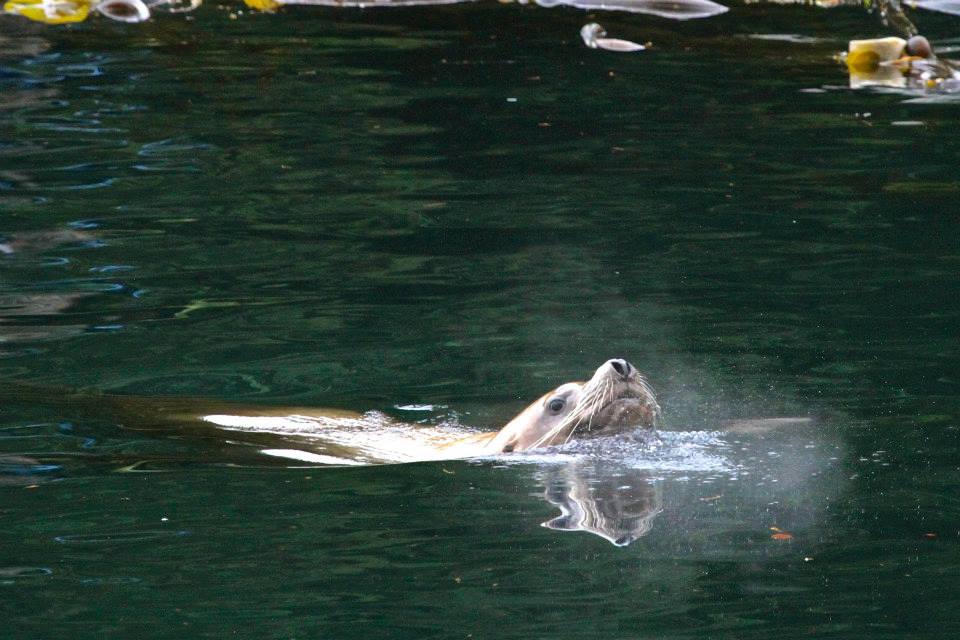
4. No matter how much you hoot and holler at them, Stellar Sea Lions will not give you the time of day.

10659202_10153342628774852_4448842526100652252_n

5. Orcas love to call at dinner time, so you stuff your plates into a plastic milk crate box and lug it all over to the lab and have dinner with headphones on.

1901153_10153342624724852_3285441612895050163_n

6. Bath Days are a gift from God and should be worshipped as such.

10995804_10153726757494852_7811731726412708212_n

7. Mink will live under the house, they’re cute but smell terrible, your cat will want to make friends, the mink will not acquiesce. 11081015_10155300238395858_6083581184589343527_n

8. Porch baths in December are a necessity. Treat them like a Nascar pit crew changes tires. If you’re not out and back inside in under five minutes you are a) doing it wrong and b) probably borderline hypothermic.

9. Bring pets. You’ll need someone to talk to when your wife gets mad at you for ruining her favorite website.

10994155_10153690504119852_621681021897676100_n

10. There is nowhere on earth like this place, nothing can replace it or come close. So enjoy every moment you have here regardless of the time of year.

_MG_9262

An Expected Visit, An Unexpected Goodbye

Paul announced the news in his usual, casual way, “a few people may be visiting the lab in early March from Greenpeace.” Made sense, we knew Greenpeace was holding a ceremony in nearby Alert Bay, and given Paul’s and Walrus’ ties to the organization, we figured a couple would want to stop in. Truth be told, the thought of playing host and hostess was welcome.

A few days later we received a call from the organizer of the trip. “How many people are coming?” Brittney asked.

“15 to 20.”

Our eyes went big, after months of just the two of us and the occasional passing boat, 20 people felt like a full fledged invasion. We were gonna need to bake more bread.

For the next few days we scrambled, polishing and sweeping out the pine needles and cedar boughs from the corners and wiping away the months of salt spray thrown against the lab windows by 40 knot storms.

As the Naiad breezed around the corner and we picked our way down the rocks, slipping over exposed kelp and seaweed on the falling tide, it felt like summer. As if I was standing on the docks, waiting to pick up my group for a day of whale watching. One by one, a range of generations and ethnicities stepped onto the island, making their way towards the house. I heard Paul’s words escape my mouth, “please be careful, the rocks are incredibly treacherous.”

Walrus stepped off the boat and began to weave a path into the cedar as if he couldn’t stand another moment apart from his precious forest. There was no real plan, and people wondered hither and thither. It soon became clear what the first order of business had to be. Unbeknownst to me, Bob Hunter’s daughter held the last of her father’s cremated remains in her hands, wishing to lay part of him to rest in the quiet cove on the flooding tide.

Brittney and I stood amongst the crowd huddled along the shoreline as the now flooding tide shuffled us slowly back. We listened to the eulogies to the man I had never met, but heard so much about. One of the original founders of Greenpeace, Bob Hunter had led a life that turned my eyes blurry and my cheeks wet with tears. He’d battled the nuclear testing in Amchitka, Alaska on Greenpeace’s maiden voyage, seal hunters, whalers, published books, and who knows how much more that would lay unwritten and untold.

“It was Paul who convinced him to stick his head in Skana’s (a captive orca at the Vancouver aquarium back in the 1970s) mouth,” remembered one speaker. A small grin spread across my face, as in my mind I could see Paul goading him toward the edge of the tank, a mischievous grin on his face.

As the ashes fell in the gentle breeze onto the waters surface, a First Nations man banged on a traditional drum, the bass echoing across the water and ricocheting off the silent old growth that stood sentinel over the proceedings. Goosebumps erupted across my body to hear the soundtrack of the land revive and return. An eagle soared over and a sea lion poked its head out at the mouth of the cove. As if they too recognized the sound, the song that spilled into Blackfish Sound, resonating in their hearts, a reminder of simpler times.

The songs ended, Bob’s ashes scattered on the turquoise waters, piercing rays of sun cutting through the surface, a gentle breeze rustling the tips of the trees. They couldn’t have picked a better day to say goodbye and we felt incredibly honored to be allowed to bear witness to this intimate and precious moment.

John Muir, Stickeen, and the Biggest Decision of Our Lives

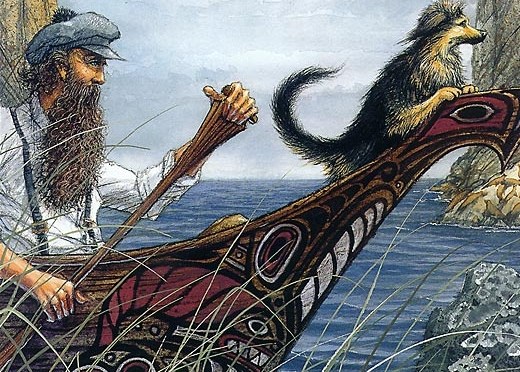
My favorite John Muir story involves a tiny dog named Stickeen. Fanatically loyal to Muir, Stickeen followed the famous naturalist everywhere, even the glaciers could not separate them. On one trip a storm hit. The light was fading, and they were still far from home. Between them and camp lay a large crevasse in the ice, a narrow bridge across offered the only hope of passage.
Muir scooted across and turned to find Stickeen still on the other side, sprinting back and forth as the wind howled, panicked and too terrified to follow. Muir knelt down and reach out his arms calling to his companion.
“Hush your fears little one, no right way is easy in this rough world, we must risk our lives in order to save them.”
For a moment Stickeen remained perched on the edge of the precipice, and in a flurry sprinted across the bridge, past Muir and began to yip and run in circles in ecstasy.
For years John Muir’s words have resonated inside me, echoing in my head with every major decision I make. I tried to avoid making decisions simply because they were safe or comfortable, probing deep inside for what I really wanted.
With this credo echoing in both our hearts, we walked, hiked, and hitched through New Zealand. Bounced from seasonal job to seasonal job. Crammed everything we owned into the Pathfinder and drove for five exhilarating days to Seattle. And of course, spent the last six months blissfully happy on Hanson Island.
Slowly we’ve watched our time remaining tick away, somehow, we have just two months left, and the thought of leaving already left a lump in our throats.
In our wildest dreams, where money is no object, we knew we’d come back. But even here, the financial demands of life can reach us. Student loans, IRAs, and that house in Gustavus beckon. It became our next goal, to save up and buy that house, if the elephant in the room (winter work in a town of 350) could be addressed.
Than Paul and Helena changed everything, offering to help us return for another winter if we wanted to. Thus began the hardest decision we’ve ever made together. We tried to imagine returning to Alaska, kayak guiding in Glacier Bay and than… what? Making coffee in Juneau I suppose. Which was all well and good, but we both knew that at night, crammed back into our shanty studio apartment, we’d look out the window to find ourselves surrounded by street lights. And our souls would ache for this place. For the sound of the waves on the rocks. The Harlequin ducks bobbing like rubber duckies into the cove every morning, the mischievous mink that taunts the cat from under the house.
We budgeted. We convinced each other that one decision was correct, and than the other. Finally, we would lapse back into fits of indecision. Pulled between starting to put down roots, and fearing that we’d eternally regret not returning to the island. We talked long into the night, unable to decide. Until this morning when Paul asked us if we’d reached a decision. We looked at each other across the table, a pained look on both our faces. We knew saying no meant we may never see this place again. And we knew that we couldn’t live with that.
There will be houses to save for later. Winter work questions to answer, money to make, roots to set down. But in our hearts, the wanderlust called for an encore. To sprint across that ice bridge one more time. To risk our lives. And to save them.

“We’re coming back!” we replied.
And like Stickeen a century ago, jumped and ran around the cabin while the wind and rain pelted the windows.

A Deathbed Lesson in Living

For my entire life I’ve been blessed to live in a place that other people visit. Not the Bahamas, or southern California, or Europe; Alaska. The Last Frontier, Land of the Midnight Sun and whatever other catchy tagline we’re using these days (Palin’s Pasture?).
For three summers I had a front row seat to those retracing the routes of John Muir, the gold rush and sled dogs. I worked in Alaska’s capital, Juneau as a whale watch guide, deckhand and bear guide (bear viewing that is, not hunting).
I was fresh out of college, and had just had the rug pulled out from underneath me. I had lined up an entry level position with NOAA (National Oceanic and Atmospheric Administration) only to have the federal budget frozen and my position unceremoniously tossed out four weeks before I was supposed to begin.
I didn’t know the first thing about guiding. But I knew whales, the ocean and my Dad had once been charged by a Grizzly so I felt qualified. Virtually the entire tourism industry in southeast Alaska centers around the cruise ship. The 2,000 passenger floating hotels that market themselves as holding everything you could ever want.     Upwards of 15,000 people can flood Juneau off the boats in the summer; a town with a population of about 33,000.
I fidget on the dock. Bright orange polo tucked into Carharts, black and orange ball cap jammed on top of curling blond hair. I feel like a 6’4” carrot. Slowly couples begin to gather around me; from Germany, Texas, Boston, and Australia. I hand out the weight sheets to ensure the planes are balanced for the flight portion of the tour and try to make conversation. A beer or two would’ve helped.
My last couple staggers slowly down the gangplank towards me. It’s immediately clear that all is not well. The husband’s steps are uneven, his breath ragged, he looks exhausted and beaten. Cancer will do that.
As we board the bus bound for the airport his wife pulls me aside. Yes, her husband was terminally ill, his life expectancy could be measured in months. But if I could, please, try to treat them as normally as possible.
I climb the steps behind her and collapse into my seat mind whirling. I was supposed to be in a lab, or a research boat measuring the bioenergetics of forage fish. Fish that couldn’t tell me their physical condition. That there last wish was to see the glaciers of Alaska.
What the hell had I gotten myself into? What did this man care how big a humpback whale was? How long a brown bear slept or how much fish they could devour in a day?
The trip slides by as the plane sends us over the glaciers and over to an island called Chichagof which has one of the largest concentrations of brown bears in the world. Naturally we see none. Nature doesn’t understand the concept of the storybook ending.
In the small native town of Hoonah, a boat collects us and we begin the three hour trip back to Juneau eyes scanning for whales. Slowly I begin to pluck up the courage to talk to him. His name is Dan, he’d lived his whole life in Houston, Texas and had just been diagnosed a couple of weeks ago.
He’d rejected chemotherapy and other treatments, emptied their bank account, and was seeing as many of the places he’d dreamed of experiencing before the sickness shackled him to a bed. Alaska had been his number one pick.
Juneau had been their boats first stop. “No pressure,” I told myself. I apologized that the bears hadn’t shown, that the glaciers had been partially obstructed by clouds.     He shrugs, “it’s just enough to know that I’m here.” he answers.
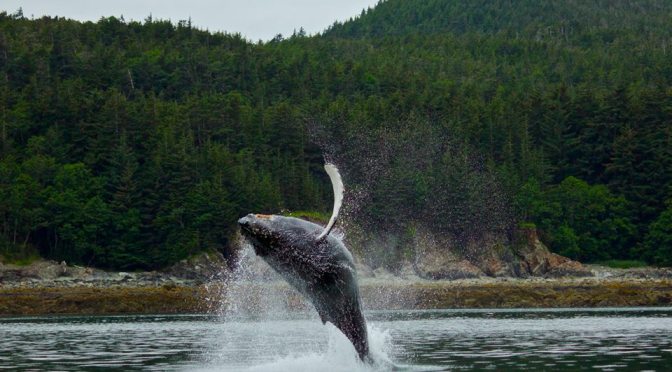
Twenty minutes later a humpback blasts out of the water like a rocket, sending a crescendo of foam across the surface and we cheer like our team just won the Super Bowl. There’s a spark in Dan’s eyes, a glint of joy and life that I can still see four years later. For a few seconds he looks reborn until another coughing fit sends him back into the boat’s cabin.
An hour later we’re within sight of Auke Bay, Juneau’s largest harbor. From the water, the Mendenhall Glacier looms over the boats bobbing along the dock. Even from two miles away it dominants the skyline like a giant frozen sky scraper. The boat captain screams the boat to a halt and ushers me onto the deck with Dan and his wife.
“Get their picture with the glacier,” he whispers.
They lean against the boat’s railing, the ice framed perfectly above them. I swallow a lump in my throat and blink away tears. For the second time Dan looks half his age as he dots a kiss on his wife’s cheek and wraps an arm around her as I click off a shot. The moment passes, the boat revs, and they slowly move back inside, wrapping their down jackets tightly against the wind.
Minutes later we’re on the bus, headed for the cruise ships 15 minutes away. I search for something comforting or inspiring to say. Some magic words that could somehow make their plight better. Instead I just listen as they talk about their kids, their work, their life. My ears doing more than my tongue ever could.
Feet from the dock Dan looks out the window and sighs, “it’s a magnificent place you have here, David.”
“Thanks, but it’s not mine, it’s all of ours. It grabs hold of something deep inside of us, resonates, makes us whole.”
He nods, “I wish I would have seen it sooner so I could climb the mountains. Maybe go fishing, you hunt?”
I confess that I’ve never killed anything bigger than a salmon.
“Well don’t wait,” he said, “live out your dreams while your young, don’t wait for your come to Jesus moment.” His wife sniffs and he gives her a little squeeze.
The bus stops, I shake Dan’s hand and hug his wife. Slowly they walk away, inching up the gangway, his last words echoing between my ears.
Don’t wait, live now. See what needs to be seen. Breath the air, walk the trails, climb the mountains, swim the rivers. Don’t let life get in the way of living.
Four years later I sit in a cabin perched on the shores of British Columbia, living. NOAA never called back, hallelujah. Maybe I’ll get a real job some day but I doubt it. Not after seeing that look in Dan’s eye as the humpback broke the surface, telling me everything I’d ever need to know.

Collect Experiences. Not Things

For the first time in years I want something that I cannot have. The number in my bank account is woefully too small to buy the house that Brittney and I have been salivating over for the past two days. It’s not a mansion with enough square footage to fit a basketball court. Nor does it look out over some ridiculous ocean side vista. It’s just a humble, quaint, hobbit approved house on a tiny road in Gustavus, Alaska. And I can’t have it.

Since graduating from college, I’ve been rebelling against the status quo. Bouncing from seasonal jobs, spending months in New Zealand and Canada and loving every minute of a life that we seem to create one step at a time. But as we’ve wandered, we’ve begun to feel the need to have a home base. A place where kayak gear, camera equipment, and pets can pile up without fear of how on earth they will fit in the Nissan Tetris in a few months. So we looked up houses in Gustavus and began to covet really bad. Houses are never an impulse buy. Thank God. Because I was looking all over the screen for the, “buy now” button like it was ebay.

We took a little crash course in down payments, mortgages, and interest rates. What else are you going to do a 9 pm on an island where you represent 66% of the population? Slowly we began to accept the hard truth that the dream was a long ways away. Though it didn’t stop us from scrolling through the photos one more time (so much natural light!).

In Victoria, British Columbia is the Phillips Brewery, the only microbrew beer I can find in Alert Bay’s tiny liquor store. Besides having a Peanut Butter Stout, which is freaking amazing, the inside of their bottle caps have the phrase, “collect experiences, not things.” For the first time in a long time I want, “things,” or more accurately, “thing” in leu of, “experiences.” Weird.

Of course, if we hadn’t been jet setting, going to baseball games, and had, you know, worked the past seven months, we might be able to make it happen. But I sit in a house perched on the rocks over Blackney Pass. A storm beginning to build after a calm red sky morning. Yesterday was monopolized by calling orcas, sea lions bark and roar at all hours of the day, and the stars pop with no interference from streetlights. Sure, I could be sitting in that house today and I’m sure we’d love it. We’d also have a thirty year financial commitment that would really make it tough to live up to the website’s namesake.

I’m sure someday we’ll truly be ready for that sort of endeavor. But when we do, I want there to be no regrets, that it’s done on our terms, on our time. That we don’t sit in our house with fantastic natural lightening and wonder what could have been. Someday we’ll have a doormat that says, “Cannamore” and a sign that says, “all guests must be approved by the cat.” But until than, I’ll savor the adventure, the sweat, the and cursing as I try to cram one more duffel bag in the back of the car.

Collect experiences, not things. Experiences after all, don’t need a house to be stored in.

We Have Neither the Plans Nor Disguises

My last Christmas in Eagle River I went to the same holiday party that I’ve been going to for years. No longer though, was it acceptable for my friends and I to drag the TV into one of the bedrooms, hook up the Gamecube, and beat each other silly in Super Smash Brothers, taking time only to race back upstairs through the maze of grown ups for another piece of pie. Now in our mid 20s it was time to negotiate through the kitchen, making small talk and drinking enough to make it all seem interesting.

Balancing a plate of food I bumped into person after person I had hardly spoken to since high school. Time and again I would compress the last five years of my life into a succinct three minute presentation. That I had graduated college, was not in grad school, and was working seasonal jobs and globe trotting as much as possible. Most were receptive, some excited at the prospect of spending a winter on an island isolated from the rest of the world, understanding the romanticism and beauty of living a simplistic life for months at a time. Others, did not.

As the night wore on and we continued to shift conversation partners, I bumped into a man I hadn’t seen since high school. A middle aged father of two, he had for a time been a volunteer in the youth group of my church as I was growing up. And so I began my presentation, summarizing my summers on whale watch boats, farming in New Zealand, and my upcoming year in British Columbia and Orca Lab. Anyone whose ever given a presentation, at school or work has felt the wriggle of insecurity as you begin to talk, and know that it isn’t going to end well. His face evolved from one of surprise, than shock, and finally, condescending.

“How old are you now, David?” He asked.

“25.”

“When are you going to start taking life seriously?”

I pause, taken aback by his bluntness. What would constitute taking life seriously? Did I have to make X amount per year? Or own a house of a certain square footage? Or perhaps I had to have a job that I didn’t love. I avoid a philosophical debate and chose to just announce that I’m happy with my life, young, and having fun.

“Well, yeah,” he allows, “but it’s like riding a skateboard.”

A skateboard? Whatever he had in that glass I wanted some.

“You see those 13, 14 year olds riding around and that’s ok. But if you see, like a bunch of old guys riding around on them… you can’t do it forever. You start to wonder when they’re going to grow up.”

Convoluted and ambiguous metaphors aside, my pride began to flicker, my eyes narrow, the cocktail shrimp on my plate forgotten. It certainly wasn’t the first time I’d heard inquiries such as this. About once a week during the summer, some older man would try to explain to me why I couldn’t go on this way forever. But there was something about hearing it from a man who knew me, someone that I had been friendly with that made this time different.

But as I walked away a few minutes later, I began to feel pity instead of anger. I imagined if one of his kids came to him someday with the same wanderlust that had overtaken me. What kind of reception would he receive?

It is a very American ideology. That we must have a plan, that we must be secure, safe, comfortable. We build walls of comfort and safety and along the way, forget what it means to be alive. But it is all ok, because it has been deemed acceptable and normal to live this way. Go to school, get a job, get married, have kids, retire, die. It is a blueprint followed by most, and for many, perhaps that’s ok. For some, maybe they are perfectly happy and content to live in the same house and go to the same office every day for forty years, punctuated by their annual two week vacation.

But for a growing number of the younger generation, it isn’t. We’ve seen too many of those walls turn into bars, a prison with no escape. Guarded by the henchmen of mortgage, debt, and car payments. Maybe they’d be happier if they pulled their old skateboard out of the closet from time to time, gave it a whirl, and remembered what it felt like to be young and free. As I’d neared this age of reckoning and college wound down, I began to feel this noose begin to tighten. I wondered if there was another way, a different trail down the road of life. Bumpier, perhaps, but a lot more fun. Slowly I loosened the noose until finally I became ok announcing that there was no plan. That I wanted to be an environmentalist and a writer and as long as I was doing something to better the wild world and wasn’t curling up under park benches at night, it’d be ok.

And so to the man that I doubt will ever read this. I plan to ride that skateboard until a wheel snaps off and sends me careening into the briar patch. Who knows, maybe it’ll never happen, maybe it will. But every second is going to be a fulfilling ride that I wouldn’t trade for anything.

Making Christmas

It is somehow December. My Alaskan sensibilities tell me it’s impossible for it to be the season of; holly, mistle toe, and red clothed, cookie scarfing, overweight home invaders without a thick carpet of snow. I suppose that’s not entirely fair. It did snow one morning and it almost stuck around for the whole day. But for the most part, the weather continues to emulate an Alaskan fall with the temperature playing jump rope with the freezing point and encouraging us to maintain a fire around the clock.

The orcas gifted us an early christmas present the other day when the I15s announced their arrival in Blackfish Sound with their trademark, donkey like, “hee-haw.” After holding down the strait for much of the summer, seeing the family charge through Blackney Pass and into Johnstone Strait made it feel like August all over again. They have sense vanished, we presume they are still to the west of us in the strait. Though we have reached the time of year where the clouds and storms begin to choke the power from the solar panels, causing hydrophones to cycle on and off, especially at night. With the ocean again silent, save for the daily parade of tugs and the occasional Alaska state ferry, we can prepare, as best as we can at least, for Christmas.

Much like our ill fated New Zealand thanksgiving with the intrusive lemurs, we knew this was coming. That we were going to be far from not just our families, but our friends as well for a season that magnifies togetherness more than any other. Thanks to Helena and our parents though, we’re doing our best to bring a little bit of Christmas to the island. We’ve put up our single strand of multi colored christmas lights and a tiny, “father christmas” figurine who for some reason, is outfitted like a biblical Shepard complete with a staff, mercifully the glorious white beard remains in tact. Than there’s my mother, who can only be described as having been born with second and third helpings of, “care bear DNA.” Their christmas gifts, complete with stockings for not just us, but the cat and rabbit too are piled on a shelf in our room (Brittney insists that we need to find a tree). All together, it makes it feel a little more like the holidays on Hanson Island. But it feels weird to not be listening to the traditional Cannamore rotation of Christmas music, I can’t believe I’m admitting that.

It is, I suppose, all part of the isolation of care taking. And there are certainly days when we need the other to make us smile, laugh, or at the very least, roll our eyes. Yet besides Mom’s christmas cookies and everything else that always made Christmas special, I don’t find myself missing civilization much at all. Groceries being a 30 minute boat ride away doesn’t feel like an inconvenience, nor does getting up every two hours in the middle of the night to stay warm. On the whole, I’ve transitioned into this lifestyle magnitudes easier than I had trying to live in Seattle. When the luxuries of normality are stripped away, we find that we really need precious little to be happy and secure. There’s a roof over our heads, a pot of coffee, and a comfortable fire burning. What more does a human being require. It makes me wonder what it’ll be like when we do leave, and drive back down to the big city before escaping to the comfort and familiarity of Southeast Alaska. Sensory overload, I imagine. Perhaps Brittney should drive.

My Declaration

I sit in paradise. The only sign of human life out the window is the lighthouse on Parson Rock two miles away. The storm rages, the wind blows, shaking the windows. The land is untamed, dangerous, and beautiful. Humpbacks stubbornly push through the waves to breath and feed. The gulls hover as if suspended like marionettes, riding the gusts above a churning ocean. Cougars prowl on Swanson and Cracroft Island, some have never laid eyes on a human being. It is the land that I’ve been drawn to my whole life. The freedom and the salt spray, the forest so full of life you can feel the energy of millions of lives all around you though they’ll never speak a word.

But how long will it stay like this if we elect people who don’t care? At what point does the environment become something that we’ll stand for. As a new wave of climate change deniers take center stage, America continues to fall further and further behind the rest of the world. We have spoken. Money, oil, and development mean more than quiet places and open spaces. A full wallet speaks louder than a full soul. I would say that we’ve lost our way. But it’s hard to find a time where we knew where we were going. It creates quotes such as this from James Inhofe: “The Genesis 8:22 that I use in there is that ‘as long as the earth remains there will be seed time and harvest, cold and heat, winter and summer, day and night.’ My point is, God’s still up there. The arrogance of people to think that we, human beings, would be able to change what He is doing in the climate is to me outrageous.”

The bible is not a shield Mr. Inhofe. Nor is it justification for development and pipe lines. We are charged as care takers of this world God created. That does not mean that it is our to be pillaged.

What would they think if they just visited some of these places. Not just saw them but experienced them. If they got down on their hands and knees and felt the rocks beneath their palms. Smelled the sea and the forest. Inhaled the oxygen straight from the trees. Took the time to sleep on the ground, watching the stars blossom into view, with no streetlights or car horns to invade the senses. Perhaps sleep with a root buried in the lower back. If they could be paralyzed by the perfect beauty of the sunrise climbing the peaks of the mountains, spilling out over the beach, intertwined with the crashing of the waves. Would they care than? Would they see that material riches are not enough to satisfy the human soul and spirit. That nature and wilderness is not a luxury. That it’s a necessity whether we realize it or not and all that experience it is never the same.

I am not Republican, I am not Democrat. This isn’t about us versus them, at least, it shouldn’t be. We all share this planet, we’re all on the same side whether we realize it or not. I am of the party of Teddy Roosevelt and Richard Nixon. Creators of National Parks and the Endangered Species Act. The party of John Muir and Rachel Carson, Kim Heacox and Lynn Schooler, writers who dare to speak for a world that cannot speak for itself. Because tragically the mountains cannot stand before congress, nor can the bears and whales. But we can, I will. And as I read the statements of those that now represent these places it has become clear what I will spend my life fighting for.

I could spend my whole life here, sitting suspended above the rocks, watching the sea crash against them. Or sitting in the old growth forest that has been growing and falling for millennia. But how selfish would that be of me. To live and enjoy while its future hangs in the balance. I want this place, these lands to change someones life the way that it has changed mine. I want someone to paddle in Glacier Bay, 100 years from now while humpbacks lunge feed around them and sea lions flash beneath their kayak. I pray to the same God as Mr. Inhofe for that, because in the end, we’re all on the same side.

The Life I Never Wanted

The email was terse, to the point, and completely unhelpful. NOAA, after offering me a job upon my graduation from college in three weeks, was withdrawing their offer, citing a lack of funding. Fear courses through my blood, my knees weak, I reread the email, sure that I’d missed something. I hadn’t. It has to be one of the worst responses ever to the question, “when’s my first day?” I grab the phone and call the ladies office that I was, in theory working for. As the phone rang and rang I mentally calculated the deposit on the apartment I’d just put down and my bank account with a number that Bob Cratchit would be embarrassed by. For the next two days I wrote emails and left messages at the office, trying to get someone, anyone to return one, to explain what had happened, to give me any direction. I’m still waiting.

Things were going so well too, I’d gone to college, met the girl I’d marry, and had the, “get a job” step all figured out. I was going to graduate and work for NOAA, at least to start, make some money and than go to grad school. Well on my way to a nice respectable, safe career. My job, measuring the bioenergetics of herring. I’d even talked myself into being excited about it. Studying whales, well, it’d been a nice dream, but it was time to be realistic I told myself. Time to grow up. There can only be so many Paul Spongs and Alex Mortons in the world.

After three days of blind panic my heart rate slowly returned to normal, I began to think rationally again and deleted all those terrible emails I’d written but thankfully never sent. Life was going to take a detour, just a small one I told myself. I needed work, and I told myself not to be picky, just find something to keep a roof over your head. And in that process I learned an incredibly valuable lesson, no job is beneath you, and just because you’ve never thought about doing it, or don’t think you can, doesn’t mean you shouldn’t try.

I applied everywhere, restaurants, pizza delivery, tourism, I even swallowed what pride I had left and dropped an application off at Fred Meyer, the same place I’d worked after my freshman year of college. I felt like I was being pulled backwards. What happened next you could call God, or the universe, or karma, or just boring old luck. I landed the job I think I always wanted, was meant to have, I just couldn’t admit. I was going to be a whale watch guide.

Looking back it seems so obvious, such a natural route for life to take. But I was pulled into the American obsession of careers and security, my life filling up with, “had tos.” I had to have a year long job, I had to start saving money, I had to buy a house, I had to have a job with health insurance, all these things I had to have. And I’d bought it, swallowed the sales pitch, and had believed it my whole life. And I still did even after landing the job that paid me to watch orcas breach and humpbacks bubblenet. My destiny, I told myself still lay in herring bioenergetics. My clients encouraged such thoughts, a nice young man such as myself needed a real job eventually, needed to make something of himself. This whale watching thing is ok, just for right now.

So two months later, when three positions opened up at NOAA, I shined up my resume, and marched back into that building with the air of a conquering hero, ready to fulfill my destiny. A month later I’d heard nothing and finally picked up the phone, this time, someone returned my call. 18 people had applied for the three positions. Positions that required only an undergraduates degree in marine biology. Ten of the applicants had masters, four more had doctorates. I’d be shocked if my resume got a second look. I hung up the phone and headed for work, there were still whales to watch after all. What, I wondered, did the applicants look like for non entry level jobs? Did I really want to go to school for at least six more years so that I could find out the number of joules in a herring? To that moment I had never considered another possibility, never fathomed being anything besides a, “scientist.”

But by the time I’d pulled into the parking garage and dug out my rain jacket I’d decided; it wasn’t the life I wanted. I could do without the lab coats because I new, deep down, I couldn’t possibly be happy with one on. In five minutes there’d be twenty cruise ship passengers, looking up at me, expecting the answers to all of their Alaska questions, and I couldn’t even answer everyone’s first personal question, what’re going to do with your life?