Tag Archives: cats

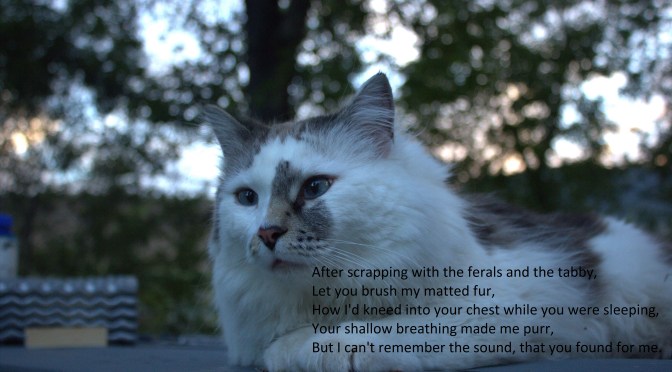
Porter the Cat Explains His Departure

When the Gastineau Humane Society hired me in the fall of 2011, I made a promise. No matter what cute and furry critter came across my path, I wouldn’t adopt it. My life was transient with a new girlfriend, a seasonal job as a deckhand, and a financial and housing picture that at best was out of focus.

Naturally, I adopted a little white bunny with brown spots within two weeks. Mistaking her for a boy, I originally called her Bilbo before a kindly veterinarian informed me that, if gender mattered in my naming choices, I’d fallen in love with a lady bunny. So, I pivoted to “Pennybright” after a female hare from the beloved “Redwall” series of my youth. As my infatuation with the Beatles grew, this eventually turned into Penny Lane for short.

Having failed to keep my simple bargain, Brittney reasoned that it was only fair that she got a pet too. She had eyes on a cat, my only stipulation being her cat wasn’t allowed to eat my bunny.

Throughout the winter Brittney would peruse the cat rooms of the Humane Society. I was closing most nights and took to letting a few choice kitties along with Penny roam the hallways for exercise. Two cats in particular got along well with Penny, but for Brittney, they weren’t the right fit.

***

December of 2011 was frigid with nighttime temperatures dropping into the single digits. I arrived at work one clear and chilly day to find a new cat in quarantine. He had been roaming the streets for weeks and had taken shelter in someone’s garage in search of relief from the cold. He’d been caught in a cat trap and had worn down his claws so badly trying to escape that we thought he’d been declawed.

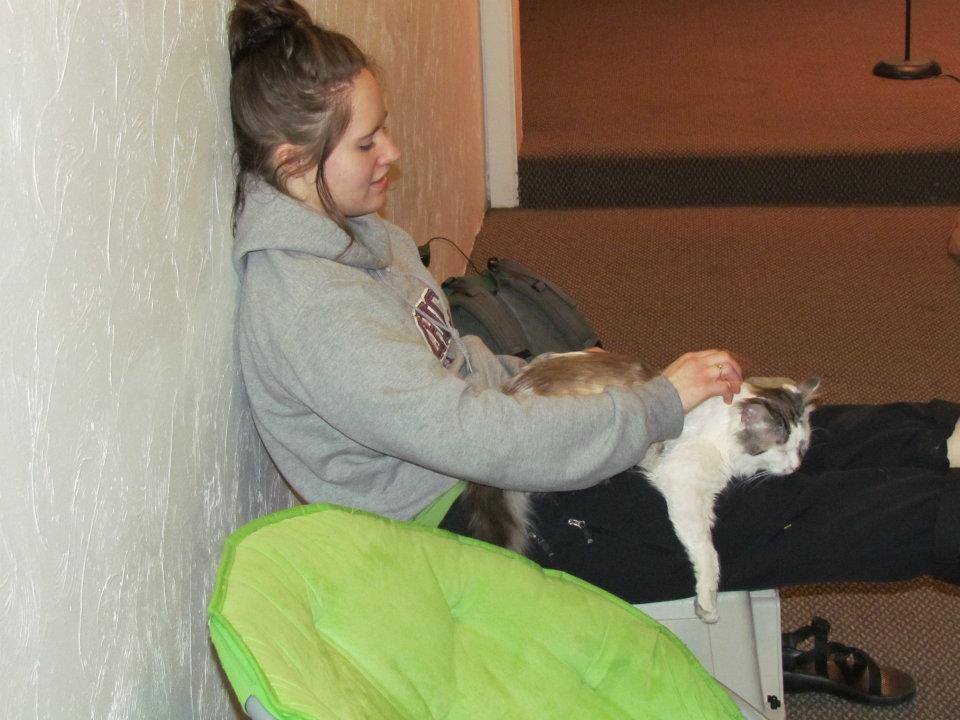
Beautiful blue eyes and striking white fur accented with brown streaks made for an attractive kitty. He seemed like Brittney’s vibe, so that night she stepped into quarantine to meet her kitty soulmate. But he wanted nothing to do with her, which made her try even harder to win his affection. Bit by bit, Porter came around. And on our first night in our first apartment, it was her lap he leaped on, stretching out his long legs and falling asleep.
***

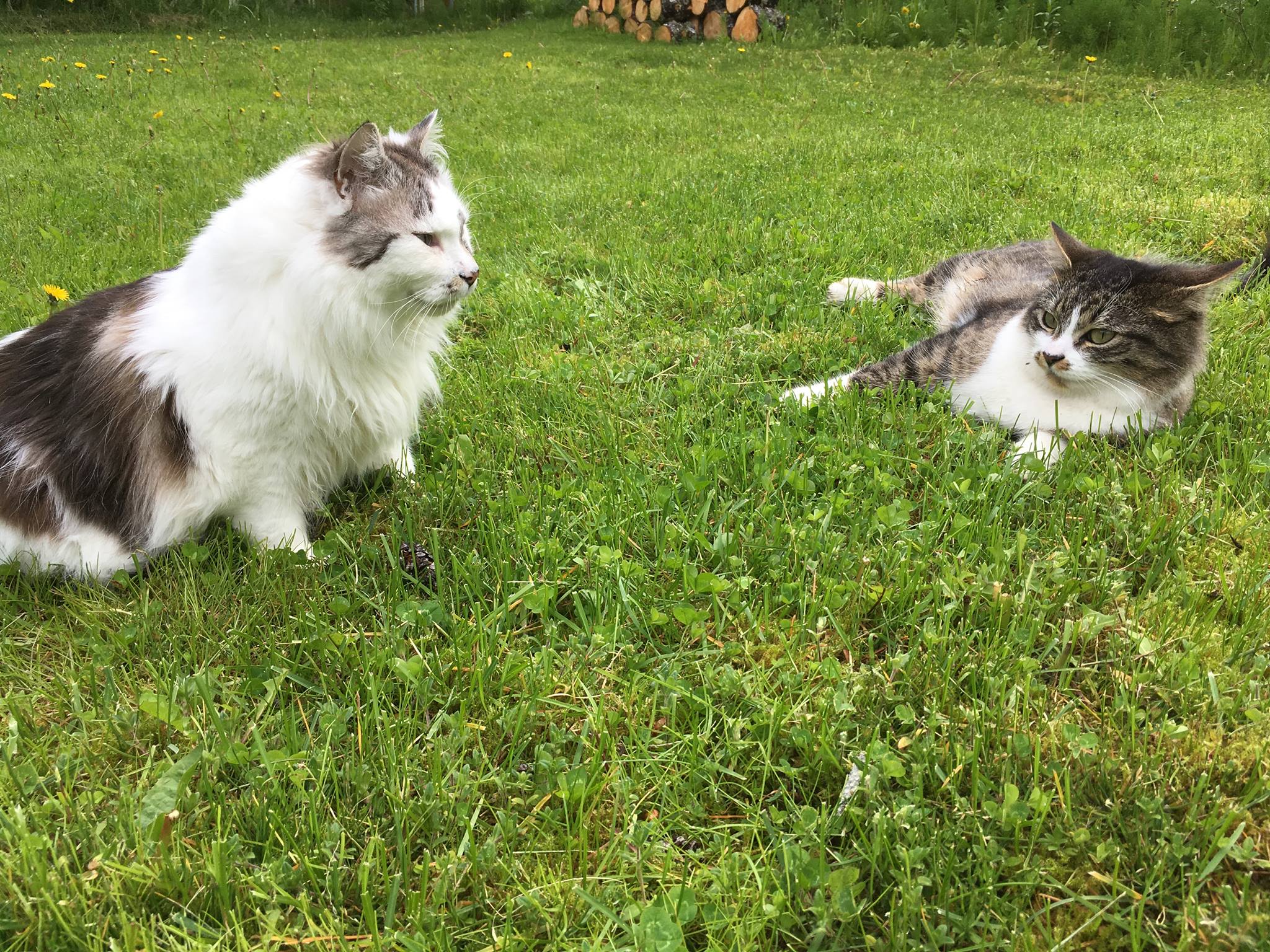
Over the following eleven and a half years, Porter has been a constant in my life. He has crossed the Canadian border no less than ten times. Gone on road trips and slept in tents. Ridden on ferries, skiffs, and sailboats Hiked to sea lion haulouts, battled mink, and dodged moose. His protective nature over Penny was heartwarming, on multiple occasions, he put himself between her and curious dogs.

He was there the day Penny passed away in 2017. And has tried without success to make my cat Minerva his best friend, though she has always had little interest in that arrangement.

On cold nights he’d fall asleep on our pillows or burrow between us like a little furry space heater.

A mason jar cannot be opened without him underfoot and expectant glances waiting for his portion of salmon skin or venison scraps. No unguarded stick of butter or leftover meat is safe. The kitchen counter was his domain whether we liked it or not.

The house was not deemed livable until I’d built a ramp that allowed the now creaky Porter to reach the bedroom and continue his tradition of sleeping on the bed.

Besides Brittney, no soul has defined and influenced my young adulthood as much as that stinking cat.

***

Today I say goodbye to one of my best friends. Porter is still healthy. He’s at least 13 years old, but he just keeps on cranking. He sleeps more than he used to, and his outdoor wanderings are getting shorter. But there’s no drop in his appetite and his fur remains soft and silky. But when I return home in six weeks, Porter will be gone. Like any separation, there’s the question of who the kids will live with.

In this case, the choice is easy. Porter is so clearly her cat first and foremost. Their bond has grown from his icy ambivalence into a love I truly believe he reciprocates. This is a cat that once leaped into 43-degree water to swim to her. That bond can’t be separated.

I’m thankful in a way. My last night with him was one where he was happy and healthy instead of sick, in pain, and scared. I got to leave him at his best. Purring and begging for food.
***

On our final evening together I pull two salmon tail fillets from the oven and Porter takes his usual position by his food bowl. He nuzzles the corner of the cabinet. In less than a year he has created a brown smudge on the plywood from his obsessive rubbing. He has left a legacy that will remain in the house for the rest of my life.

He expects a chunk of salmon skin, and indeed I tear a fillet of skin in half, handing half to him and half to Minerva. But as they begin to mow down, I go a step further. I flip a fillet onto a small plate and set it on the floor next to him. His eyes turn the size of saucers. Without stopping to purr, much less swallow, the feeding frenzy begins. It’s not a large fillet, but it’s still the equivalent of me eating a steak roughly the size of my head.

Porter downs it in less than five minutes. I’ve wondered if he would ever consider himself “full” or if he would just keep eating until he exploded. If I’d spent a chilly winter scrounging for voles in someone’s garage, maybe I’d never pass up food again.

This morning we took a final walk around the property. Porter’s steady plod isn’t as quick as it once was. But he will loyally follow until I turn around. Minerva prefers to wait until we’re ahead and then come tearing after us, rolling in the dirt and clambering up trees. But I love Porter’s steady gait. One step in front of the other, always just a few feet behind.
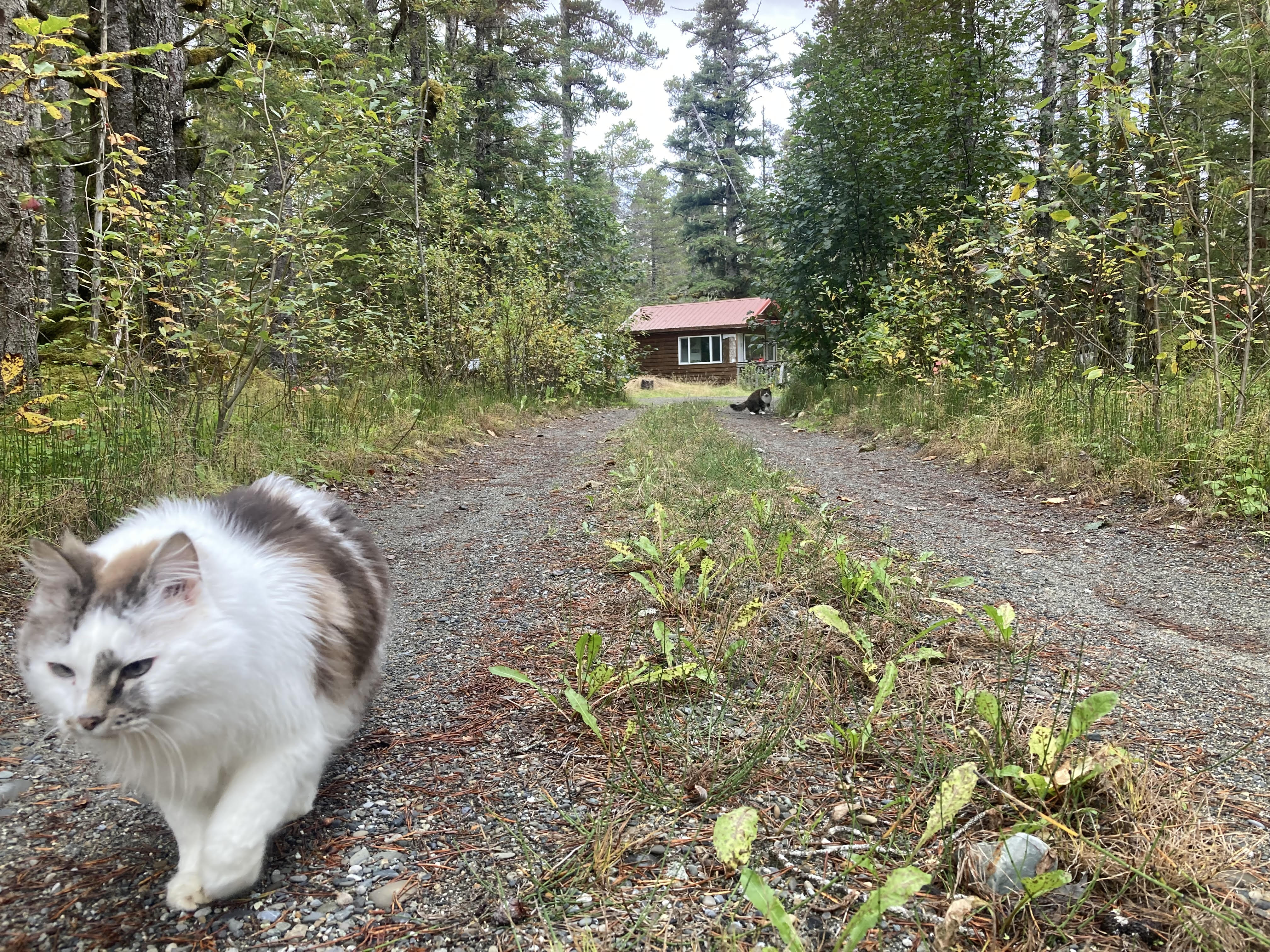
I kneel and he trots over, nudging my knee and purring, arching his back, and raising his face for chin scratches. I envy his ignorance. It’s just another walk. The backpacks in the mudroom are a mild inconvenience. I’ll come back. I always do. I scoop him up and bury my face in his fur. He always smells good. His purrs vibrate against my face.

“Being your dad has been one of my greatest pleasures.”

He begins to wiggle and squirm.

“I am always going to love you. You will always have my heart.”

Squirming intensifies.

“I hate that I have to say goodbye.”

Claws dig into my arm.

“And I hope you never forget me. Because I’ll never forget you.”

“Yowl!”

***

Back home I grab the treat bag. 11:40. I need to go. Porter looks up at me, purring away and waiting for the treats to rain down on him.

“One more time,” I whisper.

I scatter a handful around the room, and he proceeds to hunt them down one at a time. I open the door, grab my packs, and walk down the trail. In my pocket is a Ziploc with a few tufts of hair. I couldn’t resist giving him a haircut to ensure that – along with that smudged cabinet corner – there will always be a little piece of Porter in the house and in my heart.

Otters and Men; Lichen and Trees

For the first time in a week, the wind acquiesces. The temperature crawls above freezing, and like bears from their dens, we step out into a world defined by snow drifts and frozen salt spray. A week ago half a foot of snow fell, but in one of nature’s more curious quirks, the forest floor remains mostly barren. The snow has piled in the few open muskegs and clearings. The other alternative was to be blown callously into the intertidal and ocean where a biting 33 degrees still melts snow.

We step off the beach and into the forest. After years in Gustavus, the old growth of the Inians feels like a novelty. And in winter what little undergrowth there is has been extinguished. Skeletal stalks of Devil’s Club stand bunched together. In a few months electric green buds will emerge from the top of these spiny towers. A member of the Ginseng family, the forest will take on the herby odor of the buds that can be collected (very carefully) and cooked. Preferably fried in oil and served with Siracha mayo. Watermelon berries and salmon berries will appear, the blueberries a little bit behind. But for now, the land is comparatively barren. But far from empty.

A squirrel chatters. A chatter that shouldn’t be heard here. It’s a long swim across Inian Pass to here. The squirrels of the archipelago hitched a ride on a boat, either intentionally or by accident. Greg Howe seems to believe that it was by choice. Some homesteader who missed the incessant giggle of the little furry reds.

I can’t condemn though. We’ve brought our own little invasive species. There’s us of course on the three acre homestead, and our two furry companions. I don’t know if all cats will hike if given the opportunity, but Porter and Minerva do. In the woods they’re unlocked. Scaling hills, scrambling up rocks, and clutching to the bark of trees. Eyes wide and paws alight. Confining our cats to the house feels like confining humanity to the cities. Sure, they can survive, but they miss such a critical part of what it means to be human or feline. We’d prefer to not upset the song bird population. And while Porter has never been much of a birder, Minerva, like Walter before her, is tenacious. She sports a bird-b-gone. A fluorescent, multi-colored collar that fans around her neck to alert birds to her presence. She is part court jester and part Dilophosaurus.

The spell of the woods takes hold. The ground is frozen solid, like walking on chunky green asphalt. Rattlesnake plantain, club moss, and sphagnum moss are still a resilient green even after the cold that’s frozen the top of the creeks solid. Brittney carries a woven basket, collecting fallen hemlock boughs and old man’s beard. She advises me to keep an eye out for any of the teal-blue lichen that’s fallen to the floor.

“Why do you only want fallen old man’s beard?”

“Because it takes a long time to form on trees. It’s more sustainable to only harvest that which has fallen.”

Fair enough. I had no idea. Lichens are a prime indicator of the overall health of a forest and the cleanliness of the air. Stealing the indicator of a forest’s health feels sacrilegious. Yet I was ready to do so blindly. What else, I wonder have I callously taken which was not appropriate? A great glacial erratic has planted itself firmly on the hillside. The size of a small house, a pair of mountain hemlock have secured themselves to the top. Their roots as large as pythons slither down the rocks, seeking the forest floor below. One root has made a sweeping U-shape a foot above the ground and attached itself to another tree. I stare at the miracle for a long minute. What on earth compelled the tree to do that? Why make that U-turn so close to the ground? Unless… unless it knew the other tree was there and knew it’d be firmer if they were connected. But how did it know it was there?

The secret lives of trees are secret indeed.

Brittney finds a skeleton. Another deer, larger than the one we found on Westeros. The skull is half the length of my forearm, the molars the size of thumbnails. Brittney is incapable of passing the shadow of another spirit without paying respect. She kneels and examines the bones, cups the skull gently in her palm. The bones are bleached and white, whenever this deer said goodbye to the physical world was long before our arrival. But for Brittney that doesn’t matter. She keeps me grounded. My U-shaped root holding me fast when I’d rather climb my erratic and head for the sunnier canopy.

Maybe the secret lives of trees isn’t that secret. Maybe, like us, a tree’s life is best when you hold the hand of one you love.

We weave back down the hill, through a stand of alder, and onto the beach. To my surprise, the property is only a few hundred yards away. After an hour among the spruce and hemlock I thought we’d traveled much farther. There’s been a flock of twenty Canadian geese that have made the hole their base of operations for the last two weeks. They bounce from beach to beach, servants of the tidal whims. But it is the resident sea otter that catches my eye. He’s eating. As usual. He doesn’t have a choice.

What the coyote and wolf were to the homesteaders and ranchers of the west, the sea otter is to southeast Alaska. They are a villain, simply for their biology. Because they have no blubber, they must eat constantly to feed their feverish metabolic rate that keeps them warm. Walking the low tide with Zach, he pointed out how much the tidepools had changed over the last ten years. Ever since the otters got a foothold and began to devour the clams, mollusks, sea stars, and most importantly, the crab of the Inian Islands and the panhandle. The diversity of the pools has plummeted. More seaweed, less of everything else.

It’s not their fault. Like us, like every creature on earth, they’re simply trying to live. And unfortunately, tragically, their consumption falls in line with what we want to eat as well. There’s satire, an Onion headline in mankind criticizing the over-consumption of another creature. The otter is not always a pleasant critter. They eat everything that moves, their mating habits are… uncomfortable and inappropriate. Yet they are just critters. Incapable of having the moral and ethical choices that we have. They don’t have that convenience.

I’ve often thought that we love orcas because we see them as ideal reflections of ourselves. They’re born into air-tight family units. They want for nothing. They’re identity is in those they love and live with. Nothing troubles an orca. They are perfectly content, comfortable in their own skin. If orcas are humanity at are best, perhaps otters are us at our worse. Consuming every resource we can get our paws on. Changing every ecosystem we touch, eating ourselves out of house and home.

The otter continues to bob up and down, every few minutes he dives for another snack. I think of the lichen of the forest. Like me he doesn’t know any better. How does he know that his dinner is changing the tidepools at my feet? How was I supposed to know old man’s beard needed so long to grow and flourish? And there I have my difference. If my species was going to continue to sprint past the limitations of evolution, then it was my responsibility to limit myself if nature wasn’t going to do it. It’s a tall order. The hardest word in the English language for man to utter is, “enough.”

Someday, the Hobbit Hole will no longer be able to support the otter. He’ll eat himself out of house and home. And what will happen then? The sea otter population of Glacier Bay has finally crested. About time. There’s more of the furballs in the bay than the entire California coast. Nature has begun to regulate. The familiar peaks and valleys of populations. Lesson one of any Population Biology class, the lynx and the rabbit rising up and down together. I don’t worry about the otters, I don’t worry about the crab. It’ll all even out in the end. I continue to hope, that when it comes to man and nature, the ledger will someday even out too.