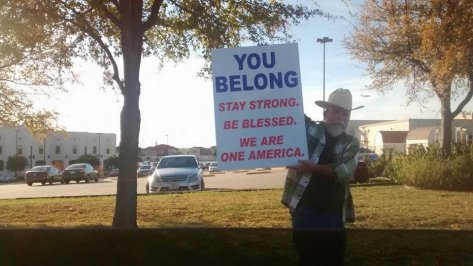
Trading in My Privilege

I will dispense with the alarmist phrases and horrifying -ists that we fear are going to fall in the days to come. For the last thing I want is to throw my own tinder into the blazing bonfire that is sensationalist news that lives for clickbait and scrolling ads at the bottom of the article.

“Answer this survey question to continue reading the article.”

No, this is about privilege.

“Really, David?” you ask. “Not Sea Lions or whales or trees or warming oceans?”

No, not today.  Today was a glorious, baby blue sky day in Blackfish Sound. For the first time in months the sun brought a warmth that sunk deep into the skin and made me smile. No biting wind made me tighten my jacket around me, no icy rain fell down my neck. I reveled in it, cutting wood, splitting wood, fixing water lines.

Meanwhile millions across the continent wept.

Privilege. My life overflows with it. White, male, straight. When we say all men are created equal, they’re talking about people like me. Hell, in a few months I’ll own property, which will make me legally able to vote in any election in American History.

That, is messed up.

Across America, gays, trans, minorities, those with pre-existing conditions, and many others watched in horror as a man who has declared war on them took an oath and set to work destroying their lives. I cut firewood.

Now this new administration threatens all of us, Republican or Democrat, gay or straight, black or white, Christian or Muslim. None can live without clean water or air. All of these are threatened  now more than ever. And if it all comes crashing down, there will be no regard for what boxes we put ourselves in.

But for the moment, I am as safe as an American can be. I live in a tiny hamlet that is accepting of everyone. All things considered, I live a blessed life. And so it’s people like me that must do more over the next four years.

The most disheartening backlash of Meryl Streep’s speech was those that told her not to worry. “Hollywood elites always do fine regardless of whose in office.”

Wait, what?

When did we start only caring about that which directly effected us? America is diseased. Modern Christianity has completely fallen off the wheels. We’re obsessed with the growth of our GDP. If we’re not expanding it must be a crisis. But it is our self centeredness that horrifies me most.

“Why do you care? You’re going to be fine.”

“We survived Obama. You can survive Trump.”

It’s how we got into this mess. We’re repealing health care for millions. Was the system perfect? No, but when you don’t have a pre-existing condition, why should you care? When did we become so selfish? When did the glitz and glamor of our privilege blind us from the basic empathy for our fellow man.

We call America the land of opportunity. We glorify the successful, the famous, and those on TV. And we’ve swallowed a horrible piece of propaganda. With the idea that America is the land of opportunity, we now assume that if someone fails they have no one to blame but themselves.

So now we demonize those on wellfare, we paint all those receiving government help as slackers, abusers of the system. We dismiss health care as a basic human right. Shit we dismiss basic human rights. We walk around with blinders, staring only where we are going. We stay in our lane and assume that if others are failing it is because of their own failures. They didn’t work hard enough, they don’t care, they have no one to blame but themselves.

This is how are empathy has corroded into nothing. When Donald Trump proposed registering Muslims, I thought it was over. When Donald Trump claimed he could kill someone in Times Square and get away with it, I thought it was over. When Donald Trump was caught on tape bragging about grabbing women by their pussies, I thought it was over. But it wasn’t. Because those words just bounced off the armor of our white privilege.

“I’m not Muslim, I don’t live in Times Square, I don’t know anyone whose been victimized by sexual assault.”

We screamed with our silence that we didn’t care.

So what am I going to do? What can a kid who lives in a predominately white town of 650 on the Alaska coast do about it? I can yell at the top of my voice that the persecuted matter. I can encourage those that enjoy the same privilege that I do to scream with me. Because we’re needed so badly. The face of this new America is dominated by the white male. Ok, that’s nothing new. But it’s been a long time since it was this blatant.

But if the straight white males stand on the side of equality and justice, it speaks volumes. It means we looked at the opportunities Trump’s America offered us and said no. It means that we’d rather do with less than live in a country where our brothers and sisters are squashed. It means we find these truths to be self evident, that all humans are created equal. I have been gifted, I have been blessed, and believe me when I say it wasn’t because I worked my butt off while some young African American born in L.A didn’t. So instead of taking what I have and trying to climb higher, I want to come back down to the level of the threatened. We may never climb that high, but if we do it’ll be all together.

“I might not be the same, but that’s not important. No freedom ‘till we’re equal. Damn right I support it.” – Macklemore

The Hemlock

The cabin shook. We watched the windows rattle and the walls accordion and had flashbacks of Alaska and earthquakes. But as quick as the tremor began, it ended. Throughout the winter we have been serenaded by the occasional blasts from Parson Bay as logging companies rip through the forests with dynamite to create logging roads. It’s a sobering reminder that we still live in the days of clear cuts and manifest destiny. When they blast with dynamite we feel the shock waves rolling across the water. But this one feels much closer, and instead of being directional, it seems to originate from within the house.

The next day I climb the hill behind the lab and into the labyrinth of saintly trees. The earth is saturated from two days of torrential downpour, the forest expelling the water as fast as it can. Every crevice and divot overflows. Water, there’s either too much of it or not enough. Shortages in California, flooding, erosion, and sea level rise on the north slope of Alaska. Every day Florida loses real estate. Florida, the state that literally has the most to lose from climate change voted for the one major political party that denies its existence.

I clamber over fallen trees that are rotting into the ground, their bark soft and squishy. Ahead of me is our water line. It snakes up the hillside to a stream that has turned into a roaring river. The line has been clogged more times than I can count this winter, and the walk up the hill is familiar and welcoming. But this time the solution is not as simple as digging river runoff out of the hose. I climb onto a ledge and stop, the explanation for the earth shattering concussion the day before in front of me. A massive Hemlock has fallen. Its body has cracked into three pieces, tumbling over the ledge to rest like a broken arm at twisted angles. The main piece has fallen at the perfect angle to bury the waterline for twenty feet, fluorescent green hose pokes meekly out at the bottom of the ledge.

With the Hemlock gone, light hits a forest floor that hasn’t seen the sun in decades. The patch of forest feels naked without the Hemlock. I sit down on the trunk and let the silence take me in. I think about the concussion the tree made when it fell, the sound of its death, the violence of it all. It doesn’t seem right, for a species that appears so peaceful and tranquil in life to die with such force. It is not an elegant farewell, but it is a noble one. There’s a lot of carbon in the forest, but it’s bottled up in the trees, squirreled away as bark and inaccessible to the life around it. For all the trees’ biomass, forests are comparatively empty when compared to transition zones like Alder thickets or Tundra. The trees dominate. So when one falls and begins to rot it is a gift. Organic matter slowly returns to the ecosystem after decades, sometimes centuries bottled up in the tree.

It’s a patience we either don’t have time for or can’t afford. This tree will still be rotting into the ground when I’m old, if mankind will allow it. Brittney returns with me the next day and we dig out the water line, repairing the punctures. It feels good to work in the forest. I considered bringing the chainsaw with me to cut the log up to make it easier to move, but the roar of destruction seems inappropriate in this cathedral. So we grunt and strain and finally move the tree to the side to rest and continue its noble work.

At the top of the water line I attach a new filter to keep the runoff out of the line. The water is icy cold and my forearms go numb as I fumble with clumsy fingers to secure the filter. I shiver as the rain begins again and sends icy tendrils down my back. It’s been a cold winter, and the constant freeze ups probably have a lot to do with the continuous clogs in the line. Most of North America seems to have been hit by the chilly outflows. It makes me wonder how the news that 2016 was the warmest on record will be taken. I doubt it will change much, if anything. If sea level rise and earthquakes in Oklahoma don’t raise alarm bells, I doubt more factual science will. Not when we can point out the window to the snow drift at the end of the driveway and boldly claim that there’s no way it can be true.

No patience to listen, no patience to learn. Like these trees we are rooted in place, unable or unwilling to move. But the day is coming, a day when we’ll be ripped free of those roots and sent to earth with a thundering crash. Perhaps then and we will see what we have reaped. What, I wonder, do Climate Change deniers think we have to gain from spouting falsehoods? What monetary kickback are we getting from wanting fewer Carbon emissions, more biodiversity, and a habitable world? How much of Florida has to disappear before they turn on their Conservative overlords? Or—as Kim Heacox theorizes—will we evolve and move forward.

“They’ll take their boats to the football stadium built on the highest ground.” He says only half in jest. “And cheer for their Dolphins, brought to you by Exxon Mobil.”

We walk back down the hill and past the fallen Hemlock. What kind of world will it be when she finally disappears into the forest. Will this still be a forest? God forbid they find a gold deposit in the creek. I wish I better understood mankind’s insatiable desire for growth and profit. It’s not like it’s a new phenomenon, our species has been driven by the thirst for more since time immemorial. But I just don’t get it. It has driven me into the forests and fjords of the world, searching for a place I understand. I suppose I should be grateful that I’ve found not one but two places that stare deep into my soul and hold me tight.

I want some idealistic and lost boy 60 years from now to find these places and love them the way I do. I want the next generation of Orca Lab to climb over that fallen Hemlock and feel its rot and age beneath their boots as she crumbles. I want them to walk into a clearing filled with saplings reaching for the sky to take the place of their predecessor. Some are born to live in the city. I won’t pretend to understand but I suppose I can respect it. All I want is for them to set aside places for us outliers to run to when we find we don’t belong on concrete.

My Orca Lab Playlist

Music and Orca Lab don’t often mix. When you’re passively listening around the clock, an earbud can miss that first whispered call. But music ties me tightly to this place because for much of my life I’ve had an iPod in my pocket.

There are songs I hear nine years later that I still place to memories centered around this place. It starts with a track by the band Snow Patrol before I even knew the Lab existed.

My first trip to British Columbia was a kayaking trip when I was 18. Returning to civilization I recharged my iPod, stuck it on shuffle, and this is what came up. For the following winter I returned to this song again and again. It has nothing to do with wilderness or nature (though it does have the word ‘water’ in it) but it pulls me back to those days when my internal compass was spinning out of control and I transformed from basketball player to Edward Abbey apostle.

The next summer I returned to British Columbia. Like many of us I had the privilege of volunteering at the Lab. And, like many of us, I made the trip north from the city of Vancouver via Greyhound bus. Blurry eyed and yawning I slumped against the window and watched the concrete give way to forest. As I hit play on my iPod, this is the first song that came on, and it is forever tied to that smelly bus station and the promise that I was almost there.

https://www.youtube.com/watch?v=7-A6yO2wO-o

A few hours later the bus took the familiar right turn off highway 19 and into Port McNeil. Down the hill, sharp right turn, Malcom Island visible in the distance. The moment needed a song fitting of this momentous moment and fate delivered.

Is there a better song to hear into when you’ve waited all winter and counted down the days until you made it back? The answer is no, no there is not. That piano, awesome. I still get goosebumps as I remember grabbing my duffel bag and looking around as the bus disappeared, wondering where on earth the Port McNeil campground was.

We had macaroni and cheese my first night at the Lab. I’ll never forget it. By the time we’d finished eating it was too dark to pitch our tents so we slept in the guest cabin. As I sit at the table in that very cabin, I can still point to the spot on the floor where I laid out my sleeping bag that night, put in my headphones and fell asleep to more Snow Patrol

I don’t know if it’s the same for everyone else, but it’s the little moments that make this place special. I’ve had Orcas buzz past Cracroft Point and been awoken by humpbacks deep in the cove on a midnight high tide. But it’s Helena coming into the lab at 6 in the morning with cinnamon rolls that chokes me up. It’s having the honor of introducing this place to others that are my fondest memories. It’s quiet afternoons with Grandma Cedar and giving fish to Harbor Seals that I’ll miss the most.

Miss. It’s still hard to fathom using that word. But miss it I will, because this is our final winter. Geez that was hard to write. In the end, I’ll have spent almost two years of my life here. It seems like a lot when you add it all together, but believe me when I say it’s gone by in a heartbeat. When memories that are almost ten years old are still so vivid, the time between feels like a blur. But Orca Lab has given me something that I will take with me for the rest of my life.

If you could have told me when I met Paul Spong that he would turn from folk hero to mentor to boss to friend, I would have cried. Paul taught me so much before I even shook his hand. His story is one of resilience, conviction, and truth. It would have been easy for him to keep quiet and stay in his lane. But Paul doesn’t care about staying in his lane. Skana deserved to go home and a cement pool was not what she deserved. So he picketed his employer when they threw him out. He went north and pushed his kayak into the waves of Blackfish Sound because his faith in himself outweighed the doubts of the world.

And look at what’s been built. Look at the lives that he and Helena have touched and impacted. It’s a legacy, there’s no other word for it. Everyone who sets foot in this place is transported. There is a look of childlike innocence, their faith in the greater good is restored, the answers to life’s questions in a slice of Helena’s bread and a cold Kokanee.

In the end I think that’s what I’ll remember most. Paul and Helena’s quiet confidence and faith in themselves. I won’t beat a drum about how people don’t do this sort of thing anymore, they do. We’re going to a place populated by people who believe and act much like the apostles of Orca Lab. In our home in Gustavus, Alaska is a young man that I imagine is a lot like Paul was when he first drove up Vancouver Island.

Zach Brown is a dark haired and quick witted 30-year old with a P.H.D in Oceanography and a deep love of basketball, good beer, and keeping the world green. Like Paul, don’t you dare tell him, “no” or that it cannot be done. The guy celebrated the successful defense of his Doctorate by walking from the Stanford campus to Port Angeles, Washington. There he traded his hikers for a kayak and paddled the inside passage to Gustavus. He is a man of constant motion and ideas. He’s a fighter, he’s idealistic, he wants to change the world. He not only wants Alaska to cleanse itself of fossil fuel consumption, he has plans for how it can be done. Will we see it in our lifetime? The pessimist in me says probably not, but he has the same faith that Paul has. The same faith that continues to believe that after almost forty years, Corky can still come home.

It is impossible to be in the presence of people like this and not be inspired.

To the south of Gustavus is Icy Strait. At the west end of the strait is a cluster of islands called the Inians. I don’t know how they go their name, perhaps some mariner meant to write Indian and forgot the “D.” The archipelago is part of the Tongass National Forest, and thanks to recent legislation, its old growth should be protected for eternity. Except for one piece. On that piece is a homestead, settled into a protected little bay. The people of Gustavus call it the Hobbit Hole. When it went up for sale, Zach Brown got an idea not unlike one Paul had all those years ago.

“Isn’t immersing yourself in the natural world the best way to study the natural world?”

The night after meeting with Zach I rode home on my bike, Grand Funk Railroad in my ears.

https://www.youtube.com/watch?v=g8MYsii4DZY

And so the Inian Island Institute was born. When the homestead went up for sale Zach went from one corner of the continent to the other to find funders and donors who would believe in him. The Hobbit Hole is his now. Or the Institutes to be more accurate.

It’s a place where students come to learn, get off the concrete, and see the biomes they’ve read about in textbooks. The place is run on hydropower and fed by the garden, deer, salmon, halibut, and shrimp. Brittney and I plan to be heavily involved in Zach’s work. The world needs whistle blowers now more than ever. Patient, convicted, and passionate speakers of truth and fact. And this is a place where we can scream at the top of our lungs and enlist the generation that will either clean up the messes of the past or be buried by them.

I won’t be callous and say it’s the Orca Lab of Alaska, for that is an insult to this place. There is NO place like Orca Lab and there never will be. For that’s the beauty of nature, nothing is identical. There is magic to every bend in the cove and the ring of every tree. I will bawl my eyes out when we pull away for the last time. I will miss this place every day for the rest of my life. I will scroll through photos and feel my heart ache for the sunrise over Vancouver Island, Harlequin’s on the rocks, and Sea Lions yelling in the night.

But the playlist is finished. It’s time. I am gracious for the peace and comfort this place has brought me and humbled to have the chance to leave my small imprint. It has realigned my vision of what I can and want to be. It has given me a direction that will stay with me for the rest of my life. I am not David Cannamore, amateur writer, kayak guide, and husband to Brittney without this place. I cannot imagine what I would be without this island, Paul, or Helena. I will never be able to truly express my gratitude to those two magnificent people. So let me end this post with that. Gratitude and thankfulness for a place and people that will never be replaced. Bless this place, the Orcas it watches over, and every 3 am wakeup to record their calls.

“I know there’s, California, Oklahoma,

and all of the places that I ain’t never been to but,

down in the valley with whiskey rivers,

These are the places you will find me hiding.

These are the places I will always go.”

Stop Talking About Polar Bears. Talk About Us.

The blog has been quiet lately. This hasn’t been intentional it’s just, well, I’ve always tried to keep this forum balanced. Too often I feel environmental writing gets dragged down into a “the end is neigh” rhetoric that beats the drum so often that the reader goes tone deaf. There is good out there, it’s just been hard to find. Sure, we can applaud Obama’s protection of the Arctic from drilling, but even that has a dark lining as many pundits have been quick to point out.

We’re so used to fighting a losing battle, that even victories are viewed through our pessimistic lens. I suppose I’ve been guilty of that too. It’s been easier to play fantasy basketball, read books, and watch silly TV shows than sink my teeth into anything. Which is dangerous. Apathy at this moment in history is a death blow and I cannot mobilize others to fight while I sit on my duff and drink my fifth cup of coffee this morning.

So lets talk about something that matters. Or more accurately, talk about not talking about something anymore.

We need to stop talking about Polar Bears.

“What?” I can hear you say. “But the polar ice caps are at a historic low! They’re starving and mating with Grizzly Bears! They’re the flagship species of climate change!”

Let me begin by saying that I agree with you. 100 percent. I have never seen a wild Polar Bear, I hope I have the opportunity someday (not too close if you please). And that’s the problem.

Let me remind you of America’s unfortunate waltz with insanity this year and that a man who prioritizes the Environment as highly as women’s vaginas and Russian hacking will soon be in office. We’ve been here before so I won’t bother with another 500 words on it. But as a refresher, the majority of American’s support three of Trump’s seven horcruxes: environmental policies, national parks, and lowering carbon emissions. These are opinions that span both sides of the aisle, though left leaning to be sure.

But it hasn’t mattered. The Polar Bear has been leading a movement that, well, isn’t moving. It’s not galvanizing public opinion or inspiring people to make drastic changes in their lives. This isn’t their fault of course. But scientists and well meaning people pointing feverishly at graphs of vanishing ice, rising carbon emissions, and photos of emaciated bears isn’t changing the minds of the suburban mid-westerner.

That sucks. It speaks to our self centered “out of sight out of mind” mentality. So we need to bring the flagship home. But I haven’t the faintest idea how to do that. Getting people outside is a common theme. “Coming home” as it were, getting in touch with our ancestral playground. But to the casual eye, the woods feel similar to how they were two decades ago.

I look over Blackney Pass and I don’t see the effects of climate change. My quality of life has not diminished. The grocery store is stocked with food, fresh water is everywhere, the jerry cans are full. The boat engine comes to life on the first pull. If someone who lives with his head to nature’s chest and can hear her heartbeat cannot easily see, how do we expect the suburbanite to recognize it? This is my fear. That each generation will experience these subtle changes, see them as normal, and move on.

There used to be toads on Hanson Island. Just twenty years ago Paul and Helena used to see them all over the place. I had no idea. It was a sobering realization that I could be so naive and immune to what the island should contain. It was much the same shock as when I stumbled across an old clear cut last year with the decapitated stumps of trees twenty feet in diameter. Imagine a century from now, some kid staring up at the skeleton of a blue whale and marveling that the world used to hold animals so grand.

If we’re going to wait until the quality of life is deteriorating in the suburbs of Cleveland, I fear it will be too late. It’s funny how environmentalists are viewed as tree huggers and hippies that would rather save a butterfly than a human life. The greatest twist in the tale of humanity is that we’re not trying to save the whales, we’re trying to save ourselves. I’m not learning about root cellars and gardening because I have a particular interest in being the next Samwise Gamgee, I’m learning because I believe there is the possibility that it will save my life.

It’s a scary and sobering realization. It’s something I wish more people thought about. Of course if more people thought about it we wouldn’t be here. Asking people to change for the Polar Bears or southern Resident Orcas is not enough. New cars, big houses, and the tidal waves of consumerism and manifest destiny drowns out their pleas with a deafening roar. This is the enemy. It’s easy to pin Exxon, Shell, the government, and other faceless entities to the cross. They’re not us. They’re the problem. We’re just along for the ride.

To steal our new commander in chief’s favorite phrase, “wrong.”

They exist because we allow them to exist. Our obsessive, “if you’re not growing you’re failing, American dream, more, more, more” mentality exists because of us. Stop believing you need everything nay, deserve everything, and it will disappear. Rip those shackles off. If these ideologies are defeated, the polar bears, Orcas, and us will be saved by default. Don’t save the Polar Bears, save humanity.

How I’m supposed to convince people of this I have not the faintest idea. So instead let me leave you with this final nugget.

I believe Orcas are smarter than humans. From the moment an Orca is born, it has everything it could ever want: family, food, security, shelter. It’s beautiful. After decades of research and millions of hours studying them, scientists have but a handful of instances in which Orcas were aggressive to each other. What they have, is a society with no in-fighting, violence, poverty, or hunger (except for the plummeting salmon stocks which is not their fault). If I told you that there was a place you could live without those hardships, you’d want to learn all you could about it. Take that into 2017. Hug your loved one, eat good food, watch out for another, settle conflict peacefully.

Be an Orca. Maybe they should be the flagship species.

Cover Photo Credit: Sylvain Cordier/Oxford Scientific/Getty Images

Winter Descriptions and Luxuries Disguised as Necessities

The days feel shorter here than up in Alaska. That shouldn’t seem possible, but the orientation of the lab makes dusk fall quickly. As we approach winter solstice, the sun must clear a pair of hurdles to reach our cabin. First the mountains that overlook Robson Bight and then the collection of Fir and Spruce trees on the southern side of the cove. So even when the sun shines, it only strikes directly for a few hours.

But some sun is better than none, and over the last week we’ve been serenaded by blue sky and sunshine. After the rains of November it’s a welcome change. With the sun comes the northeasterly outflow. A pocket of cold air that has enveloped much of Canada in a classic winter freeze. They are days that lend themselves to wool hats, wool sweaters, and walks through the forest.  The sun reaches down through the boughs like the fingers of Midas, turning all they touch into gold. The humpbacks have vanished. The geese and cranes have flown south, the Varied thrush inland. We are left with the heartiest of the temperate species. The Raven, crow, Harlequin, Scoter, deer, and mink. It’s a vocal and charming collection of neighbors. Some smell, some call with the rising sun, some quietly munch frozen kelp illuminated by the full moon.

Inside the cabin, it’s an hourly effort to keep the temperature comfortable. The weather lends itself to light, dry wood, the moisture of Fall sapped from its wooden tendons to burn hot and fast. But the greatest ally of the wood stove is bark from the Fir tree. It washes up in droves, waiting to be plucked and dried. After a few days out of the water, it super charges the stove and sends heat into even the chilliest corners of the room. Nevertheless, the cat and rabbit curl up at the stove’s base while Brittney and I wrap ourselves in blankets, sweaters, and long johns to take off the chill. We rise every two hours at night to stoke the fire and keep the cabin warm for the rabbit. Each time I rise I turn the tap. The water runs icy cold, but as long as water moves through the line every few hours it won’t freeze.

I love this clear, frozen world. A world that in many ways is not that different from the one inhabited by generations of people before me. The rustic hand loggers and fish packers that used to dot the coastline from Campbell River to Bella Bella. The sourdough and flapjack generation as it were. The Billy Procter all stars. It’s a universe of simplistically over convenience.

Today more people live in cities than ever before. We are urbanized, domesticated, house trained. Homo stationarious. We insist on electric heat, warm water, indoor plumbing, matching granite countertops, and auto start. So many necessities the sourdough people couldn’t have even fathomed fifty years ago. Imagine Billy tortured over the design of his countertops or balking at walking to his car in minus 20 weather. I’m closer to him than the coffee shop in Seattle. Born too late and raised too wild.

Why do we need these things? What are we looking for? A generation of beach combers picking up materialism, taking it home, placing it on the mantle to see how it looks. At what point do we say “enough?”

Don’t eat till you’re full. Eat until you’re no longer hungry.

A bath on Hanson Island, like it was for many years, requires time and effort. It’s an all day affair of collecting wood, feeding the fire, and tapping your foot. But when you sink into that tub with Blackney Pass splayed out in front of you. Oh my goodness. Blissful tub nirvana.

Perhaps that’s it. When the necessities aren’t simple you fall back in love with them. We linger a bit longer over what many would call the mundane, extracting more joy from a trickle of hot water than many will find in a shower with 5,000 PSI. It’s hard to know what warm is until you’ve been cold. Hanson Island has taught me that necessities are not necessities at all but luxuries. They are things that we have simply been told we cannot do without when in actuality we prefer our lives without them. After years of technological “progress” aimed at making our domestication more efficient, the average family still needs just as many hours to clean the house as they did in 1950. It’s a secret Roomba and Hoover don’t want you to know.

Perhaps some will always prefer the high rise apartment, insulated from the faintest breeze and sweetest bird song. But I will take the biting wind as I walk to the outhouse and the therapy of a cup of tea while the cold crawls through the cracks. I’ll take the star scattered night uninhibited by headlights and the songs of Humpbacks in my dreams. May my countertops be wooden, the car cold when it starts, and the days unencumbered by the trappings of modernity.

Blessings of the harbor seals be upon you.

This is Our Dunkirk

Let’s breath. All of us. Right now. Deep breath in, deep breath out. Look out the window and find something beautiful. Find something that makes you smile and lightens your heart. Find something that makes you feel good. I know it’s been a rough month. If you’re reading this I’m sure you’re like me. Every day we seem to be asking ourselves how ethics, humanity, and just plain old fashioned decency can be eclipsed by the cold blooded bottom line.

We’re watching protestors whose only crime is the desire for clean water and respect for burial grounds be sprayed with water in freezing temperatures.

We’ve watched as Canadian Prime Minister Justin Trudeau has stared unblinking into the camera and lied to the world. Fuck you and your coal free promises Minister. Your word means nothing when you green light a pair of pipelines. That’s like saying you’re going to quit drinking and then cracking a beer while saying what you really meant was you were only quitting whiskey.

As for the rest of America… well let’s just leave the rest of that screwed up Republic alone because I don’t have the energy to get into that right now.

Because believe it or not. This is about hope.

On November 9th I wrote my friend and mentor Kim Heacox. He’s a writer, photographer, and soon to be my next door neighbor. He’s one of the greatest guys you’ll ever meet. If the world is truly going to hell, I’m glad I’ll have his company on the way. I asked him, in not so many words, what the heck we do now.

“Read,” was his response. From a man that built a separate structure on his property to hold all his literature it was hardly a surprise. “Find a big heavy book, 500-600 pages long about a dark period of history that turned out brightly.”

So I did. I love history. I’ve inhaled World War II books since I was a kid. It’s my Dad’s fault. I could tell you the difference between a Spitfire, Hurricane, and Typhoon before I was 10. If you don’t know your Royal Air Force history that last sentence meant nothing to you. But that’s besides the point. I found a big old book about the early period of World War II in Europe.

Nazi Germany had annexed Austria, steamrolled through Poland, and improbably wiped the floor with France in a manner that no one had seen coming. Back in Berlin, Hitler was euphoric. But with tank divisions closing in on the last allied stronghold on the French coast at Dunkirk, he ordered a halt. The move was inexplicable. The British Army was routed and pinned to the coast. But he halted for 24 hours. It was all the allies needed. Over the next few days, hundreds of thousands of British and French soldiers were evacuated back to England. Beaten and discouraged, but alive to fight another day.

Over the next few months, the German and British Air Forces battled for air supremacy. The British, with the aide of Polish, French, Canadian, Kiwi, and Aussie pilots prevailed in what was later called The Battle of Britain. The tide slowly turned. A year later the U.S entered the war, and with their equally incredible victory in the Pacific at an island called Midway, saved the world from fascism and imperialism.

Now I knew these stories before I picked up the book. But it still amazes me when I consider how close we were to the world crashing down. All because a few thousand tanks plowing through the French countryside were ordered to stop. All because Hitler was an insecure man who loved playing his Generals off one another.

Ladies and gentlemen, this is our Dunkirk. We are in the French countryside, watching the Panzers of the German army steamroll towards us. We are the unsuspecting marines, sound asleep on December 7th, 1941. Things look bleak, I won’t deny that.

But you know what? This is nothing new. History is peppered with occasions when the prospects looked bleak. Many a soldier sat on the French beaches in June 1940, looking out over the ocean for a rescue he thought impossible. But it happened. Our rescue is coming.

“The arc of history will bend towards justice,” wrote Dr. Martin Luther King. If ever there was a man who was justified in feeling his fight was lost, it’s the good Doctor. But he had faith. Faith that, in the end, the good heart wins, that the compassionate will be victorious, and the just will overcome.

I won’t sit here and blow sunshine up anyone’s butt and say everything is just fine. It ain’t. The good guys won World War II, but millions of lives (many of them civilians and of course Jews) were lost. Dr. King’s fight continues today, far from over. This is going to be hard. The right thing usually is. So be loud, be passionate, and above all, please don’t give up hope. Sacrifice. You don’t have to be in North Dakota or run for president to fight this.

You can install solar panels, go off the grid, give a homeless man your lunch, give up your seat on the bus, smile at someone who doesn’t deserve it. Just promise me that you will not sit in your home scrolling through Facebook and believe that the battle is lost or that there is nothing you can do. Because if we begin to think like that, we will indeed be defeated.

On Sunday morning I saw one of the most beautiful things I’ve seen since the election. It came to me via Twitter of all places (don’t bother following me, I never tweet). Someone had retweeted this picture of a man in front of Mosque:

cym69maw8aahxaq-jpg-large

If you could describe a “Trumpeter” to a police sketch artist, he’d look like this. But look at this! Isn’t that amazing! Isn’t that fantastic! Don’t for a second think he doesn’t have friends, colleagues, or family members who gave him hell for this. He may have lost friends, he may have family members that will no longer talk to him, I don’t know. But he did an incredibly simple thing. He held a sign in front of a mosque. And he gave me hope. He made me feel good. And I’m neither Muslim nor Arabic. May he be inspiration to us all.

It’s dark out their my friends. Yet humanity has been here before. We have seen evil men and evil corporations infest and threaten us. But they cannot win as long as we have the courage to stand up and speak against it. We will lose battles yes. We’re losing several right now. Pipelines are being built, bigots are being elected, corporations are taking priority over human beings. But justice is on our side. The arc of history bends in our favor. Dark is the way but light is the place. Let us not despair just yet.

Bless the harbor seals.

The Environment is Not A Luxury Cause

I’ve struggled to write the past week and a half. Most of what came out was the equivalent of literary tourrets. In the past I’ve contributed to the independent website, Elephant Journal. I’d never had a submission rejected before. I’ve had two returned with, “Thanks but no thanks” since the election. Because somewhere along the way I became a ranter. I was spewing anger at everyone from Trump supporters to Clinton to Russia to myself.

I had, in other words, a case of the “guilts.” I wanted to reach out and change and impact everyone’s lives immediately. I walked into the labyrinth of Facebook comment threads. I tried to be rational, accepting, understanding. Three adjectives that Americans haven’t had a lot of opportunities to use this year. I felt myself stretched thin.

There is simply too many things to be concerned about right now. Sorry to bum you out. My liberal Facebook scrolling made it worse. Thanks Huffington Post, Occupy Democrats, and the Other 98%.

So what do we do now?

It’s one thing to read articles from the liberal media, comment on them and share them. I’ve done plenty of that. But this is not enough. It’s not enough to post status updates supporting those that are oppressed or attach a paperclip to your clothes. These are nice gestures, they’re great reminders, but in the long run, paperclips are not going to save us.

In the past Brittney has felt the way we’re all feeling right now, overwhelmed by the needs of the many. She wants to save the greyhounds, rid the world of plastic, and put an end to factory farming and animal testing. Even a genetically engineered combination of Michael Pollan, Edward Abbey, and Rachel Carson can’t do that. At some point we must accept that we cannot save everything. That doesn’t mean that we cannot show empathy or support the work of others, but we cannot allow ourselves to be bogged down and discouraged by every injustice. This is not meant to sound callous or dismissive, but time and energy wasted worrying about everything is time we could spend pouring ourselves into that which we are most passionate. Please don’t misinterpret passionate for more important. Protecting undocumented immigrants, Muslims, and the environment are all noble and worthy causes. This is not my attempt to rank levels of importance.

But I will be—as you may have guessed—dedicating myself to preserving and protecting what wild places remain. I’ve written before about the huge majority of Americans that support the preserving of National Parks, Refuges, and Forests. 80% of Americans say they’d even be  willing to pay additional taxes to keep these places healthy and undisturbed. How many other causes would four out of five Americans agree are worthy of taking more money out of their pockets?

But at the end of the day, these sentiments weren’t enough. We elected not just a president but a congress that not only is dismissive of public lands but are willing to explore the possibility of doing away with them. Now articles on these reports are somewhat convoluted and unclear and I hesitate to believe that even the majority of Republican senators would support such a drastic change in policy. Just this morning I received an email from an aide to Alaskan senator Dan Sullivan (R) in response to a letter I wrote last week. In it he assured me that Sullivan was committed to protecting Alaska’s national parks. We can take from this what we want, but I found it heartening and reassuring that Denali, Glacier Bay, Yosemite, and the rest of them are not in danger of being bulldozed over, at least for the moment. The Arctic Refuge and its promise of oil may be a different story, but we’ll explore that some other time.

The biggest problem environmentalists have in America, is the perception that most Americans seem to have of wild places environmental policy. It is my hunch that most of the population sees environmental issues as “luxury causes.” We’ll save the endangered species, the old growth forests, and the clean air and water when it’s convenient for us. This election cycle, none of that was convenient enough. There were other more pressing and selfish issues that took priority.

What’s lost is how important the natural world is to all of us. I can understand how that can be lost on a lot of people. We have become more and more urbanized and disconnected from the world around us. Despite the level of technology we enjoy, we are disconnected from an incredible amount. We’ve walled ourselves off from everything that doesn’t directly concern us and it is this that has contributed to the great political divide in the country.

But it has also separated us from nature, our life blood. And it is this that is even more disastrous. Most Americans can turn any tap and be rewarded with potable water. Food shelves are always stocked, heat is available at the turn of a knob. Our lives are so convenient that we don’t have to think about the sources of these necessities. They are simply always there. We’re so consumed with our jobs, families, and luxuries that the resources that serve as the foundation have been forgotten. It is my fear that this foundation is cracking and rotting. And if it fails, everything propped on top of it—civilization as we know it—will come crumbling down.

This is why we must stop looking at clean air and water as luxuries. It’s ludicrous to write that phrase, but it’s true. Perhaps if it was laid out in these obvious terms we’d understand it better. But no, we spent all of our time discussing Trump’s hand size, Hillary’s emails, and whether or not the media was “biased.” We completely forgot to discuss what the hell we were going to do after November 8th.

This starts with us. I stand with Bernie Sanders when he says that climate change, not ISIS or China or TPP is the greatest threat to America and the world. It will be difficult to fight for the rights of women and good paying American jobs if we can no longer grow food or find safe water to drink. The only thing more foolish than trying to eat your money is trying to drink it.

So I have a challenge for us. I want people to find where their foundation comes from. This is a closed system, it all must come from somewhere. Is your electricity via hydropower? Solar? Coal? Natural gas? A house elf hiding in the wall? What’s your fresh water reservoir? How about your food and heat? This is not meant to be a guilt trip or my elitist little rant because my water source is 200 yards away at the top of the hill. It’s to get people plugged in and connected to what supports us. I’m genuinely curious so please share your findings if you’re so inclined.

For a long time environmentalists have been warning of the dangers of climate change. That’s all well and good, it’s factually correct. The only problem is that it’s not working. If it was then a man who claims it is a hoax perpetuated by the Chinese would have been laughed out of the room long ago. So here’s a different route. Let’s connect people with these resources so that they understand the impact the changing climate is having on them. Too many people have separated themselves from the consequences. Chalk it up to the “luxury causes” theory. It is tantamount that people recognize that climate change and environmental policy is not just something that affects Polar Bears and Common Murres but all of us, whether you live in Gustavus, Alaska or Atlanta, Georgia, the threat is real.

Let this be the start of a new revolution. The start of a more intimate connection between humanity and the resources that sustain us. Do not let another day of callously turning on the faucet or flicking on the lights go by. Research, educate, and teach. Do it with patience and love. Do not rise to baiting or sarcasm. And probably best not to utter the words climate change for a bit. Only when we understand what sustains, us we will be able to protect it.

Bless the Harbor Seals

The Death of Innocence

I was twelve when Bush “won” in 2000 and eighteen when the economy crashed. I was twenty-three when the Affordable Care Act passed and Osama Bin Laden was killed. But here’s the thing, every morning, no matter who was in the oval office, my day’s were the same. New York was on the other side of the country, so aside from long TSA lines 9/11 was but a shudder,  a TV show, separate from my suspended teenage reality.

When the market crashed I still got up and went to class. Because Dad had a good job and my parents had saved for my college tuition. I was privileged, and because of it, I was isolated and insulated from the tremors of the nation’s unrest. And when the Affordable Care Act was passed I was still on my parent’s health care, unable or incapable of wrapping my invincible young mind around the concept of not being able to afford the care I may need should my body fail me. I have been blessed enough to, up to this point, lead a sheltered, blessed, and innocent life.

But last night that life died.

I have spent much of my life doing things that don’t matter. On paper, that’s not a bad thing. “Time you enjoy wasting, was not wasted” said John Lennon.

I spent time playing computer baseball games, watching basketball, and, when I was young, flying little metal airplanes throughout the house shooting down bad guys.

This is the death of my innocence.

On this side of the election, there seems to be little time remaining for such trivial things. For last night, war was declared. Like our latest wars, it’s not a war of geography, but ideology. And this time, it’s on our own ground. An ideological civil war that will pit Caucasians versus minorities, the LGBT community, the Muslim religion, and the environment. All of which now need your help.

Complacency has led us this far, I urge all of us to make sure it takes us no further. Many of you I am sure are already involved in causes or programs that work to make the world a better place. To which I say thank you. But we’re all going to need to do more. I woke up this morning as scared as I’ve ever been. But I also awoke to a mind swirling with ideas. Ideas that I hope to share in the coming days. There’s two ways to take this. We can lie down and say they’ve won. Or we can work even harder. Today we’re mourning, we’re in shock. I get it. There’s this weird haze around my head right now. This toxic fog whose noxious fumes are gripping my heart and making it pound.

What’s done is done. We must move forward. And when we do, we will inevitably encounter those that not only don’t care, but are ecstatic over how last night ended. We’re vulnerable, we’re afraid. So let me quote Yoda.

“Fear leads to anger. Anger leads to hate. Hate leads to suffering.”

Sound familiar? It should because that’s the platform a certain someone just rode to the presidential ticket. Let’s not follow his example. Let us embrace the victors with love. Fight their intolerance with tolerance, their hatred with forgiveness. So today, smile at a stranger on the street. Walk to work. Sit in the woods, give your lunch to a homeless man, tell the people you love how much they matter, count your blessings, hug your cat.

This is not end. It is the beginning.

Bless the Harbor Seals.

We Must Speak for Those That Can’t

A few days ago I was sitting in my usual spot. During the winter that’s at the table, squeezed in a chair between table and couch. To my left is a great bay window and ten feet (depending on the tide) beyond that is the ocean. On this day I wasn’t writing, reading, or even watching basketball. I was refreshing fivethirtyeight.com, waiting for their election model to update. Like the rest of the world, I was waiting with baited breath, watching in terror as the odds slowly shifted closer to Donald Trump. The thought of a Trump presidency was unimaginable, but as it became more possible, the scenarios amplified in my head. I sat with an iron fist clenched within my chest, encircling my heart and crushing my lungs. Brittney walks by and sees the webpage refresh, the odds moving imperceptibly closer to Trump. I’m living and dying with every decimal point fluctuation.

“It’s going to be ok,” she says. From the beginning she’s maintained faith that, when the chips are down, America will do the right thing. That we won’t completely lose our minds. I’m not as confident. I’m terrified. But not necessarily for what will happen to me.

Out the window a trio of Sea Lions surface. Their loud breaths like snorts rumble along the cabin walls and into my head. A harbor seal rides the swells just off the rocks, sad puppy dog eyes wide and alert. The cutest rubber ducky ever made.

“I’m not worried about me.” I gesture out the window to the quartet of pinnipeds. “I’m worried about them.”
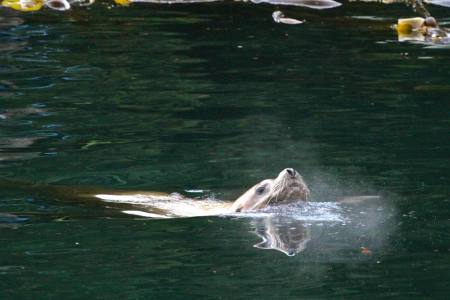
10659202_10153342628774852_4448842526100652252_n

(Stellar Sea Lion, British Columbia)

***

I fell in love with Bernie Sanders not because he was offering free state college tuition (Brittney and I have both graduated), or because of his health care plans (I’m on state medicaid), but because he alone said what environmentalists and scientists have been saying for years.

“The biggest threat to the country is climate change.”

It got lost in his message that revolved around health care, millennials, and the top 1%. But he returned to that subject as often as he could. Every time I felt a wave of relief.

“Here,” I thought, “was how you change the system. No super pacs, no Washington bandwagon, just a man, his army of donors, and a message that this is bigger than us.”

And it almost worked. Just a few super delegates short.

***

America is full of contradictions. Contradiction is the nice word for it. Hypocrisy may be the more honest one. Recent surveys show around 64% of Americans are concerned about global warming (from here forward called climate change). Fifty-nine percent believe climate change is already occurring with another 31% believing that changes will occur. Ninety percent of Americans in other words see climate change as an issue that needs to be addressed.

Other polls find the majority of Americans in favor of politicians who want to uphold environmental pillars like the Clean Air Act, the Clean Water Act, and the Endangered Species Act. Sixty-six percent of respondents said they don’t believe that we have to choose between the economy and the environment, and that it is necessary to preserve species from going extinct.

And yet…

Yet we have a man inches from the white house who is on record saying climate change is a hoax. Who has made threats to do away with any and all federal renewable energy programs. Yet this is never discussed. We’ll spend endless time on Donald Trump’s (henceforth known as he-who-must-not-be-named) hand size, Hillary Clinton’s foundation, and which candidate we dislike more (we have no room to complain, we nominated the dingbats).

What this says to me is a shocking truth that could be the end of it all. For Americans, the environment is a convenience. Brown bears, Humpback Whales, Timberwolves, and Sandhill Cranes are a luxury. The cherry on the Sunday when everything else fits together. If the tax break is right, if the Muslims are oppressed, if my house is big enough.

1016914_10152076989579852_539427979_n

(Breaching humpback in North Pass near Juneau, AK. Humpbacks were removed from the Endangered list this summer).

I’m here to say it doesn’t work that way. As the North Dakota Pipeline Protestors have reminded us, “Water is life.” If we drill every well and level every tree, we’ll find that we haven’t just lost the charismatic megafauna we are privileged to share the earth with, we’ll have lost ourselves too. If we’re going to categorize wolves and cranes as conveniences, then we do the same to clean water, healthy food, and our quality of life.

***
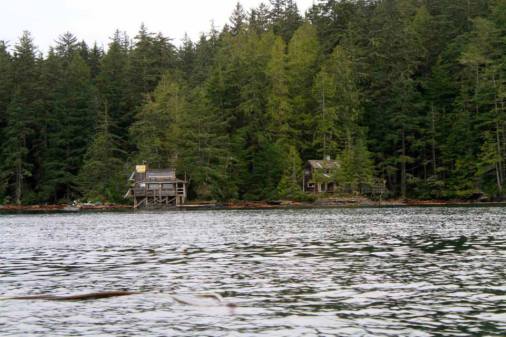
10857837_10153488489199852_5980215313637848356_n

(OrcaLab, Hanson Island British Columbia)

Beyond the cabin, hidden in the trees, is a series of hills. Between two hills runs a creek. For me, Brittney, the cat, and the rabbit, that creek is life. A garden hose runs from the creek’s mouth to the cistern and supplies us with more water than we could ever use. A filter in the main house gives us the sweetest drinking water I’ve ever had (albeit with a bit of a Cedar aftertaste at times). When the flow from the tap turns to a trickle we climb the hill, find the clog, and clear it out. It’s a wonderful gift to know exactly where your water comes from.

How many others can say this?

Here is the disconnect, and here is the danger. When water comes from the tap, food from the store, and light from the switch, we remove ourselves from their sources. Trace them back far enough and you end up in the woods, a natural well, maybe a hydroplant if you’re lucky. But many will never trace the metaphorical garden hose all the way to the beginning. When we don’t see it, it’s easy not to care. When we don’t see it, it’s easy to forget. Until the lights go out, the pipes go dry, or the shelves go empty.

***

Seattle’s fine as far as cities go. But after two days here I can feel an invisible pressure pushing down on my spine. I need to get out. Too much concrete, too many people, not enough deer. As we sit at a stoplight, a man in tattered clothes staggers along the side of a convenience store. His eyes look in opposite directions and he walks as if one leg is an inch shorter than the other. His cheeks look shrunken, whatever life is in him is waining fast. Meth will do that to you.

We watch horrified as he stoops and grabs a piece of bread off the concrete. He shoves it in his mouth and gums it down.

In the car we discuss how sad it is. How horrible and unfortunate that this young man has fallen into such a sad and helpless life.

Someone should really do something.

The light turns green, the car turns left, and the addict disappears in the rearview mirror. Having had our sixty-seconds of sorrow we pull into a brew pub and have dinner.

***

We are in the sixth extinction. We may not see it, as separated from the green portions of the world the way we are, but it’s true. Remember those movies you watched as a kid about dinosaurs? The one with the meteors that came down from the sky and sent waves of ash across the globe? Temperatures skyrocketing, creatures dying. We’re in one of those right now. Maybe not as dramatic a collision, but it’s still happening. Except now it is man instead of meteors. Yes, we are the environmental equivalent of a meteor landing in the Gulf of Mexico with so much force that it empties.

Many of us have read the articles about extinction rates; about deforestations, shrinking habitats, skyrocketing ocean temperatures and acidity.

How horrible and unfortunate that this species has fallen into such a sad and helpless life.

Someone should really do something.

The light turns green, we turn left, and we buy the cheapest apple or bag of coffee we can find, the threatened species’ disappearing in the rearview mirror of our subconscious.

common_murre_gr

(Common and Thick Billed Murres died in the hundreds of thousands last winter due to unusually warm waters in the Pacific. This winter is once again showing surface temperatures several degrees above normal).

***

I’ve stopped refreshing fivethirtyeight.com. Brittney gently pulled the computer away from me an hour ago, her eyes filled with alarm.

“When was the last time you laughed?” She asked.

I try to put Tuesday, November, 8th out of my mind. We make dinner, watch Friends, listen to John Mulaney’s stand up comedy. And I laugh. I laugh so hard I almost cry. Both hands on the counter, bent at the waist, nervous energy coming up as roaring barks of euphoria.

But inside I marinate. I still obsess with what the people of New Hampshire, North Carolina, and Nevada are thinking. And the knowledge that not many of them are thinking about the world the way I am is disheartening. I know that sounds elitist and arrogant. I’m a 28-year seasonal employee that plays jump rope with the poverty line. I have no right to get all holier than thou. But if we’re going to glorify a man who brags about sexual assault, I think I should have my say. Because what I want won’t benefit me monetarily. In fact it’ll probably lessen my income and raise my taxes. I don’t care.

I am here to speak for those that can’t. For the trees on the hill behind the cabin and the harbor seal in the kelp bed. They aren’t luxuries or conveniences or necessities. They are life. And if we lose them, we lose ourselves. Whether we see it or not right now, we need these places and the green and blue world to support the ever growing gray one we are sculpting out of concrete.

Which is why, on Tuesday, you must vote for Hillary Clinton.

“But she’s untrustworthy.”

“I don’t like her.”

“What’s in her emails?”

To which I answer:

“I know”

“I don’t really either.”

And “who knows? Hopefully just lots of cat videos.”

This is not the time for a “protest vote.” Gary Johnson supports fracking for crying out loud. Nor is it time to “shake up the system.”

I mean, it is, but Bernie Sanders is kind of busy trying to keep Emperor Palpatine/Sauron out of the white house.

No, it is time for America to put its vote where its mouth is. It’s time to end the hypocrisy and put the environment first. It is time to save ourselves before it’s too late. And if the harbor seals get to thrive along the way, I couldn’t be happier.

If you’re still on the fence. If you’re still struggling with the idea of graying in that little circle next to Hillary Clinton, think of it this way. Don’t do it for her. Do it for yourself. For the places you fell in love with as a child. For the places you want your children to fall in love with. For the national park your parents took you to, for the bird on the tree outside your window. For the wonder and spiritual healing you feel every time you step into the woods. Do it for clean water. A protest vote won’t save that, nor will it save you. Don’t vote just to speak your mind, vote to speak for those that can’t. Along the way we may just find a way to save ourselves.

45631_488778539851_6865631_n

(Quiet places and open spaces).

Sources:

http://earthjustice.org/news/press/2015/new-national-poll-finds-90-percent-of-american-voters-support-the-endangered-species-act

http://www.gallup.com/poll/190010/concern-global-warming-eight-year-high.aspx

Common Murre Photo: wsl.ch

Midnight Humpbacks

Another year with no trick or treaters on Hanson Island. I shudder to imagine what we’d do if we heard a knock on the door right now. We’d glance terrified at one another, bodies taut, legs weak, hands shaking. What the hell? No one whose ever knocked on the door of a cabin on the rocks at 10:00 at night has ever done so with good intentions. But the night is calm and seems to be low on ghoulish or spiritual skullduggery. After a stormy month, it’s nice to hear the quiet. There’s not even boat traffic. All that comes out of the hydrophones is the occasional gurgle of water and the unexplained static like crackles.

But despite the quiet and despite the darkness, we’re not alone. Outside the door are sea lions and seals and mink and dolphins, and tonight, humpbacks. They never seem to favor the Hanson shore during the day. When they could be photographed and possibly identified. No, they wait until the sun disappears and the clouds devour what little moon there is. But in the pitch black, we can hear them. Their deep booming breaths shake the window as they surface somewhere out beyond the curtain of night.

And time and time again I rise from my seat and step out onto the porch. It’s not like I can’t hear them from inside. But somewhere embedded in my DNA is an instinct as natural as breathing. Go to the whales. I stand on the edge of the porch, my bare feet gripping the slippery wood. Out of habit I count the blows. One… two… three… Three!? When was the last time there was three humpbacks in front of the lab? In between their surfacings is the sound of sea lions. Their exhalations are minuscule next to their cetacean neighbors. They’re like flies. They zip and dive around the humpbacks, why no one really knows. Maybe their picking off stray fish, using the whales for protection from Transients, or maybe it’s a game. Some sort of Sea Lion chicken to see who can get closest to a 15-foot flipper and not get bludgeoned to death.

There’s something about whales at night. I love whales at night. Let’s be honest, I love them at all hours, but something about hearing them but not seeing them hits me hard. Humpback or Orca, hydrophone or above water makes no difference. I love to listen. It goes back to a night more than ten years ago, not far from where I live and write.

Eleven Years Ago:

It’s past midnight. The only dark stretch of this July night. I’m asleep in a two man tent with my Father when my eyes snap open. I sit upright in my sleeping bag, that DNA kicking on for the first time. I know what I heard, the only question is; was it in my dream. I only have to wait a few seconds when I hear it again.

Blows. Lots of them.

I spring out of my sleeping bag—Dad right behind—and step out onto the rocks. Johnstone Strait is ten feet away and five feet down. And somewhere in that eternal blackness, they’re swimming. Orcas. I hear them but can’t see them. It’s infuriating. We’ve traveled hear to see them, not hear them swim tantalizingly by just feet away. From my knees I stretch out into the nothingness above the water, eyes straining, heart praying. But they’re moving on. Going west.

Two days later I got my wish when the A36s, a trio of male Orcas swim past in the morning. From the seat of my kayak I watched Kaikash, Plumper, and Cracroft cruise by. If only I’d known their names that day. I would have paddled out and introduced myself.

Today I don’t mind. Let them approach in the dark and scurry across to the shadow of Harbledown Island in the sun. Even as I write the humpbacks continue to move back and forth in Blackney Pass. Sometimes close, sometimes further away. But in the stillness I can hear them, mixing with the sounds of the hydrophone, the crackling of the fire, and the snoring of the cat.

Home.

Somewhere along the way, this place became home. One of them at least. It can be easy to take some of the miracles of Hanson Island for granted when it’s at your feet 24-hours a day. But not tonight. Not when the humpbacks surface and reawaken the boy inside that fell in love with it all eleven years ago.