
Golden light through golden leaves. Cottonwoods fluttering in a fall breeze are punctuated by random squalls that vanish before I can grab my raincoat. My fingers are greasy with salmon skin and stained with creosote. Sweet-smelling alder smoke billows from the smoker’s open door. I slide racks of salmon between the shelving and nihilistically rub stained hands on stained pants.
I close the door and watch the temperature tick towards 90 degrees. The smoked salmon recipe is as familiar as a warm blanket. Dry brine. Equal parts brown sugar and salt. Soak for four hours. Rinse. Let rest overnight. Into the smoker for four hours at 90 degrees. Bring to 180 over an hour. Hold for another hour. Eat the river.

I plop against a spruce and nestle into the mossy layers coating the ground around Hank Lentfer’s house like a Tempurpedic mattress. I walked past this spruce exactly one lifetime ago, drunk on the prospect of going full homesteader. With covetous eyes, I drank in Hank and Anya’s house and overflowing garden, convinced that this could someday be ours. Nevermind that I initially mistook the smoker for the outhouse.
“Rule number one,” Hank laughed as we walked by, “don’t shit in the smoker.”
So no, I haven’t shit in the smoker, but I have pulled racks of succulent salmon and one luscious deer leg from its innards with the overeager enthusiasm of children on Christmas morning. The temperature hits 90. Six hours begins… now. The stopwatch squeaks, and I set to work peeling bark from a waiting pile of alder.
There are easier ways. Electric smokers exist. Set it and forget it. I could fashion a hot plate and plywood box, eschewing the careful dance between wet and dry alder. Keeping the smoker at 90 degrees locks in the flavor. Slowly raising it to 180 keeps fat from bubbling to the fillet’s surface. I could stop there, slide them into an oven, and let them slow cook to completion. I’ve already hiked miles up the river, fished for hours, and shouldered them to the trailhead. It’s not cutting corners; it’s just practical.
Cottonwood leaves whisper on the gusts. The old rusting stove pops and cracks. Smoke escapes from the shiplap siding. I wander through the woods, sampling high-bush cranberries and following moose trails that terminate in dead ends as if their users apparated on the breeze.
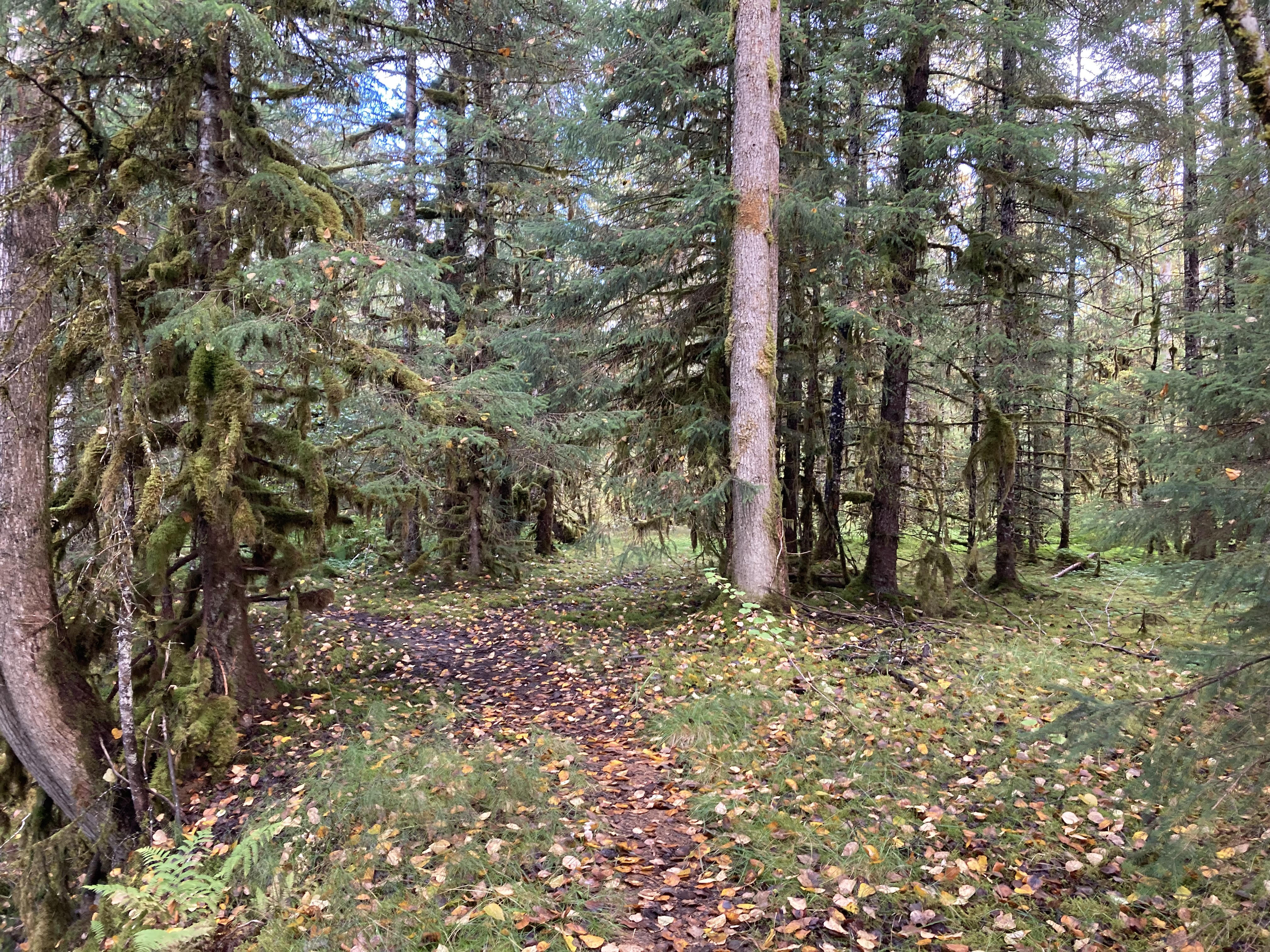
Even in sleepy Gustavus, it’s easy to get wrapped up in the rat race.
I don’t sit in traffic or attend budget meetings, but the “to-do” list never seems to shrink. A sliding scale of my own tolerance dictates the project list. Tyvek siding is acceptable until one day, I can’t stand to look at it another second. A kitchen faucet emptying into the same bucket for months is now intolerable. The cast iron tub that sat uselessly in the yard needs a home. A trail of washed rock appears and connects the driveway to the front steps. I returned in September, shocked to realize I’d been home less than four weeks since May. The house and property felt neglected. I set to work finding a place for the tub and slapping siding over Tyvek (kitchen sink bucket TBD).
But everything orbits around coho. A sunny day demands a journey up the river. The return of a birthday tradition of camping in the Bartlett River high meadow so I can roll out of my sleeping bag on the first day of my 36th year and cast into the river before I’ve sipped my coffee. It crescendos with this smoker that must be babied and attended to all day. It forces me to slow
All
The
Way
Down
I kneel beside a well-worn trail traveling through the moss. It’s no wider than my forearm, but the moss has turned black and muddy from constant use. The trail connects two spruce trees. Their trunks covered with the shells of spruce cones. I don’t know how many squirrels ping pong between these two trees, but I’ve stumbled into somebody’s critical home. At least a couple of these chattering critters orbit their entire lives between these conifers. Up and down, back and forth, again and again. The patience, the time, the metronome-like consistency to make this trail speaks to a tradition no less significant than migrating cranes and howling wolves.
I run a hand down the trail. Is it possible to envy squirrels?
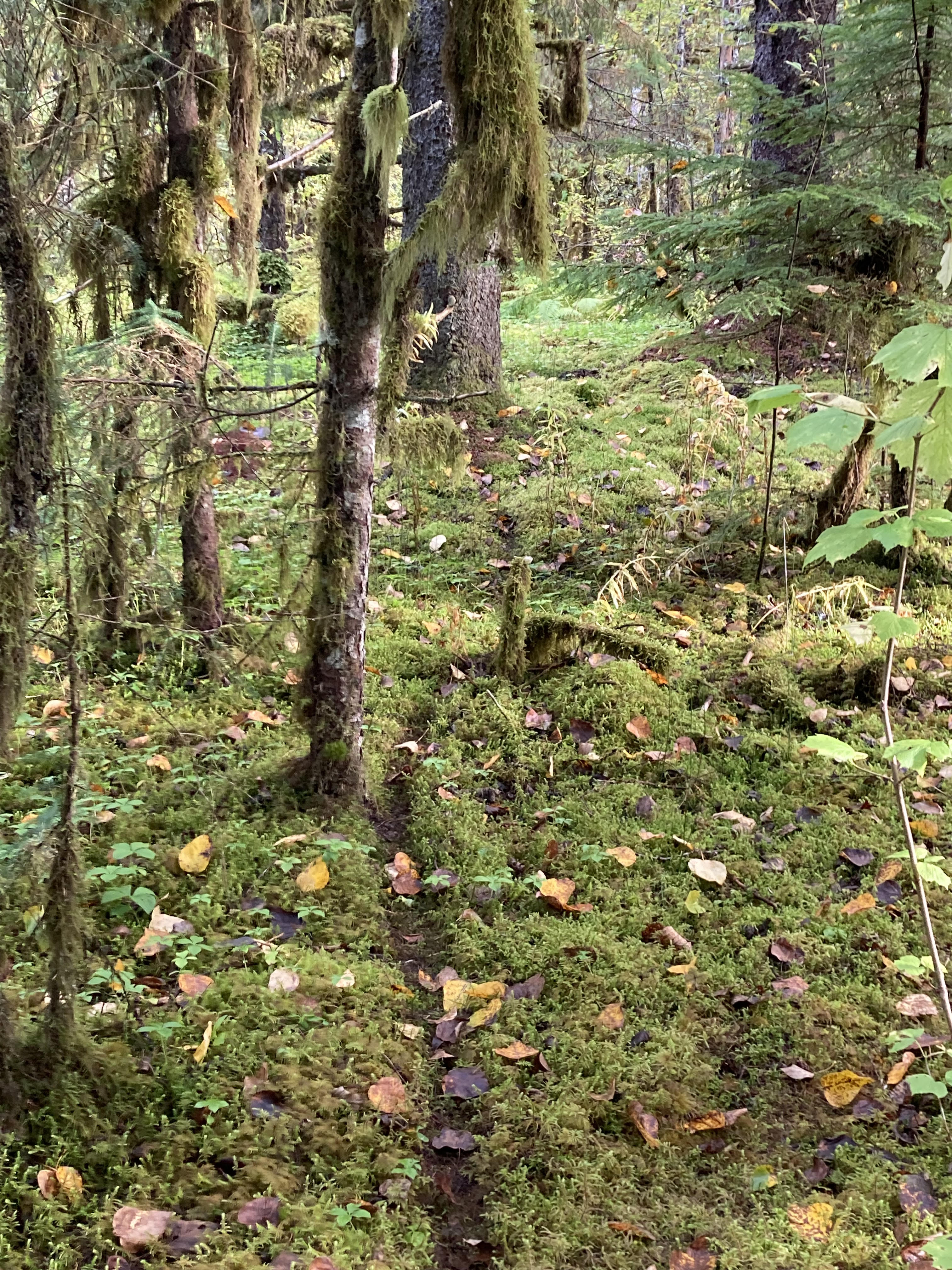
I think of the dozens of backbreaking trips with a wheelbarrow laden with rocks to form my own pale imitation. My attempt to reinforce the claim that I lived on and loved my swampy bit of land. But there is no substitute for time and the necessary pilgrimages between two trees that give these fast-twitch residents everything they need.
Hour number six slides by. I pop the door with poorly contained glee. Zach and Laura have arrived with their own tote heavy with brining salmon. Together, we shuttle the finished fillets to Hank’s porch, where their toddling son, Salix, is waiting. The door opens, and Hank appears with a quartet of Rainiers. He scoops a chunk of bronzed coho with one hand and flips a squealing Salix over his shoulder with the other.
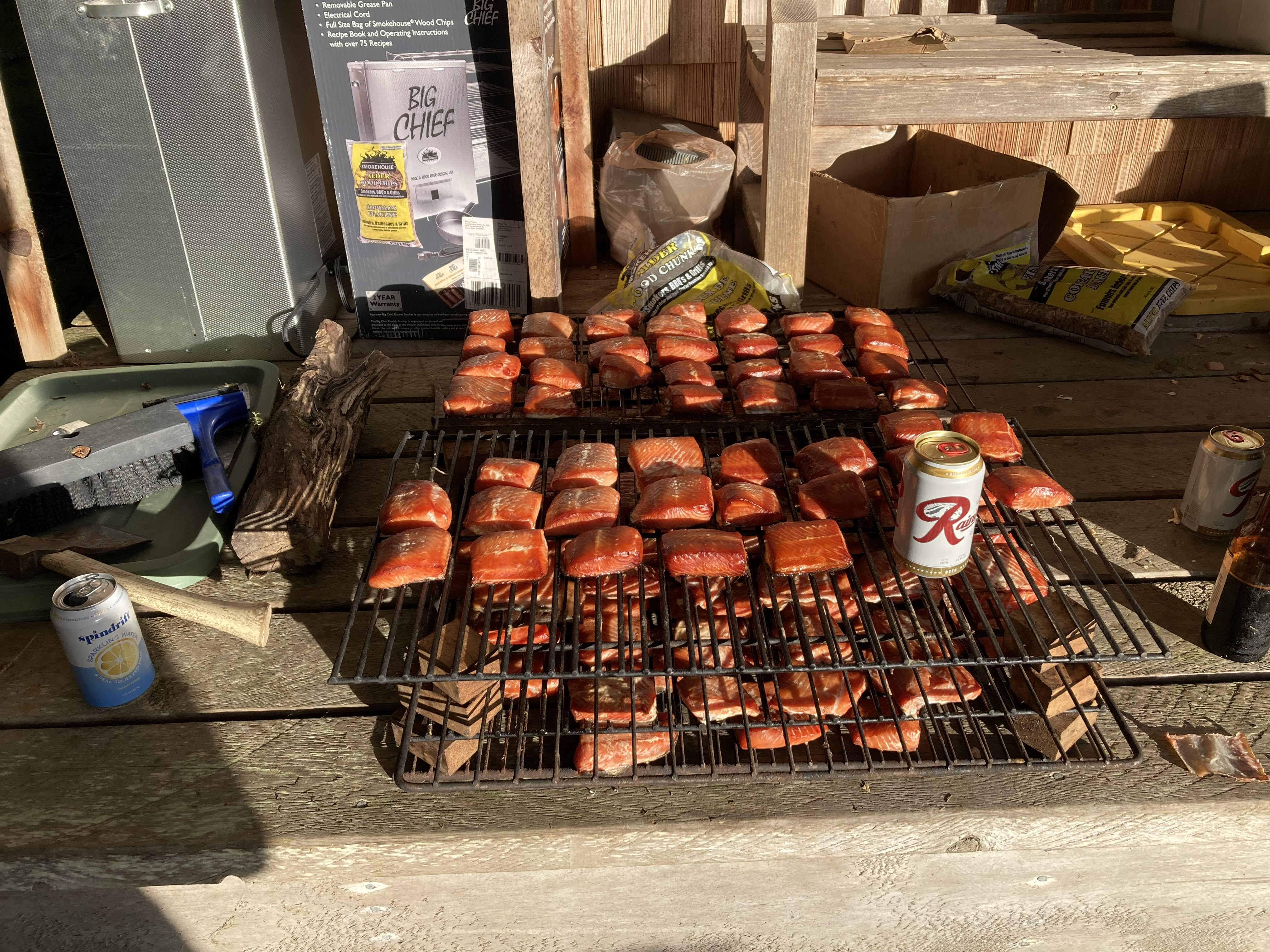
The cooling salmon are irresistible, and we shovel handful-sized bites into our mouths. Salix takes some of us first uneasy steps, light brown curls reflecting the last of the day’s autumn light. Perhaps my trails will never be so defined. But this place has other sorts of worn and loved indentions to reinforce my connection to home. Spiritual footpaths matter more than worn footprints.
I take a final walk through the enchanted forest, gathering my things and trying not to forget anything. The universe dictates that I must always leave something behind. This week’s victim is a pair of rain pants.
“I’ll try not to tell anyone you left your pants at my place.” Hank texts.
“Appreciate that. That’s how rumors start.”
I pause at the base of the Squirrel Spruce and nestle a piece of salmon in the moss amongst their spruce cone pile. The forest breathes, bracing for a winter as inevitable as a sunset or falling tide. But not yet. We have a few more golden weeks to walk our trails, harvest food, and watch cottonwood leaves fall.
 Raincoast Wanderings