
Snow coats the hemlock boughs like icing. At sea level, we’re oscillating between sleet and snow on a minute-by-minute basis. From South Pass, the Gulf of Alaska is visible and foreboding. The constant swell an undulating steppe that bottlenecks through this passage that in many places is just a half-mile wide.
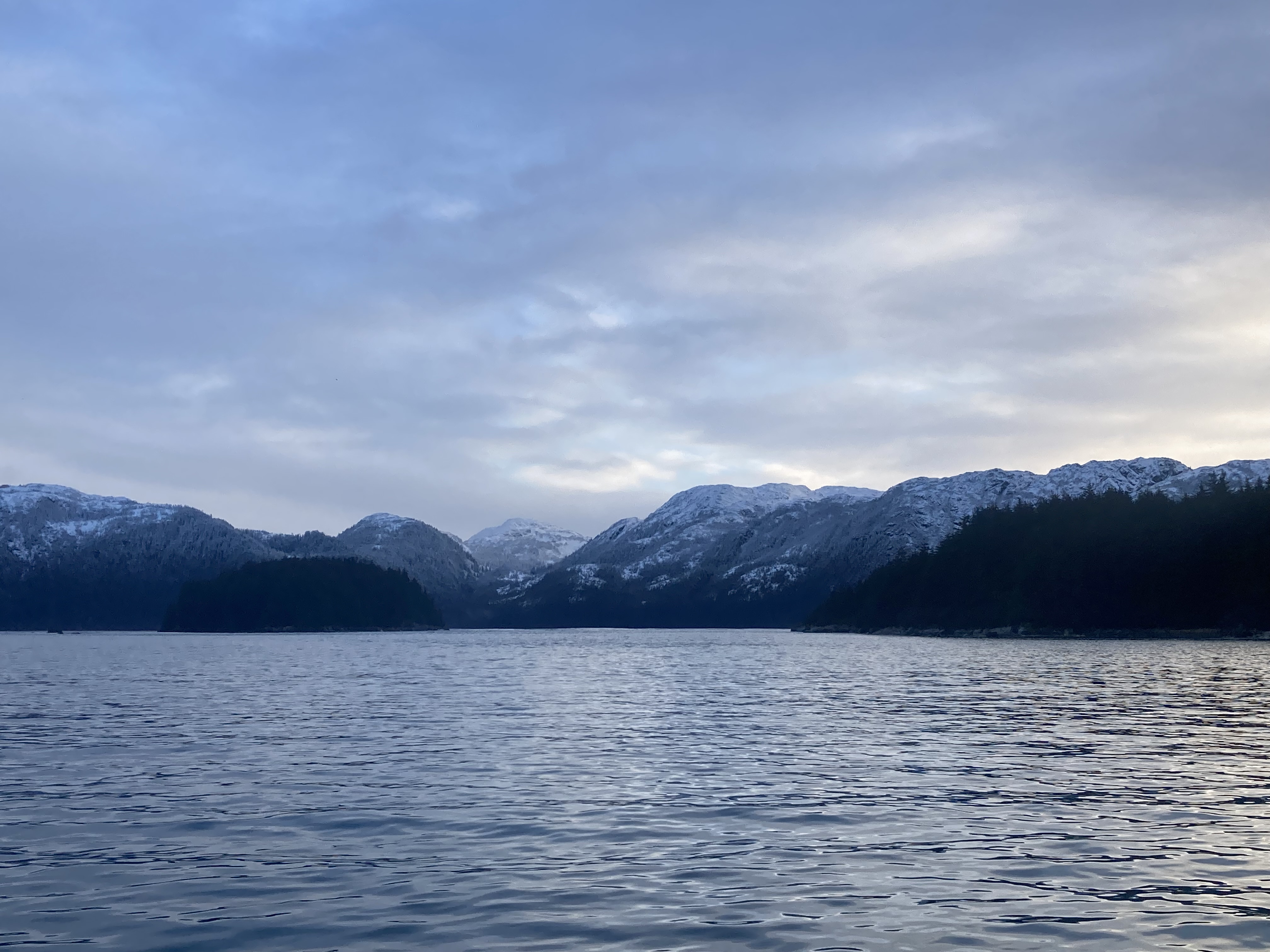
My double kayak is sheltered by the biggest of the Inian Islands, the bow rising high in the air with each swell. Instead of another paddler, the bow seat is occupied by a rifle and dry bag. If all goes according to plan, there will be a four-legged occupant in that seat on the way home.
The Inians are four watermark islands at the west end of Icy Strait, a breakwater between the inside waters and open gulf. They’ve been designated as wilderness by the U.S Forest Service, with one exception – The Hobbit Hole.
How to describe the Hobbit Hole? It’s a picturesque homestead. Five acres of old growth nestled in an ideal harbor accessible through a narrow cut. A mile west can be some of the most dynamic, challenging, and downright dangerous waters on the coast. It’s the last harbor. The last shelter. The last hearth. And it has become a tradition to spend Thanksgiving here in the name of fellowship, deer, and gratitude.

I have a spot in mind. A little pocket beach near the south end of the island. It’s too shallow for a boat, but a kayak can squeeze in there when the swell allows. The kayak catches the surf and slides up the pebbled beach. I jam my paddle into the rocks and the boat holds fast as the ocean retreats. I scramble free and drag the kayak to the pile of drift logs at the feet of the forest.
I tie the kayak to the logs and step out of my raingear. I’m wrapped in wool. Not as dry, but quieter when creeping through the forest. Five shells slide into the magazine of the 30.06, the last one clicking into the chamber with a deathly click.
Safety on. Backpack shouldered, GPS tracker on.
I follow the drainage, letting the sound of crashing surf and running water muffle my footsteps. I am not a quiet hunter. If there’s a stick to crack or a rock to send down a hillside, I will find it. The deer I’m looking for can hear better, smell better, and probably see better. They have home-field advantage, and the myriad of deer trails tells me that there are multiple escape routes if they feel the need.
But the Springfield slung around my shoulders does a hell of a job at leveling the playing field. I prefer to sit and wait. Find a perch, try to get comfortable, and exercise some patience. It’s that last bit I struggle with. But the human eye doesn’t see well when it’s moving, and the odds of me seeing a deer before it sees me when I’m in motion are slim.
I find a small rise looking up the hillside. It’s reasonably open for the Inian Islands where the forest is defined by thick groves of blueberry, devils club, and muskeg. I bring a wooden deer call to my lips and give a few bleats. I’ve been wearing it every day since July. It’s become something of a talisman, a worry stone I can hold onto when the feelings get big. But I finally get to use it for something besides startling my cat when she falls asleep on my lap.
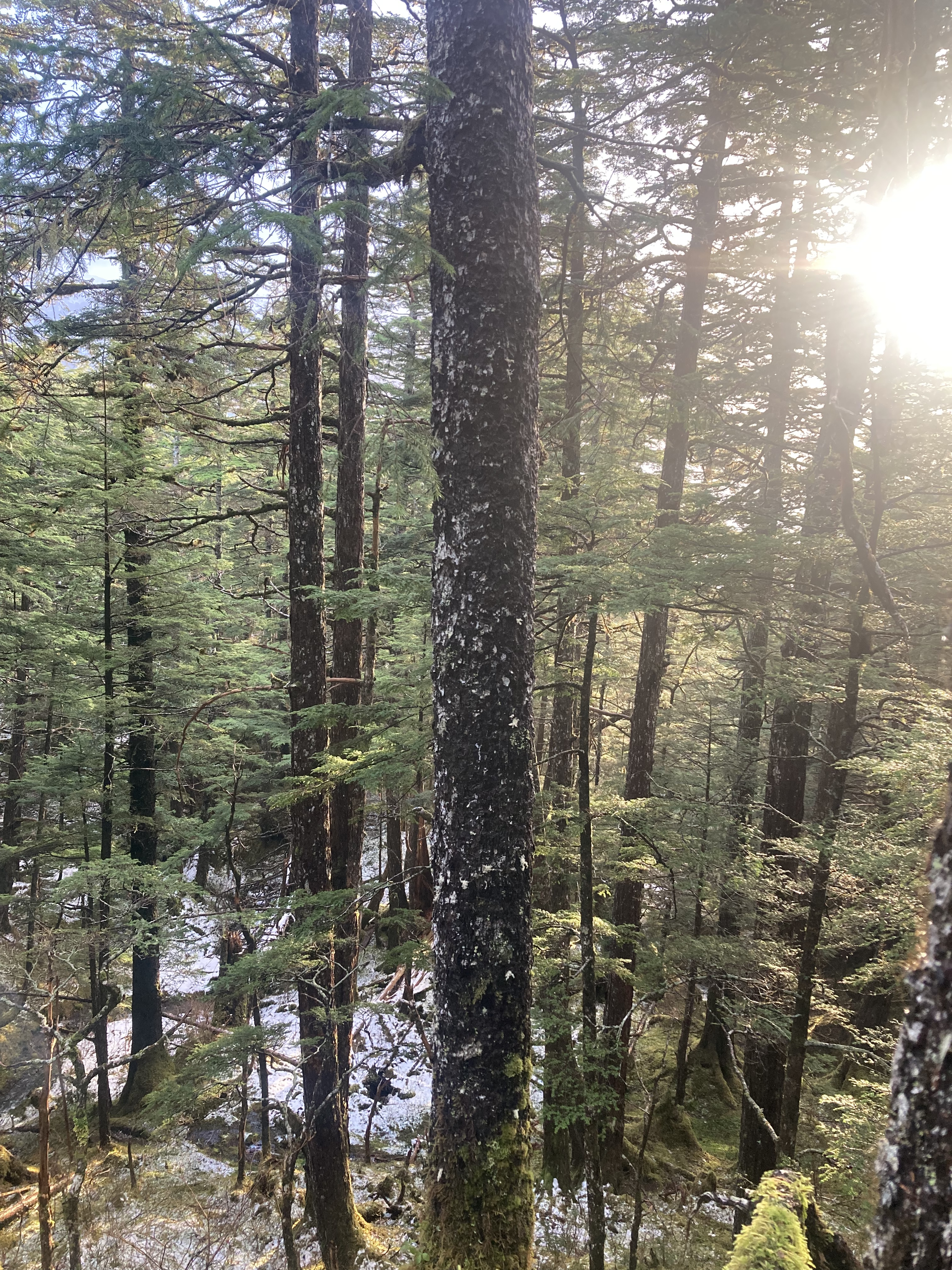
I settle in. All my tramping surely scared everything off, time to let the woods go quiet, to melt into the moss and pretend I’m not there, to give the – there’s a deer.
Top of the hill, to my left, moving right. Weaving along a well-worn trail. I bring the scope to my eyes. There are antlers. I’ve been in the woods thirty minutes, and I’ve found antlers. I blow the call. He keeps disappearing behind hummocks and thickets. But he’s moving towards me. My heart pounds and I’m embarrassed by how much my hands are shaking. Halfway down the hill, he vanishes behind a fallen spruce. I bring the scope to my eye, aiming to the left of the blowdown, and wait.
But a sound further down the hill distracts me. The raspy call of a doe echoes through the woods. The buck isn’t coming towards me. He’s heading for her. Can’t blame him. She’s much cuter than I am. But she has no interest in what he’s selling. For a moment I have them both in the scope, but the view is fleeting. The doe scrambles back up the hill and the buck vanishes. He doesn’t take the rejection very well.
For a while, I try to follow their tracks in the scattered snow. But they’re downwind of me and the trail is hard to follow. The wind blows from the southeast, so I turn around, still feeling the exhilaration of the sighting. The relationship I have with deer is often met with raised eyebrows and skepticism from those down south.
It’s hard for me to imagine deer as pests piling up on the side of the interstate or rummaging through petunias. They are the perfect forest emissary. Quiet, fragile, and mysterious. Beautiful and delicate. Surefooted and swift. Able to sprint straight uphill without making a sound. Simply finding deer in these woods can feel like a miracle. It makes every encounter intimate and unique. Hours of inactivity followed by seconds of exhilaration.
30 minutes later I find two more deer. This time a doe and a fawn rummaging through a muskeg. They paw at the snow and bury their noses in the earth. From my vantage point, I wait for something with antlers to wander out of the woods. A raven croaks from a branch above me and the doe’s head snaps up to scan the tree line.
What did that raven say? The bird takes off and lands on another branch closer to the pair. The call fits this place like the intertwined fingers of lovers. For centuries ravens and wolves have found deer together, ravens calling out locations like a beacon, drawing the pack in while the ravens get the carrion.
As we spend more and more time plying the forests of the Inians, are local ravens picking up on this? We don’t leave the scraps a wolfpack does, but a big gut pile is nothing to sneeze at. Whether it’s the call of the raven or the deep snow in the muskeg, the pair wanders off into the woods. I munch on a sandwich and watch the empty muskeg, still hoping a buck may appear and follow their trail. My patience disappears with my lunch. I shoulder the pack and rifle, continuing along the ridge.
I vaguely remember a hunt last fall in this area. There’s an open section where I saw a doe and fawn. I drop down another hill, acutely aware of the sound of crunching snow beneath my boots. I find a deer trail and follow it along the side of the hill. Lots of blueberry in the valley below and trees clustered together. I pause near a potential perch that offers a better view. The hill bends to the left ahead of me, and a raven calls around the corner. If a deer is the forest’s soul, then a raven is the voice. I must keep going, something insists on it. I stand and follow the croaking raven. The view is a little better around this bend, and a downed spruce makes a perfect brace.
I slide off my pack and look up at the branches for the raven, the forest quiet again. I bring the deer call to my mouth and look back down at the little valley. The call falls from my lips without making a sound. A deer. Walking straight towards me. Scope to my eye. Antlers. He’s what we call a “spike.” His antlers haven’t forked yet, they’re just two rigid pieces of bone sticking out behind his ears.
He continues to move towards me, and I hear the raven again. The buck seems unconcerned with the calls and continues to work toward me, nose to the ground. He reaches a small clearing 40 yards ahead. Now or never.
I miss.
One would expect a deer to bolt at the sound of a gunshot. But the sound is so sudden and foreign, that they often pause. That’s what he does, staring right down the barrel. The second shot is clean.
I sit near the deer and lay my hand on his chest. I stare at those little antlers, and he looks so tiny. Spikes tend to be two years old, and with a swell of guilt, I wonder if this is the fawn I saw the previous fall. Did he work this hillside his entire life? Walk this drainage countless times? It’s likely I’m the first human to set foot in this spot in a year.
That old mixture of gratitude, grief, and yes, pride swell up inside.
Wings beat above me. The raven perches along the bough, the call filling the empty woods that I have just filled with violence. As I prepare the deer for the half-mile drag to the beach, I listen to the raven. He sounds impatient. Can’t you do that faster? He’s soon joined by another, they touch beaks, and take turns calling through the woods. Not content to reap the bounty of the impending gut pile, it must be shared with their friends.
I remove the heart and liver and drop them in a Ziploc. I feel the same. Back at the Hobbit Hole, we’ll eat the organs tonight. Together. Sharing stories around mugs of cold beer and a sizzling blueberry crisp.

I am home. With soaked pants and a gentle rain melting the snow. The deer, this place, this life, it’s a miracle. Everything else falls away. I would not trade this moment, this sensation, for anything. Some hunter-gatherer DNA has its claws in me and will not let go.
The deer is ready. The ravens are too. 700 feet of elevation and a nasty drainage are between me and the kayak. But I’m not ready to leave the glen just yet. I lean against a tree and look at the birds, waiting so patiently.
“Did you know he was here? Did you know I was close?”
Black eyes stare. Revealing nothing.
“I’m going to pretend like you did. That we have this bond. That you watched me hunt this hillside a year ago, that you remember me. Things are different now. Things once in order now seems so strange. But this, this is my constant. This is my heartbeat. I hope you eat well. I hope this sustains you. Let’s waste nothing of this miracle. I’ll see you two soon.”
I shoulder the pack and grab the line tied around the neck. The rifle bangs against my hip, the deer slides across the snow. With a final caw, the ravens descend, and the forest goes silent once more.
 Raincoast Wanderings