Rivers and Roads

Finding relics is hard on this coast. The rainforest is tenacious, hungry, and unrelenting. It devours anything made of wood, eager to absorb it back into the ground and turn it into mulch so the next generation of trees can grow, topple, and repeat. Abandoned houses quickly crumble as their metal roofs rust and fall away. Even cast iron and the alleged “stainless” steel can only resist the pounding rain and ever-present dampness for so long.

So, walking through a place like the U’Mista Cultural Center in Alert Bay feels like something of a miracle. Referred to by the Namgis First Nations elders as a “box of treasures” the museum is chock full of regalia, masks, and artifacts, some of them of pre-contact vintage. Some are so precious that they have been given a special room where photography is forbidden. Stepping into this space with the same layout as a traditional Big House feels akin to walking into any holy place.
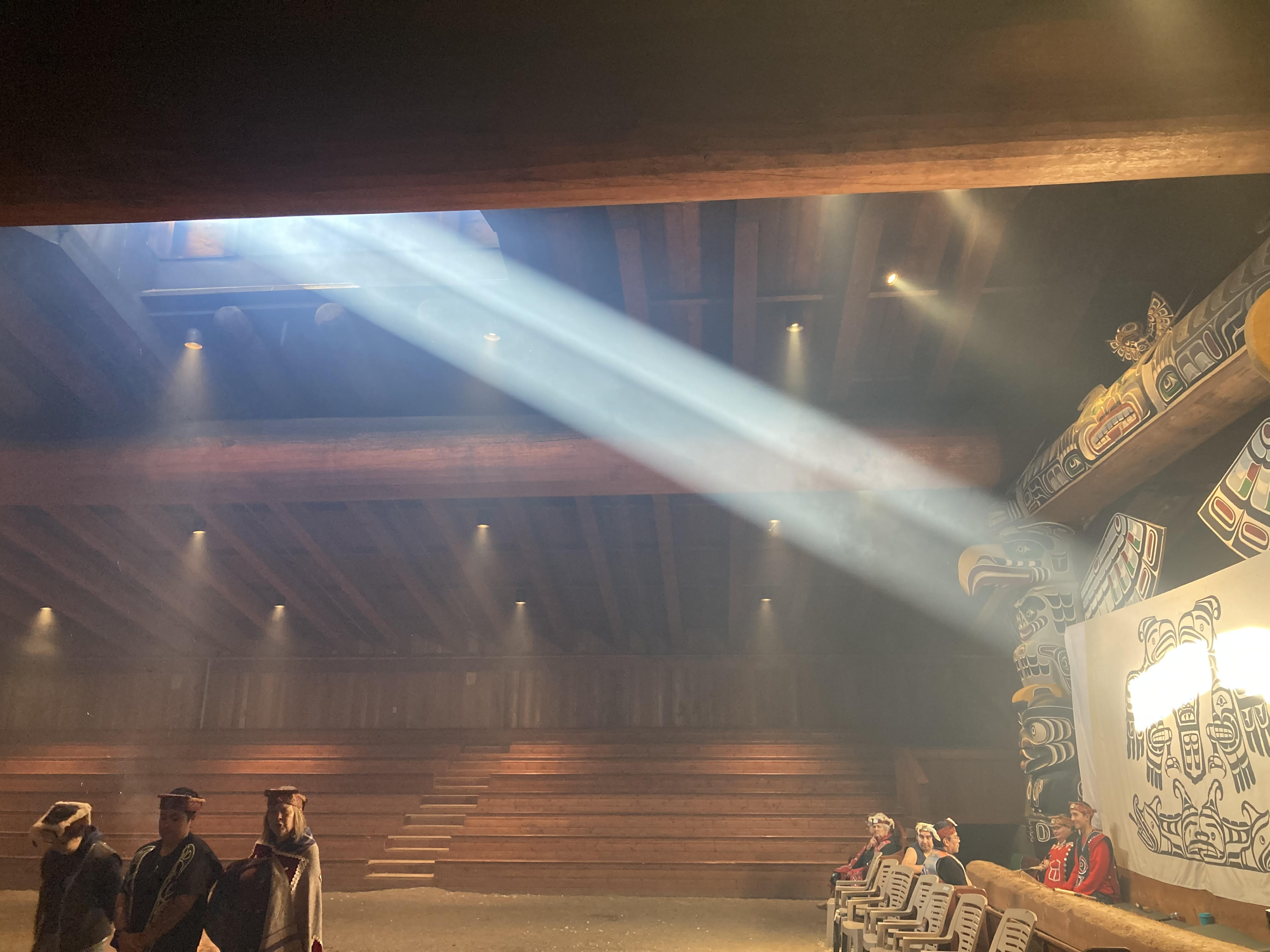
The big house in Alert Bay, British Columbia.

You can feel the age. Hear the whispers, the songs, the banging of drums on a stormy winter night while the wind howls up Johnstone Strait. For decades, potlatch ceremonies were forbidden by the Canadian government. The gatherings led to arrests and the confiscation of artifacts, language, culture, a way of life. It wasn’t until the Cultural Center was built that the regalia and masks were returned.

I kneel in front of an ornately carved orca, done in the classic form line design of the Pacific Northwest. The calls of the northern residents ring in my ears. Oral histories tell us that the “blackfish” swam in pods so thick that you could leap across their backs from one side of the strait to the other. Guess who likes the sound of that?

Black and white photos of old village sites, many long abandoned, run along the hallway. I know a lot of the names, or at least the ODWG (Old Dead White Guy) names of these islands and channels and coves.

Even after years exploring this coastline and probing the beaches, I know nothing about this place. So many remain just names on a map and nothing else. I thought that my wandering would be satisfied with that. That I could leverage my new life and travel wherever Lindblad was willing to send me.

A Patagonia contract looms. What are southern hemisphere glaciers like? Or humpbacks? Orcas? Do penguins smell as bad as everyone says they do? I’m intrigued, excited, thankful. But there’s a bungee cord tied to my heart. Any time I step too far from the B.C. coast, the cord goes tight and springs me back.

It has been six years since I hugged Paul Spong on the Alert Bay dock, promised to keep in touch, and boarded the ferry. 12 years since I first shouldered my pack and boarded a bus in Vancouver for the region that is my birthplace. The symmetry is not lost on me. All it took was U’Mista, an orca carving, and some black and white photos, to tell me that I don’t need to travel the globe to find myself. To be fed. To heal.

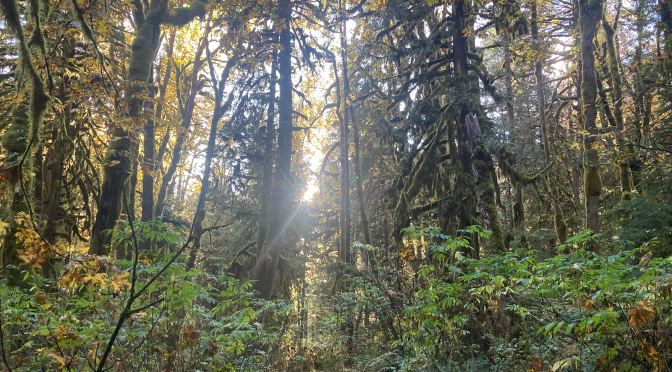
There are places where I have left beached my kayak, stepped into the woods, and felt a presence. Without fail, I would find evidence of human life.

A scarred tree where pitch has been harvested for fires. A strip of bark peeled from a red cedar. The miracle tree that could be lived under, paddled, and worn. A flattened divot where a house once stood. Wooden poles of an ancient purse seiner.

I step outside and look over the water. A southeast squall is rolling up the strait, but the rain has stopped and the sun bleeds through. I can see my wooden kayak rolling in those waves, battling the passage from Port McNeil toward Alert Bay.

This place is full of memories. Many beautiful, a few painful, others bittersweet.

But something it is abundantly clear. This place isn’t done with me. In what capacity or function I don’t know. The time has come to migrate back. To step into these woods I want to know, to feel that presence and sleep on that moss. Hear the wolves and watch the seals. Rivers and roads led me north, but at some point, in some capacity, I always knew they’d lead me back here.  

Wabi-Sabi

Eyes snap open, heart racing. Where am I? The boat vibrates, a cradle gently rocking, and I’m swaddled in the bunk of room 807. For the last three months, memories and reminders of what is and what is no longer come rushing in the morning. They have all the subtlety of a 747. A soft, blue light bleeds through the porthole. Along the British Columbia coast, mornings are coming later and later as the calendar flips to October.

My name is David. I am a naturalist aboard the National Geographic Venture. I am loved. I am treasured. I am ok.

I grope for my phone and pull up the GPS app. The islands, passes, and channels look up at me, friendly little faces with names that bring comfort and order to my life. Broughton and Blackfish. Johnstone and Harbledown. Parson, Blackney, and Robson Bight. My second home. My first home. The place where this human, whoever he is, was born. It was in the waters of Johnstone Strait that I bobbed in a kayak during the summer of 2007. The A36s came swimming by, stately tall dorsal fins guiding me. Not north like they do in all the stories, but south.

Aboard the National Geographic Venture, I return to these places every fall. Not as a caretaker or paddler or biologist, but something of an educator. A representative of this place that has meant so much to me. But like everything, this sanctuary comes with some baggage.

I step onto the bow with a coffee cup gripped in my hand and greet an early morning drizzle. The boat chugs through Blackfish Sound. Hanson Island is off the port, Orca Lab just a mile behind me, cloaked in morning fog.

And there are the Plumper Islands off north Hanson Island with their little passes and reefs I memorized during three winters of town runs from the Lab to Alert Bay. Another lifetime ago in so many ways.

I pull out the spotting scope and train it on the shoreline of the Plumpers. There they are. Humpback after humpback hits the surface and are greeted by flocks of greedy gulls that divebomb the forage fish pushed to the surface. The harsh edges of this clump of islands float in and out of the fog, the world blurry and slightly out of focus.

There’s a Japanese phrase, wabi-sabi. It means impermanent, imperfect, but aesthetically appreciated. A spoon’s wooden handle worn smooth from years of use. A torn and stained pair of Carharts with oil, blood, grease, dirt, and grass stains worn into the fiber. A stained cabinet edge from a beloved cat’s insistent nuzzling.

This stretch of coast is my, “wabi-sabi.” These islands, these whales, the tantalizing promise that a six-foot dorsal could appear at any moment. But inside I also feel wabi-sabi. Incomplete, under construction, and loved all the same.

I get to talk about it today. Share this place and this history with 80 people. They’ll give me a microphone and hang on my words. A chance not just to share but influence.

But there’s no way to speak of Hanson Island, Paul Spong, orcas, or quiet nights in Robson Bight without sharing my own history. And so that means opening a vein and scratching the scab that’s just starting to heal. How will it feel when I see the picture of us grinning at the camera with a rabbit and a cat clutched in our arms?

***

I step behind the little pulpit in the middle of the Venture’s forward lounge. I glance at the TV in front of me, my presentation loaded and staring back. There’s the lab, framed in cedar and fir. I remember the day I took this photo, a spring day in 2016 when I knew our time at the lab was coming to an end.

A down payment was soon due on 4.2 acres of Gustavus clay. An era was coming to an end. A final gulp of wanderlust. My tumbleweed wanted roots, and we were learning what it took to grow them. It meant saying goodbye to black nights with chatting orcas and salt spray on the windows.

I don’t know if I made the right choice.

I pick up the mic and begin to speak. There’s the photo of Paul next to the projector, focused and handsome. A black and white photo of Skana the orca he was hired to perform “research” on. Paul playing his flute to her beneath the headline “Friend Wants Orca Freed!”

I talk about Paul heading up Vancouver Island and setting off in a kayak around Hanson Island with nothing but a flute. Did he have a life jacket? I never asked. Something tells me he didn’t.

I tap a button and the calls of the northern Resident orcas’ blast through the lounge. A Clan and G Clan. Pings, squeaks, and whistles. Calling me home. I never truly left. This is still my home. My first love. And just because life has changed doesn’t make that love and time any less significant. It’s part of me. My journey. Part of my wabi-sabi. The lump rises in my throat. Damn it I miss this place.

A couple slides later and there we are. There she is. A smile on her faces as she looks out the lab over Blackney Pass. A photo of Brittney asleep in the cabin with Porter on her lap, Penny the bunny nestled in her little house. But opening this vein, scratching this scab isn’t bringing tears. The lump is gone from my chest. And I realize I am celebrating the adventure. The beautifully braided journey we made. My mind will not let my heart take that away.

The spoon’s worn handle feels comfortable in my hand.  

I finish with a crescendo. Underwater footage of orcas at the rubbing beaches. I love this shot. A female settles right in front of the camera and rests on the bottom. She gives a few happy wiggles along those smooth rocks that mean so much to them for reasons we don’t fully comprehend. Their calls once again ring through the lounge.

 I break.

A tear slides down my cheek, then another. I’ve been scared to think about my time in British Columbia, much less talk about it. But sometimes what we fear is what we need to do. Destigmatize our traumas and pain and instead glorify all that was great and beautiful and precious.

I catch a few wet eyes looking back at me.

“Thank you for your time. For letting me share this place and these animals that mean so much, that makes me who I am. It’s a pleasure to get to come back here. If you’ve had enough whale talk, I totally get it. But I’m happy to take questions and talk as long as you want.”

I suppress a grin and allow my ego a couple cartwheels as hands shoot into the air.